Micron ratings show the size of particles your filter can trap, with smaller numbers catching finer debris. But don’t assume lower micron ratings always mean better filtration; they mainly indicate particle size, not efficiency. Filters can still miss tiny particles like viruses or ultrafine pollutants, and flow restrictions may occur with very fine filters. To truly choose the best filter, it helps to understand how these ratings work and what they can’t catch. Exploring this can help you make smarter choices.
Key Takeaways
- Micron ratings measure the size of particles a filter can trap; lower ratings remove smaller particles but don’t guarantee efficiency.
- Filters with 1-5 microns effectively catch bacteria and fine dust, while coarser filters (10+ microns) target larger debris like rust and dirt.
- Extremely low micron ratings (below 1 micron) may restrict water flow and still allow nanoparticles, such as viruses, to bypass.
- Micron ratings alone don’t indicate a filter’s capacity, lifespan, or ability to remove gases and oils.
- Proper filter selection depends on matching micron ratings to specific contaminants, considering both what the filter catches and what it misses.
Understanding Micron Ratings and Particle Sizes
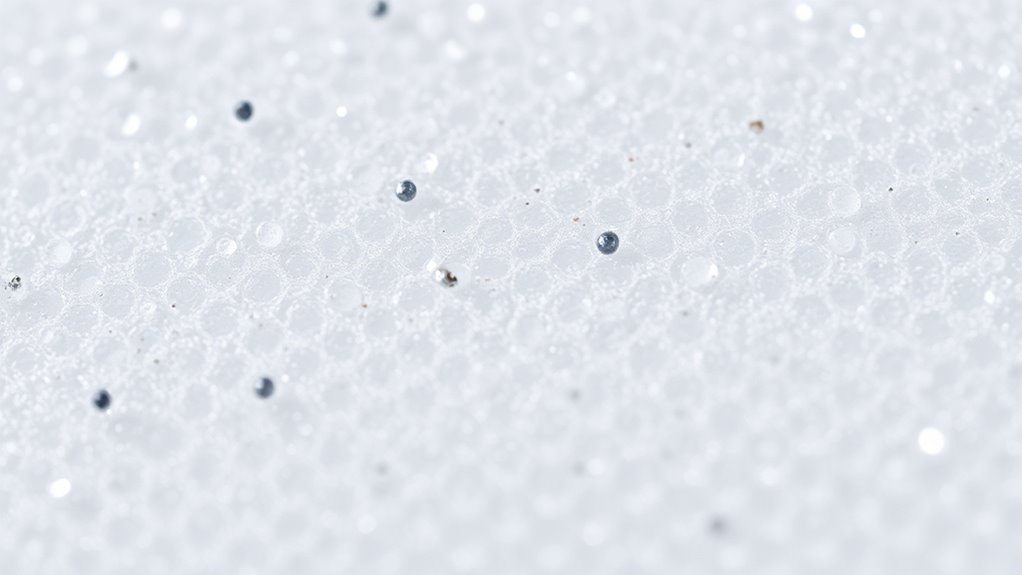
Understanding micron ratings is essential because they indicate the size of particles a filter can remove from a fluid. Micron ratings measure the diameter of particles that a filter can trap, with smaller numbers catching finer debris. For example, a 5-micron filter captures particles larger than 5 microns, while a 1-micron filter catches smaller particles. Knowing this helps you choose the right filter for your needs, whether it’s removing dirt, bacteria, or other contaminants. Keep in mind, micron ratings don’t tell you about a filter’s efficiency or how much debris it can hold; they simply indicate the size of particles it can physically block. This understanding helps you better assess filters and match them to specific filtration requirements. Additionally, the filter’s construction influences its overall performance and longevity, beyond just micron ratings.
How Different Filters Use Micron Ratings to Capture Particles

Different types of filters utilize micron ratings in distinct ways to effectively capture particles. For example, HEPA filters target very small particles, often 0.3 microns or larger, using dense fiber mats that trap particles through interception and diffusion. Car air filters typically have higher micron ratings, like 10 to 30 microns, capturing larger debris such as dust and leaves with a coarse mesh. Water filters rely on micron ratings to remove sediments, with ratings around 1 to 20 microns, depending on whether they’re designed for fine or coarse filtration. Industrial filters may use layered micron ratings, combining multiple sizes to maximize particle removal across a range. By understanding how each filter type employs micron ratings, you can choose the right filter for your specific needs, ensuring ideal particle capture. Proper filtration is essential for maintaining air and water quality, highlighting the importance of selecting the appropriate micron rating for your needs.
Common Misconceptions About Low Micron Ratings

Many people assume that a lower micron rating automatically means better filtration, but this isn’t always true. While smaller micron ratings can capture tinier particles, they don’t guarantee superior overall filtration. In fact, extremely low ratings can restrict water flow and increase pressure drop, making systems less efficient. Some believe that a 1-micron filter traps everything smaller, but in reality, many particles can slip through or bypass the filter entirely. Also, not all contaminants are solid particles; some are oils or gases that a micron rating alone can’t effectively address. Focusing solely on micron ratings can lead you to overlook other important factors like filter media quality, capacity, and compatibility with your system. Additionally, understanding air quality concerns and how different filters perform helps in selecting the most effective filtration media for your needs.
Particles That Can Still Slip Through a Filter

Even with a high-quality filter and a low micron rating, some particles can still slip through. No filter is perfect, especially when it comes to extremely tiny particles. For instance, nanoparticles or ultrafine particles, which are less than 0.1 microns, often bypass standard filters. These particles can include viruses, certain bacteria, or airborne pollutants that are difficult to catch. Additionally, particles that are stuck to larger debris or clumped together might escape because they’re not free-floating. You might also encounter particles that are shaped irregularly or have a charge that helps them cling to surfaces, reducing their chances of getting trapped. Recognizing these limitations helps you understand why some contaminants may still be present despite using a quality filter. Filtration limitations can occur due to particle size and shape, impacting overall effectiveness.
Choosing the Right Filter Based on Micron Ratings and Needs

Choosing the right filter depends on understanding your specific needs and the types of particles you want to remove. Consider what contaminants are most critical to block and select a micron rating accordingly. For example, a finer filter (1-5 microns) captures small particles like bacteria, while a coarser filter (10-50 microns) handles larger debris. The table below helps clarify how different micron ratings match common needs:
| Micron Rating | Typical Particles Removed | Recommended Use |
|---|---|---|
| 1-5 | Bacteria, fine dust | Medical, precision applications |
| 10-20 | Sand, dirt, pollen | HVAC, water filtration |
| 50+ | Larger debris, rust | Industrial, pre-filters |
Match your needs with the appropriate micron size for effective filtration without unnecessary clogging. Understanding the performance upgrades available for vehicles can also help tailor the filtration and maintenance process to your specific driving conditions.
Frequently Asked Questions
How Do Micron Ratings Affect Filter Lifespan?
Higher micron ratings mean your filter lasts longer because it captures larger particles and clogs less quickly. Lower micron ratings catch smaller contaminants but tend to clog faster, reducing lifespan. You should choose a filter based on your needs, balancing filtration quality with how often you want to replace it. Regular maintenance and monitoring help extend the lifespan, ensuring your system stays clean and efficient longer.
Are Higher Micron Ratings Always Better?
Higher micron ratings aren’t always better because they let larger particles pass through, reducing filtration efficiency for finer contaminants. If you want better air or water quality, opt for a lower micron rating to trap smaller particles. However, this might clog the filter faster, shortening its lifespan. So, choose a micron rating based on your specific needs, balancing filtration effectiveness with filter longevity.
Can Filters Be Rated for Different Particle Types?
Yes, filters can be rated for different particle types. While micron ratings measure size, filters are often designed to target specific particles like dust, pollen, bacteria, or oil-based aerosols. You should choose a filter based on the particles you want to capture, rather than just micron size. This guarantees ideal filtration efficiency for your needs, whether it’s for air purification, industrial use, or respiratory protection.
What Maintenance Is Required for High-Micron Filters?
You should regularly inspect and clean high-micron filters to guarantee peak performance. Replace them when they show signs of wear or clogging, typically every few months, depending on usage. Keep an eye on pressure gauges, and if you notice increased resistance, it’s time for maintenance. Proper maintenance prevents system damage and maintains efficiency, so don’t neglect routine checks and cleaning to extend your filter’s lifespan.
How Do Temperature and Pressure Influence Filtration Efficiency?
Temperature and pressure are the dynamic duo that can make or break your filtration efficiency. When temperatures rise, filters can expand and become less effective, letting tiny particles slip through like ghosts. Higher pressure pushes contaminants harder against the filter media, boosting efficiency but risking damage if too high. Conversely, low pressure or temperature drops can cause clogging or reduced flow, making your filtration system as sluggish as a snail.
Conclusion
Knowing what your filter truly catches can make all the difference in protecting your air and water. Did you know that even a 1-micron filter can miss particles as tiny as 0.3 microns? That’s like trying to catch a grain of sand with a tennis racket. By understanding micron ratings, you can choose the right filter for your needs and avoid surprises. Don’t settle for less—your health and comfort depend on it.