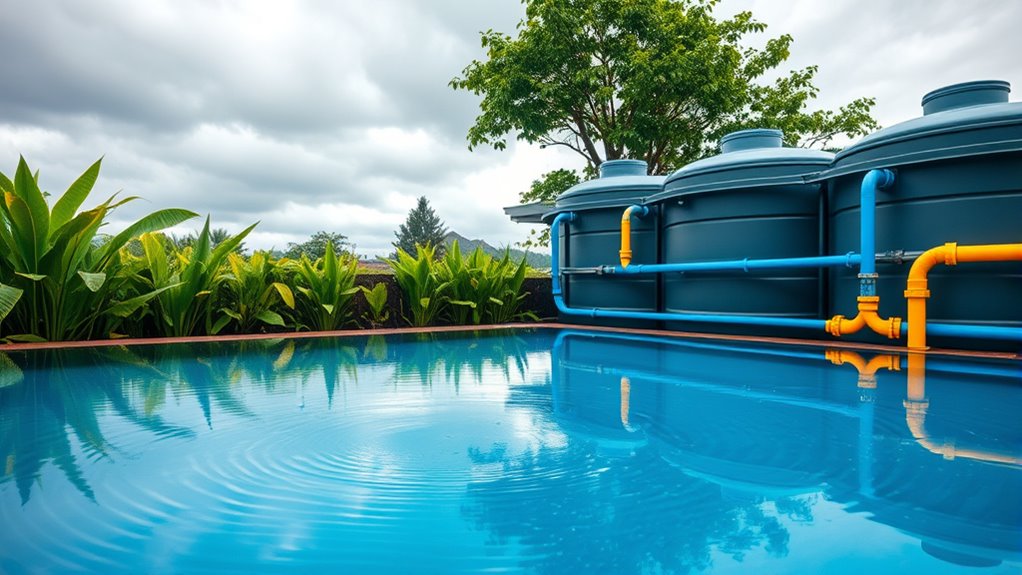

Using rainwater harvesting for your pool’s make-up water offers a smart, eco-friendly solution that reduces reliance on municipal water. It helps you manage water levels efficiently, lowers your bills, and supports stormwater control by diverting rain away from your property. Proper system design and maintenance guarantee clean, reliable water supply. If you want to learn how to set up a system that maximizes benefits and sustainability, there’s more to discover below.

Get pool and patio gear delivered free — and shop member deals
- Fast, free delivery on millions of items
- Access to Prime Big Deal Days deals on October 6–7
- Prime Video, Amazon Music and more included
Key Takeaways
- Rainwater harvesting provides an eco-friendly, sustainable source of make-up water, reducing reliance on municipal supplies.
- Proper system design, including filters and first-flush diverters, ensures high-quality water for pool maintenance.
- Adequate catchment area and tank size are essential for reliable rainwater collection for pool topping off.
- Regular maintenance prevents algae growth and mosquito breeding, ensuring water safety and system efficiency.
- Integrating rainwater harvesting supports water conservation, stormwater management, and lowers long-term operational costs.
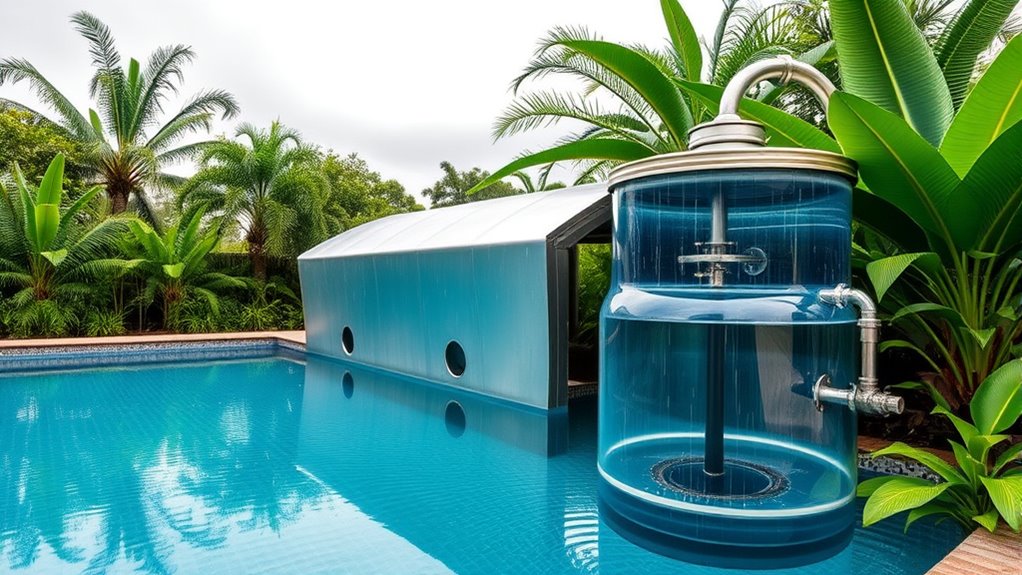
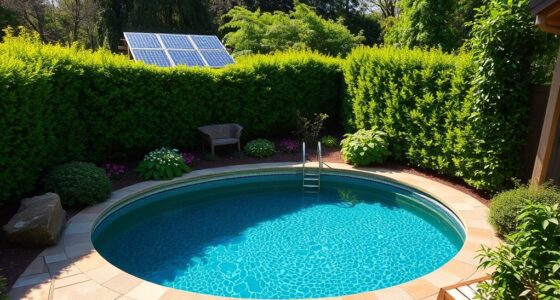
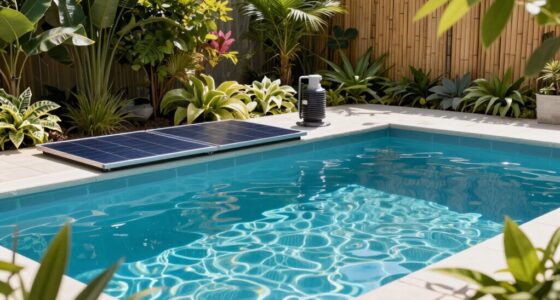
Rainwater harvesting offers an effective way to supplement your pool’s make-up water, reducing reliance on municipal supplies and lowering costs. By capturing rainwater from rooftops or other surfaces, you can create a sustainable source of water that helps manage your pool’s water levels efficiently. This approach not only minimizes your dependence on treated water but also aligns with broader stormwater management efforts. When you implement rainwater harvesting, you’re actively contributing to water conservation strategies that benefit both your household and the environment.
Rainwater harvesting reduces costs and supports sustainable water management for your pool.
Stormwater management is a key benefit of collecting rainwater for your pool. Instead of letting rainwater run off your property and potentially cause erosion or flooding, you channel it into storage tanks. This reduces stormwater runoff, which can carry pollutants into local water bodies. By doing so, you’re helping to improve local water quality and reduce strain on municipal drainage systems during heavy rains. Properly designed rainwater harvesting systems also lessen the risk of water pooling around your foundation, protecting your property from water damage.
Incorporating rainwater harvesting into your water conservation strategies makes your pool maintenance more sustainable. It’s a practical way to save water, especially during drought-prone seasons or in areas with limited municipal water supplies. Using harvested rainwater for your pool means you’re conserving potable water for drinking and household needs. Plus, it reduces your water bills, making your pool upkeep more economical over time. To maximize the benefits, you should ensure your collection system includes filters to keep debris out of the storage tanks and consider installing a first-flush diverter to discard initial runoff that might contain pollutants.
When designing your rainwater harvesting setup, think about the size of your catchment area and the capacity of your storage tanks. Larger roofs can collect more rainwater, but you’ll need appropriately sized tanks to store it. Regular maintenance is essential to keep the system functioning properly. Clean gutters, check filters, and inspect tanks periodically to prevent algae growth or mosquito breeding. Additionally, understanding vertical storage solutions can help optimize space and improve efficiency in your setup. With proper planning and upkeep, your rainwater harvesting system can reliably supply your pool with make-up water, considerably reducing your environmental footprint.
rainwater harvesting system for pools
As an affiliate, we earn on qualifying purchases.
As an affiliate, we earn on qualifying purchases.
Frequently Asked Questions
What Is the Optimal Storage Capacity for Rainwater Tanks?
You should choose a tank size based on your local rainfall patterns and your pool’s water needs. For ideal tank sizing, perform a capacity calculation considering your area’s average rainfall and evaporation rate. Typically, a capacity of at least 1,000 gallons suffices for a standard pool, but larger tanks ensure consistent supply during dry periods. Adjust the capacity calculation to match your specific climate and usage to maximize efficiency.
How Often Should I Clean My Rainwater Harvesting System?
You should clean your rainwater harvesting system at least twice a year to guarantee filter maintenance and prevent algae growth. Regular cleaning removes debris and buildup, maintaining water quality for pool make-up water. Inspect and clean the gutters, screens, and filters thoroughly to prevent clogs. If your system experiences heavy rainfall or debris, consider more frequent cleanings to keep algae at bay and ensure peak system performance.
Are There Legal Restrictions on Rainwater Harvesting in My Area?
You should check your local regulations to guarantee legal compliance with rainwater harvesting. Many areas have specific rules regarding collection, storage, and usage of rainwater, especially for pool make-up water. Contact your local government or water authority to find out about restrictions or permits needed. Staying informed helps you avoid fines and ensures your rainwater harvesting system operates within legal boundaries.
Can Rainwater Harvesting Reduce My Pool’s Chemical Usage?
Yes, rainwater harvesting can reduce your pool’s chemical usage by providing a source of water with high rainwater purity. By using harvested rainwater, you help maintain your pool’s chemical balance naturally, decreasing the need for harsh chemicals. Just guarantee the rainwater is properly filtered and treated before adding it to your pool. This approach keeps your pool cleaner, safer, and more environmentally friendly while lowering chemical costs.
What Are the Costs Associated With Installing a Rainwater System?
You’ll want to do a thorough cost analysis before installing a rainwater system, as initial setup costs vary widely. Expect to spend on components like gutters, filters, storage tanks, and pumps. Don’t forget maintenance expenses—they include cleaning, filter replacements, and system inspections. While the upfront investment might seem high, over time, reduced water bills and environmental benefits could make it a smart, cost-effective choice.
rainwater collection filters and diverters
As an affiliate, we earn on qualifying purchases.
As an affiliate, we earn on qualifying purchases.
Conclusion
By harvesting rainwater for your pool’s make-up water, you not only save on utility bills but also reduce your environmental impact. Did you know that capturing just 1 inch of rain over a 1,000-square-foot area can yield around 623 gallons of water? This simple method helps you be more sustainable and cost-effective. So, consider installing a rainwater harvesting system—your pool and the planet will thank you!
rainwater storage tanks for pool make-up water
As an affiliate, we earn on qualifying purchases.
As an affiliate, we earn on qualifying purchases.
gutter mounted rainwater diverter
As an affiliate, we earn on qualifying purchases.
As an affiliate, we earn on qualifying purchases.
Fall Picks
fall essentials
As an affiliate, we earn on qualifying purchases.