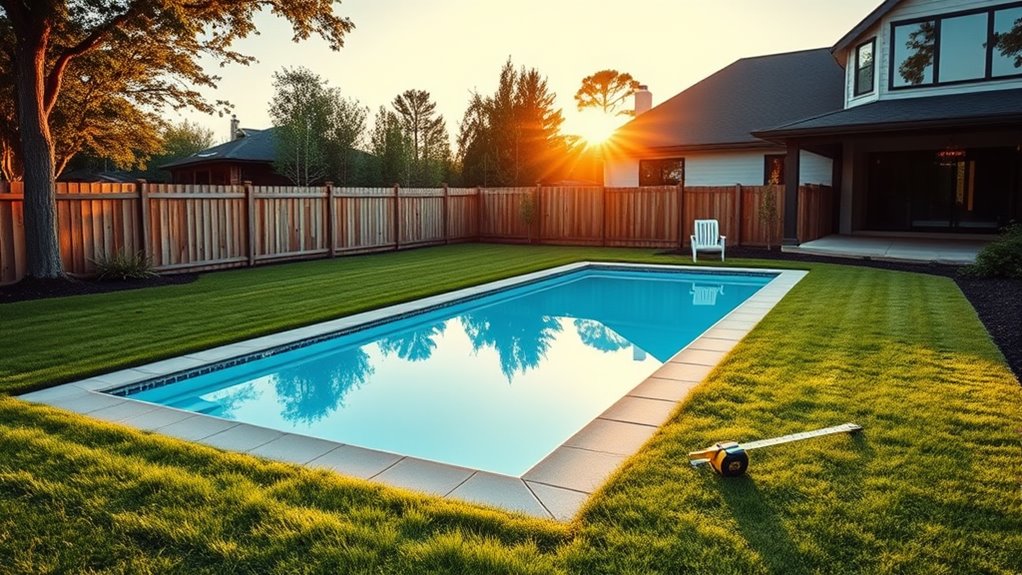

When installing a pool, it’s important to follow local zoning laws and setback requirements to stay compliant and ensure safety. Typically, you’ll need to keep your pool a certain distance from property lines, structures, and underground utilities, often around 10 feet, but rules vary. Fencing regulations, including height and safety gates, are usually mandated to prevent accidents. To keep your project on track, learn more about your area’s specific rules and restrictions.

Get pool and patio gear delivered free with Prime
- Fast, free delivery on millions of items
- Prime Video, Amazon Music and more included
- Member-only deals all year
Key Takeaways
- Zoning laws regulate pool placement, height, and fencing to ensure safety and neighborhood harmony.
- Setback requirements specify minimum distances from property lines and structures, typically around 10 feet.
- Pool fencing must meet local standards, including height, self-closing gates, and alarms to prevent accidental drownings.
- Water safety regulations often mandate alarms, covers, and lockable gates for enhanced security.
- Non-compliance can result in fines, legal issues, or mandated modifications, emphasizing the importance of local regulation adherence.
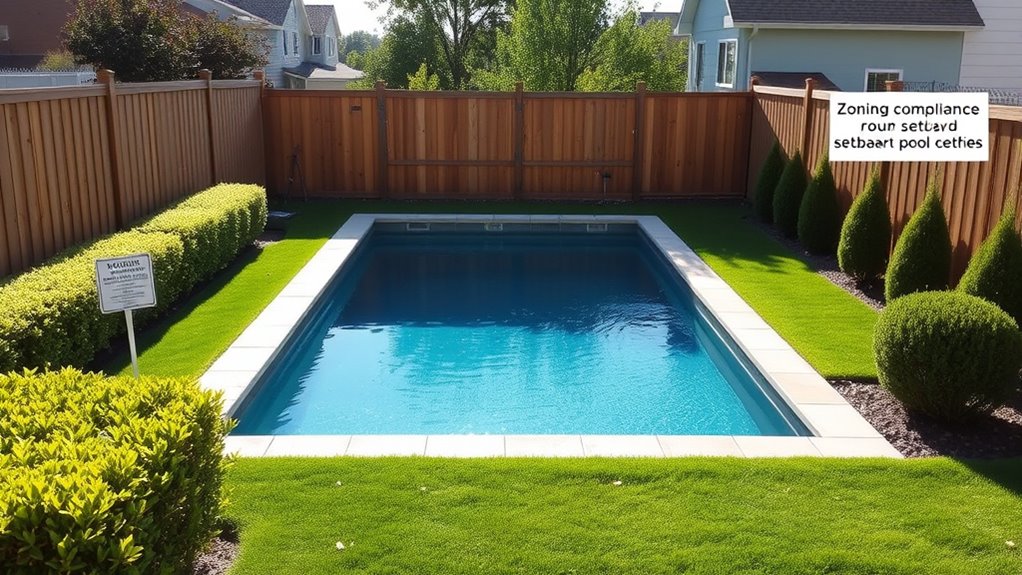
Installing a pool on your property involves more than just digging a hole and filling it with water; zoning laws and setback requirements play a vital role in the process. These regulations are designed to guarantee safety, proper neighborhood aesthetics, and compliance with local government standards. Before you start digging, you need to understand the rules surrounding pool fencing and water safety. Pool fencing isn’t just a matter of style; it’s a paramount safety feature mandated by many jurisdictions to prevent accidental drownings, especially for households with children or pets. Local codes often specify the height, type, and location of fencing, ensuring that your pool area is secure and inaccessible to unauthorized or curious individuals. Ignoring these rules can lead to costly fines or the requirement to dismantle or modify your fencing later.
Setback requirements are equally important. Setbacks determine how far your pool must be from property lines, buildings, septic tanks, and other structures. These distances vary from one municipality to another but are generally in place to maintain neighborhood harmony and safety. For example, you might need to place your pool at least 10 feet away from your property line or existing structures. These setbacks prevent your pool from encroaching on neighbors’ property rights and help avoid disputes. They also guarantee that emergency services can access your property if needed and that your pool doesn’t interfere with underground utilities or drainage systems. Additionally, understanding local water safety regulations is essential to ensure full compliance and safety for all users.
Understanding water safety regulations is vital as well. Aside from fencing, some localities require pool alarms, safety covers, or lockable gates to minimize risks. These rules are there to protect everyone, especially young children who might accidentally wander into an unprotected pool area. Installing a compliant fence with self-closing gates and alarms isn’t just about following the law; it’s about creating a safe environment for your family and visitors. When planning your pool, take the time to research specific local requirements, as violating these can lead to legal issues or the need for costly modifications later.
pool safety fencing with self-closing gates
As an affiliate, we earn on qualifying purchases.
As an affiliate, we earn on qualifying purchases.
Frequently Asked Questions
Are There Any Exceptions to Setback Requirements for Existing Structures?
Yes, there are exceptions to setback requirements for existing structures. If you install pool fencing, it may be permitted closer to property lines or existing structures, depending on local rules. You should check with your local authorities, as some jurisdictions permit modifications or waivers for existing structures to ensure safety and compliance. Always verify specific regulations to avoid violations when planning your pool and fencing around property lines.
How Do Zoning Laws Differ Between Residential and Commercial Pools?
Think of residential pools as your private oasis and commercial pools as community hubs. Zoning laws for residential pools focus on pool safety and water conservation, often with relaxed setbacks and size limits. In contrast, commercial pools face stricter regulations, requiring larger setbacks, safety measures, and water management plans. These differences guarantee safety and sustainability, whether you’re enjoying your backyard or sharing a swim with the public.
Can I Apply for a Variance to Reduce Setback Distances?
Yes, you can apply for a variance to reduce setback distances, but you’ll need to demonstrate that doing so still maintains pool safety and fencing requirements. Contact your local zoning office to understand their specific process, submit a formal application, and provide reasons why the variance is necessary. Keep in mind, the goal is to guarantee your pool remains secure and compliant with safety standards while considering your property’s unique features.
Are There Specific Regulations for Underground vs. Above-Ground Pools?
Think of underground and above-ground pools as different breeds of the same family tree; each has its own rules. You must follow specific regulations for pool safety, including fencing requirements, regardless of type. Underground pools often require deeper setbacks and more robust fencing, while above-ground pools usually have fewer restrictions. Always verify local codes to ensure your pool complies with safety standards and fencing guidelines for your property.
How Long Does the Permitting Process Typically Take?
The permit timeline for pool installation usually takes between one to four weeks, depending on your local approval process. You should submit your application promptly, provide all required documentation, and stay in contact with authorities. Factors like completeness of your paperwork and local workload can influence the process length. By staying organized and responsive, you can help ensure a smoother, quicker approval process for your pool permit.
As an affiliate, we earn on qualifying purchases.
Conclusion
Guiding zoning laws and setbacks may seem like a gentle nudge in the right direction, guiding your pool project toward harmony with your surroundings. Embrace these guidelines as a friendly framework that guarantees your backyard oasis enhances your home without intruding on neighbors’ peace. By respecting these subtle boundaries, you’re creating a space that’s not only beautiful and functional but also considerate of the community. After all, a well-planned pool is a true asset for everyone to enjoy.
above ground pool covers with lockable features
As an affiliate, we earn on qualifying purchases.
As an affiliate, we earn on qualifying purchases.
As an affiliate, we earn on qualifying purchases.
Columbus Day / Indigenous Peoples' Day Picks
long weekend sales
As an affiliate, we earn on qualifying purchases.