Suction side cleaners connect to your pool’s skimmer or dedicated line, using the pump’s suction to vacuum debris and clean surfaces effectively. Pressure side cleaners attach to a pressure port, utilizing pressurized water to propel themselves around the pool and collect debris. The main difference is how they use hydraulic power: suction cleaners rely on low-pressure vacuum, while pressure cleaners depend on high-pressure water flow. Continue exploring to understand how these hydraulics impact performance and maintenance.

Get pool and patio gear delivered free — and shop member deals
- Fast, free delivery on millions of items
- Access to Prime Big Deal Days deals on October 6–7
- Prime Video, Amazon Music and more included
Key Takeaways
- Suction side cleaners use the pool pump’s vacuum pressure to collect debris, while pressure side cleaners rely on pressurized water from the pump.
- Hydraulic efficiency affects cleaning power: suction cleaners depend on strong vacuum flow, pressure cleaners depend on consistent pressurized water flow.
- Suction cleaners attach to skimmers or dedicated lines, creating a vacuum that pulls debris, whereas pressure cleaners connect to a return jet and use water pressure for movement.
- Proper pump performance and hydraulic flow are crucial for both types, impacting debris pickup, navigation, and overall cleaning effectiveness.
- Maintenance issues like clogged filters or air leaks can reduce hydraulic efficiency, impairing both suction and pressure cleaner performance.
automatic pool cleaner suction side
As an affiliate, we earn on qualifying purchases.
As an affiliate, we earn on qualifying purchases.
What Are Suction Side and Pressure Side Pool Cleaners?
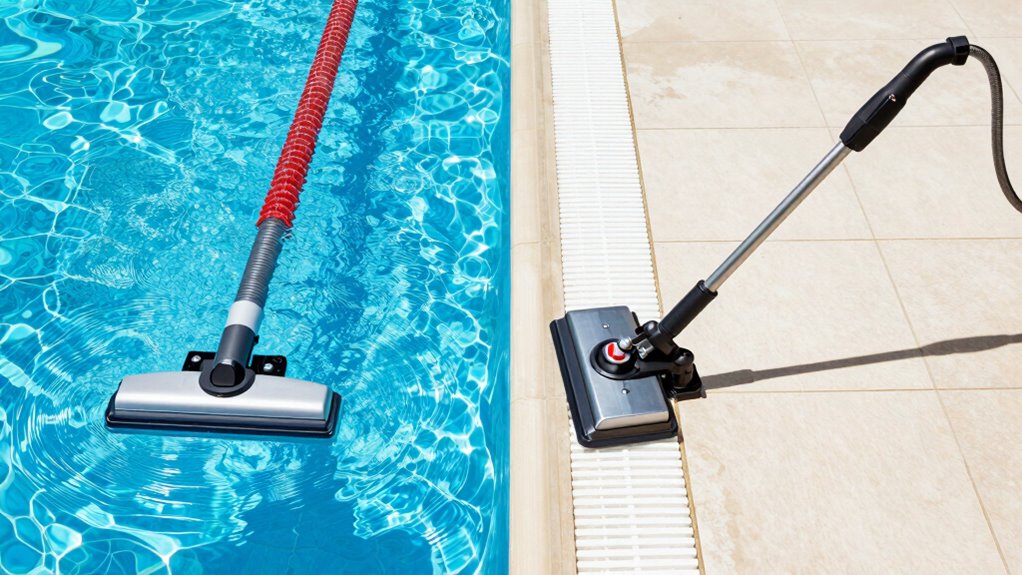
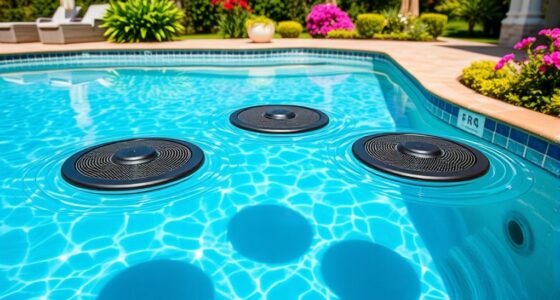
Suction side and pressure side pool cleaners are two common types of automatic pool cleaning equipment, each operating differently to keep your pool spotless. Suction side cleaners attach to your pool’s skimmer or dedicated suction line, relying on suction pressure to generate the hydraulic force needed for cleaning. They typically have better hydraulic efficiency because they use existing pool pump power without extra energy. These cleaners use your pool’s suction pressure to move and vacuum debris from the pool floor and walls. Pressure side cleaners, on the other hand, connect to a dedicated pressure port and use pressurized water to propel themselves around the pool. Both types depend on hydraulic principles, but their efficiency and cleaning mechanisms differ considerably. Understanding these differences is key to choosing the right cleaner for your pool’s needs. Additionally, factors like hydraulic efficiency significantly influence the overall cleaning performance and energy consumption of each system. Recognizing the hydraulic principles behind each cleaner can help optimize their operation and improve cleaning results. A clear understanding of system design can also assist in troubleshooting and maintenance to ensure optimal performance.
As an affiliate, we earn on qualifying purchases.
How Do Hydraulic Systems Power Pool Cleaners?
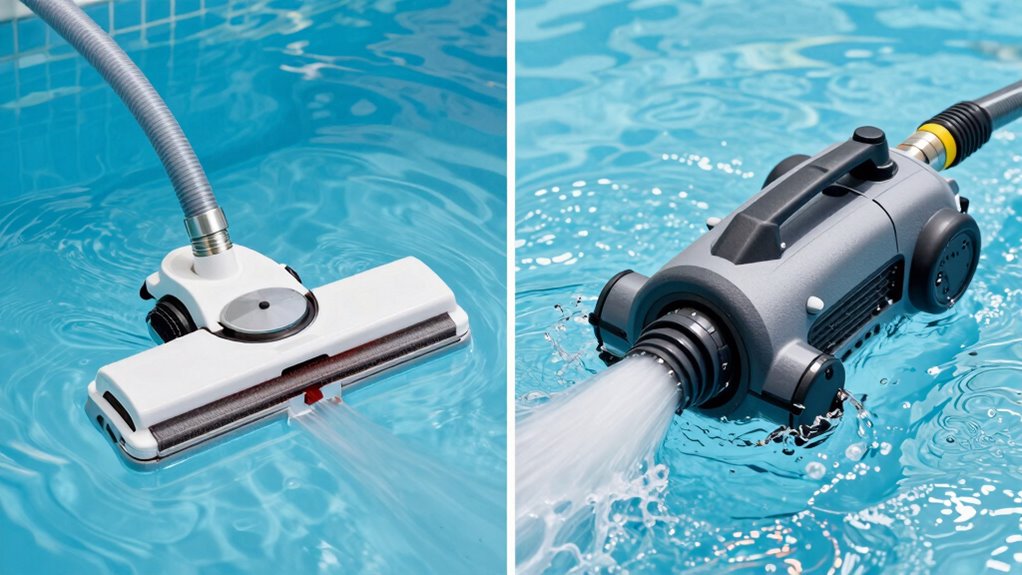
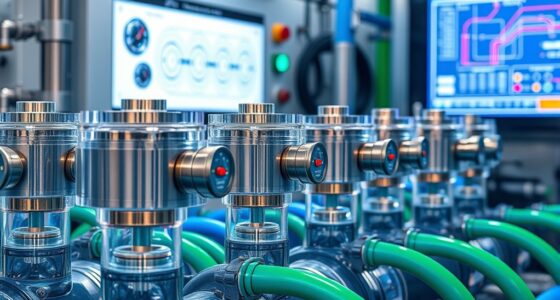
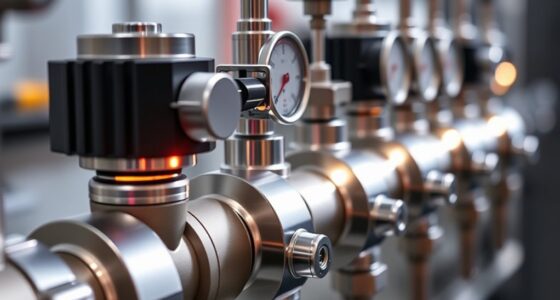
Hydraulic systems are the driving force behind how pool cleaners move and operate. They use hydraulic fluid to transfer energy from the pump to various parts of the cleaner, creating the movement needed to scrub and pick up debris. The pump’s efficiency directly impacts the power delivered through the hydraulic system, determining how effectively the cleaner operates. When the pump runs smoothly and efficiently, it generates consistent hydraulic pressure, which energizes the cleaner’s mechanisms. This ensures proper movement and debris removal without wasting energy. Hydraulic systems are designed to optimize this flow, providing reliable power to pool cleaners. By understanding how hydraulic fluid and pump efficiency work together, you can better appreciate the hydraulic power behind these cleaners’ performance. Additionally, the hydraulic system components work together to ensure fluid flow remains steady and responsive under various operating conditions. A well-maintained hydraulic system relies on the pump’s performance to sustain optimal pressure levels and prevent system failures. Maintaining the hydraulic fluid quality is also essential to ensure consistent operation and prevent component wear. Proper fluid flow regulation is vital for maintaining system stability and efficiency during operation.
pool vacuum cleaner hydraulic system
As an affiliate, we earn on qualifying purchases.
As an affiliate, we earn on qualifying purchases.
How Do Pressure Side Cleaners Use Hydraulic Pressure Differently?
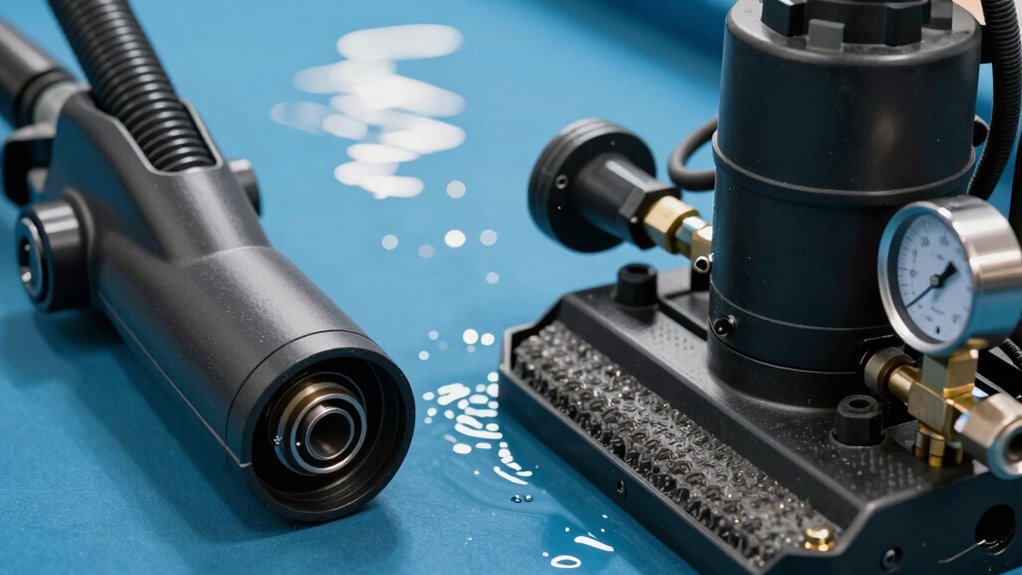
Pressure side cleaners utilize hydraulic pressure differently by harnessing the flow of water from the pool’s filtration system to power their movement and debris collection. They rely on hydraulic efficiency to maximize performance, ensuring the water pressure is used effectively without waste. These cleaners often feature pressure modulation, allowing you to control and adjust the pressure flow to optimize cleaning speed and force. By managing hydraulic pressure precisely, they can navigate complex pool shapes and handle larger debris with ease. Unlike suction cleaners, pressure side models don’t depend solely on vacuum power; instead, they utilize controlled water flow to enhance cleaning capabilities. This method provides consistent operation while conserving energy, making pressure modulation a key component of their hydraulic system. Understanding hydraulic flow dynamics can help optimize their operation for even better cleaning results. Additionally, the design of hydraulic components plays a vital role in maintaining efficiency and durability over time.
As an affiliate, we earn on qualifying purchases.
How Water Flows and Sucks in Pool Cleaners
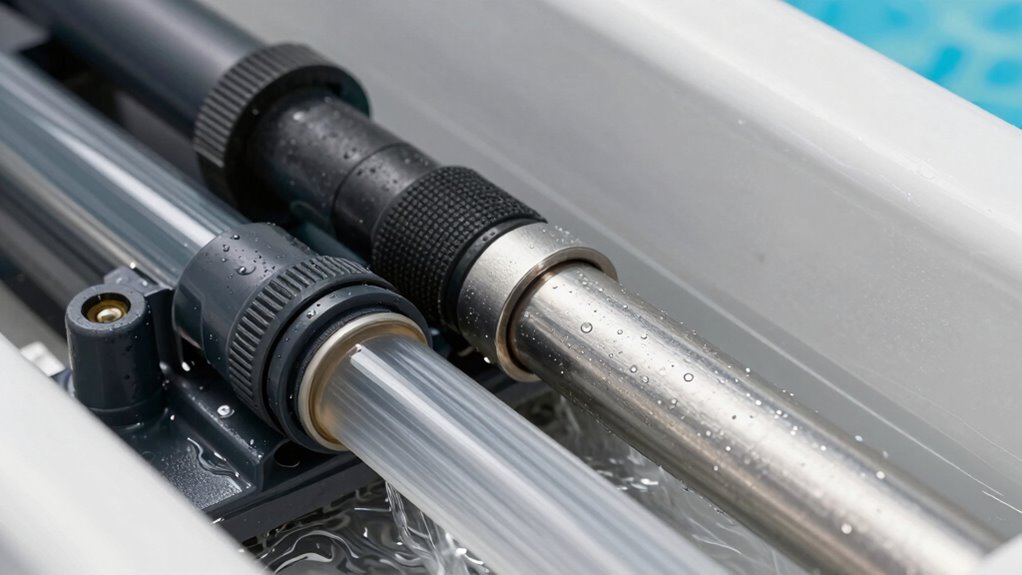
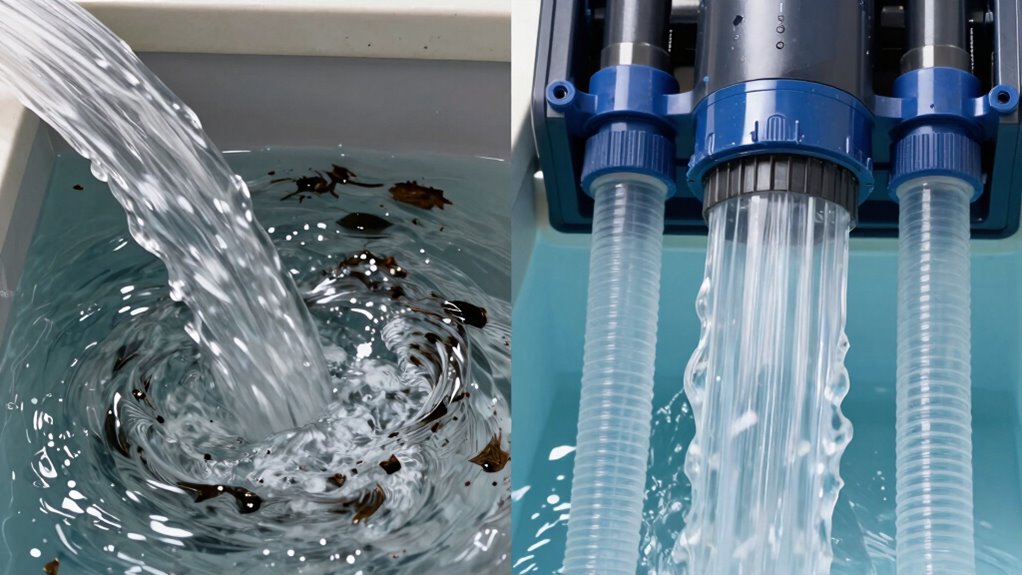
Understanding how water flows is key to choosing the right cleaner. Suction side cleaners pull water through their hoses, creating a vacuum that lifts debris. Pressure side cleaners, on the other hand, use pressurized water to move and collect dirt efficiently. Additionally, Free Floating technology allows some pool cleaners to move more naturally across the pool surface, improving cleaning coverage. Recognizing hydraulic principles helps in selecting a cleaner that matches your pool’s specific needs. Knowing how water dynamics work can optimize your cleaning strategy and ensure better results. Mastering fluid movement concepts can further enhance your understanding of pool cleaning effectiveness, especially when considering system efficiency for optimal performance.
Water Flow Mechanics
Water flow mechanics in pool cleaners rely on how water moves through their systems to effectively pick up debris. Proper flow guarantees ideal filter efficiency and smooth operation. To achieve this, consider these key points:
- Water enters through intakes, driven by the motor design, creating the necessary suction or pressure.
- The motor’s efficiency influences flow rate and debris removal, affecting overall cleaning performance.
- Cleaners must maintain consistent water flow to prevent clogs and maximize filter efficiency, ensuring debris is captured without restricting movement.
Suction vs Pressure
Pool cleaners operate using two main methods: suction and pressure systems, each moving water differently to collect debris. In a suction cleaner, the hydraulic fluid is drawn through the system by the pump, creating a strong vacuum that sucks debris into the filter. This method relies heavily on pump efficiency to generate sufficient suction power. Conversely, pressure cleaners use a high-pressure jet of water to propel the cleaner forward, with water expelled through jets to lift debris from surfaces. The pump in pressure systems maintains the hydraulic fluid at high pressure, ensuring consistent movement. Both systems depend on ideal pump performance to maximize hydraulic fluid flow, which directly impacts their ability to operate effectively and efficiently. Pump performance is vital for maintaining optimal flow rates and ensuring debris is removed effectively. Additionally, pump efficiency plays a crucial role in determining the overall effectiveness of each system, emphasizing the importance of a well-maintained pump. Proper maintenance of the pump can significantly enhance hydraulic fluid flow, leading to better cleaning results and longer equipment lifespan. Understanding these differences helps you choose the right cleaner for your pool.
How Debris and Surfaces Are Handled by Each Cleaner Type
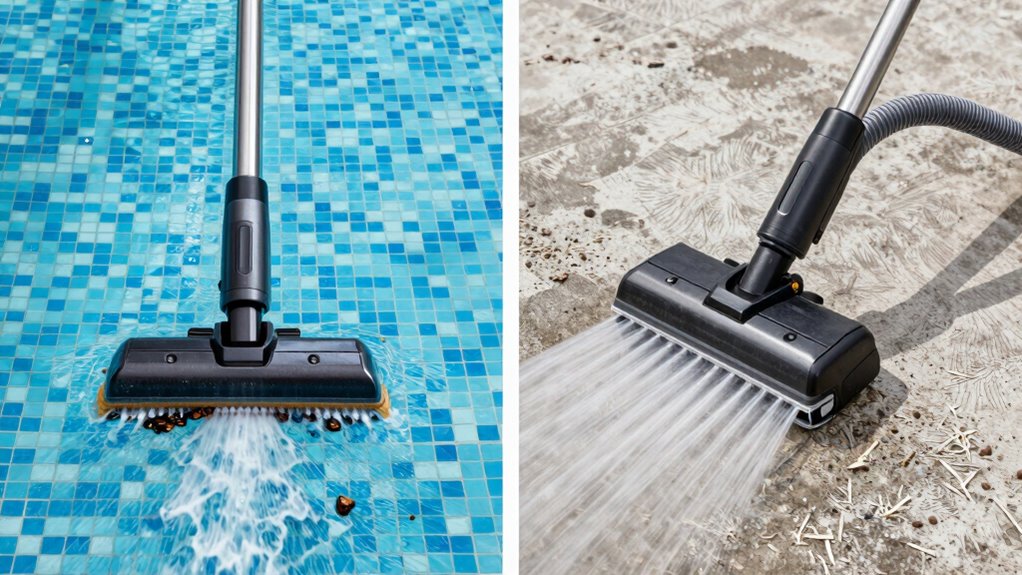
Suction side cleaners typically pick up debris directly from the pool floor and walls by creating a strong vacuum, efficiently pulling in leaves, dirt, and small particles. For debris collection and surface cleaning, they excel in specific ways:
- Large debris removal: They handle leaves and bigger debris effectively, preventing clogs.
- Fine particle pickup: They pick up dirt and small particles for thorough cleaning.
- Surface coverage: They ensure consistent cleaning of the pool floor and walls, reaching nooks and crannies.
This targeted debris collection makes suction cleaners ideal for maintaining surface cleanliness. They focus on surface cleaning by removing debris from pool surfaces, ensuring a clean, clear pool. While not as effective for complex surfaces, they excel at basic debris removal and surface maintenance.
Which Hydraulic System Is Better for Large or Complex Pools?
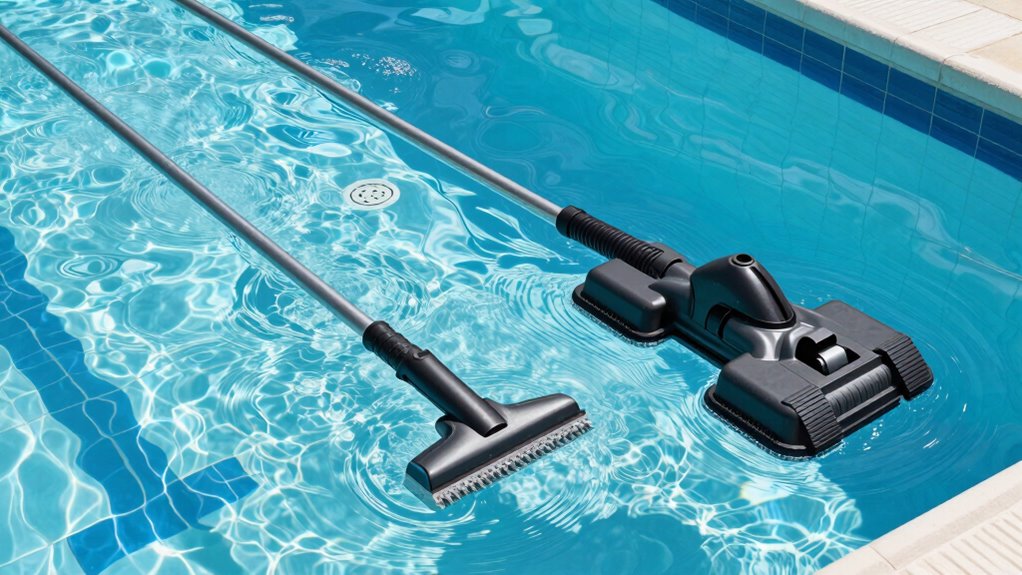
When choosing a hydraulic system for large or complex pools, you need to take into account how well it can handle intricate surfaces and extensive areas. Pressure regulation becomes essential here, ensuring consistent cleaning performance across diverse surfaces. A system that uses hydraulic fluid effectively maintains steady pressure, allowing the cleaner to adapt to tight corners or uneven terrain without losing power. For large pools, a hydraulic system with superior pressure regulation offers better coverage and efficiency, reducing the need for manual intervention. Complex pools with varied surfaces demand a system that can maintain ideal pressure throughout the entire area. Ultimately, the right hydraulic system enhances performance by providing reliable, balanced pressure, making it better suited for large or intricate pool designs.
Common Hydraulic Problems and How to Fix Them
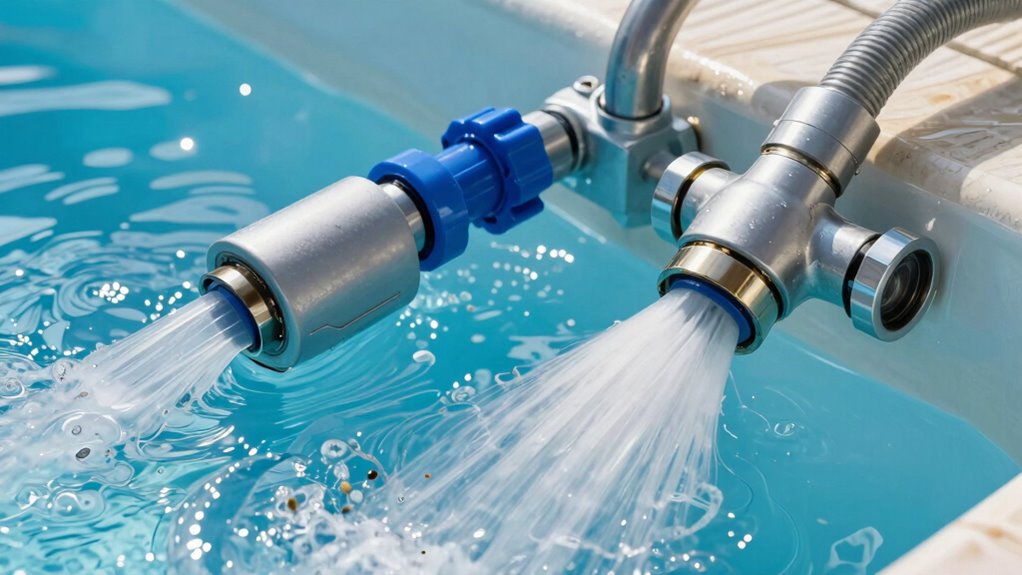
Hydraulic systems can experience issues that disrupt their performance, but most problems are fixable with some troubleshooting. Common issues include low hydraulic fluid levels, which reduce pump efficiency, air leaks that cause cavitation, and clogged filters restricting flow. To fix these problems:
Hydraulic issues like low fluid levels, leaks, or clogged filters can be easily fixed with routine checks.
- Check and top off hydraulic fluid regularly to maintain proper levels.
- Inspect all fittings and hoses for leaks and tighten or replace as needed.
- Clean or replace filters to guarantee unobstructed flow and ideal pump efficiency.
Cost and Maintenance Tips Based on Hydraulic Design
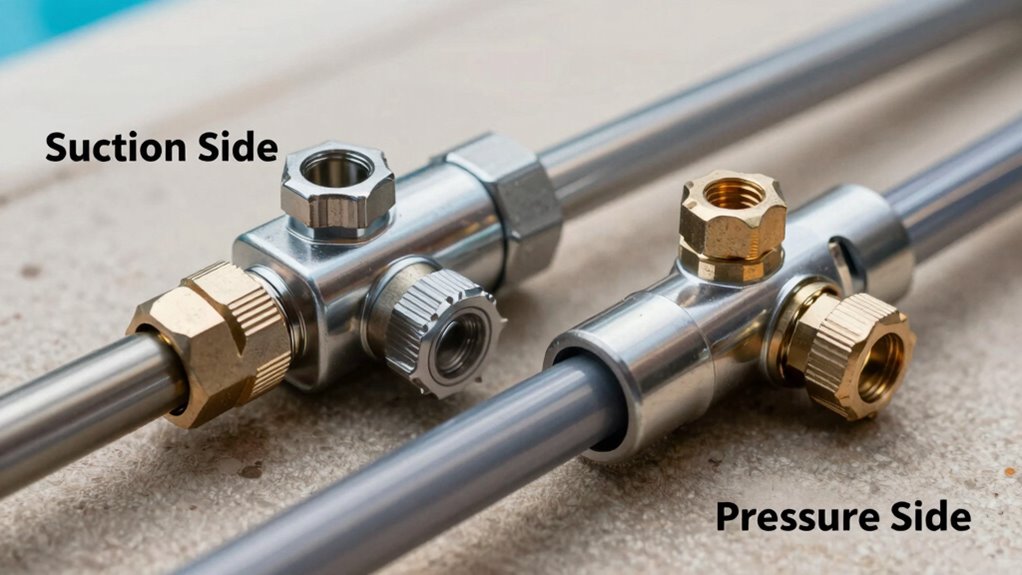
Understanding the hydraulic design of your system is key to managing costs and simplifying maintenance. A well-designed system minimizes hydraulic fluid waste, reducing operating expenses. Regular pump maintenance is essential; check for leaks, wear, and proper lubrication to keep performance at its best. Properly sized pumps prevent overworking, which can lead to higher energy bills and faster component wear. Keep an eye on hydraulic fluid levels and quality—contaminated fluid can cause damage and increase repair costs. Using the right type of hydraulic fluid ensures smooth operation and extends component lifespan. Simplifying your system’s hydraulic layout reduces the risk of blockages and pressure drops, lowering maintenance needs. By focusing on hydraulic design, you can reduce downtime, save money, and guarantee your cleaner operates reliably over time.
Choosing the Right Pool Cleaner: How Hydraulics Affect Performance
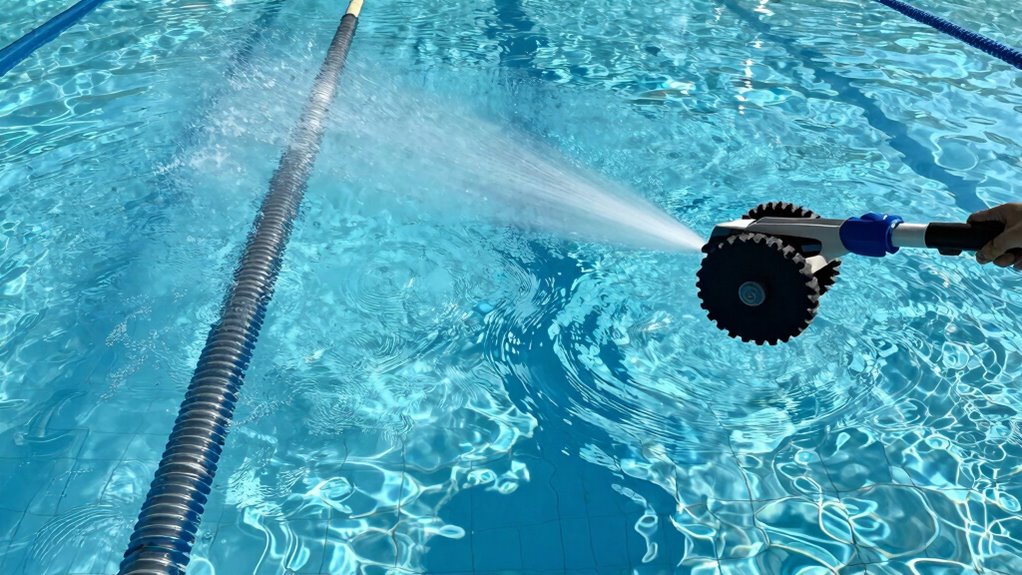
Understanding how hydraulics influence your pool cleaner’s performance is key to making the right choice. Factors like suction power, pressure regulation, and compatibility directly impact cleaning efficiency. By considering these points, you can select a cleaner that works best for your pool’s specific needs.
Suction Power Dynamics
The way a pool cleaner uses suction directly impacts its ability to pick up debris effectively. Suction power dynamics depend on how well hydraulic fluid flows through the system, influenced by pressure sensors that maintain ideal pressure levels. If pressure sensors aren’t calibrated correctly, suction weakens, reducing debris pickup. To maximize suction power, consider these factors:
- Properly balanced water flow ensures steady hydraulic fluid movement.
- Maintaining clean filters prevents pressure drops that diminish suction.
- Regularly inspecting pressure sensors guarantees accurate readings, keeping suction consistent.
Understanding how these elements interact helps you select a cleaner with reliable suction. A system with well-maintained hydraulics delivers consistent debris removal, making your pool cleaner more effective and efficient.
Pressure Regulation Benefits
Proper pressure regulation in your pool cleaner ensures ideal performance by maintaining consistent hydraulic flow. When pressure stays steady, your cleaner operates smoothly, reducing strain on components and maximizing cleaning efficiency. This stability also helps protect filter types by preventing sudden pressure spikes that can damage them over time. With well-regulated pressure, you’ll find that your filter needs less frequent maintenance, as debris is managed more evenly without clogging or overload. Regularly following maintenance schedules ensures your pressure regulation system remains effective, preventing flow disruptions that could compromise cleaning performance. Ultimately, good pressure regulation means fewer breakdowns, longer-lasting equipment, and a cleaner pool with less effort on your part. It’s a simple way to optimize your cleaner’s hydraulics and prolong its lifespan.
Compatibility and Efficiency
Choosing the right pool cleaner depends heavily on how well it matches your pool’s hydraulic system. Compatibility affects overall efficiency, especially in how hydraulic fluid flows and how your pump operates. When selecting a cleaner, consider these factors:
- Hydraulic compatibility with your pool’s plumbing design to guarantee ideal flow.
- The impact on pump efficiency—some cleaners demand more flow, reducing overall performance.
- How well the cleaner leverages your existing hydraulic setup without causing pressure drops or flow restrictions.
A compatible cleaner maximizes hydraulic fluid movement, minimizes strain on your pump, and guarantees cleaning performance remains effective. Proper compatibility means fewer disruptions, better energy use, and longer equipment life—all essential for efficient pool maintenance.
Frequently Asked Questions
Which Cleaner Type Is More Environmentally Friendly?
You’ll find suction side cleaners generally more environmentally friendly because they use less energy, reducing their eco impact. They require fewer chemicals and operate at lower pressures, supporting sustainability aspects like water conservation and lower emissions. Pressure side cleaners can be less eco-friendly due to higher energy use and chemical demands. Consequently, if you prioritize sustainability, choosing a suction side cleaner helps minimize your environmental footprint.
How Does Pool Size Influence Cleaner Choice?
Your pool size greatly influences your cleaner choice because larger pools require more efficient cleaners to cover the area effectively. For bigger pools, pressure side cleaners often deliver better cleaner efficiency, as they handle debris more powerfully and quickly. Smaller pools can be effectively cleaned with suction side cleaners, which are typically more cost-effective and easier to maintain. Matching your pool size with the cleaner type ensures ideal cleaning performance and efficiency.
Can Hydraulic Issues Cause Long-Term Damage?
Hydraulic issues can be like a ticking time bomb, causing long-term damage if ignored. A faulty hydraulic system increases corrosion risk and weakens pool components over time. This can lead to leaks, reduced efficiency, and costly repairs. You should regularly inspect and maintain your system, as early intervention prevents extensive damage and keeps your pool running smoothly. Don’t wait until small issues turn into major problems.
Are There Safety Concerns With Hydraulic Pool Cleaners?
Yes, there are safety concerns with hydraulic pool cleaners. If hydraulic fluid leaks, it can pose health risks and environmental hazards. Always make certain your cleaner meets safety standards and regular maintenance is performed to prevent leaks. Use proper protective gear when handling hydraulic components, and keep the equipment in good condition. Following safety standards helps prevent accidents and ensures your pool cleaning remains safe for everyone.
How Does Maintenance Differ Between Suction and Pressure Cleaners?
Think of maintaining your pool cleaner like tending a garden—you need to prune and care for different parts. For suction cleaners, you’ll mainly check the filter and replace it regularly, ensuring smooth suction. Pressure cleaners require attention to their motor durability, as they often use more power. Regular filter replacement keeps them running efficiently, and inspecting the motor prevents costly repairs, making maintenance straightforward and effective for both types.
Conclusion
Think of your pool cleaner as a skilled gardener. The suction side is like a gentle hand pulling weeds, while the pressure side acts like a steady stream watering plants. Understanding these hydraulic differences helps you select the right tool to keep your pool pristine. By mastering this flow, you ensure your cleaner works smoothly—like a well-tended garden, your pool stays inviting and crystal clear with less effort.
Evergreen bestsellers Picks
bestsellers
As an affiliate, we earn on qualifying purchases.