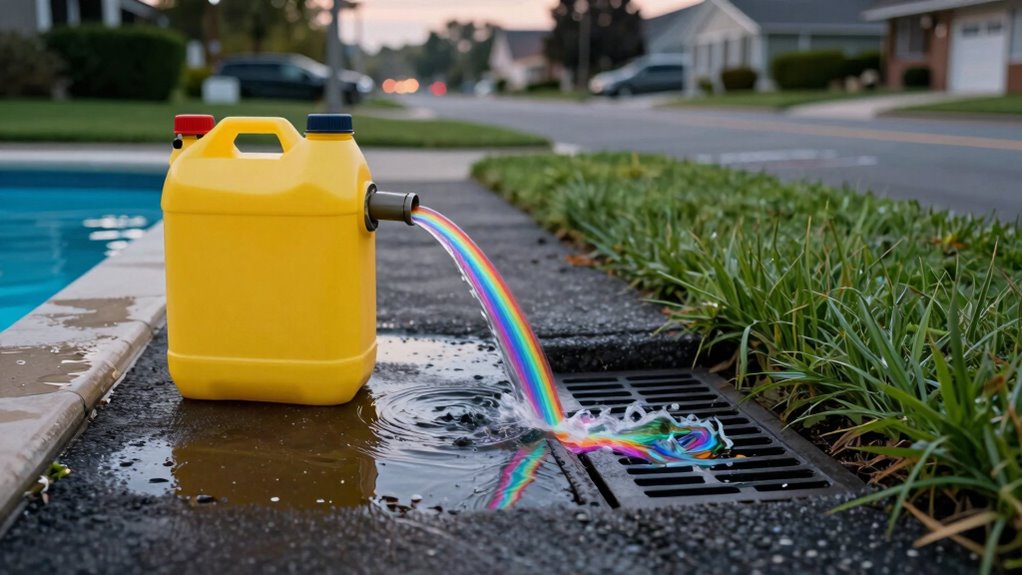

To prevent pool chemical runoff from reaching storm drains, always store chemicals securely away from runoff areas and avoid pouring them down drains. Maintain proper chemical levels through regular testing and clean filters to reduce excess. Use physical barriers like silt fences around your pool to catch runoff. Dispose of chemicals properly at authorized hazardous waste sites and never dump leftover water into storm drains. Keep these tips in mind to protect waterways and discover more effective practices.
Key Takeaways
- Store and handle pool chemicals securely to prevent leaks and spills that could wash into storm drains during storms.
- Avoid pouring chemicals directly into storm drains; dispose of them at authorized hazardous waste facilities following local regulations.
- Install physical barriers like silt fences or berms around pools to intercept runoff and prevent chemical entry into waterways.
- Regularly test and maintain pool water to minimize chemical overuse and reduce runoff potential.
- Educate community members on proper chemical storage, application, and disposal to promote environmentally responsible practices.
pool chemical storage containers
As an affiliate, we earn on qualifying purchases.
As an affiliate, we earn on qualifying purchases.
Why Pool Chemical Runoff Harms Our Waterways
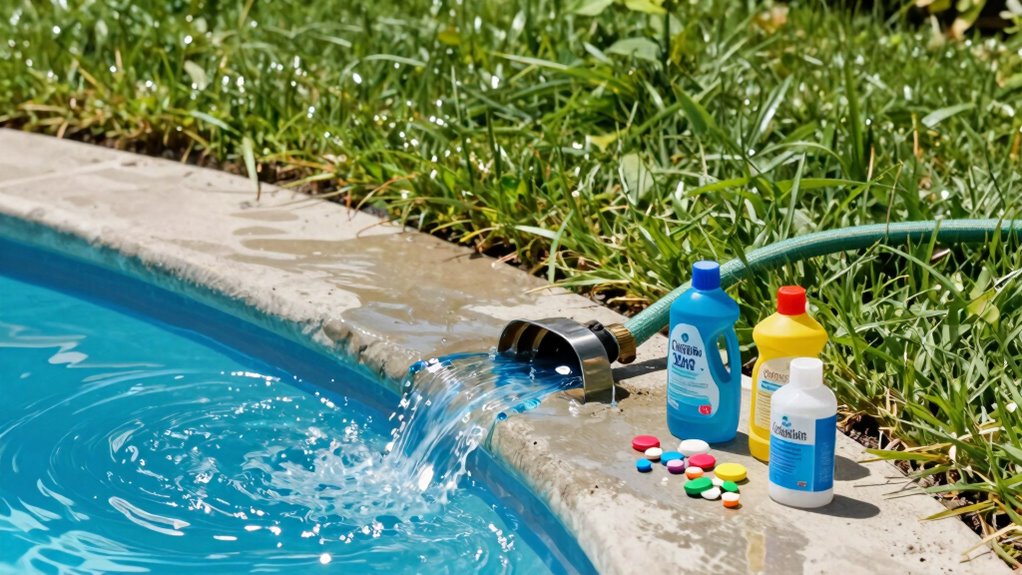
Pool chemicals often wash into nearby waterways after heavy rains or improper disposal, and this runoff can cause serious environmental problems. When chemicals like chlorine, algaecides, or pH adjusters enter lakes and rivers, they pose significant pool chemical hazards to aquatic life. These substances can disrupt ecosystems by harming fish, plants, and microorganisms essential for water health. Additionally, stormwater management practices influence how much chemical runoff reaches natural water bodies, emphasizing the importance of proper disposal. The environmental impact extends beyond aquatic habitats, affecting water quality and biodiversity. You might not realize that something meant to sanitize your pool can become a pollutant if it enters storm drains or runoff channels. Proper chemical handling and disposal practices are essential for minimizing environmental damage. Being mindful of how you handle and dispose of pool chemicals is key to minimizing their environmental impact, especially considering the role of runoff pathways in transporting pollutants. Implementing safe disposal methods can significantly reduce the risk of chemical contamination in local waterways.
As an affiliate, we earn on qualifying purchases.
How Pool Chemicals Can Enter Storm Drains and Waterways
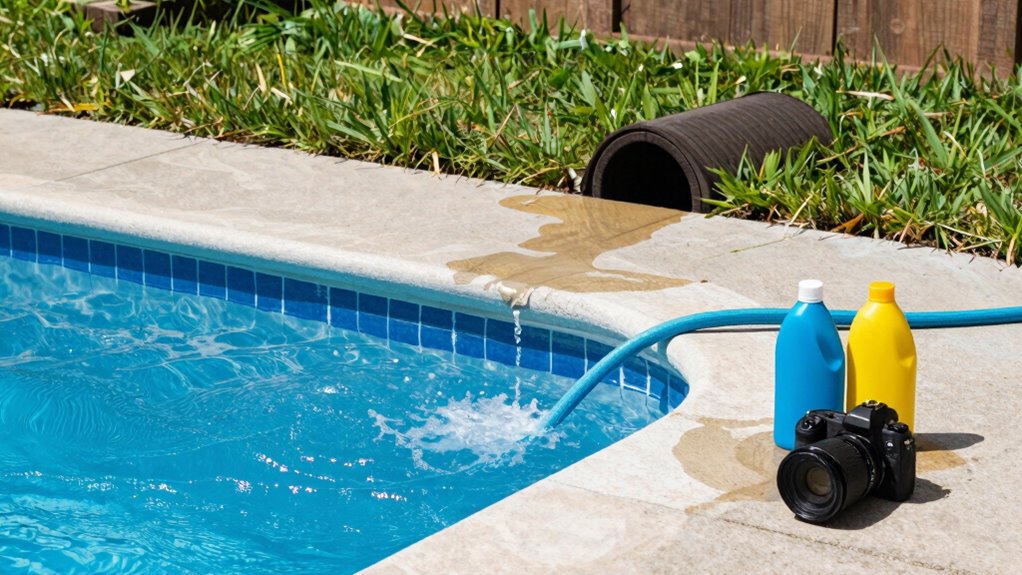
During heavy rains, chemicals used in pools can easily wash off surfaces and flow into storm drains. This runoff poses significant pool chemical dangers and can lead to storm drain contamination. You might not realize how quickly these chemicals spread, but here’s how it happens:
- Spilled or improperly stored chemicals can be carried away by rainwater.
- Over-application of pool chemicals causes excess that easily washes into drains.
- Deck runoff from splashes or rinsing chemicals can flow directly into storm drains.
- Unsecured containers or damaged pool covers allow chemicals to escape during storms.
- Free Floating debris or algae can also carry residual chemicals into waterways during rains. Additionally, stormwater management practices are often overlooked, increasing the risk of chemical runoff reaching waterways. Properly maintaining chemical storage areas can significantly reduce the likelihood of spills during storms. Implementing spill prevention measures is essential for protecting local water quality and minimizing environmental impact. Proper site assessment can help identify areas vulnerable to runoff and address potential hazards proactively.
Understanding these pathways helps you see how pool chemical dangers extend beyond your backyard, threatening local waterways. Preventing runoff is key to avoiding storm drain contamination and protecting the environment.
As an affiliate, we earn on qualifying purchases.
Easy Ways to Prevent Pool Chemical Runoff
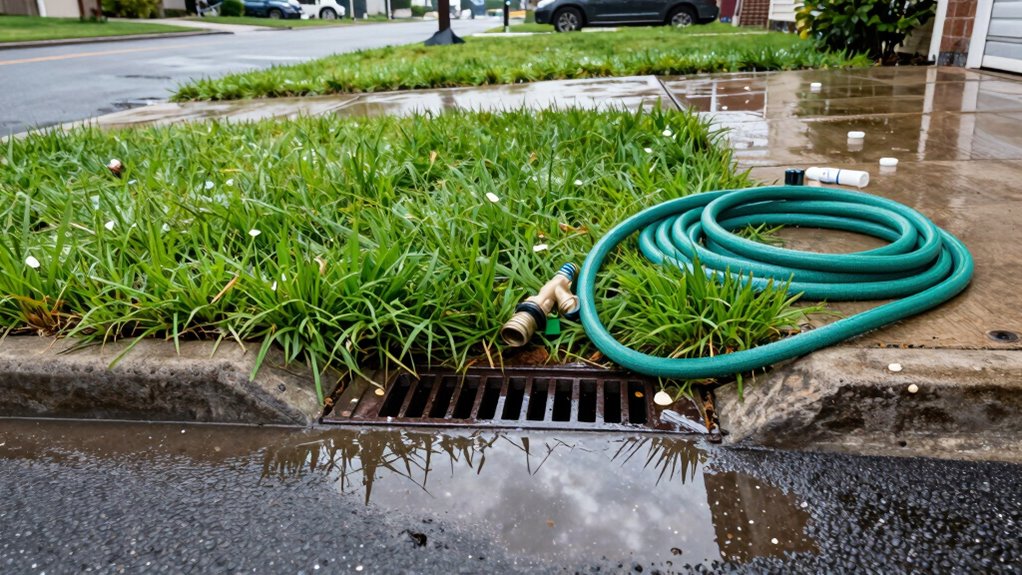
You can prevent pool chemical runoff by maintaining your pool properly and avoiding overuse of chemicals. Installing barriers around your pool helps block chemicals from reaching storm drains. Taking these simple steps makes a big difference in protecting nearby waterways. Additionally, ensuring your pool’s safety features, such as proper sensor calibration, can help prevent chemical imbalances that lead to runoff. Incorporating impact-conscious practices in pool management also supports sustainable water use. Being aware of water runoff prevention strategies can further reduce environmental impact and promote responsible pool maintenance. Understanding halal water use traditions encourages environmentally respectful practices.
Proper Pool Maintenance
To prevent chemical runoff from your pool, regular maintenance is essential. Properly maintaining your pool reduces excess chemicals that could wash into storm drains. Start with:
- Regular pool cleaning—skim debris and vacuum the bottom to keep water clear and prevent chemical imbalance.
- Consistent chemical balancing—test and adjust pH, chlorine, and alkalinity levels to avoid overuse of chemicals.
- Check filtration systems—ensure filters are clean and functioning properly to circulate water evenly.
- Monitor water levels—maintain proper levels to prevent over-chlorination or chemical spillage during refills.
- Use environmentally friendly products—opt for eco-friendly chemicals when possible to minimize environmental impact household products.
Use Barriers Effectively
Proper pool maintenance helps keep chemical levels balanced, but adding physical barriers can further prevent runoff from reaching storm drains. Effective barrier placement is key; position barriers around your pool’s perimeter or drainage areas to intercept runoff before it escapes. Choose barrier types suited to your landscape, such as silt fences, berms, or gravel beds, which can absorb or redirect chemicals. Make certain barriers are sturdy, properly anchored, and cover all potential runoff paths. Regularly inspect and maintain these barriers to keep them effective, especially after heavy rains or pool chemical treatments. Installing smart home safety devices like leak detectors or sensors can also alert you to potential runoff issues early, allowing for prompt action. Understanding environmental protection principles helps in selecting the most effective barrier systems for your property. By strategically placing the right barrier types, you create a physical shield that minimizes chemical runoff, protecting local waterways and complying with environmental standards.
As an affiliate, we earn on qualifying purchases.
How to Safely Dispose of Pool Chemicals and Water
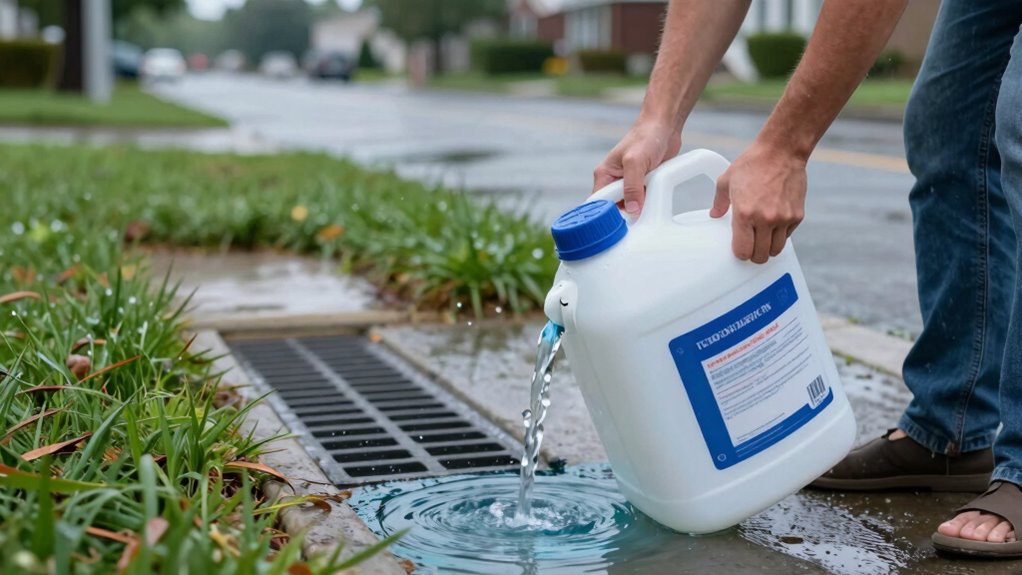
When disposing of pool chemicals and water, always dilute them first to reduce their concentration. Use proper containers and make sure they’re clearly labeled to prevent accidents. Be sure to follow your local regulations to guarantee you’re disposing of chemicals responsibly and safely. Additionally, consider consulting product roundups to find safer disposal tools and accessories for your pool chemicals. Proper disposal also involves understanding water runoff, so avoid pouring chemicals into storm drains to prevent environmental contamination.
Dilute Before Disposal
Before disposing of pool chemicals or water, it’s vital to dilute them thoroughly to minimize environmental harm. Proper dilution prevents harmful concentrations from reaching storm drains or waterways. To do this effectively:
- Start by adjusting the pH level, using pH adjustment techniques to balance the water.
- Slowly add water to chemicals, ensuring thorough mixing for proper chemical dilution.
- Continue diluting until the chemical concentrations are considerably reduced.
- Test the water to confirm that it’s safe and within local disposal guidelines.
Use Proper Containers
Using the right containers is essential to safely dispose of pool chemicals and water. Always transfer chemicals into specifically designed pool chemical containers, which are sturdy and clearly labeled. These containers help prevent spills and leaks, reducing the risk of chemical runoff that could contaminate storm drains. When disposing of pool water, use sealed, chemical-resistant containers to prevent accidental spills during transport. Proper containers also ensure that chemicals are stored securely until they can be taken to authorized disposal sites. Spill prevention is key—keeping chemicals contained minimizes the chance of leaks that could seep into the environment. Always inspect your containers for cracks or damage before use, and never mix chemicals in unapproved containers. The right containers make safe disposal straightforward and protect your surroundings.
Follow Local Regulations
Following local regulations is essential to guarantee you dispose of pool chemicals and water safely and legally. Doing so promotes pool safety and helps conserve water. First, check with your local waste management authority for specific disposal guidelines. Second, never pour chemicals directly into storm drains or natural water sources, as this can harm the environment. Third, consider draining water during times of low water demand to support water conservation efforts. Fourth, take unused or leftover chemicals to designated hazardous waste collection sites. By following these steps, you guarantee responsible disposal that protects your community and environment. Adhering to local regulations also helps avoid fines and supports sustainable pool safety practices. Proper disposal is key to preventing chemical runoff and safeguarding our water resources.
Tips for Communities to Protect Stormwater During Pool Season
During pool season, communities can considerably reduce stormwater pollution by implementing simple yet effective practices. Start by boosting community outreach and raising public awareness about the importance of preventing chemical runoff. Educate residents on proper chemical storage, application, and disposal, emphasizing that improper handling can contaminate storm drains and local water bodies. Encourage residents to use environmentally friendly alternatives and to cover pools when not in use to prevent chemical spills. Organize neighborhood workshops or distribute informational flyers to reinforce these messages. Partner with local organizations to spread awareness further. By fostering a well-informed community, you can markedly decrease the risk of pool chemicals entering stormwater systems, protecting local ecosystems and ensuring compliance with environmental best practices during peak swimming season.
Regulations and Resources for Pool Chemical Disposal
Are you aware of the regulations governing the proper disposal of pool chemicals in your area? Proper disposal is essential for pool safety and preventing environmental runoff. To start, always read chemical labels carefully—they contain disposal instructions. Next, check local regulations, as rules vary by location. Here are four key steps:
- Contact your local waste management authority for approved disposal methods.
- Never pour chemicals down storm drains or into water sources.
- Use designated hazardous waste collection events for chemical disposal.
- Store chemicals securely until disposal to prevent leaks or spills.
Following these guidelines ensures you’re disposing of pool chemicals responsibly, protecting both the environment and community health. Stay informed about regulations and resources to keep stormwater safe from runoff.
Frequently Asked Questions
Are There Eco-Friendly Alternatives to Traditional Pool Chemicals?
Yes, you can use eco-friendly chemicals and natural pool treatments instead of traditional chemicals. These options often include mineral-based sanitizers, saltwater systems, or enzyme treatments that naturally break down contaminants. By choosing eco-friendly chemicals, you reduce chemical runoff and help protect the environment. Natural pool treatments are effective, safer for swimmers, and sustainable, making them ideal for eco-conscious pool owners who want to maintain clean water without harming the planet.
How Do Weather Conditions Affect Chemical Runoff Risk?
Weather conditions considerably impact chemical runoff risk. Heavy rain increases storm impact, overwhelming drainage and causing pool chemicals to wash into storm drains. To prevent runoff, you should monitor weather forecasts and avoid adding chemicals before storms. Proper runoff prevention includes maintaining your pool and using eco-friendly chemicals, reducing the chance of harmful substances entering waterways during adverse weather. Stay vigilant to protect your local environment from chemical runoff risks.
Can Rainwater Wash Chemicals Into Groundwater?
Yes, rainwater can wash chemicals into groundwater, leading to contamination. When you leave chemicals like pool or lawn treatments exposed, rain can cause chemical leaching, which seeps into soil and travels downward. Over time, this process contaminates groundwater, risking environmental health and your well water quality. To prevent this, always store chemicals properly and avoid applying them before heavy rain, reducing the chances of chemical runoff and groundwater contamination.
What Are the Penalties for Improper Chemical Disposal?
You should know that improper chemical disposal can lead to hefty legal penalties—up to $75,000 per violation, depending on your location. In fact, over 80% of environmental violations involve chemical disposal issues. If you ignore proper disposal methods, authorities can fine you, shut down your operations, or even pursue criminal charges. Always follow local regulations to avoid these penalties and protect the environment from harmful runoff.
How Can I Inform Neighbors About Runoff Prevention?
You can inform neighbors about runoff prevention through effective neighbor communication and community outreach. Start by sharing informational flyers or hosting a neighborhood meeting to discuss the importance of keeping pool water out of storm drains. Use social media or neighborhood groups to spread awareness. Encouraging a collective effort helps everyone understand their role in protecting the environment and reduces chemical runoff risks in your community.
Conclusion
So, next time you’re tempted to dump leftover pool chemicals down the storm drain, remember: it’s the easiest way to keep waterways clean—by doing the opposite. Ironically, what seems like a quick fix can cause long-term harm to aquatic life and water quality. Instead, choose proper disposal methods and protect our environment. After all, it’s your responsibility to keep stormwater clear, even if it means taking a little extra time.