To estimate your pool’s water loss, measure the initial water level and track how much it drops over 24 hours. Subtract the amount lost from evaporation, which you can confirm with a bucket test. If the level drops more than usual, you might have a leak. Knowing this formula helps you plan refills, conserve water, and prevent costly repairs. Want to keep your pool in top shape? Keep going for all the key details.
Get ready for Prime Big Deal Days — try Prime free
Exclusive member deals on October 6–7, plus fast free delivery. Cancel anytime.
As an affiliate, we earn on qualifying purchases.
Key Takeaways
- Measure water loss by comparing the drop in pool water level to the bucket test results over 24 hours.
- Calculate evaporation rate using the formula: Water Loss Rate = (Pool Level Drop – Bucket Level Drop) / Time.
- Use the difference between pool and bucket water loss to determine if leaks or evaporation cause the loss.
- Regularly monitor water loss to schedule refills accurately and prevent overfilling or unnecessary water waste.
- Employ pool covers to reduce evaporation, especially during peak summer months, to minimize water loss.
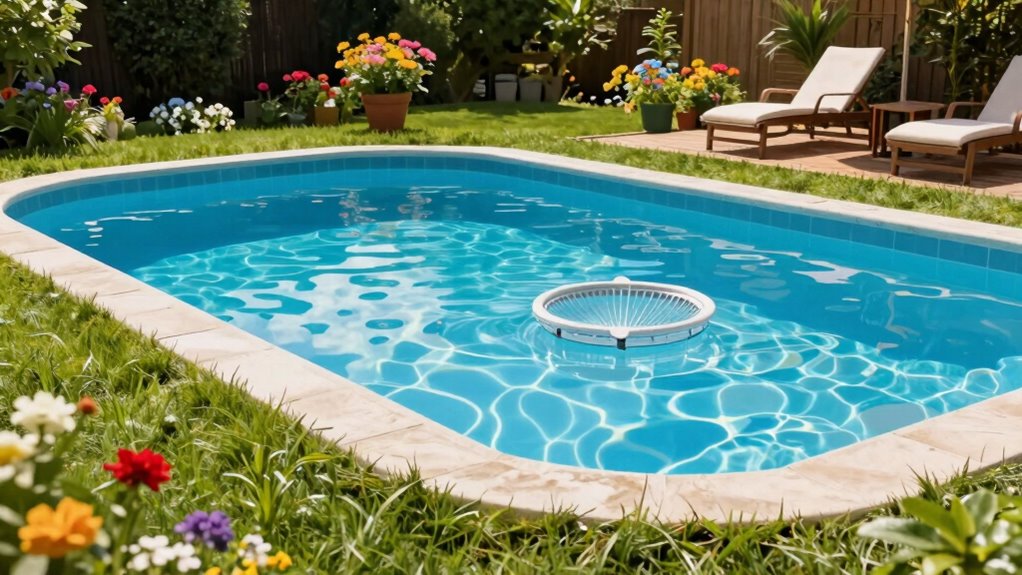
Understanding how to accurately measure water loss in your pool is essential for maintaining proper water levels and preventing damage. When you keep tabs on water loss, you can identify leaks early, avoid overfilling, and ensure your pool stays in top shape throughout the season. This knowledge is also vital for effective water conservation, helping you use water efficiently and reduce waste, especially during dry months or drought conditions.
Monitoring water loss helps prevent damage, detect leaks early, and promote efficient water use during dry seasons.
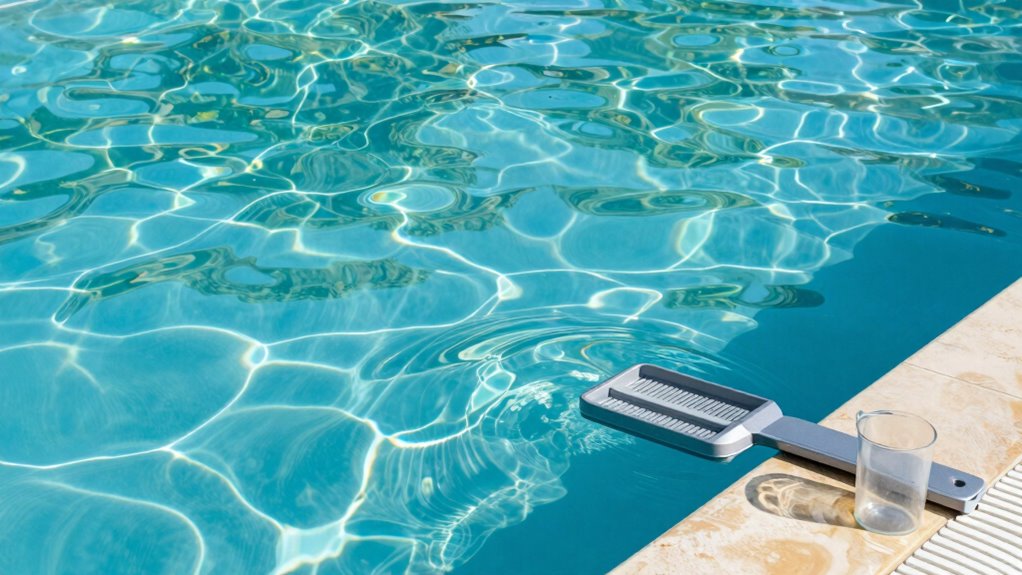
To get started, you need to perform a simple test called the “bucket test” — it’s straightforward but incredibly effective. Fill a bucket with water and place it on the pool step or somewhere similar where it won’t tip over. Make sure the water in the bucket is about the same level as the water in your pool. Turn off all pool equipment, like the filter and pump, because they can influence evaporation rates. Mark the water level on the bucket with a waterproof marker or note the water level. Now, let your pool sit undisturbed for 24 hours. After that, compare the water level in the bucket to the pool’s water level. The difference in the water levels reveals how much water your pool naturally loses due to evaporation and minor leaks. Understanding water loss mechanisms is crucial for accurate assessment and effective maintenance.
Next, you can use a simple formula to estimate your water loss: subtract the final water level from the initial water level in the bucket, then compare that to the pool’s water level change. If your pool’s water level drops significantly more than the bucket’s, you might have a leak. Conversely, if both levels drop roughly the same amount, evaporation is the primary cause. This calculation helps you determine whether to focus on fixing leaks or simply adjusting your water top-offs. Recognizing the causes of evaporation can also help you implement strategies to reduce water loss, such as using pool covers. Proper knowledge of evaporation rates can lead to more precise scheduling of refills, saving water and energy in the long run. Additionally, understanding water conservation techniques enables you to maintain your pool efficiently and sustainably.
Knowing your pool’s water loss rate allows you to plan better for water conservation, especially during peak summer months when evaporation rates increase. You can schedule refills more accurately, avoiding unnecessary overfilling that wastes water. Plus, understanding water loss helps you optimize your pool maintenance routine, making sure you’re not wasting energy or chemicals on compensating for unnecessary water additions.
pool water level measurement tools
As an affiliate, we earn on qualifying purchases.
As an affiliate, we earn on qualifying purchases.
Frequently Asked Questions
Can Evaporation Rates Vary With Different Pool Types?
Yes, evaporation rates can vary with different pool types. For example, uncovered pools lose more water due to exposure, while pool covers reduce evaporation considerably. Additionally, water chemistry impacts evaporation; high temperatures and low humidity speed it up. You should monitor these factors, especially with different pool covers, to prevent water loss. Keeping water balanced also helps minimize evaporation, preserving your pool’s water level and reducing refills.
How Does Temperature Affect Water Loss Calculations?
Temperature plays a vital role in water loss calculations. As it rises, evaporation speeds up, especially when humidity impact drops and wind influence increases, pulling moisture away more rapidly. You might notice your pool losing more water on hot, breezy days than during cooler, calmer ones. Keep an eye on these conditions because they directly affect how much water your pool might lose, helping you manage refills more effectively.
Is the Water Loss Formula Applicable to Saltwater Pools?
Yes, the water loss formula applies to saltwater pools, but you should consider saltwater chemistry and corrosion risks. Saltwater pools tend to evaporate water at similar rates to freshwater pools, so the formula still helps estimate evaporation. However, high salinity can accelerate corrosion of pool equipment and surfaces. Keep an eye on water levels, and regularly check salt and chemical balance to prevent damage caused by saltwater chemistry.
How Often Should I Check My Pool’s Water Level?
You should check your pool’s water level at least once a week to catch any significant drops early. Regular checks help maintain proper chemical balance and guarantee your filter isn’t overworking. If you notice a sudden loss, top off the water and inspect for leaks. Keeping an eye on water levels also helps you maintain ideal filter performance and avoid chemical imbalance, making your pool safer and more enjoyable.
What Are Signs of Leaks Beyond Evaporation?
Think of your pool as a delicate vessel; hidden leaks can silently drain it. Beyond evaporation, signs include a consistently low water level despite a pool cover, unexplained wet patches around the pool, or liner damage showing wrinkles or tears. If you notice your liner looks saggy or water seems to disappear faster than usual, it’s time to investigate for leaks. Catching these early prevents costly repairs and keeps your summer splash-ready.
As an affiliate, we earn on qualifying purchases.
Conclusion
Knowing the water loss formula is your key to safeguarding your pool’s health this summer. Think of it as your personal lighthouse, guiding you through the fog of evaporation and leaks. By mastering this simple calculation, you’re not just maintaining water levels—you’re preserving the lifeblood of your backyard oasis. Keep the formula close, and let it be your steady compass, ensuring your pool remains a sparkling sanctuary all season long.
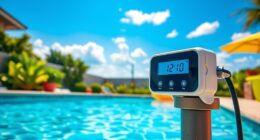
automatic pool water level monitor
As an affiliate, we earn on qualifying purchases.
As an affiliate, we earn on qualifying purchases.
pool cover for water evaporation reduction
As an affiliate, we earn on qualifying purchases.
As an affiliate, we earn on qualifying purchases.
Fall Picks
fall essentials
As an affiliate, we earn on qualifying purchases.