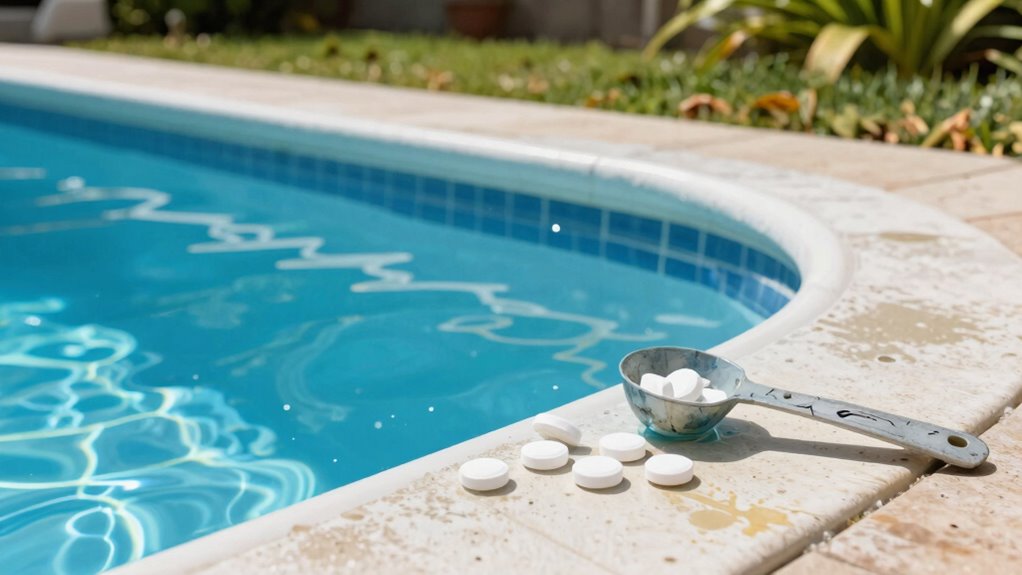

Overdosing pool chemicals can silently harm the environment by polluting nearby water sources through runoff, especially after heavy rains. You might not see the immediate effects, but these chemicals threaten aquatic life, disrupt ecosystems, and enter the food chain, affecting animals and humans alike. Over time, this damage can be long-lasting. If you care about preserving natural water quality and ecosystems, understanding the hidden costs of chemical misuse is essential.
Key Takeaways
- Excess pool chemicals runoff into water bodies, increasing aquatic toxicity and harming aquatic life.
- Chemical residues bioaccumulate in food chains, threatening wildlife and human health.
- Overdosing chemicals disrupt ecosystems, reduce biodiversity, and impair ecosystem functions.
- Responsible chemical use minimizes environmental contamination and protects water quality.
- Long-term environmental damage from chemical runoff can impact community health and local ecosystems.
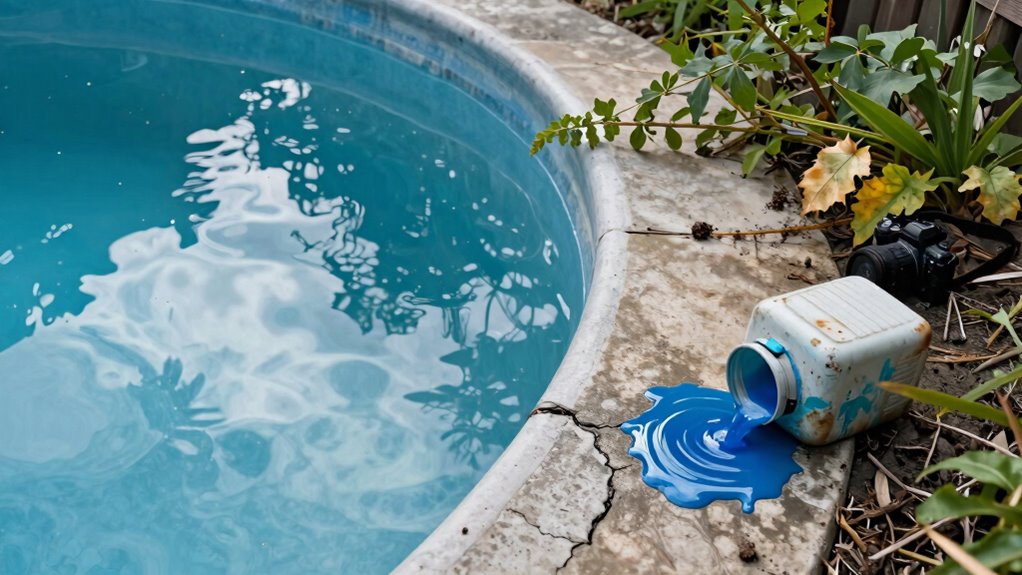
Have you ever thought about what happens when pool chemicals are overdosed? It might seem like a simple issue of maintaining water clarity and sanitation, but the consequences extend far beyond your backyard. When you add too much chlorine, algaecides, or pH adjusters, these chemicals don’t just stay in the pool. Instead, they often find their way into nearby soil and water sources through runoff. This chemical runoff can cause significant environmental harm, especially to local ecosystems that are unprepared for such chemical overloads.
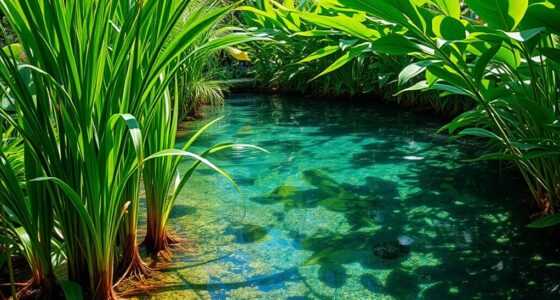
When chemicals from pools reach natural water bodies, they can increase aquatic toxicity, threatening fish, amphibians, and aquatic plants. These species are particularly sensitive to changes in their environment, and excess chemicals can disrupt their reproductive cycles, impair their immune systems, or even cause death. Overdosing on pool chemicals can lead to dangerous concentrations of toxic substances in lakes, rivers, and streams, which can persist long after your pool is drained or chemicals are diluted. This is especially problematic during heavy rains, when runoff can carry concentrated chemical residues into waterways rapidly.
Excess pool chemicals can harm aquatic life, disrupting ecosystems and causing long-term environmental damage during heavy rains.
You might not realize it, but chemical runoff from overdosed pools doesn’t just impact aquatic life; it also affects the broader ecosystem. Plants along water margins can absorb these chemicals, which then enter the food chain, affecting insects, birds, and mammals that rely on these plants and water sources. Over time, this buildup can result in bioaccumulation, where toxins become more concentrated as they move up the food chain. The health of local wildlife and even human communities relying on these water sources can be compromised, leading to health issues like skin irritation, respiratory problems, or even more severe conditions caused by prolonged chemical exposure. Proper chemical management is essential to minimize these risks and protect the environment. Additionally, implementing best practices in chemical use can further reduce the likelihood of harmful runoff and environmental damage.
The environmental cost of overdosing pool chemicals isn’t always immediately visible, but its effects are long-lasting and widespread. As a pool owner, you may focus on keeping your water safe and clear, but it’s equally important to use chemicals responsibly. Proper dosing, regular testing, and careful handling help prevent chemical runoff and reduce aquatic toxicity. Recognizing the long-term environmental impact of chemical misuse can help motivate more sustainable practices. Additionally, understanding chemical runoff effects can help you make more informed decisions about pool maintenance. By doing so, you protect not just your pool’s water quality but also the health of the surrounding environment. Remember, what happens in your backyard can ripple outward, impacting ecosystems far beyond your property. Being mindful of chemical use isn’t just about your pool — it’s about safeguarding the health of the planet.

Poolmaster 22260 5-Way Swimming Pool or Spa Water Chemistry Test Kit with Case, Essential Collection
- Water Chemistry Testing: Tests Chlorine, Bromine, pH, Alkalinity, Acid Demand
- Clear-View Test Block: Includes transparent round test block with color chips
- Solution Set Included: Contains 1oz solutions for tests #1-#3, 0.5oz for #4-#5
As an affiliate, we earn on qualifying purchases.
As an affiliate, we earn on qualifying purchases.
Frequently Asked Questions
How Do Pool Chemicals Affect Local Wildlife Beyond Water Contamination?
You might not realize, but pool chemicals can harm local wildlife beyond water contamination. Chemicals like chlorine and algaecides cause wildlife toxicity when animals ingest or contact contaminated water or soil. Over time, these substances bioaccumulate in animals’ bodies, disrupting their health and ecosystems. This ongoing chemical buildup can threaten entire food chains, making it essential to handle pool chemicals responsibly and prevent environmental runoff.
What Are Long-Term Health Risks for Communities Near Overdosed Pools?
Imagine a silent cloud of chemical exposure lingering over your community, gradually seeping into homes and lungs. Long-term health risks for those near overdosed pools include respiratory issues, skin irritations, and potential endocrine disruptions. Continuous chemical exposure can also increase cancer risks and weaken immune systems. These health implications underscore the importance of proper chemical management, ensuring that your community stays safe and protected from unseen, lingering dangers.
Can Pool Chemical Runoff Impact Nearby Agricultural Land?
Yes, pool chemical runoff can impact nearby agricultural land. When you neglect proper pool maintenance and fail to maintain the chemical balance, excess chemicals can seep into the soil and water sources. This runoff may introduce harmful substances like chlorinated compounds and other chemicals, potentially harming crops, soil health, and water quality. Ensuring proper chemical balance and runoff management helps protect adjacent agricultural areas from environmental damage.
Are There Safe Alternative Methods to Chlorination for Pools?
Did you know that over 85% of pool owners seek eco-friendly methods? You can consider natural alternatives like mineral sanitizers, ozone, or UV systems, which effectively disinfect without harsh chemicals. These eco-friendly methods reduce chemical runoff and environmental impact, making your pool safer for the planet. Switching to natural options not only helps protect water quality but also promotes healthier living environments for you and your community.
How Does Chemical Overdosing Influence Groundwater Quality?
When you overdose pool chemicals, chemical leaching can occur, contaminating nearby groundwater sources. Excess chemicals often cause pH imbalance, which destabilizes water chemistry and accelerates chemical breakdown. This imbalance makes harmful substances more likely to seep into the soil and contaminate groundwater, posing environmental risks. To protect groundwater quality, you must carefully monitor chemical levels and avoid overdosing, ensuring safe, balanced water chemistry.

AquaDoc Chlorine Neutralizer for Pools & Hot Tubs – Sodium Thiosulfate, 1lb
- Reduces Chlorine Levels: Helps lower elevated chlorine in pools and spas
- Sodium Thiosulfate Formula: Contains widely used chlorine neutralizer
- Easy to Use: Dissolves quickly for uniform distribution
As an affiliate, we earn on qualifying purchases.
As an affiliate, we earn on qualifying purchases.
Conclusion
By now, you see how overdosing pool chemicals harms our environment—polluting water and harming wildlife. Isn’t maintaining a clean pool worth risking our planet’s health? It’s easy to overdo it, but small changes like measuring carefully or choosing eco-friendly products can make a big difference. Think about the impact you want to have—are you willing to prioritize convenience over our planet’s future? Every responsible choice counts toward a healthier environment for everyone.

ARM & Hammer Clear Balance pH Maintenance Tablets, 24 Count
- Number of Tablets: 24 tablets for pool maintenance
- Easy Water Clarity: Maintains ideal pH and alkalinity levels
- All-Season Balance: Supports balanced pH, alkalinity, and chlorine
As an affiliate, we earn on qualifying purchases.
As an affiliate, we earn on qualifying purchases.

YCXCMAT Universal Spill Kit for Chemical, Water & Garage Oil Cleanup 1 Pack
- Spill Kit for Various Liquids: Absorbs oil, coolant, water, chemicals
- Portable and Compact Design: Fits in car trunks and equipment sheds
- Includes Absorbent Pads and Socks: 15 pads and 2 socks for effective cleanup
As an affiliate, we earn on qualifying purchases.
As an affiliate, we earn on qualifying purchases.