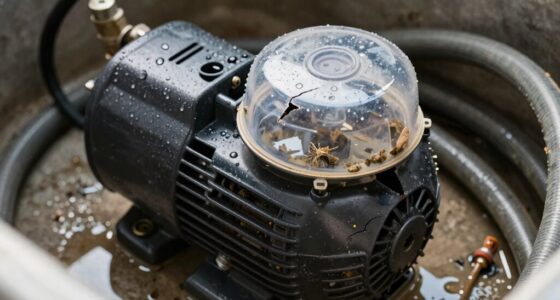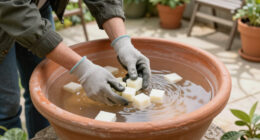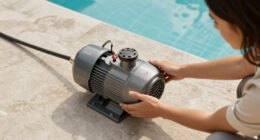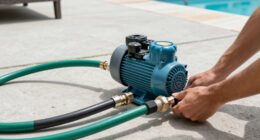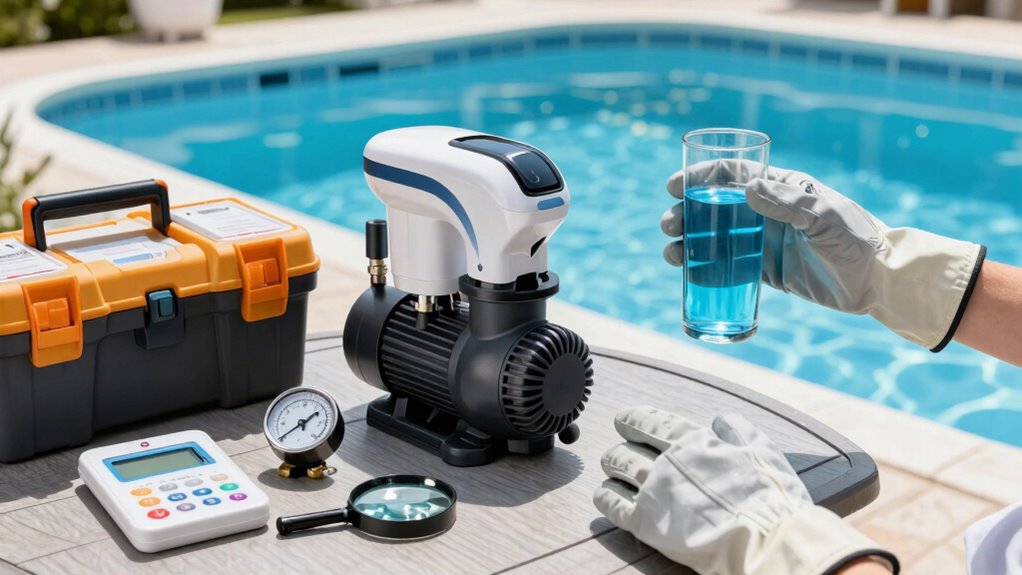
To protect your expensive pool equipment, perform simple monthly checks like inspecting filters and pumps for wear or damage, and cleaning out debris from the skimmer and pump baskets. Test your water’s pH, alkalinity, and sanitizer levels regularly to prevent corrosion or scaling. Keep an eye on system performance to catch issues early, and address minor problems before they turn costly. Continuing with these easy steps can help you maintain your pool’s equipment and avoid unnecessary repairs.
Key Takeaways
- Regularly inspect and clean the pool cover to prevent debris from damaging equipment.
- Monitor chemical levels monthly to avoid corrosion and buildup that can harm equipment.
- Check and maintain proper pH, alkalinity, and sanitizer levels for optimal equipment performance.
- Inspect filtration and circulation systems for wear, leaks, or blockages to ensure efficient operation.
- Address any damage or malfunctions promptly to prevent costly repairs and extend equipment lifespan.
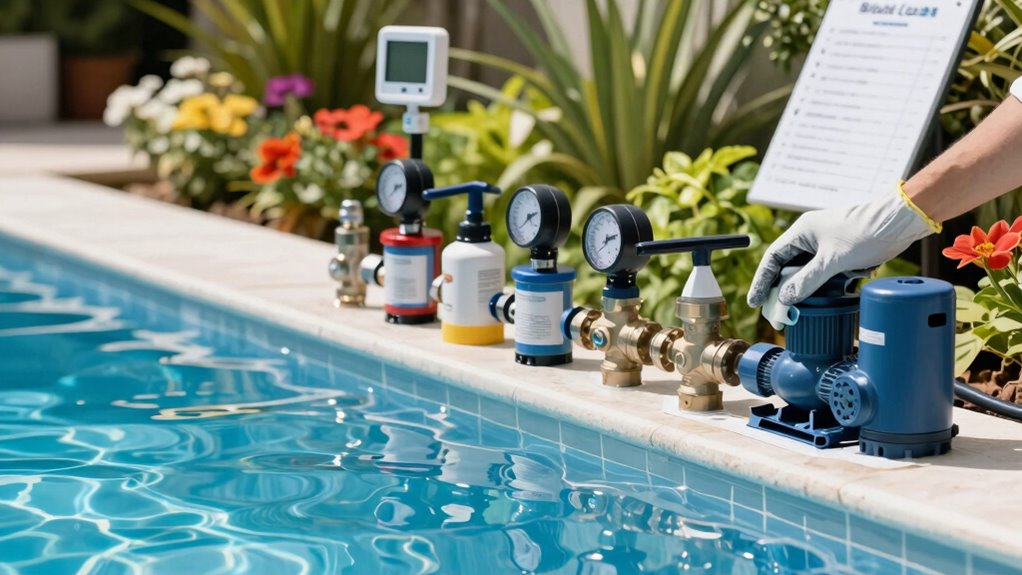
Protecting your pool equipment is essential to guarantee it stays in good condition and functions properly year-round. Regular maintenance habits go a long way in preventing costly repairs and extending the lifespan of your investment. One of the simplest ways to do this is by performing monthly checks that focus on key areas like pool cover maintenance and chemical balance monitoring. These routine tasks keep your pool in perfect condition and help you catch potential issues before they escalate.
Start with pool cover maintenance. Your cover acts as the first line of defense against debris, dirt, and the elements, but it requires regular attention. Each month, inspect the cover for tears, holes, or signs of wear. Clean off leaves, dirt, and algae that can accumulate on its surface, and ensure the cover is tightly secured. A well-maintained cover reduces the amount of debris that enters your pool, decreasing strain on your filtration system and preventing unnecessary wear. If you notice any damage, address it promptly to avoid larger problems down the line, and consider replacing the cover if it’s beyond repair. Additionally, understanding the importance of biodiversity in your local environment can help inform better practices for outdoor maintenance and landscaping around your pool area. Incorporating native plants and natural barriers can also promote a healthier surrounding ecosystem and reduce the need for chemical interventions. Regularly inspecting your pool cover for signs of deterioration can help you identify small issues before they become costly repairs.
Equally important is chemical balance monitoring. Proper water chemistry is critical to protect your equipment and ensure safe, clean swimming conditions. Every month, test your pool’s pH, alkalinity, calcium hardness, and sanitizer levels. Use a reliable test kit or digital tester to get accurate readings. Maintaining a proper pH (around 7.4-7.6) prevents corrosion of your equipment and minimizes scaling, which can clog filters and damage pumps. Balancing alkalinity stabilizes pH levels, while appropriate calcium hardness prevents scaling or etching of pool surfaces and equipment. Keep your sanitizer levels in check to inhibit algae growth and maintain water clarity. If any parameters are outside the recommended range, make adjustments with the appropriate chemicals, and retest to confirm the balance. Regularly inspecting your pool filtration system can also help detect early signs of malfunction or wear, saving you from more extensive repairs later.

Aqua Comb Pool Filter Cartridge Cleaning Tool
DESIGNED AND BUILT FOR LONG LIFE AND USE: The Aqua Comb body is made of UV protected ABS…
As an affiliate, we earn on qualifying purchases.
As an affiliate, we earn on qualifying purchases.
Frequently Asked Questions
Can I Use DIY Methods to Fix Pool Equipment Issues?
Yes, you can use DIY repairs for some pool equipment issues, making cost-effective fixes that save you money. Simple problems like replacing a broken valve, cleaning filters, or fixing minor leaks are manageable with basic tools and guidance. However, for complex issues or electrical components, it’s safer to consult professionals. Always assess your skill level first, and use tutorials or manuals to guarantee safe, effective repairs.
What Signs Indicate a Failing Pool Pump?
You’ll notice a failing pool pump if it makes unusual noise, like grinding or squealing, which indicates motor issues. Also, listen for irregular pool pump noise that’s louder than usual. Leak detection is essential—watch for water loss or damp spots around the pump. If you see leaks or persistent strange sounds, it’s time to inspect or call a professional, as these signs point to potential pump failure.
How Often Should I Replace Pool Equipment Parts?
You should replace pool equipment parts when they show signs of wear or failure, typically every few years, but regular checks help extend their lifespan. Keep your pool’s chemical balance in monitor to prevent corrosion or damage. Also, consider seasonal equipment upgrades to ensure your system stays efficient. Regular maintenance and timely replacements safeguard your investment, keeping your pool running smoothly and preventing costly repairs.
Is Professional Maintenance Necessary for All Pool Equipment?
No, professional maintenance isn’t necessary for all pool equipment, but it’s highly recommended to keep your pool in pristine condition. Regular checks of pool chemical balance and pool cover maintenance can prevent costly repairs, extend equipment lifespan, and keep your pool sparkling clean. While some tasks you can handle yourself, professional care guarantees everything runs smoothly, avoiding disasters like equipment breakdowns or chemical imbalances that could ruin your swim season.
What Safety Precautions Should I Take During Inspections?
During inspections, you should wear protective gear like gloves and goggles to guarantee pool chemical safety. Turn off electrical power to equipment to prevent electrical hazard prevention. Keep your hands dry and avoid touching electrical components with wet hands. Maintain clear access to electrical panels, and check for any exposed wiring. These precautions help protect you from chemical burns and electrical shocks, making your inspections safer.

Digital Pool Water Test Kit with Digital Reader, Wynvex 7-in-1 Water Testing for Chlorine, Bromine, pH, Alkalinity & More, Includes 150 Test Strips for Pools
EASY-TO-READ DIGITAL RESULTS:The reader scans the test strip and displays clear numerical results in about 15 seconds for…
As an affiliate, we earn on qualifying purchases.
As an affiliate, we earn on qualifying purchases.
Conclusion
By performing simple monthly checks, you’re acting as a vigilant guardian, shielding your pool equipment from the silent threats of corrosion and debris. Think of your routine as a gentle lighthouse beam, guiding your equipment safely through the stormy seas of wear and tear. With these small, consistent steps, you’ll keep your pool running smoothly, turning maintenance into a breeze rather than a burden. Protect your investment—and let your backyard oasis shine bright all season long.

Pool Patch Repair Kit, Pool Cover Patch, 12×8 Self Adhesive Vinyl (PVH), Swimming Pool Patch Repair Kit, 6 Pack
Durable Material: Pool cover patch repair kit made from heavy-duty woven vinyl (PVC) with adhesive backing; tear-proof, dust-proof,…
As an affiliate, we earn on qualifying purchases.
As an affiliate, we earn on qualifying purchases.

AIPER HydroComm Smart Pool Monitor, 24/7 Automatic Water Testing for Pools, Hot Tubs & Spas, 5-in-1 Accurate Digital Tester, App Control, Customized Optimization Tips, Pearl
Automatic Hourly Monitoring: Automatically tests your pool water every hour for continuous day-and-night monitoring. Generates clear water quality…
As an affiliate, we earn on qualifying purchases.
As an affiliate, we earn on qualifying purchases.