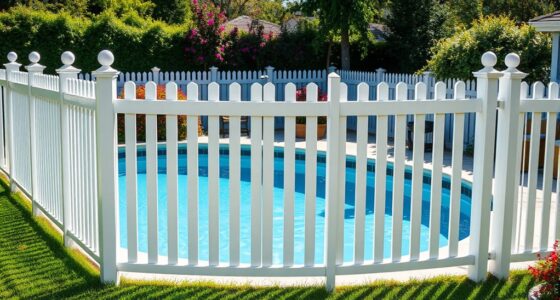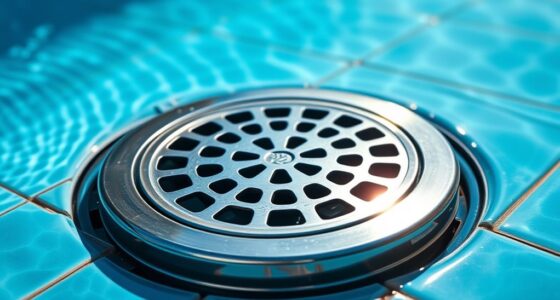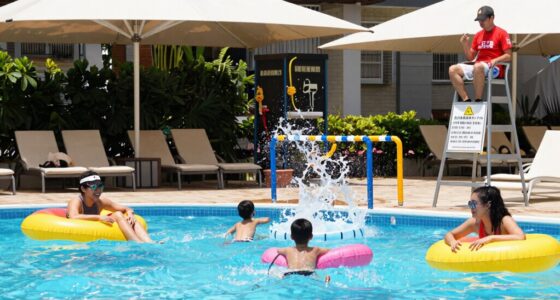
The slip hazard zone around pools is the area just outside the deck where water, debris, and algae accumulate, making surfaces slick and dangerous. You might slip or fall if you’re not cautious, especially when distracted or in a hurry. Proper maintenance, clear signage, and careful behavior can help prevent these accidents. Paying attention to these hazards can save you from injury—stick around to learn more about keeping safe in these tricky zones.

Get pool and patio gear delivered free with Prime
- Fast, free delivery on millions of items
- Prime Video, Amazon Music and more included
- Member-only deals all year
Key Takeaways
- Wet areas just outside the pool deck, especially near drains and entry points, are common slip hazard zones.
- Lack of proper signage and warnings increases adult accidents in slippery poolside areas.
- Inadequate surface maintenance and debris buildup create slick surfaces prone to causing falls.
- Running or rushing in the slip hazard zone significantly raises the risk of adult injuries.
- Insufficient drainage and surface treatments lead to water accumulation, making the zone more dangerous.
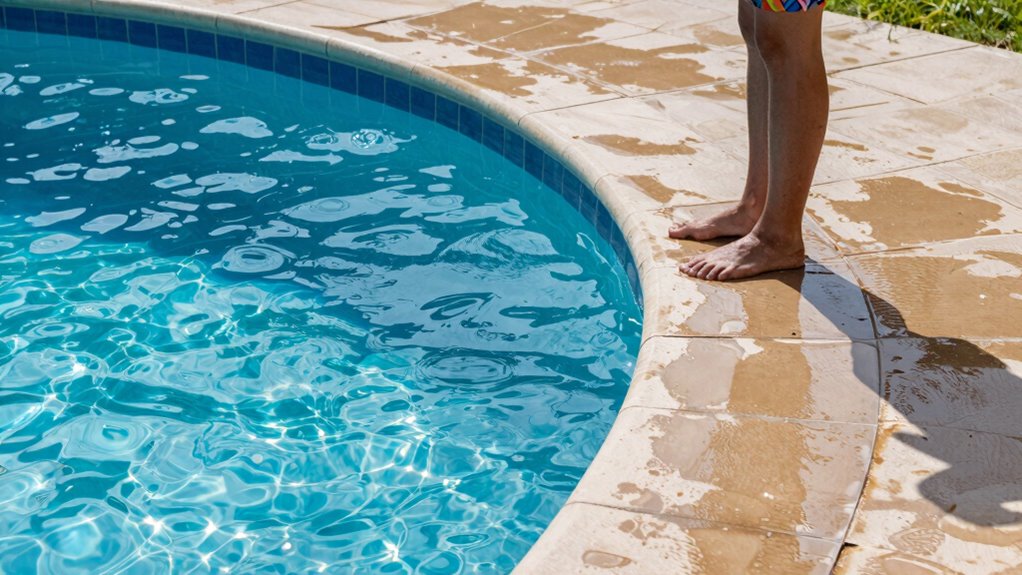
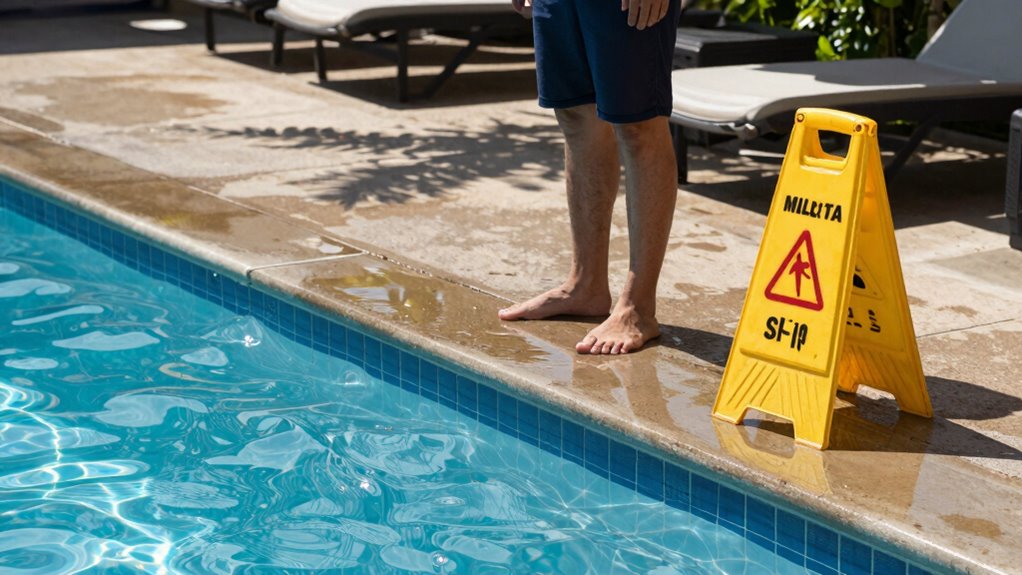
When you’re around pools, understanding the slip hazard zone is essential for preventing accidents. These zones, often just outside the pool deck, are where water and moisture tend to accumulate, making surfaces slick and dangerous. It’s easy to underestimate how quickly a wet deck can turn into a hazard, especially if you’re distracted or in a rush. That’s why paying attention to these zones is vital—your safety depends on it. Proper pool cleaning plays a significant role here; regularly removing debris, algae, and excess water reduces the risk of slips. Using slip-resistant mats or textured surfaces in these areas can also help, providing better footing even when surfaces are wet.
Safety signage is another key element in managing the slip hazard zone. Clear, visible signs inform swimmers and visitors about the risks, prompting caution and encouraging responsible behavior. Signs that warn of wet floors or slippery surfaces should be placed prominently around the pool’s perimeter, especially in high-traffic areas. It’s not enough to have signs; they must be easy to read and strategically positioned so that everyone, from kids to adults, notices them. Combined with consistent maintenance, safety signage creates an environment where hazards are clearly communicated, reducing the chances of accidents. Recognizing that wet surfaces are common around pools helps reinforce the importance of vigilance and preventative measures. The real danger lies in complacency. Many adults tend to overlook the risks, especially if they’re familiar with the pool area or in a hurry to get in or out. But slip-and-fall injuries can be severe, leading to broken bones, head injuries, or sprains. These injuries often occur when someone misjudges the water’s slickness or fails to notice the warning signs. To minimize risks, always walk carefully around the pool, especially in the slip hazard zone. Avoid running, and be extra cautious after rainfall or if the area has just been cleaned. Proper maintenance practices are crucial in reducing hazards and ensuring safety, especially in wet conditions. Maintaining proper drainage systems can significantly reduce standing water and minimize slip risks, making the area safer for everyone. Regularly inspecting and addressing potential hazards such as loose tiles or uneven surfaces also plays a vital role in preventing accidents. Additionally, educating pool visitors about slip risk awareness can foster a culture of safety, reducing reckless behavior. Remember, even a small puddle or a thin film of water can cause a major fall.
As an affiliate, we earn on qualifying purchases.
Frequently Asked Questions
How Deep Does the Slip Hazard Zone Typically Extend?
The slip hazard zone around pools usually extends about 3 to 6 feet from the pool edge. You should focus on proper pool surface maintenance to minimize slipping risks. Always guarantee safety signage is visible, warning about wet surfaces. Regularly checking the area and promptly cleaning up spills or algae can prevent accidents. Staying vigilant within this zone helps protect yourself and others from injuries caused by slipping.
Are Certain Materials More Prone to Causing Slips in This Zone?
Think of pool surfaces as dance floors—some materials are like polished marble, slipping easily, while others are textured like a rough dance floor. Certain materials, such as smooth tiles or slick concrete, are more prone to causing slips due to poor traction. To keep you safe, choose pool surfaces with better material traction, like textured concrete or non-slip tiles, reducing the risk of accidents in the slip hazard zone.
What Footwear Best Prevents Slipping Around Pools?
You should choose footwear with excellent grip options to prevent slipping around pools. Look for shoes with textured soles designed for wet surfaces, like rubber soles with deep treads or patterns that provide better traction. Pool deck textures can be slick, so avoid smooth-soled shoes. By selecting footwear with good grip options, you reduce your risk of slipping and staying safe on various pool deck textures.
How Does Weather Impact the Slip Hazard Zone?
Weather greatly impacts the slip hazard zone around pools. Rain or humidity increases water on surfaces, making slips more likely, so you should prioritize pool chemical safety to prevent algae buildup that can make surfaces slick. Also, maintain your pool cover regularly to keep debris and water off, reducing slipping hazards. During colder months, make sure surfaces are dry and free of ice, further minimizing risks and keeping the slip hazard zone safe.
Can Landscaping Reduce Slip Hazards Near Pools?
Yes, landscaping can reduce slip hazards near pools. You should focus on thoughtful landscaping design and careful plant selection. Use non-slip ground covers, textured pavers, and plants that don’t shed excessive debris or slippery fruits. By creating a well-planned landscape, you can minimize wet, slippery surfaces and improve safety. Properly chosen plants and strategic design help keep the pool area safer, reducing the risk of slips and falls.
As an affiliate, we earn on qualifying purchases.
Conclusion
To keep yourself safe, always be mindful of the slip hazard zone around pools. That tiny, overlooked area could turn a fun day into a catastrophic injury faster than you can say “ouch.” Don’t let careless footing turn your perfect summer day into a disaster movie scene. Stay alert, walk carefully, and respect the danger zone. Protect yourself and your loved ones—because one slip is all it takes to change everything in an instant.
As an affiliate, we earn on qualifying purchases.
As an affiliate, we earn on qualifying purchases.
Fall Picks
fall essentials
As an affiliate, we earn on qualifying purchases.