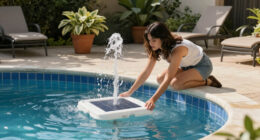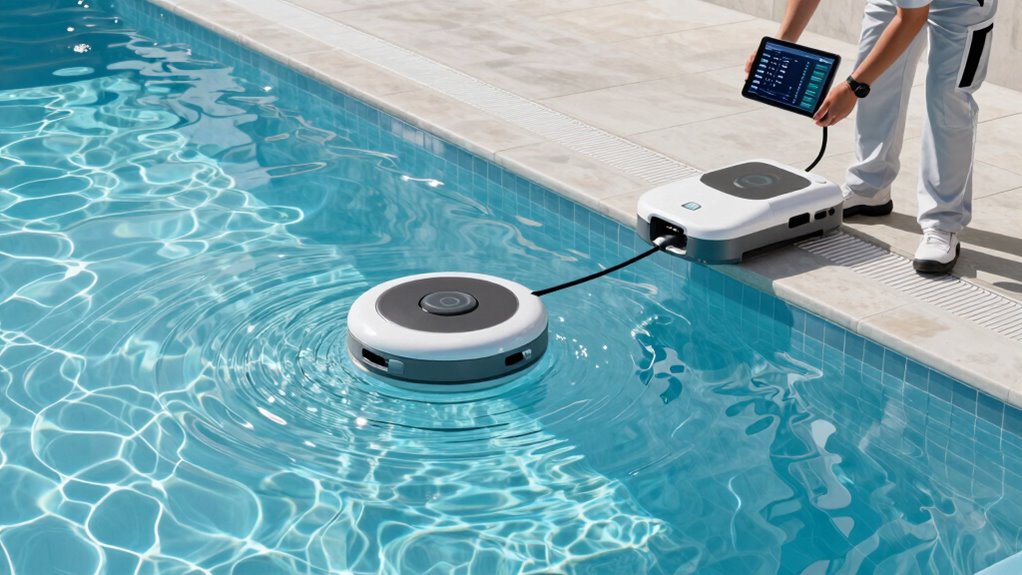

Real-time sensors are transforming your pool maintenance by providing instant data on water quality, filtration, and equipment status. You can automatically adjust chemicals, activate filters only when needed, and catch issues early before they become costly problems. Connecting these sensors to smart systems makes managing your pool more efficient and eco-friendly. With continuous updates and alerts, you stay ahead of potential trouble. Keep exploring to discover how these innovations can make your pool care easier and smarter.

Get pool and patio gear delivered free with Prime
- Fast, free delivery on millions of items
- Prime Video, Amazon Music and more included
- Member-only deals all year
Key Takeaways
- Enable continuous monitoring of water quality, reducing manual testing and ensuring optimal chemical balance.
- Detect contamination or cloudiness instantly, allowing targeted and timely filtration adjustments.
- Provide early alerts for equipment issues, preventing costly repairs and minimizing downtime.
- Facilitate integration with smart apps and control systems for automated, efficient maintenance routines.
- Support sustainable practices by optimizing resource use and reducing chemical, water, and energy waste.
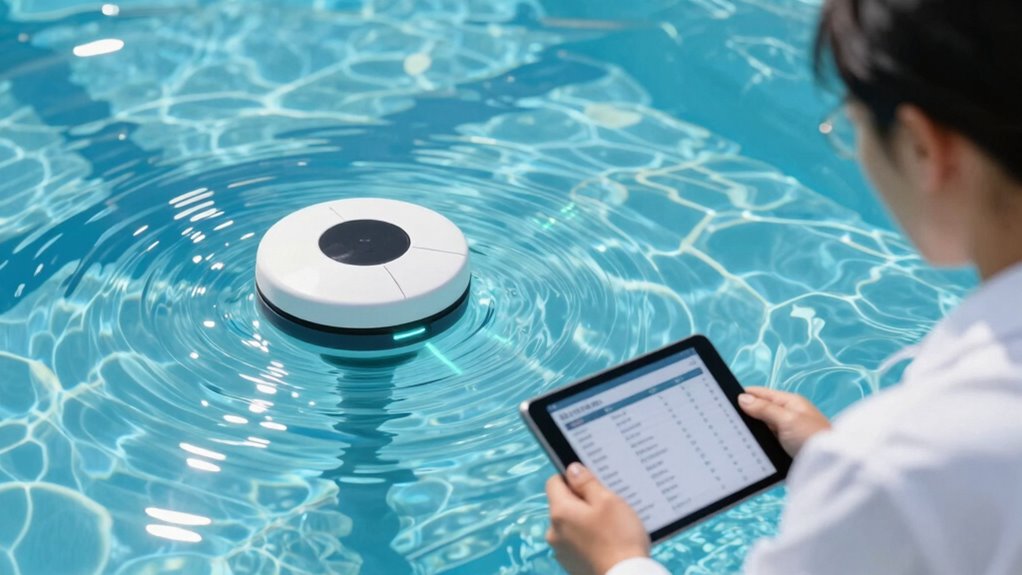
Real-time sensors are transforming how you maintain your pool, making it easier to keep water clean and safe. These devices provide instant feedback on critical water quality parameters, allowing you to adjust chemical levels proactively rather than reactively. Monitoring chemical balance becomes much more precise, ensuring that pH, chlorine, alkalinity, and other chemical levels stay within ideal ranges. Instead of relying on manual testing kits and guesswork, you get continuous data that helps you maintain the perfect chemical balance effortlessly. This not only improves water clarity and safety but also reduces the risk of algae growth and bacteria buildup, making your pool safer for swimming. Real-time data from these sensors allows for more accurate and efficient pool management. Water filtration is another area that benefits markedly from real-time sensors. Traditional filtration systems often run on timers or based on visual cues, which can be inefficient or insufficient. Sensors detect when water is becoming cloudy or contaminated, prompting the filtration system to activate exactly when needed, and utilizing advanced sensor technology can further enhance this process. This targeted approach maximizes water filtration, ensuring your pool water remains clear and free of debris without wasting energy or water. As a result, your pool stays cleaner longer, and you spend less time manually cleaning filters or shocking the water. The sensors can even alert you to potential issues, such as clogged filters or equipment malfunctions, allowing you to address problems before they escalate. Integrating biodiversity-friendly practices into your maintenance routine can help preserve local ecosystems and promote sustainability. The integration of real-time sensors into your pool maintenance workflow streamlines the entire process. Instead of multiple manual checks throughout the week, you get continuous updates, reducing guesswork and freeing up your time. Many sensors connect to smartphone apps, giving you Real-time data right at your fingertips, wherever you are. This instant access empowers you to make informed decisions quickly, whether it’s adding chemicals or scheduling maintenance. Additionally, automation becomes more effective when sensors communicate with pool control systems, allowing for automatic adjustments to chemical dosing or filtration cycles. This smart system ensures your pool remains in perfect condition with minimal effort from you. Incorporating smart technology into your routine not only improves efficiency but also supports more sustainable and eco-friendly pool management. Furthermore, the use of accurate sensors can help detect early signs of equipment failure, preventing costly repairs and downtime.
As an affiliate, we earn on qualifying purchases.
Frequently Asked Questions
How Do Sensors Detect Chemical Imbalances in Real Time?
You rely on sensors that detect chemical imbalances by measuring water parameters like pH and chlorine levels continuously. These sensors need regular calibration to guarantee data accuracy, preventing false readings. When imbalance occurs, the sensors send real-time data to your system, enabling immediate adjustments. This process helps maintain ideal water quality, reduces manual testing, and ensures safer, clearer pools with minimal effort.
What Maintenance Is Required for the Sensors Themselves?
Think of your sensors as tiny swimmers in your pool’s coral reef—regular checkups keep them vibrant. You’ll need to calibrate sensors periodically to guarantee accuracy, much like tuning a musical instrument. Keep an eye on their battery lifespan, replacing or recharging batteries as needed before they fade into silence. With proper maintenance, your sensors stay sharp and reliable, helping you maintain a crystal-clear pool with minimal fuss.
Are Real-Time Sensors Cost-Effective for Small Pools?
Real-time sensors can be cost-effective for small pools if you do a thorough cost analysis. They often reduce ongoing maintenance costs and help catch issues early, saving money in the long run. Keep in mind the sensor lifespan, as longer-lasting sensors may justify higher upfront costs. If the initial investment fits your budget and the sensors improve efficiency, they’re a smart choice for small pool owners.
How Secure Is the Data Collected by These Sensors?
Like a knight guarding a castle, your data stays secure with robust sensor encryption and data privacy measures. The sensors employ advanced encryption protocols, making unauthorized access nearly impossible. While no system is infallible, these security practices markedly reduce risks. You can trust that your pool data remains private, protected from cyber threats, and only accessible to authorized personnel, ensuring peace of mind while embracing the convenience of real-time monitoring.
Can Sensors Predict Future Pool Maintenance Needs?
Yes, sensors can predict future pool maintenance needs by analyzing data trends over time. Regular sensor calibration guarantees accuracy, while secure data storage keeps your information safe. These sensors track parameters like pH, temperature, and chemical levels, allowing you to anticipate issues before they escalate. By leveraging this predictive capability, you can schedule maintenance proactively, saving time and preventing costly repairs.
As an affiliate, we earn on qualifying purchases.
Conclusion
With real-time sensors revolutionizing pool maintenance, you’re now empowered to catch issues before they become emergencies—no more waiting around for water tests or relying solely on guesswork. These sensors act like your modern-day crystal ball, providing instant insights that save time, money, and headaches. Embrace this tech evolution and keep your pool sparkling like a vintage yacht, steering maintenance with confidence and ease. The future’s here, and it’s making your pool care simpler than ever.
automatic pool filtration system
As an affiliate, we earn on qualifying purchases.
As an affiliate, we earn on qualifying purchases.
pool maintenance automation system
As an affiliate, we earn on qualifying purchases.
As an affiliate, we earn on qualifying purchases.
Halloween Picks
halloween
As an affiliate, we earn on qualifying purchases.