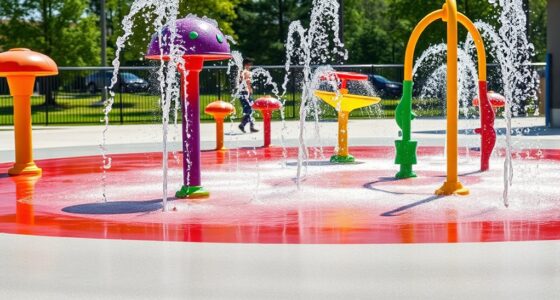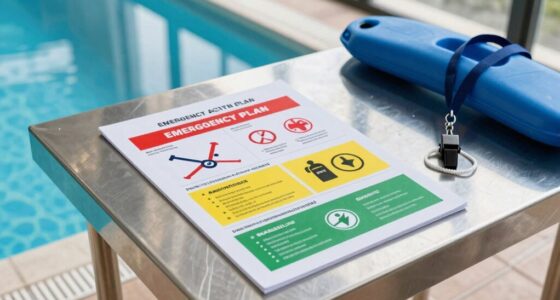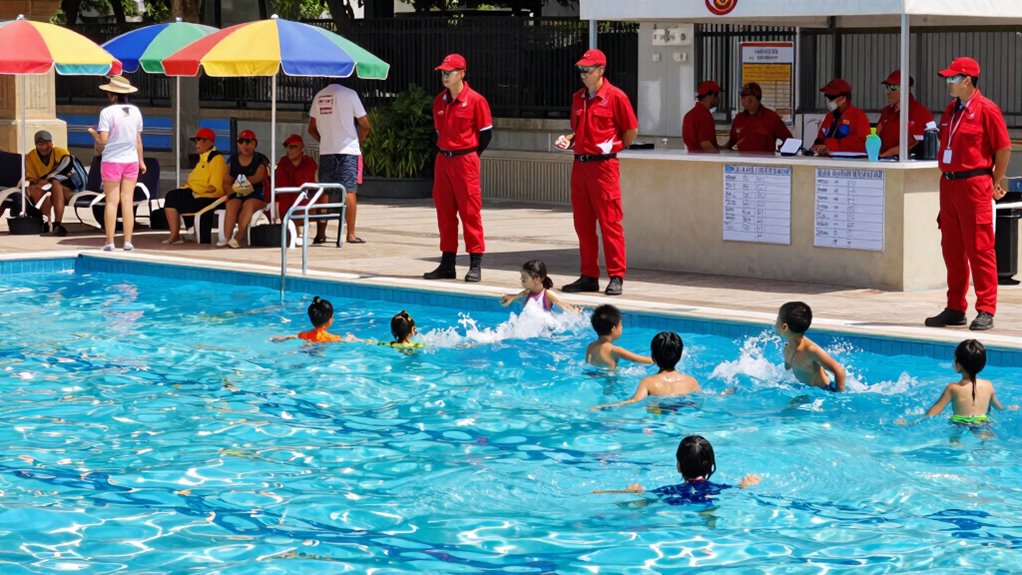

To keep your public pool running smoothly this summer, create a staffing plan that balances lifeguard coverage, maintenance, and cross-training. Schedule enough staff during peak hours and train them regularly to guarantee confidence and safety. Communicate clearly and hold briefings to prevent confusion. Incorporate safety protocols and ongoing training to adapt to challenges. A well-organized plan like this can prevent chaos—discover how to optimize your pool’s summer success.

Get pool and patio gear delivered free with Prime
- Fast, free delivery on millions of items
- Prime Video, Amazon Music and more included
- Member-only deals all year
Key Takeaways
- Implement comprehensive lifeguard training, including CPR, first aid, and emergency protocols, to ensure staff readiness.
- Maintain regular pool inspections and preventive maintenance to prevent safety issues and equipment failures.
- Cross-train staff for both lifeguard and maintenance roles to improve flexibility and operational resilience.
- Develop a staffing schedule that ensures peak coverage and incorporates regular safety briefings and communication.
- Emphasize continuous training and strict safety protocols to adapt to seasonal challenges and sustain high safety standards.
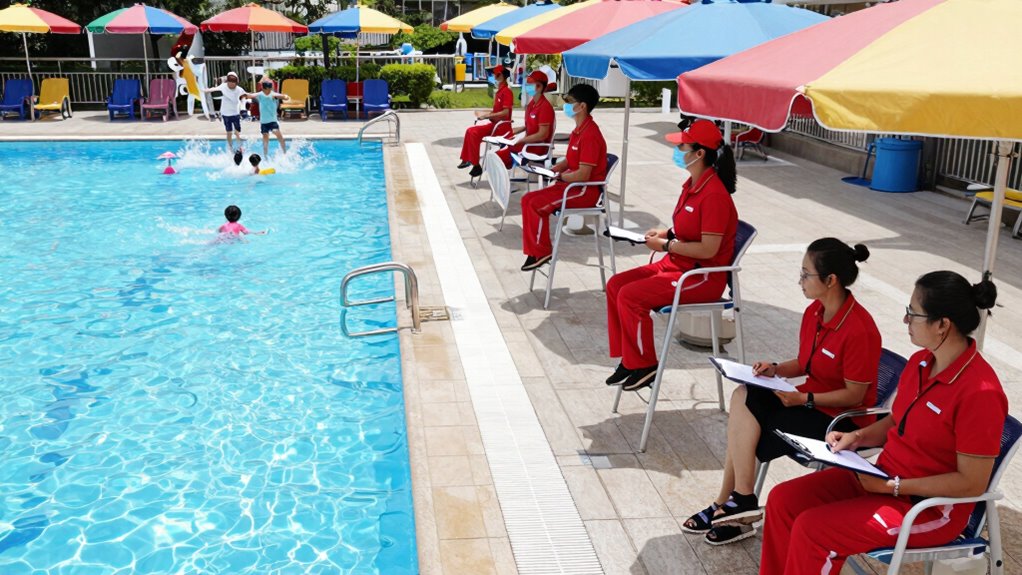
Are you prepared to guarantee your public pool runs smoothly this summer? A well-structured staffing plan is essential, especially when it comes to assuring safety, cleanliness, and overall enjoyment for your visitors. One of the most critical components of this plan is making sure your lifeguards are properly trained. Lifeguard training isn’t just about learning how to spot a swimmer in distress; it covers CPR, first aid, and emergency response techniques that can save lives. By investing in thorough training, you assure your team is confident and capable when seconds count. Additionally, well-trained lifeguards help prevent accidents before they happen by enforcing pool rules and maintaining vigilant supervision.
Properly trained lifeguards ensure safety, prevent accidents, and promote confidence during busy pool seasons.
Alongside staffing, pool maintenance plays a crucial role in keeping your facility safe and inviting. Regular checks and upkeep prevent issues like cloudy water, algae build-up, or equipment failures, all of which could compromise safety or deter visitors. Scheduling daily inspections of the filtration system, chemical levels, and cleanliness ensures the pool remains in top condition. Proper maintenance also extends the lifespan of your equipment, reducing costly repairs down the line. When your pool is well-maintained, visitors feel comfortable and are more likely to return, boosting your community’s trust and satisfaction. Implementing preventative maintenance routines can significantly reduce emergency repairs and ensure smooth operation throughout the season. Incorporating staff cross-training in both lifeguard responsibilities and basic maintenance tasks adds an extra layer of resilience to your staffing model. Regular training refreshers also help reinforce safety protocols and keep your staff prepared for any unexpected situations.
To keep everything running smoothly, you need a clear staffing schedule that balances lifeguard shifts with pool maintenance duties. You should plan for enough lifeguards on duty during peak hours to cover the entire pool area, while also assigning staff members responsible for routine maintenance tasks during off-peak times. Cross-training your staff in both lifeguard duties and basic maintenance can give you flexibility, especially if someone calls in sick or if extra coverage is needed unexpectedly. It’s also smart to schedule regular training refreshers for your lifeguards throughout the season, ensuring skills stay sharp and everyone remains up-to-date with safety protocols.
Effective communication is key to a successful staffing plan. Make sure your team knows their responsibilities, shift schedules, and emergency procedures before the season begins. Conduct briefings daily or weekly to address any concerns, updates, or safety reminders. By keeping everyone informed and prepared, you minimize confusion and ensure smooth operations. Additionally, maintaining proper safety protocols such as body piercing and jewelry care can prevent injuries or infections among staff and visitors, further enhancing overall safety standards. Clear communication also helps foster teamwork and accountability, which are vital during emergency situations. Furthermore, emphasizing ongoing training can help sustain high safety standards and adapt to any new challenges that arise during the season.
lifeguard training CPR first aid kit
As an affiliate, we earn on qualifying purchases.
As an affiliate, we earn on qualifying purchases.
Frequently Asked Questions
How Are Lifeguards Trained for Emergency Situations?
You’re trained through extensive programs that focus on emergency response and rescue techniques. You practice CPR, first aid, and how to handle various emergency situations regularly. Your training includes simulated rescue scenarios to build confidence and quick decision-making skills under pressure. This hands-on approach guarantees you’re prepared to respond effectively during emergencies, keeping swimmers safe and minimizing risks at the pool.
What Safety Protocols Are in Place During Staffing Shortages?
During staffing shortages, you rely on volunteer coordination to fill gaps and guarantee enough lifeguards are on duty. You also prioritize equipment maintenance to keep safety gear ready and functional, reducing risks. You implement clear safety protocols, such as designated emergency responses and communication procedures, to protect swimmers. By actively managing volunteers and maintaining equipment, you create a safer environment even when staffing levels are low.
How Is Staff Performance Monitored and Evaluated?
Imagine you’re overseeing a pool on a busy summer day. You monitor staff performance through regular check-ins and observation, ensuring they meet performance benchmarks like safety, customer service, and cleanliness. To boost staff motivation, you recognize top performers and provide constructive feedback. This ongoing evaluation helps you identify training needs, maintain high standards, and keep your team engaged, ultimately ensuring a safe, enjoyable experience for all swimmers.
Are There Incentives for Staff to Work During Peak Hours?
Yes, there are incentives for staff to work during peak hours. You’ll find that staff motivation increases when incentive programs reward those who handle busy times efficiently. These programs might include bonuses, recognition, or extra time off. By linking incentives to performance during peak hours, you encourage staff to stay engaged and motivated, ensuring the pool stays well-staffed when it’s most needed and providing a better experience for visitors.
How Do Staffing Plans Adapt to Unexpected Weather Changes?
You adapt staffing plans by closely monitoring weather forecasting to anticipate changes, like rain or heatwaves. With staff flexibility, you can quickly reassign lifeguards or pool attendants to different shifts or duties, ensuring coverage during unexpected weather shifts. This approach minimizes downtime and keeps the pool safe and operational, even when weather patterns are unpredictable. Your proactive adjustments help maintain efficient staffing and excellent service despite weather surprises.
public pool maintenance equipment
As an affiliate, we earn on qualifying purchases.
As an affiliate, we earn on qualifying purchases.
Conclusion
By implementing a smart summer staffing plan, you keep your pool thriving instead of drowning in chaos. Remember, a well-organized team is like a lifeguard on duty—always watching, always ready. When you plan ahead, you’re not just managing staff; you’re creating a safe haven where families can make memories without worry. So, stay proactive, stay prepared, and let your pool be the oasis everyone trusts and loves—because a smooth summer starts with your plan.
As an affiliate, we earn on qualifying purchases.
As an affiliate, we earn on qualifying purchases.
Halloween Picks
halloween
As an affiliate, we earn on qualifying purchases.