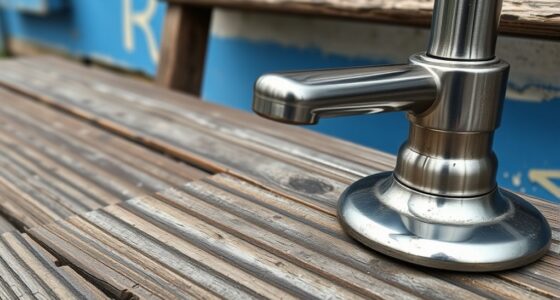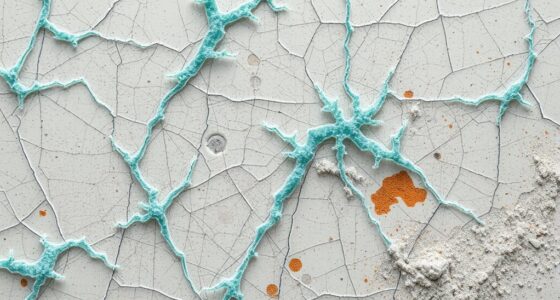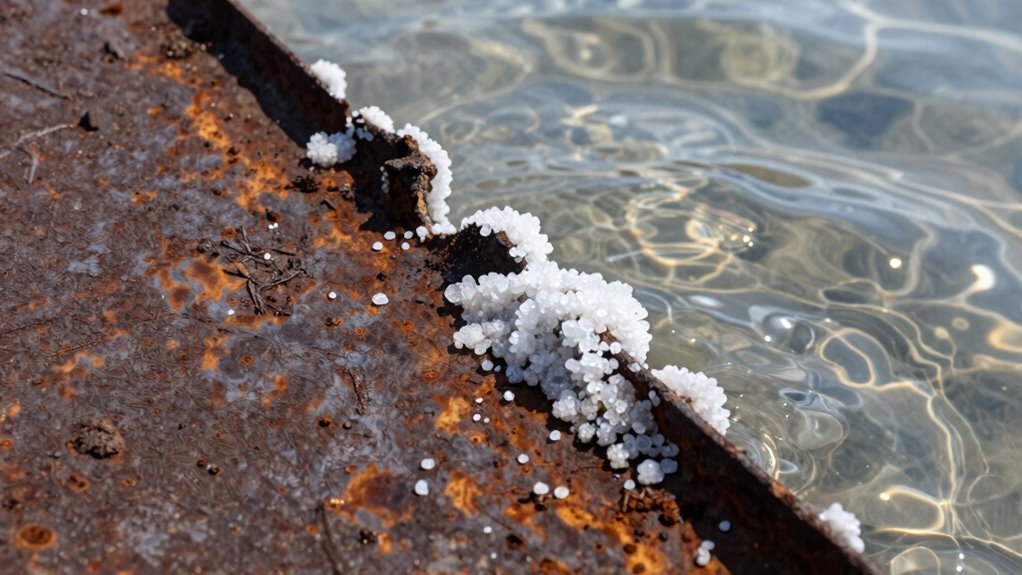

Saltwater forces you to rethink metal choices and protective strategies because it accelerates corrosion, especially in common metals like steel and aluminum. You must consider materials that resist salt’s corrosive effects, such as stainless steel or specialized alloys, and use protective coatings or galvanization to extend lifespan. This changing environment highlights the importance of innovative materials and proactive measures. If you keep exploring, you’ll uncover how science and technology help you build more durable, salt-resistant structures.
Key Takeaways
- Saltwater accelerates metal corrosion, prompting a focus on selecting corrosion-resistant materials for marine environments.
- It drives innovation in developing durable alloys and protective coatings to withstand aggressive saltwater interactions.
- The need for proactive corrosion prevention strategies becomes essential to extend metal lifespan and reduce maintenance costs.
- Saltwater influences material science, emphasizing the importance of understanding electrochemical processes for better metal selection.
- Material choices and protective measures are critical for ensuring safety, performance, and longevity in salty, harsh conditions.

Have you ever wondered why some metals corrode faster in saltwater than others? The answer lies in how saltwater interacts with different materials, profoundly influencing their longevity and performance. Saltwater is highly corrosive because it accelerates the oxidation process, where metals lose electrons and break down. This means that materials exposed to saltwater require careful consideration of corrosion prevention strategies to maintain their integrity over time. When you select metals for marine environments or salt-heavy conditions, understanding how saltwater affects material durability becomes essential. It’s not just about choosing a metal that looks good; it’s about selecting one that can withstand harsh conditions without degrading quickly.
Understanding how saltwater accelerates corrosion helps in choosing durable metals for harsh marine environments.
Corrosion prevention plays a vital role in extending the lifespan of metals in salty environments. Techniques like applying protective coatings, galvanization, or using corrosion-resistant alloys can help shield materials from the aggressive nature of saltwater. For example, stainless steel, with its chromium content, forms a passive oxide layer that acts as a barrier against corrosion. Similarly, specialized coatings create a physical barrier that prevents saltwater from interacting directly with the metal surface. These methods are indispensable because ignoring corrosion prevention measures can lead to accelerated material degradation, increased maintenance costs, and even catastrophic failures in critical structures like ships, bridges, or offshore platforms. Furthermore, ongoing research in material science continually develops new corrosion-resistant materials that offer improved longevity in saltwater environments, emphasizing the importance of innovation in this field. Recognizing the role of material science helps in understanding how advancements can lead to more durable solutions.
Additionally, understanding the electrochemical processes involved in corrosion helps inform better material selection and protective strategies. Your choice of material dramatically impacts durability in saltwater environments. Some metals, like aluminum and certain alloys, naturally resist corrosion better than others, but they still need protective measures for maximum longevity. When you prioritize material durability, you’re making a conscious decision to invest in metals that can withstand saltwater exposure without compromising safety or performance. This might mean selecting corrosion-resistant alloys or treating surfaces to improve their resilience. The right material, combined with effective corrosion prevention techniques, ensures that structures remain safe, functional, and cost-effective over their lifespan. Recognizing the role of protective coatings can further enhance the longevity of metal components in these challenging environments.
Understanding how saltwater changes the conversation around metals and materials means recognizing the importance of proactive measures. It’s not enough to choose a metal based solely on its initial appearance or cost; you need to consider how it will perform under saltwater exposure. By focusing on corrosion prevention and prioritizing material durability, you can greatly extend the life of metal components. This approach saves money, reduces downtime, and enhances safety, especially in environments where saltwater is unavoidable. Ultimately, the interaction between saltwater and metals underscores the need for thoughtful material selection and protective strategies to combat the relentless forces of corrosion.
As an affiliate, we earn on qualifying purchases.
Frequently Asked Questions
How Does Saltwater Accelerate Metal Corrosion?
Saltwater accelerates metal corrosion by enhancing corrosion mechanisms through its unique chemistry. The salt, mainly sodium chloride, dissolves in water, creating an electrolyte that conducts electricity. This increases the rate of electrochemical reactions on metal surfaces, leading to faster oxidation. Saltwater chemistry also promotes the formation of rust and other corrosion products, making metals degrade more quickly than in freshwater environments. You can observe this process in marine settings or coastal areas.
Can Saltwater Be Used to Protect Metals?
Coincidentally, saltwater can sometimes be used to protect metals, but only with special measures. You can apply corrosion inhibitors or use saltwater alloys, which resist corrosion better than standard metals. While saltwater usually accelerates deterioration, these techniques leverage its properties to create protective barriers. So, yes, saltwater can serve as a protective agent, but only when combined with appropriate alloys and inhibitors designed to withstand its corrosive effects.
What Metals Are Most Resistant to Saltwater?
You’ll find that corrosion-resistant alloys like titanium and certain stainless steels are most resistant to saltwater. Marine metal coatings also play a vital role in protecting metals from corrosion. By choosing these alloys and applying specialized coatings, you can greatly extend the lifespan of your equipment in salty environments. These options are essential for marine applications, helping you avoid damage and maintain durability despite constant exposure to saltwater.
How Does Saltwater Impact Metal Recycling Processes?
Saltwater complicates metal recycling by accelerating corrosion, making it harder to process and reuse metals efficiently. In marine engineering and saltwater desalination, you need specialized techniques to handle rusted, degraded materials. Recycling metals exposed to saltwater requires thorough cleaning and corrosion-resistant methods. Understanding these challenges helps you develop better strategies for sustainable recycling, ensuring that metals from marine environments are recovered effectively and safely reused in future projects.
Are There Eco-Friendly Alternatives to Saltwater Treatment?
Imagine a clear, gentle stream replacing salty, corrosive water—there are eco-friendly alternatives like marine agriculture and saltwater desalination. These methods harness natural processes, reducing environmental harm. Marine agriculture promotes sustainable seaweed farming, which can help clean ocean water. Desalination technology is evolving to minimize energy use and chemical runoff, offering greener options. You can support these innovations, making metal treatment safer for our planet while maintaining efficiency.
corrosion resistant metal coatings
As an affiliate, we earn on qualifying purchases.
As an affiliate, we earn on qualifying purchases.
Conclusion
Don’t assume all metals are doomed in saltwater—choices matter. Yes, saltwater accelerates corrosion, but innovative materials and protective coatings can keep your projects intact. You might think it’s too costly or complex to adapt, but investing in corrosion-resistant metals saves money and hassle in the long run. So, instead of avoiding saltwater environments, learn how to work smarter with the right materials. Embrace the challenge, and turn saltwater’s threat into an advantage.
As an affiliate, we earn on qualifying purchases.
As an affiliate, we earn on qualifying purchases.