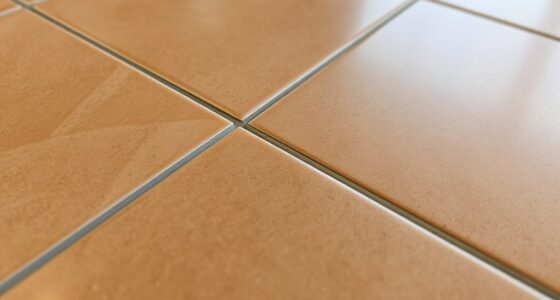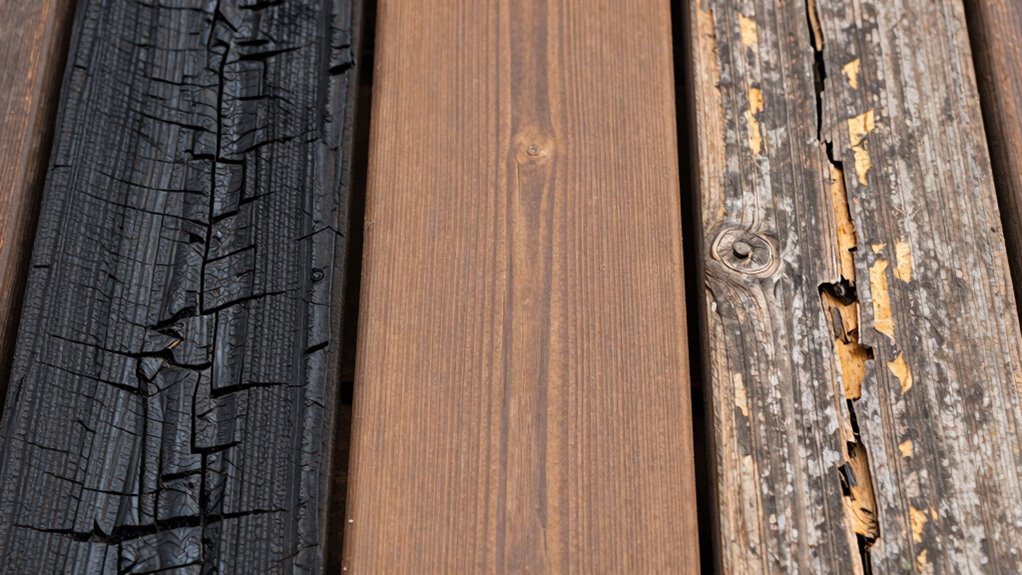

To judge decking materials effectively, consider how they handle heat—lighter colors or reflective finishes stay cooler under the sun. Check grip by looking for textured surfaces or unfinished wood that provide traction, especially when wet. For longevity, evaluate durability—synthetic composites resist rot and insects better, but natural woods need regular maintenance. Understanding these factors helps you pick a safe, comfortable, and durable deck. Keep exploring to discover detailed tips for making the best choice.
Key Takeaways
- Assess material color and finish; lighter colors and reflective surfaces stay cooler in sunlight.
- Check surface texture; textured or unfinished surfaces offer better grip, especially when wet.
- Consider material type; composites resist weathering and require less maintenance, enhancing longevity.
- Evaluate installation quality; proper fastening and spacing prevent warping and extend deck life.
- Review climate suitability; choose heat-resistant, durable materials for your specific outdoor environment.
Choosing the right decking material is essential because it directly impacts your outdoor space’s safety, comfort, and durability. When evaluating options, considering how each material handles heat, grip, and longevity helps ensure you select the best fit for your lifestyle. Heat retention is a significant factor; some materials absorb and retain more heat than others, making your deck uncomfortable during hot days. For instance, dark woods or composite materials with dark finishes tend to heat up quickly, creating a scorching surface that’s tough to walk on barefoot. Lighter-colored woods or composite options with reflective surfaces tend to stay cooler, providing a more comfortable experience. When judging heat, it’s also important to consider your climate and how often you’ll be using the deck during peak sunlight hours. Additionally, understanding the material’s heat absorption properties can help you choose options that stay cooler in the summer heat. Incorporating reflective finishes can further enhance heat management, especially in high-sunlight environments. Properly selecting materials with good heat management can significantly improve your outdoor comfort.
Choose lighter-colored or reflective decking materials to stay cooler and enjoy your outdoor space comfortably.
Grip is another critical aspect, especially if you have children, pets, or live in a rainy area. A slippery surface can pose safety hazards, so you want a decking material that offers good traction even when wet. Many wood options naturally provide better grip, especially if they have a textured surface or are unfinished. Composite materials often incorporate textured surfaces to improve slip resistance, but some can become slick when wet if not properly textured or maintained. You should also pay attention to installation techniques, as proper installation can enhance grip. For example, avoiding overly smooth finishes and ensuring the deck’s surface has a slight texture will help prevent slips and falls, making your outdoor space safer for everyone. Proper maintenance also plays a role in preserving grip over time, especially in regions with frequent rain or humidity. Regular cleaning and surface treatments can help maintain optimal grip levels over the years.
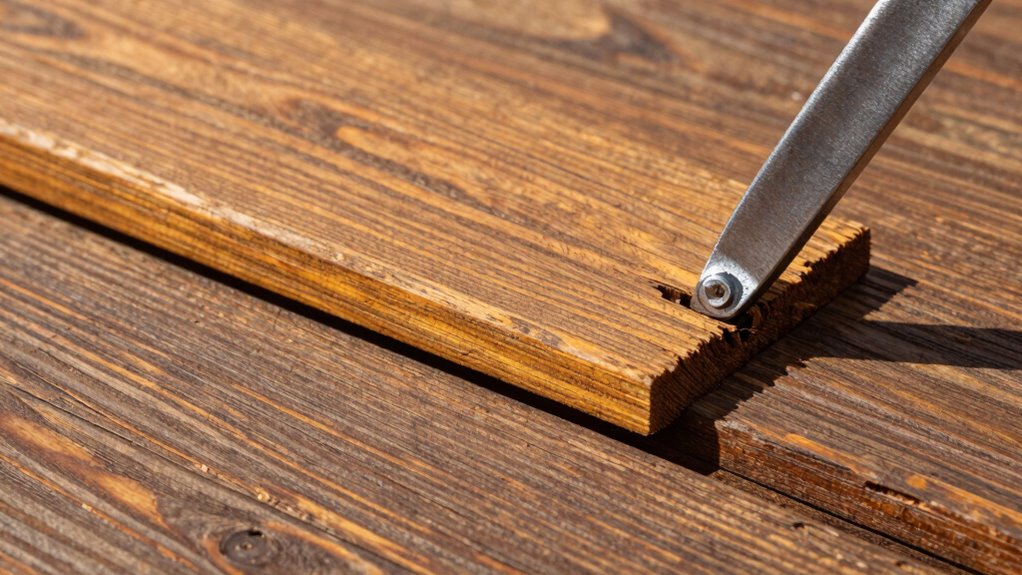
Longevity depends on both the material’s inherent durability and the installation techniques used. Natural woods like cedar or redwood are attractive but may require regular maintenance and sealing to prolong their lifespan. Synthetic options such as composite decking tend to last longer with less upkeep, resisting rot, insects, and weathering. When judging longevity, look beyond initial cost and consider how well the material withstands your local climate, especially extreme weather conditions. Proper installation techniques—like ensuring correct spacing, sealing joints, and using high-quality fasteners—play a vital role in maximizing your deck’s lifespan. This not only prevents issues like warping or cracking but also maintains the aesthetic appeal, contributing to your outdoor aesthetics over time. Additionally, selecting climate-resistant materials can further enhance your deck’s longevity in harsh weather conditions. Regular inspections and preventative maintenance can also significantly extend the life of your decking investment. Choosing materials with proven weather resistance can save you money and effort over the long term.
outdoor decking composite materials
As an affiliate, we earn on qualifying purchases.
As an affiliate, we earn on qualifying purchases.
Frequently Asked Questions
Are Composite Decks More Slip-Resistant Than Wood?
Composite decks are generally more slip-resistant than wood, thanks to their textured surfaces and specialized coatings. When comparing materials, look at slip resistance ratings to guarantee safety, especially in wet conditions. Composite decking often provides better grip, reducing the risk of slips and falls. So, if safety is a priority, composite decks tend to outperform wood in slip resistance, making them a smarter choice for many homeowners.
How Does Climate Affect Decking Material Durability?
Did you know that extreme weather can shorten decking lifespan by up to 50%? Climate impact plays a essential role in material degradation; high humidity accelerates rot, while intense sun can cause warping. If you live in a cold, snowy area, choosing materials resistant to frost is indispensable. So, you must consider your climate to select decking that endures, ensuring your investment stays beautiful and safe over time.
Can Treatments Improve Heat Resistance in Wooden Decks?
Yes, treatments can improve heat resistance in wooden decks. Applying specialized wood treatment products designed for heat resistance creates a protective barrier, reducing heat absorption and preventing warping or cracking. Regularly reapplying these treatments guarantees ongoing protection. You should choose products suitable for outdoor use and follow manufacturer instructions carefully to maximize their effectiveness, enhancing your deck’s durability and comfort during hot weather.
Which Decking Materials Are Environmentally Sustainable?
Think of eco-friendly decking as a refreshing update for your home. You’re likely to find sustainable options like recycled materials, including reclaimed wood or composite made from recycled plastics. Look for decks finished with eco-friendly finishes that reduce chemical impact. These choices help protect the planet while offering durability and style, making your outdoor space both beautiful and responsible.
How Often Should Decking Be Inspected for Longevity?
You should inspect your deck at least once a year to guarantee its longevity planning is on track. Regular deck inspections help identify early signs of wear, damage, or deterioration, allowing you to address issues promptly. During each inspection, check for loose boards, rotting wood, rusted nails, or uneven surfaces. Consistent monitoring extends your deck’s lifespan and keeps it safe, making annual inspections a smart part of your maintenance routine.
slip-resistant wooden deck tiles
As an affiliate, we earn on qualifying purchases.
As an affiliate, we earn on qualifying purchases.
Conclusion
Think of choosing decking materials like selecting a sturdy ship for a voyage. You want one that can withstand the scorching sun (heat), hold steady underfoot (grip), and sail smoothly for years (longevity). By judging each material with these qualities in mind, you’re steering your deck toward calm waters and endless enjoyment. With the right choice, your outdoor space becomes a reliable vessel, ready to carry memories across seasons and years.
As an affiliate, we earn on qualifying purchases.
As an affiliate, we earn on qualifying purchases.