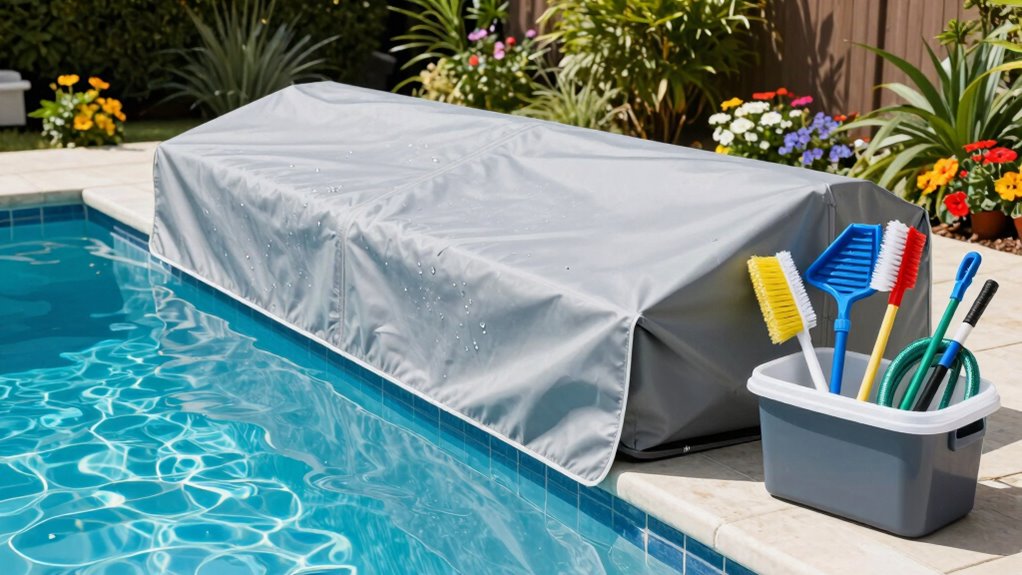
To keep your pool cover in good shape, clean it regularly with mild soap and rinse thoroughly to remove dirt and debris. Store it in a cool, dry place away from sunlight, folding carefully to avoid stress points. Check for damage and repair small tears promptly. Good maintenance extends your cover’s lifespan and guarantees it’s ready for use when needed. Keep going to discover more tips for proper cleaning and storage.

Get pool and patio gear delivered free with Prime
- Fast, free delivery on millions of items
- Prime Video, Amazon Music and more included
- Member-only deals all year
Key Takeaways
- Regularly clean the cover with mild soap and water to prevent debris buildup and extend its lifespan.
- Use gentle cleaning solutions and avoid harsh chemicals that can damage the material.
- Store the cover in a cool, dry place, folded carefully to prevent creases and stress points.
- Inspect the cover periodically during the off-season for tears, frays, or damage needing repair.
- Maintain proper storage practices, including drying hardware and straps to prevent rust and deterioration.
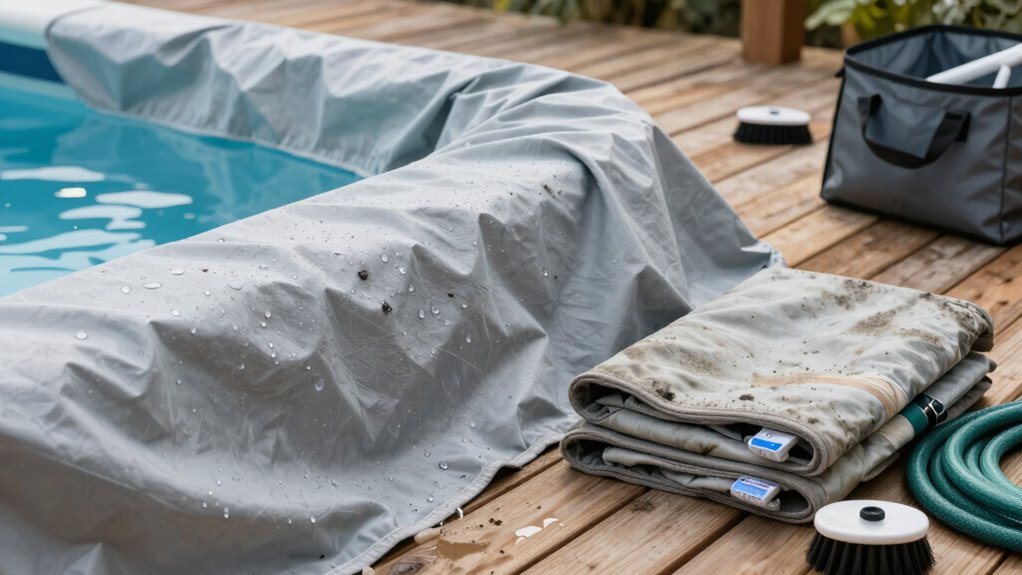
Have you ever wondered how to keep your pool cover clean and in good condition after the swimming season ends? Proper cleaning and storage are essential to extend your cover’s lifespan and ensure it’s ready for next year’s use. Luckily, modern technology offers solutions like automatic cleaning systems that make the process easier. These systems can remove debris, leaves, and dirt without you having to scrub or manually vacuum the cover, saving you time and effort. When you invest in an automatic cleaner, you’re also reducing the buildup of grime that can cause tears or wear over time.
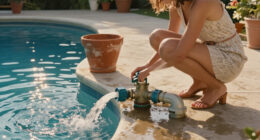
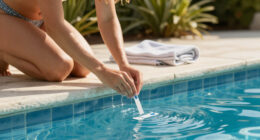
Before you start cleaning, it’s important to perform chemical maintenance. Check your pool’s chemical levels and adjust them if necessary. Proper chemical balance helps prevent algae, mold, and bacteria from growing on the cover. Use a gentle cleaning solution designed for pool covers, or a mixture of mild soap and water, and avoid harsh chemicals that could degrade the material. When cleaning, focus on removing any accumulated debris, especially in the seams and creases, where dirt can settle and cause deterioration over time. Rinse thoroughly to ensure no residue remains, and allow the cover to dry completely before storing it away. Moisture left on the cover can promote mold growth, which weakens the material and complicates future cleaning. Regular maintenance, including automatic cleaning systems, can make this task much more manageable over time. Incorporating preventative measures such as regular inspections can further extend the lifespan of your cover and help catch small issues before they become costly repairs. Additionally, understanding the materials used in your cover can help you choose the most suitable cleaning and storage methods for optimal longevity.
Perform chemical checks and use gentle cleaners to prevent damage and mold growth on your pool cover.
Using proper storage techniques is equally crucial to prevent damage during the off-season. Once the cover is clean and dry, fold it carefully to avoid creases and stress points that may lead to tears. Store it in a cool, dry place away from direct sunlight, which can cause material degradation over time. Using a storage bag or cover can provide extra protection from dust, pests, and environmental elements. If your cover has hardware or straps, make sure to clean and dry those as well, preventing rust and corrosion. Additionally, periodically inspecting your stored cover can help identify early signs of damage or deterioration, ensuring it remains in good condition for future use.
During the off-season, inspect your cover periodically for signs of damage or wear. Address small tears or frayed edges promptly to prevent larger issues when you’re ready to use it again. Regular maintenance, including cleaning with automatic systems and proper chemical treatment, helps preserve the integrity of your pool cover. When the swimming season approaches, give it a thorough inspection, a quick clean, and any necessary repairs. Properly caring for your pool cover through routine cleaning and careful storage guarantees it stays in top condition, providing reliable protection for your pool year after year.
Products Worth Considering

iRobot Roomba 105 Robot Vacuum with LiDAR Navigation

Levoit Vital 100S-P Air Purifier for Home and Pets

Philips Hue Play HDMI Sync Box
As an affiliate, we earn on qualifying purchases.
Frequently Asked Questions
How Often Should I Replace My Pool Cover?
You should replace your pool cover every 5 to 10 years, depending on the pool cover material and the cover replacement schedule. Regular use, exposure to weather, and wear can weaken the cover over time. If you notice tears, mold, or significant deterioration, it’s time for a new one. Following the manufacturer’s recommended cover replacement schedule helps guarantee safety and maximum protection for your pool.
Can I Use Regular Household Cleaning Products on My Cover?
You shouldn’t use regular household cleaning products on your pool cover because they can cause unexpected chemical reactions that damage the material. Household cleaners often lack the proper formulation for pool cover materials, risking incompatibility and deterioration. Instead, choose cleaners specifically designed for your cover’s material, ensuring safe cleaning and longevity. Remember, proper cleaning preserves your cover’s effectiveness and extends its lifespan, saving you money and hassle down the line.
What’s the Best Way to Prevent Mold on Covers?
To prevent mold on your pool cover, you should regularly clean it with a mild, non-abrasive cleaner and guarantee thorough drying. Incorporate algae prevention strategies like applying a protective cover spray designed for your cover material to boost durability. Keep your cover well-ventilated and remove debris promptly. Proper maintenance not only inhibits mold growth but also extends your cover’s lifespan, maintaining its effectiveness and appearance over time.
Are There Eco-Friendly Options for Cover Cleaning?
Yes, there are eco-friendly options for cover cleaning. You can use eco-friendly detergents that are biodegradable and free from harsh chemicals, making them safe for the environment. Additionally, choosing biodegradable covers helps reduce environmental impact. When cleaning, opt for natural solutions like vinegar or baking soda, which effectively remove dirt and mold without harming the planet. These options keep your pool clean while supporting sustainability.
How Do I Safely Store My Cover During Off-Season?
Think of your cover as a sleeping giant, resting peacefully during the off-season. To keep it safe, carefully clean your cover material, then fold or roll it gently, avoiding sharp creases. Use a breathable storage bag or a cool, dry place, like a closet or shed. Follow proper storage techniques to prevent mold, tears, and damage, ensuring your cover stays strong and ready for next season’s splash.
Conclusion
Keeping your pool cover clean and properly stored isn’t just about maintenance—it’s about protecting your investment and ensuring your pool’s longevity. Regular cleaning and correct storage extend the life of your cover, saving you money and hassle down the line. Think of it as giving your pool a much-needed spa day, so it’s always ready for those hot summer days. When you take good care of your cover, you’re truly making the most of your backyard oasis.