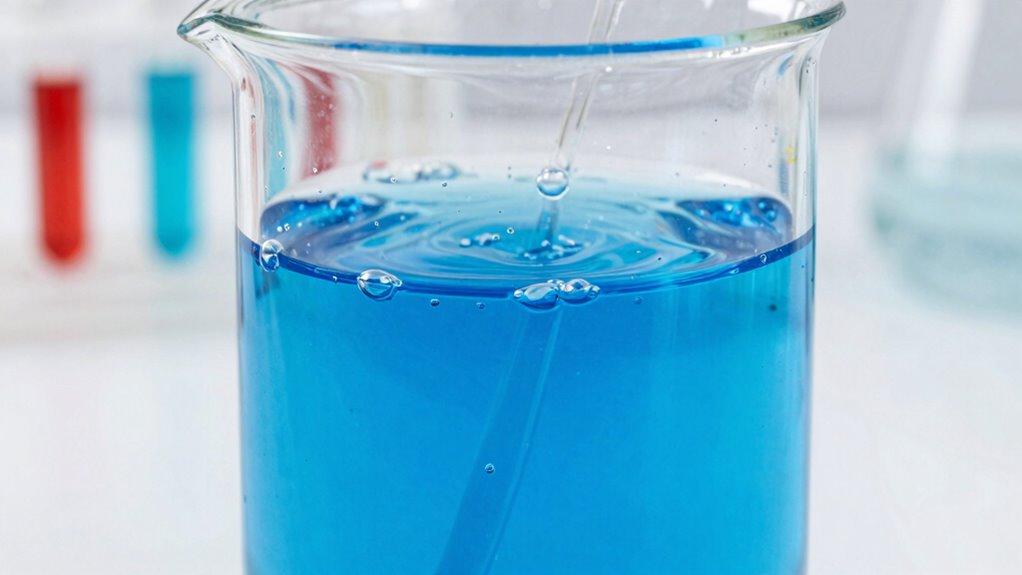

Borates, buffers, and stabilizers play a key role in controlling your water’s chemistry. They help maintain stable pH levels by neutralizing acids or bases, preventing sudden shifts that could damage your system. Borates are especially good at buffering, reducing corrosion and scaling. Using these additives keeps your water balanced, protects equipment, and extends lifespan. To see how these interactions work together, keep exploring their effects on water behavior and system safety.

Get pool and patio gear delivered free with Prime
- Fast, free delivery on millions of items
- Prime Video, Amazon Music and more included
- Member-only deals all year
Key Takeaways
- Borates act as effective buffers, maintaining stable pH levels and preventing fluctuations in water chemistry.
- Buffers absorb or release hydrogen ions to resist sudden pH changes, ensuring system stability.
- Stabilizers, including borates, reduce corrosion and scaling by maintaining optimal pH and water chemistry.
- Proper use of these agents enhances water system safety, efficiency, and equipment longevity.
- They help optimize water chemistry, preventing deposits and ensuring consistent process performance.
Understanding how water behaves is essential when working with borates, buffers, and stabilizers, as these substances directly influence water chemistry and stability. When you add borates, they serve as effective buffers, helping to maintain a stable pH level by neutralizing acids or bases that might otherwise cause fluctuations. This pH regulation is crucial because even small shifts can lead to corrosion, scaling, or the formation of unwanted deposits in systems like pools, cooling towers, or boilers. Borates act as a safeguard, ensuring that water remains within the ideal pH range, which protects equipment and prolongs its lifespan.
Buffers, in general, are substances designed to resist changes in pH. When you introduce buffers into water, they absorb or release hydrogen ions as needed, keeping the pH steady even when acids or alkalis are added. This stability is essential because it prevents sudden pH swings that could compromise system integrity or efficiency. For instance, in water treatment or industrial processes, maintaining consistent pH levels minimizes corrosion risks and improves process reliability. Borates are particularly popular because they have a high buffering capacity and are less corrosive themselves, making them ideal for applications where corrosion prevention is a top priority. Moreover, understanding chemical interactions between these additives and water can help optimize their effectiveness and prevent potential issues in various applications. Additionally, using proper testing methods can ensure that water chemistry remains balanced over time. Proper water chemistry management is fundamental for system safety and efficiency, and a comprehensive understanding of water chemistry principles can further assist in achieving optimal results.
As an affiliate, we earn on qualifying purchases.
Frequently Asked Questions
How Do Borates Affect pH Stability Over Time?
Borates help maintain pH stability over time by acting as a buffer, reducing pH fluctuation. When borates are present, they interact with hydrogen ions, preventing drastic changes in acidity or alkalinity. Your water’s pH remains more consistent because of these borate interactions, which slow down pH shifts caused by external factors like contaminants or evaporation. This makes borates essential for keeping water chemistry balanced and stable over prolonged periods.
Can Buffers Prevent All Types of Water Chemistry Changes?
No, buffers can’t prevent every water chemistry change! You might think they’re like magic shields, stopping all shifts in water pH and chemical reactions, but they’re only powerful within specific limits. When conditions become extreme or unpredictable, buffers can’t hold back the chaos. They stabilize water chemistry, but they don’t turn water into an invincible fortress. Always monitor and adjust for the best results!
What Are Common Stabilizers Used in Industrial Water Systems?
You’ll find common stabilizers like phosphates, silicates, and nitrates used in industrial water systems. These stabilizers help control chemical interactions, preventing corrosion or scaling. They also guarantee material compatibility, safeguarding equipment from damage. By maintaining stable water chemistry, these stabilizers improve system efficiency and longevity. Always choose the right stabilizer based on your system’s specific needs to optimize performance and reduce maintenance issues.
Do Borates Pose Environmental Risks When Used in Water Treatment?
Borates can pose environmental risks in water treatment due to concerns about borate toxicity and environmental impact. When released in large quantities, they may affect aquatic life and disrupt ecosystems. You should monitor borate levels carefully and adhere to regulations to minimize these risks. Proper management guarantees that the benefits of borates in stabilizing water chemistry don’t come at the cost of environmental health.
How Do Buffers Influence Water’s Corrosiveness?
Imagine you’re in a medieval castle’s moat—buffers in water act like that moat, regulating pH and preventing sudden changes. They influence water’s corrosiveness by maintaining stable pH levels, which helps with corrosion inhibition. When water’s pH stays balanced, it’s less aggressive toward metal surfaces. So, buffers keep your water less corrosive, protecting pipes and equipment while making water treatment more reliable and safer.
water stabilizers for corrosion prevention
As an affiliate, we earn on qualifying purchases.
As an affiliate, we earn on qualifying purchases.
Conclusion
Understanding how borates, buffers, and stabilizers influence water helps you appreciate its complex behavior. These substances can markedly improve water’s stability, pH balance, and overall performance in various applications. Fascinatingly, buffer solutions can maintain pH within a narrow range, even when acids or bases are added—sometimes up to a 100-fold change in concentration. By mastering these interactions, you can optimize water use in industries like agriculture, manufacturing, and healthcare, ensuring efficiency and safety.
pH testing kits for water systems
As an affiliate, we earn on qualifying purchases.
As an affiliate, we earn on qualifying purchases.
water chemistry balancing additives
As an affiliate, we earn on qualifying purchases.
As an affiliate, we earn on qualifying purchases.
Halloween Picks
halloween
As an affiliate, we earn on qualifying purchases.