
Total Dissolved Solids (TDS) in your pool are the invisible minerals, salts, and contaminants that build up over time from chemicals, sources, and usage. High TDS levels can cause cloudy water, scale, and reduce the effectiveness of sanitizers like chlorine. If you ignore TDS, it can lead to equipment damage and poor water quality. Want to know how to keep your pool balanced? Keep going to discover more about managing TDS effectively.

Get pool and patio gear delivered free with Prime
- Fast, free delivery on millions of items
- Prime Video, Amazon Music and more included
- Member-only deals all year
Key Takeaways
- TDS measures all inorganic and organic substances dissolved in pool water, affecting water quality.
- High TDS levels can cause cloudiness, scaling, and damage to pool equipment.
- Maintaining TDS below 1,000 ppm helps ensure effective sanitation and water clarity.
- TDS increases from chemicals, contaminants, and source water, requiring regular testing.
- Managing TDS involves partial draining, refilling, and proper chemical balance to prevent issues.
Ever wondered why your pool’s water sometimes looks cloudy or feels off? It’s often due to the level of total dissolved solids (TDS) in your water. TDS refers to the combined amount of all inorganic and organic substances dissolved in your pool water, including minerals, salts, metals, and other contaminants. When these solids build up beyond a certain point, they can affect water quality, making it less inviting and potentially damaging your equipment. That’s why understanding TDS is essential for proper pool maintenance and maintaining balanced water chemistry.
High TDS levels can cloud your pool water and harm your equipment. Regular testing is key.
In your pool, TDS isn’t just about dirt or debris floating around. It’s about the tiny particles and dissolved substances that aren’t visible but influence how your water behaves. Over time, as you add chemicals, use the pool, or even from source water, these solids accumulate. If you don’t monitor and control TDS levels, your water can become hard, cloudy, or even develop an unpleasant smell. High TDS can interfere with sanitation chemicals like chlorine, making it harder to keep the water safe and clean. This can lead to algae growth or bacteria thriving despite regular chlorination.
Maintaining proper water chemistry is crucial here. When TDS levels rise too high, the effectiveness of your pool chemicals diminishes, forcing you to use more chemicals to keep the water balanced. That’s why regular testing of your water’s TDS level is essential. Typically, a TDS level below 1,000 ppm (parts per million) is considered good for pools, but levels above 2,000 ppm start to cause issues. If your TDS gets too high, the best solution is often to partially drain and refill your pool with fresh water. This helps dilute the dissolved solids and restore a healthier balance. Regular water testing can help you stay on top of these changes before they become problematic.
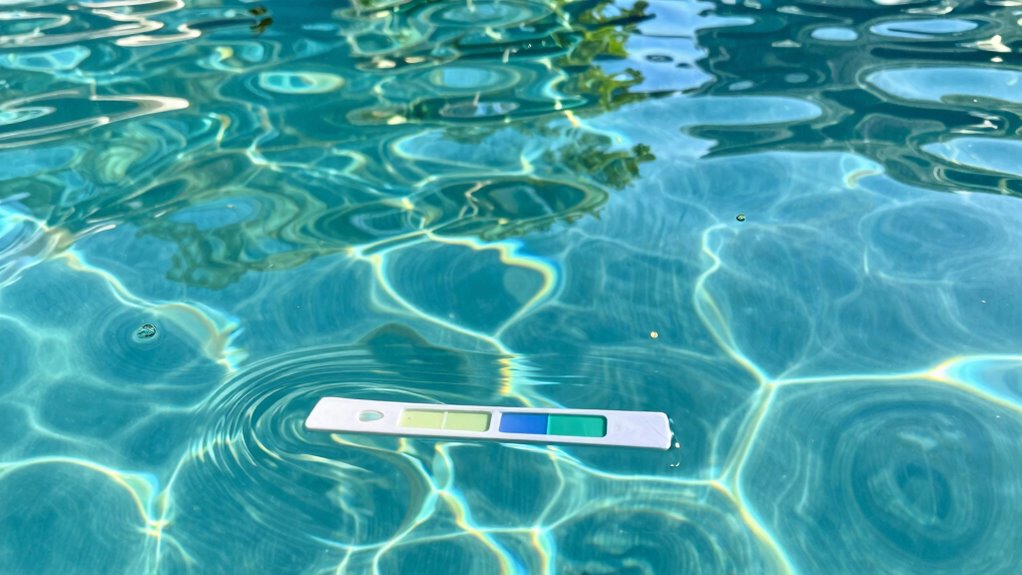
You might also notice that high TDS can lead to scale buildup on your pool’s surfaces and equipment. This can cause plumbing problems, reduce circulation efficiency, and increase maintenance costs. To prevent this, keep an eye on your water chemistry regularly, especially if you live in an area with hard water. Using water testing kits or digital meters can help you stay on top of TDS levels. Proper water management strategies can further reduce the risk of scale and other issues. Remember, good pool maintenance isn’t just about adding chemicals; it’s about managing all aspects of water chemistry, including TDS, to keep your pool sparkling and safe.
digital pool water TDS meter ppm
As an affiliate, we earn on qualifying purchases.
As an affiliate, we earn on qualifying purchases.
Frequently Asked Questions
How Often Should I Test My Pool’s TDS Levels?
You should test your pool’s TDS levels at least once a month to maintain proper water chemistry. During heavy use or after significant rainfall, test more frequently, like every two weeks. Regular testing helps guarantee your water stays balanced, preventing issues like cloudy water or scaling. Incorporate TDS checks into your routine pool maintenance to keep your water clear, safe, and inviting.
Can High TDS Cause Skin Irritation?
Coincidences happen, like noticing skin irritation when TDS levels spike unexpectedly. High TDS can disrupt your pool water chemistry, leading to skin discomfort or irritation. When TDS measurement techniques reveal elevated levels, it’s a sign to balance your pool’s chemicals. You might not realize how TDS influences skin health, but maintaining ideal levels guarantees a comfortable, irritation-free swimming experience. Keep an eye on TDS to protect your skin and pool water quality.
What Are the Best Methods to Reduce TDS?
To reduce TDS levels, you should focus on water filtration and chemical balancing. Regularly filter your pool water to remove impurities and debris that contribute to TDS. Additionally, maintain proper chemical levels to prevent mineral buildup. Draining and refilling your pool periodically, especially when TDS gets too high, can also help. Consistent maintenance and monitoring guarantee your pool stays balanced, comfortable, and safe for swimming.
Does TDS Affect Chlorine Effectiveness?
High TDS levels can reduce chlorine’s effectiveness, as shown in a recent case where elevated TDS caused chlorine to become less potent, leading to algae growth. You influence pool water chemistry with TDS measurement techniques, and when TDS is too high, chlorine struggles to sanitize effectively. To keep chlorine working efficiently, regularly test TDS levels and dilute your pool water if levels become excessive.
Is There an Ideal TDS Range for Pools?
The ideal TDS range for pools is between 1,000 and 2,000 ppm. Staying within this range helps maintain water clarity and guarantees proper chemical balance. When TDS levels are too high, water can become cloudy, and chemical effectiveness drops. Regular testing and partial water changes keep TDS in check, allowing your pool’s water to stay clear, balanced, and inviting for swimmers.
pool water testing kit chlorine pH alkalinity
As an affiliate, we earn on qualifying purchases.
As an affiliate, we earn on qualifying purchases.
Conclusion
Understanding total dissolved solids helps you keep your pool pristine, but it’s not just about numbers—it’s about the balance between clarity and contamination. Just like a clear mirror reflects your image, a well-maintained pool reflects your care. Too high, and your paradise becomes cloudy; too low, and you risk imbalance. Aim for harmony in your water, knowing that what you see on the surface mirrors the health beneath. Keep it balanced, keep it beautiful.
pool water test strips TDS chlorine pH
As an affiliate, we earn on qualifying purchases.
As an affiliate, we earn on qualifying purchases.
pool drain and refill hose for swimming pool
As an affiliate, we earn on qualifying purchases.
As an affiliate, we earn on qualifying purchases.
Fall Picks
fall essentials
As an affiliate, we earn on qualifying purchases.