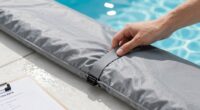
To calculate your pool’s surface area, measure its shape and dimensions: for rectangular pools, multiply length by width; for oval pools, multiply length by width then by 0.785; for irregular shapes, divide into smaller sections and calculate each. Accurate measurements help you determine the right amount of chemicals, select suitable covers, and improve heating efficiency. If you continue exploring, you’ll discover tips to make your calculations even easier and more precise.
Key Takeaways
- Measure the pool’s length and width at the water’s surface for rectangular shapes; use formulas accordingly.
- For oval pools, multiply length and width, then multiply by 0.785 for the surface area.
- Divide irregular shapes into sections, calculate each, and sum for total surface area.
- Accurate surface area ensures proper chemical dosing, cover sizing, and heating efficiency.
- Use precise measurements to prevent over- or under-application of chemicals and optimize energy use.
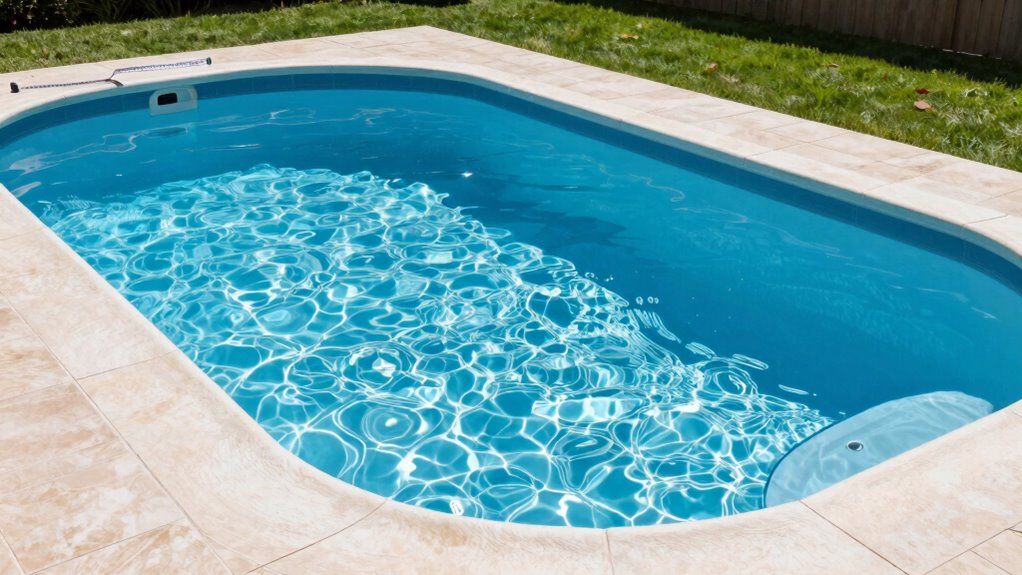
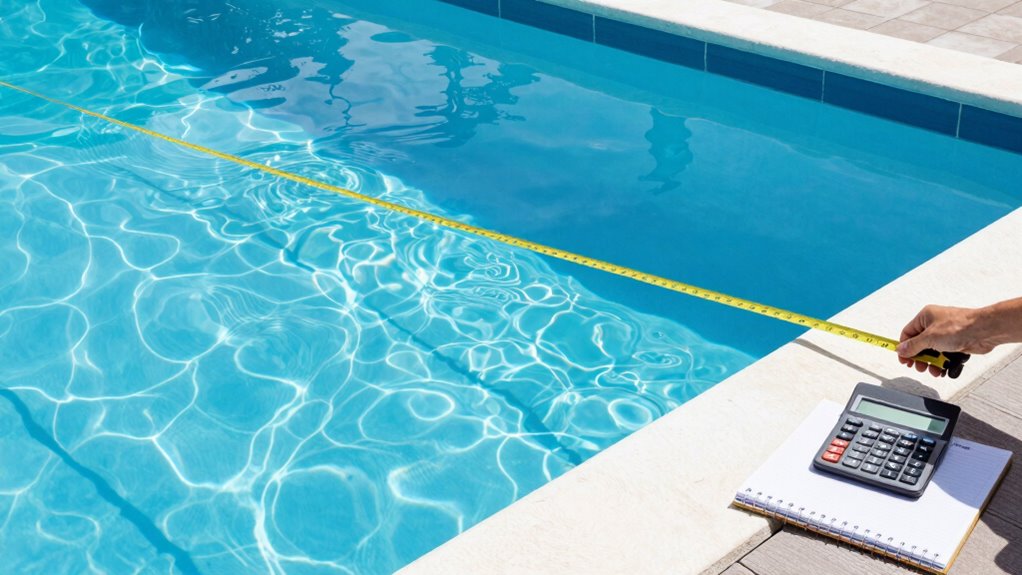
Ever wondered how to accurately determine your pool’s surface area? Knowing this measurement is essential for proper pool maintenance, ensuring your chemicals are balanced correctly, selecting the right cover, and optimizing heating efficiency. Calculating your pool’s surface area isn’t difficult, but it requires some basic measurements and a few simple formulas. First, you need to identify the shape of your pool. Most pools are rectangular, oval, or freeform, and each shape has its own way of calculating surface area. For a rectangular pool, measure the length and width at the water’s surface, then multiply these two numbers. For example, if your pool is 30 feet long and 15 feet wide, the surface area is 30 x 15 = 450 square feet. Oval pools require measuring the longest diameter and the shortest diameter, then multiplying these and by 0.785 (which is π/4). If your pool measures 25 feet by 12 feet, the surface area is approximately 25 x 12 x 0.785 = 235.5 square feet. For irregular or freeform pools, you might need to divide the shape into smaller, manageable sections—rectangles, circles, or ovals—and calculate each area separately, then add everything together. This approach guarantees you get an accurate total surface area. Once you have this measurement, you can use it effectively for various pool maintenance tasks. For example, when applying chemicals, knowing the surface area helps you determine the correct amount needed, preventing over- or under-treatment. Accurate chemical dosing is critical for safety measures, as improper balance can lead to algae growth, cloudy water, or skin irritation. Additionally, understanding your pool’s surface area can help you select the most appropriate pool cover types for your needs. When selecting a pool cover, knowing the surface area allows you to buy the right size, ensuring the entire water surface is protected from debris and evaporation. Furthermore, if you’re heating your pool, the surface area directly influences energy consumption—larger surfaces require more heat. By calculating the precise surface area, you can better estimate your heating needs and avoid wasting energy. Understanding your pool’s shape and dimensions is also important for effective pool design and customization. Overall, understanding your pool’s surface area enhances your ability to maintain a safe and enjoyable swimming environment. It helps you implement effective safety measures, like secure covers, and ensures your pool remains well-balanced and energy-efficient. Whether you’re a new pool owner or just need a refresher, taking the time to measure and understand your pool’s size is a simple step that pays off in better pool management and safer swimming conditions. Keep your measurements handy, and you’ll be better equipped to handle all aspects of pool care with confidence.
As an affiliate, we earn on qualifying purchases.
Frequently Asked Questions
What Tools Do I Need to Measure My Pool Accurately?
To measure your pool accurately, you need measurement techniques like using a tape measure for length, width, and depth, and a calculator to determine surface area. Tool recommendations include a sturdy, retractable tape measure, a laser distance meter for precise measurements, and a float or pole for measuring depth. Ensuring accurate measurements helps you select the right size cover, heater, or chemical treatment effectively.
How Often Should I Recalculate My Pool’s Surface Area?
You should recalculate your pool’s surface area at least once a year, especially after major changes like reshaping or equipment upgrades. Think of it like calibrating your equipment—just as a chef adjusts recipes for new ingredients, maintaining accurate surface measurements guarantees effective pool maintenance, heating, and chemical use. Regular recalculations keep your pool in top shape, saving you money and preventing issues down the line.
Does Pool Shape Affect Chemical Coverage Calculations?
Yes, your pool shape considerably affects chemical coverage calculations. Irregular or complex shapes can increase the surface area, meaning you’ll need more chemicals to maintain proper balance. When calculating chemical coverage, you must consider the total surface area, including corners and curves. Accurate measurements help ensure you add the right amount of chemicals, avoiding over- or under-treatment, which can impact water quality and safety.
Can Irregular Pools Be Measured Using Standard Formulas?
Irregular pools can be measured using standard formulas, but you need to account for shape variations. Start by breaking down the pool into simpler geometric sections based on your pool’s dimensions, such as rectangles, circles, or triangles. Measure each section’s dimensions accurately, then calculate their surface areas separately. Add these areas together to get the total pool surface area, ensuring your calculations reflect the unique shape variations of your pool.
How Do Weather Conditions Impact Pool Chemical Requirements?
Weather conditions dramatically influence your pool’s chemical needs. As water evaporation increases during hot, windy days, you’ll notice a drop in water levels, which can concentrate chemicals and throw off balance. Temperature fluctuations also matter; warmer weather speeds up chemical reactions, requiring more frequent adjustments. Stay vigilant—monitor your pool regularly, and adapt your chemical routine to weather shifts to keep your water safe, clear, and inviting.
As an affiliate, we earn on qualifying purchases.
Conclusion
Think of your pool as a mirror reflecting your summer days. Just like a mirror needs a clear surface to show its best, your pool’s surface area is the foundation for perfect covers, efficient heating, and balanced chemicals. Knowing how to measure it is like polishing that mirror—ensuring everything works smoothly and beautifully. With this knowledge, you keep your pool shining bright all season, turning everyday maintenance into a simple, effortless reflection of your care.
pool heating efficiency calculator
As an affiliate, we earn on qualifying purchases.
As an affiliate, we earn on qualifying purchases.
As an affiliate, we earn on qualifying purchases.