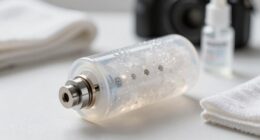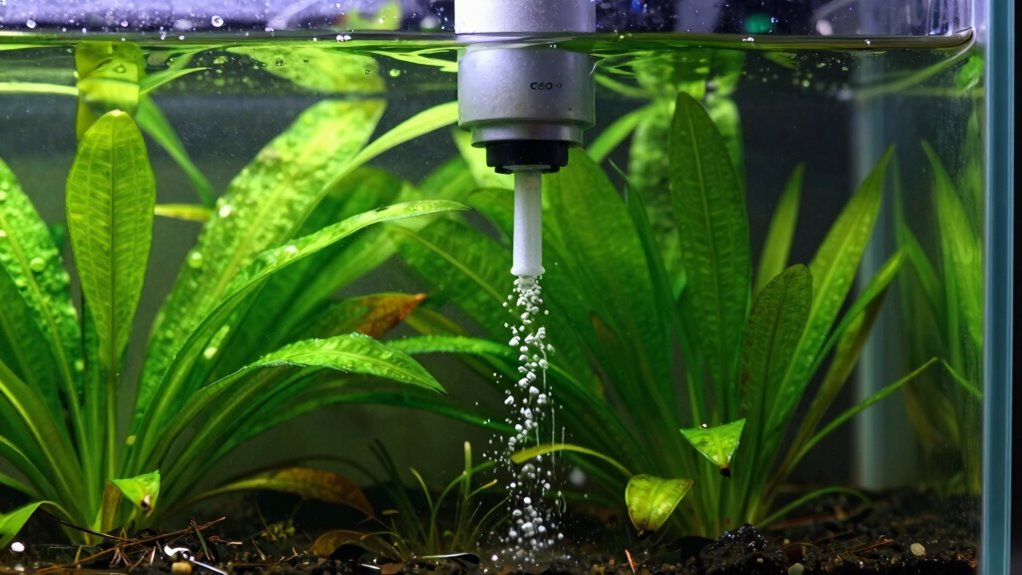
CO2 pH control systems outperform acid feeders when you need precise, rapid pH adjustment, especially in larger or more complex water setups. They provide scalable, reliable stability and are easier to operate for trained personnel. However, if you have a small, simple system or need quick fixes without high investment, acid feeders may be better. To understand which method fits best for your needs and how to troubleshoot, explore the details that follow.
Key Takeaways
- CO2 systems provide precise, rapid pH adjustments ideal for large or complex systems needing stable control.
- Acid feeders are simpler, cheaper upfront, and suitable for small or straightforward setups with less stringent pH stability.
- CO2 systems have higher initial costs but lower ongoing maintenance and chemical waste, making them more cost-effective long-term.
- Proper calibration, monitoring, and troubleshooting are essential for CO2 systems to prevent pH swings and ensure reliability.
- In environments demanding quick, scalable pH control with minimal chemical use, CO2 systems outperform acid feeders.

Smart pH ORP Controller Aquarium pH Monitor Wi-Fi for pH/ORP/Temp Measurements in Water w/Calibration, 3 in 1 Nutrient System Dual-Plug Fit with CO2 Bottle & O3 Generator for Hydroponics Plants
Real-time Wi-Fi Monitor : LANDTEK pH and ORP Contorller can measure pH, ORP (oxidation-reduction potential) and temperature with…
As an affiliate, we earn on qualifying purchases.
As an affiliate, we earn on qualifying purchases.
How Does CO2 pH Control Work, and Why Is It Beneficial?

CO2 pH control works by carefully adjusting the amount of carbon dioxide in water to maintain a stable pH level. This process relies on pH buffering, which helps resist sudden changes in acidity, ensuring consistent water quality. Gas regulation is key here—you add or remove CO2 to fine-tune the pH. When you introduce CO2, it reacts with water to form carbonic acid, lowering pH; removing CO2 raises it. This method offers precise control, allowing you to respond quickly to fluctuations. Unlike chemical dosing, CO2 adjustments are cleaner and more environmentally friendly. Additionally, water chemistry plays a crucial role in understanding and optimizing this process. Proper understanding of buffer capacity can enhance the effectiveness of CO2 pH control systems. The dissolution rate of CO2 in water also influences how quickly pH adjustments take effect. In some cases, monitoring equipment is essential to ensure accurate and consistent pH levels, especially in large or sensitive systems. For example, automatic controllers can help maintain stability by making real-time adjustments. Overall, CO2 pH control provides reliable, real-time management of water acidity, making it a popular choice for maintaining ideal conditions in aquariums, pools, and industrial systems.

Smart Water Quality Tester 6-in-1 pH/EC/TDS/Salinity/S.G and Temperature Meter with Wi-Fi Continuous Monitor Wall-Mounted pH Water Meter with ATC and Easy Calibration for Aquariums, Hydroponics
6 in 1 pH Water Meter with monitor: Equipped with a 6-in-1 sensor, this ph water meter provides…
As an affiliate, we earn on qualifying purchases.
As an affiliate, we earn on qualifying purchases.
When Should You Use CO2 pH Control Instead of Acid Feeders?
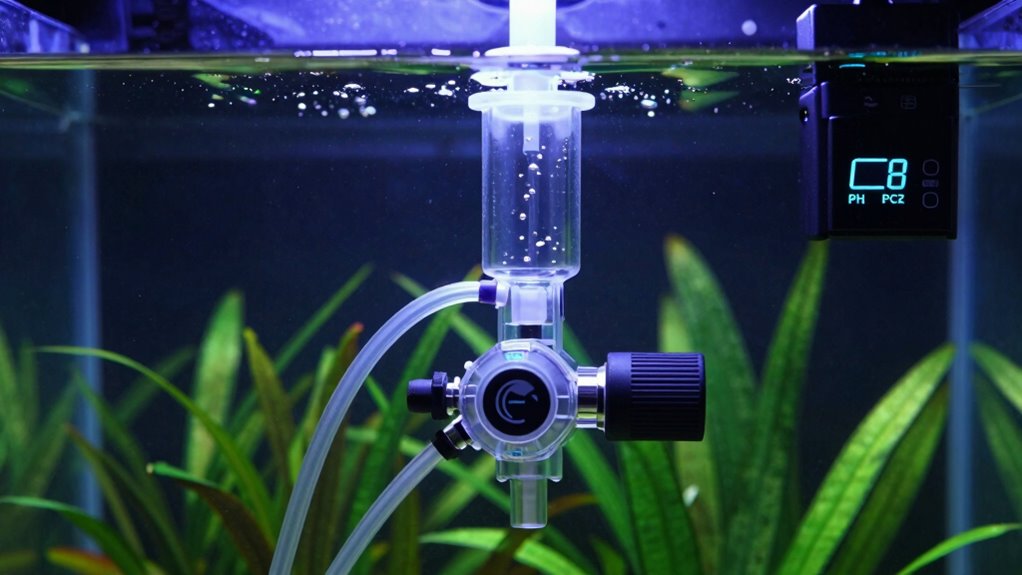
While acid feeders can effectively lower pH, there are situations where using CO2 pH control is the better choice. If you need consistent pH stability, CO2 systems offer more precise adjustments, reducing fluctuations that can stress your system. They’re also more scalable, making it easier to adapt as your system grows or changes. CO2 control responds quickly to pH shifts, maintaining ideal conditions without overcorrection. Additionally, if you’re managing larger or more complex setups, CO2 systems provide better control and consistency. Acid feeders may struggle with maintaining steady pH in dynamic environments, but CO2 offers a reliable, scalable solution that ensures your system remains stable and within desired parameters. Understanding pH regulation can help you choose the best method for your specific application.

Upgraded 2L/5L Aquarium CO2 Generator System with Timer-Enabled Motor Valve, Upgrade CO2 System Kit with Quick-Release Structure for Aquarium Plants Tanks (2L)
For first-time use, after setting the automatic mode, if the system is running, please switch to manual mode…
As an affiliate, we earn on qualifying purchases.
As an affiliate, we earn on qualifying purchases.
What Are the Main Limitations and Challenges of CO2 pH Systems?

CO2 pH systems can be complicated and costly to set up and maintain, which might impact your budget and resource allocation. You’ll also face operational challenges like maintaining consistent pH levels and system stability over time. These factors can limit the effectiveness and reliability of your CO2 pH control approach. Additionally, understanding home decor tips can help optimize space usage and improve overall system integration within a living environment. For example, choosing appropriate urban planning strategies can enhance system efficiency and reduce operational costs in complex settings. Moreover, staying informed about system monitoring techniques can help detect issues early and ensure consistent performance. Proper system calibration is essential to keep the CO2 pH system functioning accurately and reliably over the long term, especially when maintenance routines are properly followed to prevent system failures.
System Complexity and Cost
Implementing pH control systems that rely on CO2 can be challenging due to their complexity and cost. The automation complexity requires sophisticated controls to accurately monitor and adjust CO2 dosing, which can increase setup time and maintenance. Installation requirements are also demanding; you need proper equipment, safety measures, and skilled personnel to guarantee proper integration. These systems often involve specialized components like gas regulators, mixers, and sensors, adding to initial expenses. Additionally, ongoing calibration and troubleshooting can be resource-intensive. While CO2 systems can be effective, their higher upfront costs and intricate setup may be prohibitive for some operations. Balancing these factors is essential to determine if the benefits outweigh the financial and technical challenges involved. Natural pools can offer a sustainable alternative by reducing chemical use and supporting biodiversity, though they come with their own set of design considerations. Proper system integration is crucial to ensure accurate pH control without unnecessary complexity.
Operational Limitations and Stability
Operational limitations and stability pose significant challenges for CO2 pH systems, often affecting their long-term performance. Scalability concerns arise as systems grow, making consistent CO2 delivery more difficult and increasing the risk of pH fluctuations. Proper user training is essential to guarantee accurate operation and maintenance, but insufficient knowledge can lead to system instability or failure. External factors like temperature changes, equipment wear, and supply disruptions also impact stability. Additionally, over- or under-dosing of CO2 can cause pH swings, compromising water quality. To maintain reliable control, you need to regularly monitor system performance, refine calibration, and invest in ongoing training. Recognizing these operational limitations helps you develop strategies to improve system stability and ensure consistent water chemistry. Understanding system limitations is crucial for optimizing performance and avoiding unexpected failures. Furthermore, implementing preventive maintenance can significantly reduce the likelihood of system breakdowns and extend equipment lifespan. Incorporating real-time monitoring tools can also help detect issues early and maintain stable pH levels. Addressing operator training needs ensures personnel can effectively manage these complexities and respond promptly to any irregularities. Regular evaluation of system performance and adapting maintenance schedules are also vital for overcoming scalability issues and maintaining operational stability.
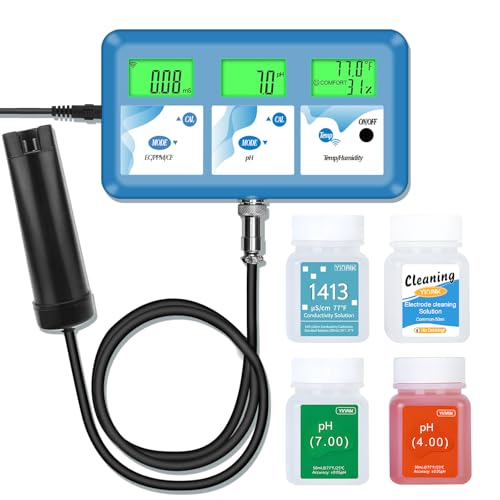
Hydroponic ppm pH Monitor, WiFi 6 in 1 pH EC Meter for Hydroponics Growing System,Continuous Monitoring pH PPM EC CF Humidity Temp of DWC Grow System Water Reservoir Tank Aeroponic Garden Aquarium…
✅6 in 1 pH EC PPM WIFI Monitor for hydroponic plants:YINMIK 6-in-1 hydroponic nutrients monitor can give you…
As an affiliate, we earn on qualifying purchases.
As an affiliate, we earn on qualifying purchases.
How Do You Decide Between CO2 pH Control and Acid Feeders?
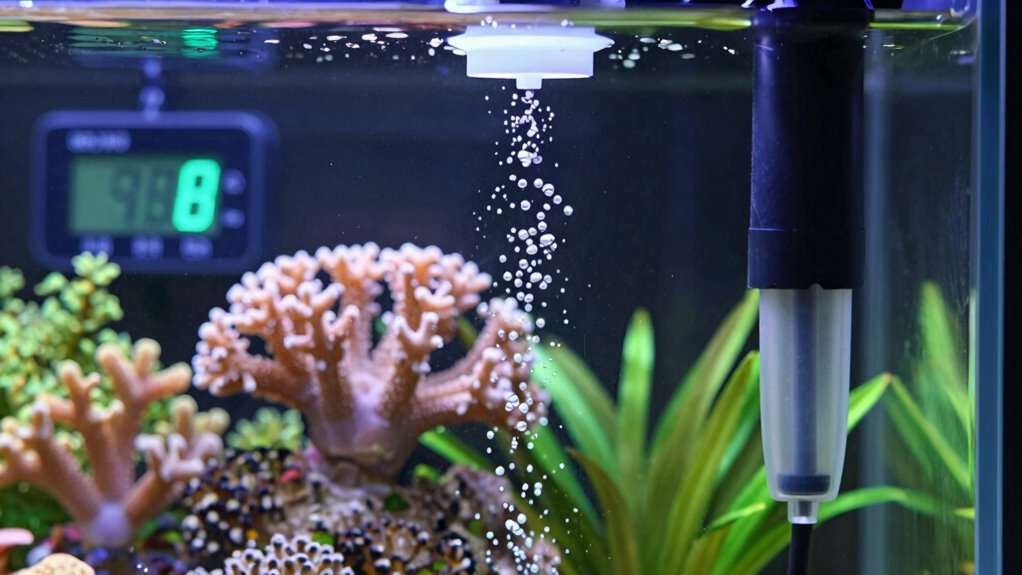
When choosing between CO2 pH control and acid feeders, you need to consider system complexity and how easy it is to manage each option. Cost and ongoing maintenance also play a big role in your decision, affecting long-term operational expenses. By weighing these factors, you can select the solution that fits your system’s needs and budget best. Additionally, understanding the system’s operational requirements can help determine which method offers the most reliable and efficient pH regulation.
System Complexity and Control
Deciding between CO2 pH control and acid feeders largely depends on the complexity of your system and how precisely you need to manage pH levels. If your system is scalable or has fluctuating demands, CO2 systems often offer better adaptability and quicker adjustments. They’re also easier to automate, reducing manual intervention. However, implementing CO2 control requires thorough user training to operate equipment safely and effectively. Acid feeders, on the other hand, tend to be simpler but may struggle with large or complex systems due to their limited responsiveness. Consider your system’s size, variability, and your team’s familiarity with chemical handling when choosing the best method. The right choice hinges on balancing control precision with operational simplicity.
Cost and Maintenance Factors
Choosing between CO2 pH control and acid feeders often comes down to cost and maintenance considerations. CO2 systems typically have higher initial costs but lower ongoing expenses due to minimal reagent replenishment. They are also more energy-efficient, reducing operational costs. Acid feeders are cheaper upfront but require regular chemical supplies and maintenance, increasing long-term costs. Additionally, CO2 systems have a lower environmental impact because they produce fewer chemical waste byproducts. Consider the table below to compare these factors:
| Factor | CO2 pH Control | Acid Feeders |
|---|---|---|
| Initial Cost | Higher | Lower |
| Maintenance | Lower | Higher |
| Energy Efficiency | Better | Less efficient |
| Environmental Impact | Lower | Higher |
| Reagent Supply | Minimal | Frequent chemical need |
What Factors Influence Your Choice of Water pH Control Method?
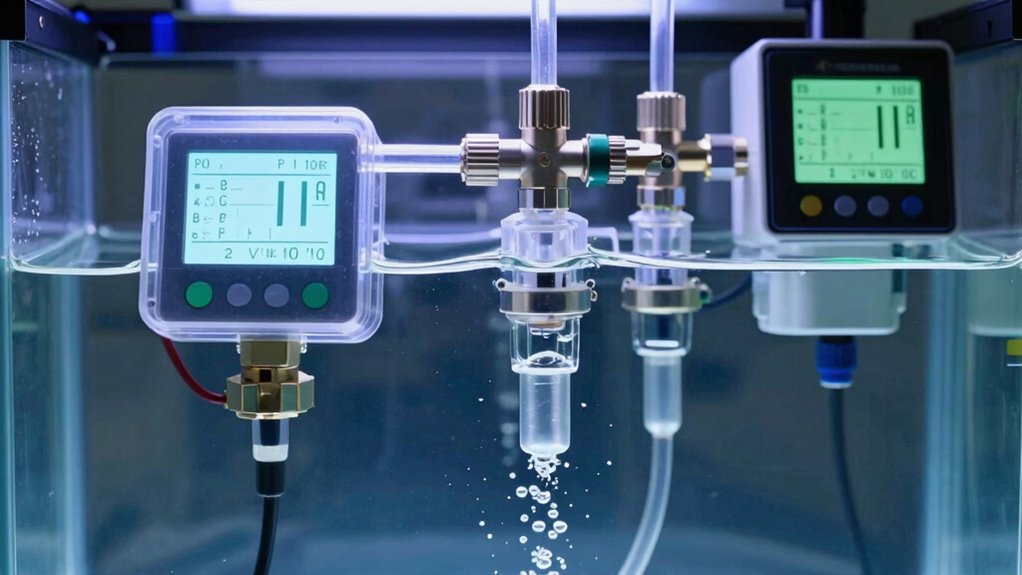
Several factors influence your choice of water pH control method, as each situation demands a tailored approach. First, pH stability is vital; you need a system that maintains consistent water conditions without frequent adjustments. Second, chemical compatibility matters—ensure the method you select won’t react adversely with your existing water treatment chemicals or equipment. Third, consider the specific water chemistry and operational conditions, such as flow rates and tank size, which can affect how effective each method is. For example, CO2 systems often excel in pH stability and chemical compatibility, but acid feeders may be more suitable if quick pH adjustments are needed. Evaluating these factors helps you choose the most reliable and efficient water pH control method.
How Can You Troubleshoot Common Issues in CO2 pH Control Systems?
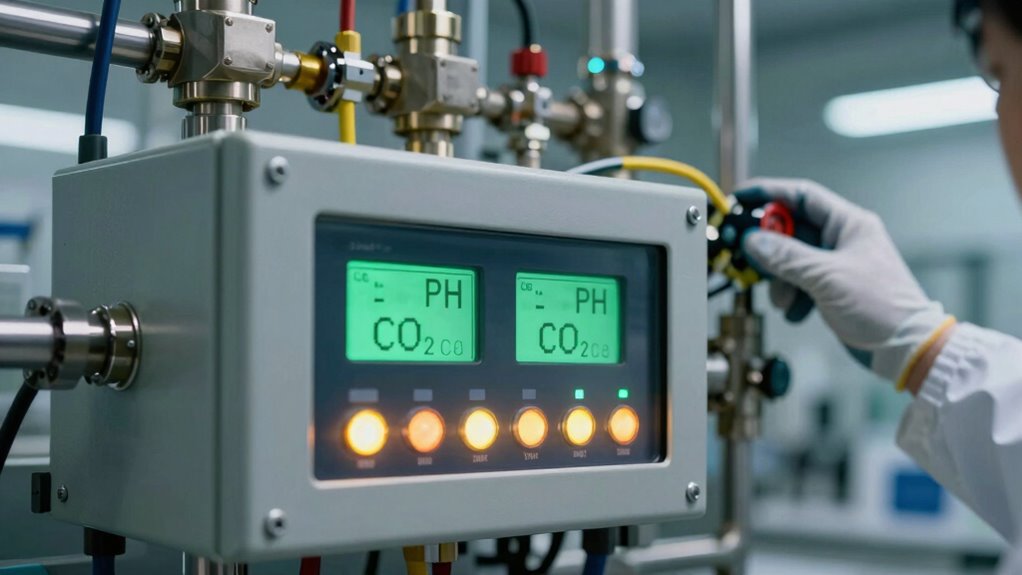
Troubleshooting common issues in CO2 pH control systems begins with understanding how each component functions and what signs indicate a problem. Start by checking sensor calibration; an improperly calibrated sensor can give false readings, causing inaccurate pH adjustments. Regularly calibrate your sensor according to manufacturer instructions to ensure precision. Next, inspect for leaks in the CO2 injection line or fittings—leaks can cause inconsistent pH control or system failure. Use leak detection methods such as soapy water or electronic leak detectors to identify any escapes. If pH levels fluctuate unexpectedly, recalibrate the sensor and verify the integrity of the system’s connections. Addressing these issues promptly helps maintain stable pH levels and prevents costly disruptions in your water management system.
Frequently Asked Questions
What Are the Environmental Impacts of Using CO2 Systems Versus Acid Feeders?
Using CO2 systems can lower your carbon footprint compared to acid feeders, especially if the CO2 is captured from industrial processes. However, if not managed properly, CO2 releases may impact local ecosystems through greenhouse gas emissions. Acid feeders, on the other hand, may cause soil and water contamination, affecting surrounding ecosystems. You need to weigh these environmental impacts carefully to choose the most sustainable pH control method.
How Do Operational Costs Compare Between CO2 pH Control and Acid Feeders?
You’ll find that CO2 pH control often offers lower operational costs compared to acid feeders, mainly due to reduced chemical expenses and less maintenance. The cost comparison favors CO2 systems over time, leading to significant operational savings. While initial setup might be higher, the long-term benefits include decreased chemical handling, fewer equipment issues, and streamlined operation, making CO2 systems a more economical choice for pH management.
Can CO2 pH Control Be Integrated With Existing Water Treatment Systems?
You can integrate CO2 pH control with your existing water treatment system, but watch out for integration challenges like system compatibility issues. For example, if your plant uses older equipment, retrofitting with CO2 controls might require upgrades. To guarantee smooth operation, evaluate your system’s compatibility first, then work with specialists to customize the setup, avoiding costly delays and ensuring effective pH management.
What Maintenance Requirements Are Unique to CO2 pH Control Systems?
You need to regularly check for gas leaks in your CO2 pH control system to guarantee safety and efficiency. Calibration frequency is essential; you should calibrate sensors as recommended by the manufacturer, often monthly, to maintain accuracy. Additionally, inspect valves and lines for blockages or damage, and replace any worn components promptly. Proper maintenance prevents system failures and ensures your pH control remains reliable and safe.
How Scalable Are CO2 pH Control Solutions for Large or Small Facilities?
You can scale CO2 pH control solutions for both large and small facilities, but scalability challenges may arise. Larger systems require more robust infrastructure and precise system customization to handle increased demand, while smaller setups benefit from simpler configurations. By evaluating your facility’s size and needs, you can adapt the system accordingly, ensuring effective pH control without overloading your resources. Proper planning makes scalable CO2 systems feasible across different facility sizes.
Conclusion
Choosing between CO2 pH control and acid feeders is like steering a river’s twists—your decision shapes the flow of your aquatic world. When you understand their strengths and limits, you steer with confidence, avoiding the rocks of inefficiency or imbalance. Remember, no system is perfect, but with careful choice and troubleshooting, you’ll keep your tank’s harmony steady—guiding your aquatic ecosystem like a skilled captain charting a course through calm and storm alike.