
To manage phosphates and nitrates in your pool water, regularly test these nutrients using reliable kits and keep levels low. Remove organic debris like leaves and dirt to prevent nutrient buildup. Maintain proper filtration and chemical balance, including pH and chlorine, to inhibit algae growth. Use phosphate removers or nitrate reducers when levels rise. Consistent maintenance and monitoring are key to keeping your pool clear and algae-free—learn more tips to keep your water pristine.
Key Takeaways
- Regularly test for phosphates and nitrates using reliable pool test kits or digital testers.
- Remove organic debris, leaves, and dirt to limit nutrient sources and prevent buildup.
- Use phosphate removers and nitrate reducers when levels are high to quickly lower nutrients.
- Maintain proper chemical balance, including pH and chlorine, to inhibit algae growth.
- Ensure filtration systems are clean and functioning properly to help remove nutrients from the water.

Keeping your pool clean and clear depends heavily on managing the levels of phosphates and nitrates in the water. These nutrients are essential for algae growth, and if their levels get too high, algae can quickly take over your pool, turning the water green and making it unsafe for swimming. To prevent this, you need to stay vigilant about algae prevention strategies and regularly monitor your water’s chemistry.
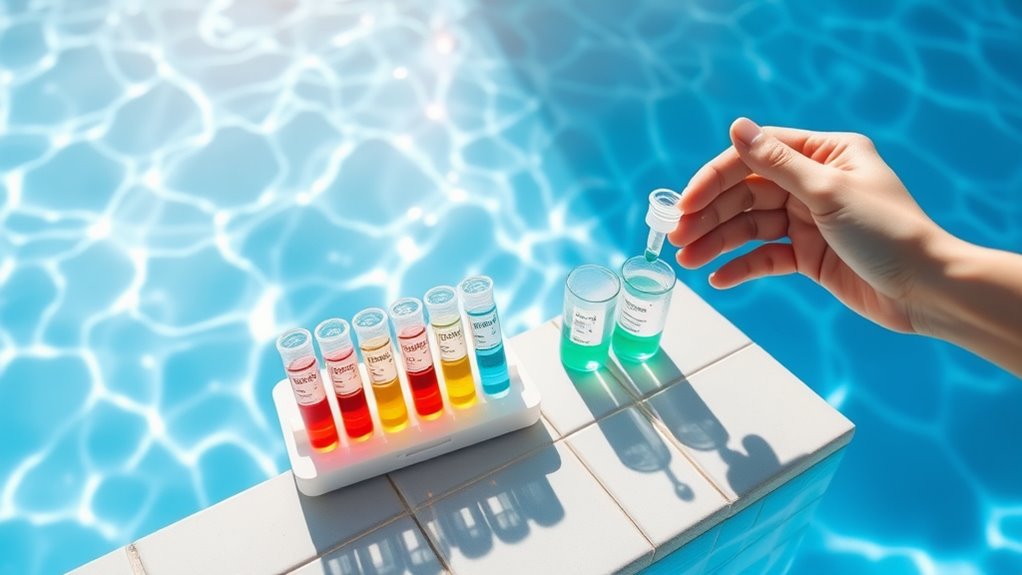
Start by understanding water testing techniques. Regular testing helps you catch rising nutrient levels before they cause problems. Use reliable test kits or digital testers designed specifically for pools. Test for phosphates and nitrates at least once a week, especially during peak swimming season or after heavy rain, which can introduce these nutrients into your pool. Accurate testing gives you a clear picture of your water’s health and helps you decide when and how to act. If tests show elevated phosphate or nitrate levels, it’s time to take corrective steps to keep algae at bay.
Regularly test for phosphates and nitrates to maintain clear, algae-free pool water.
Controlling these nutrients involves both preventative measures and active treatment. One effective approach is to limit sources of phosphate and nitrate contamination, such as organic debris, leaves, and dirt. Regularly skimming and cleaning your pool reduces organic matter that can break down into these nutrients. Additionally, check your filtration system and ensure it’s functioning properly. A well-maintained filter helps remove dissolved nutrients and particles that feed algae growth. Incorporating water filtration systems designed for pool water can further enhance nutrient removal and improve overall water quality.
Incorporating algaecides specifically formulated to target algae prevention can be a proactive step. Many algaecides also help reduce phosphate levels, which is essential for long-term water clarity. Be sure to follow manufacturer instructions precisely, and maintain a consistent application schedule during high-risk periods. Also, balancing your pool’s pH and chlorine levels is vital because improper chemistry can promote algae growth, even if phosphate and nitrate levels are low. Proper chemical balance not only prevents algae but also enhances the effectiveness of sanitizers and algaecides.
Finally, consider using phosphate removers or nitrate reducers when levels are high. These treatments can quickly lower nutrient levels, giving you a better chance to maintain clear, algae-free water. Remember, managing phosphates and nitrates isn’t a one-time fix; it requires ongoing monitoring, proper water testing techniques, and regular maintenance. By staying proactive, you can keep your pool sparkling clean, safe, and inviting all season long.
pool phosphate remover
As an affiliate, we earn on qualifying purchases.
As an affiliate, we earn on qualifying purchases.
Frequently Asked Questions
How Do Phosphates and Nitrates Affect Pool Equipment Lifespan?
High levels of phosphates and nitrates can shorten your pool equipment’s lifespan by promoting algae growth and causing water chemistry imbalances. When algae blooms, your pool pump and filter work harder, increasing wear and tear. Poor water chemistry can lead to corrosion of equipment parts. To protect your pool equipment, maintain proper water chemistry through regular pool maintenance, control nutrient levels, and keep algae at bay.
Can Natural Remedies Reduce Phosphates and Nitrates Effectively?
Natural solutions and eco-friendly methods can help reduce phosphates and nitrates in your pool effectively. You might try enzyme-based clarifiers, which break down organic matter that feeds these nutrients, or use beneficial bacteria that naturally inhibit their growth. Regularly skimming, vacuuming, and maintaining proper filtration also support these natural approaches. By choosing eco-friendly methods, you keep your pool clean and safe without introducing harsh chemicals.
Are There Specific Brands Recommended for Phosphate and Nitrate Removers?
You should look for trusted brands like SeaKlear, Nature’s Source, or Morrocan Clay, which are highly recommended for phosphate and nitrate removers. These products are known for their effectiveness in reducing these contaminants and maintaining healthy pool water. Always check reviews and follow the manufacturer’s instructions to guarantee the best results. Using reputable brands ensures you get reliable performance, making your pool safer and clearer.
How Often Should I Test for Phosphates and Nitrates?
Your pool deserves the best care, so don’t let phosphate and nitrate levels sneak up on you! You should test for phosphates and nitrates at least once a month during regular maintenance schedules. If you notice cloudy water or algae blooms, test more frequently—biweekly if needed. Staying vigilant guarantees your pool stays crystal clear and healthy, preventing those pesky issues from taking over.
What Are the Signs of High Phosphate or Nitrate Levels in My Pool?
You’ll notice your pool’s water clarity declining and increased algae growth when phosphate or nitrate levels are high. These nutrients fuel algae blooms, making the water look cloudy or green. You might also see slimy surfaces or persistent algae patches even after cleaning. Regular testing helps catch these issues early, so you can take action before the algae becomes a bigger problem, keeping your pool clear and inviting.
digital pool water test kit
As an affiliate, we earn on qualifying purchases.
As an affiliate, we earn on qualifying purchases.
Conclusion
Now that you understand how phosphates and nitrates impact your pool, you’re almost there. But remember, these unseen nutrients can quickly sneak back in, causing algae blooms and cloudy water. Will your current maintenance routine be enough to keep them at bay? Stay vigilant, test regularly, and act promptly. The key to a sparkling, healthy pool lies in your hands—are you ready to take that final step and keep those contaminants out? The choice is yours.
pool nitrate reducer
As an affiliate, we earn on qualifying purchases.
As an affiliate, we earn on qualifying purchases.
pool algae prevention chemicals
As an affiliate, we earn on qualifying purchases.
As an affiliate, we earn on qualifying purchases.