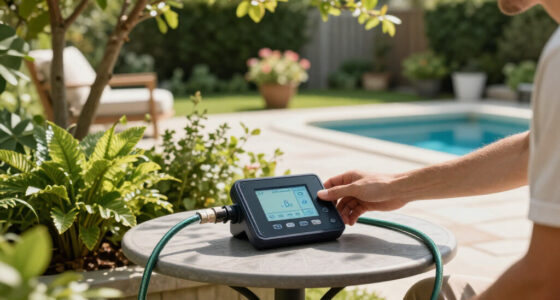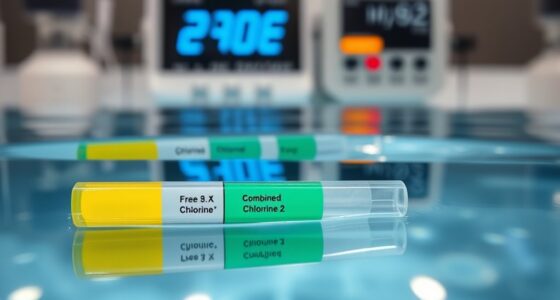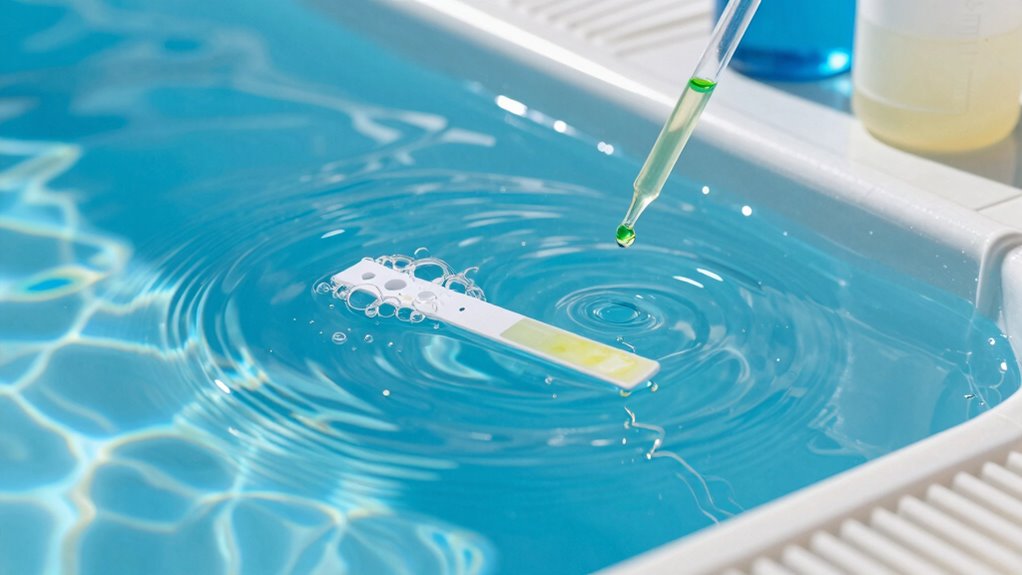

Controlling pH in your pool is tough because it’s constantly influenced by a mix of chemical reactions, environmental factors, and swimmer activity. Sunlight speeds up chlorine breakdown, raising pH, while rain introduces acids or bases that cause swings. Organic compounds from swimmers can also alter pH levels. Since chemical additions have ripple effects, maintaining balance requires regular testing and adjustments. To master these interactions and keep your water balanced, you’ll find it helpful to explore further.

Get pool and patio gear delivered free with Prime
- Fast, free delivery on millions of items
- Prime Video, Amazon Music and more included
- Member-only deals all year
Key Takeaways
- External factors like sunlight and rain cause unpredictable pH fluctuations by accelerating chemical reactions.
- Organic compounds from swimmers and debris alter pH, complicating stable maintenance.
- Chemical interactions, such as with cyanuric acid or metals, create complex, unpredictable pH shifts.
- Variations in alkalinity buffer capacity influence how easily pH levels can be adjusted.
- Small chemical adjustments can trigger larger pH swings due to interconnected pool chemistry dynamics.
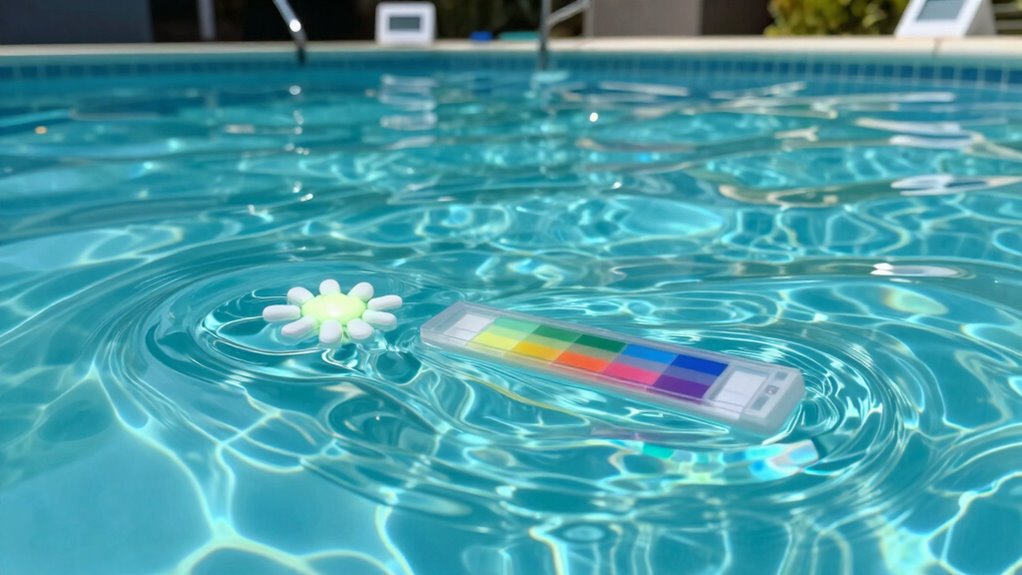
Maintaining proper pH levels is essential for keeping your pool safe and inviting. When your pH drifts out of the ideal range, it can lead to uncomfortable swimming conditions, inefficient sanitizer performance, and damage to pool equipment. One of the main reasons pH control becomes tricky is the complex relationship between your pool’s chemistry and the factors that influence pH fluctuation. Understanding this relationship helps you anticipate changes and take proactive steps to maintain stable levels.
At the heart of the challenge is chemical imbalance. When your pool’s chemical levels aren’t balanced, it’s easier for the pH to fluctuate unexpectedly. For example, high alkalinity acts like a buffer, resisting pH changes but also making it harder to adjust your pH when it does shift. Conversely, low alkalinity leaves your pool vulnerable to rapid pH swings, causing instability. Chlorine levels also play a role—excess chlorine can raise pH, while too little may allow pH to drop. Other chemicals, such as cyanuric acid or metal contaminants, can further complicate the pH balance by reacting with pool water and altering its chemistry.
pH fluctuation is often caused by external factors and internal chemical reactions. Sunlight accelerates the breakdown of chlorine, which can cause pH to rise as the stabilizer (cyanuric acid) reacts in the process. Rainwater and debris introduce additional acids or bases into the water, causing sudden pH drops or increases. Even swimmer activity, with sweat, oils, and body lotions, introduces organic compounds that can alter the pH. As these elements interact with the existing chemicals, they create a dynamic environment where pH levels are constantly adjusting, making it difficult to maintain a steady pH. Proper water testing and understanding of pool chemistry are crucial for effective pH management. Regular testing helps you stay ahead of these changes and maintain the delicate chemical balance.
The fluctuating nature of pH is compounded by the fact that every chemical addition, whether it’s adjusting pH with acid or raising it with alkalinity increasers, causes a ripple effect. Small changes can trigger larger shifts if other chemical levels aren’t properly balanced. This ongoing dance makes precise pH control a continuous process rather than a one-time fix. To keep your pool consistently comfortable and safe, you need to monitor these variables regularly and understand how each chemical influences the others. Recognizing the interconnectedness of pool chemistry helps you prevent pH from becoming too high or too low, ensuring your pool remains inviting and safe for every swimmer. Additionally, chemical interactions can sometimes produce unintended consequences that further complicate pH regulation, emphasizing the need for careful chemical management. Being aware of chemical reactions in your pool water can help you better anticipate and mitigate these issues before they escalate.
As an affiliate, we earn on qualifying purchases.
Frequently Asked Questions
How Does Temperature Affect pH Stability?
Temperature affects pH stability because higher temperatures speed up chemical reactions, making pH levels fluctuate more easily. When temperatures fluctuate, it can cause pH to rise or fall unexpectedly, challenging your pool’s chemistry balance. As temperature increases, it accelerates chemical reactions that influence pH, so you need to monitor and adjust your chemicals more frequently. Keeping a consistent temperature helps maintain pH stability and minimizes the impact of temperature fluctuations.
Can Algae Growth Impact pH Levels?
Algae growth can definitely impact pH levels, so don’t let it slide. When algae thrive, they consume algae nutrients, which can cause pH to rise or fall unexpectedly. Algae prevention is key to maintaining stable pH. If algae start growing, it’s a sign your water chemistry needs balancing. Keeping algae in check helps keep your pool’s pH steady, saving you from more complicated chemistry issues down the line.
What Role Does Cyanuric Acid Play in pH Control?
Cyanuric acid helps stabilize chlorine in your pool, but it also affects pH control through chemical interactions that influence acid-base balance. When cyanuric acid levels are high, it can bind with chlorine, reducing its effectiveness and making pH harder to maintain. You need to monitor and adjust cyanuric acid levels carefully, as imbalances can disrupt the acid-base balance, leading to fluctuations in pH that are tricky to control.
How Often Should pH Be Tested in Winter?
You should test your pool’s pH at least twice a week during winter to maintain proper chemical balancing. Cold temperatures can cause pH levels to shift unpredictably, so regular testing guarantees accurate pH calibration and prevents issues like cloudy water or algae growth. Keep a testing kit handy, and adjust chemicals promptly to keep your pool safe and balanced. Consistent testing helps you stay on top of pH fluctuations during the colder months.
Does Water Evaporation Alter pH Balance?
Water evaporation is like a silent thief, subtly stealing water and altering your pool’s chemistry. As water evaporates, minerals become more concentrated, impacting water mineralization and making chemical balancing trickier. This process can cause pH levels to rise or fall unexpectedly. Regular testing is essential, especially in winter when evaporation rates fluctuate. Keep an eye on your water’s chemistry to maintain a balanced, safe swimming environment.
As an affiliate, we earn on qualifying purchases.
Conclusion
In the wild world of pool chemistry, controlling pH feels like trying to tame a dragon—constantly shifting, fierce, and nearly impossible to pin down. But remember, understanding the complex relationship between chemicals can turn this chaos into a manageable dance. With patience and the right knowledge, you’ll conquer those pH swings and keep your pool crystal clear. Don’t let the chemistry chaos win—take charge and master the art of perfect pH balance!
As an affiliate, we earn on qualifying purchases.
As an affiliate, we earn on qualifying purchases.
Fall Picks
fall essentials
As an affiliate, we earn on qualifying purchases.