
Your pool’s phosphate levels matter more if your water isn’t balanced or you’re neglecting proper sanitation, as phosphates fuel algae growth. However, with good chemical balance—pH, alkalinity, and sanitizer levels—phosphates become less of a concern because proper maintenance suppresses algae even with higher nutrient levels. If you keep your pool well-maintained, phosphates won’t cause problems. Keep exploring to learn how essential proper pool care is for keeping your water clear and healthy.

Get pool and patio gear delivered free with Prime
- Fast, free delivery on millions of items
- Prime Video, Amazon Music and more included
- Member-only deals all year
Key Takeaways
- Proper chemical balance and sanitizer levels reduce phosphate impact on algae growth.
- High phosphates promote algae mainly when sanitizer or water chemistry is off.
- Well-maintained pools can control algae without removing phosphates.
- Phosphate removal is more necessary in poorly maintained or heavily used pools.
- Routine testing and chemical adjustments minimize phosphates’ influence on pool clarity.

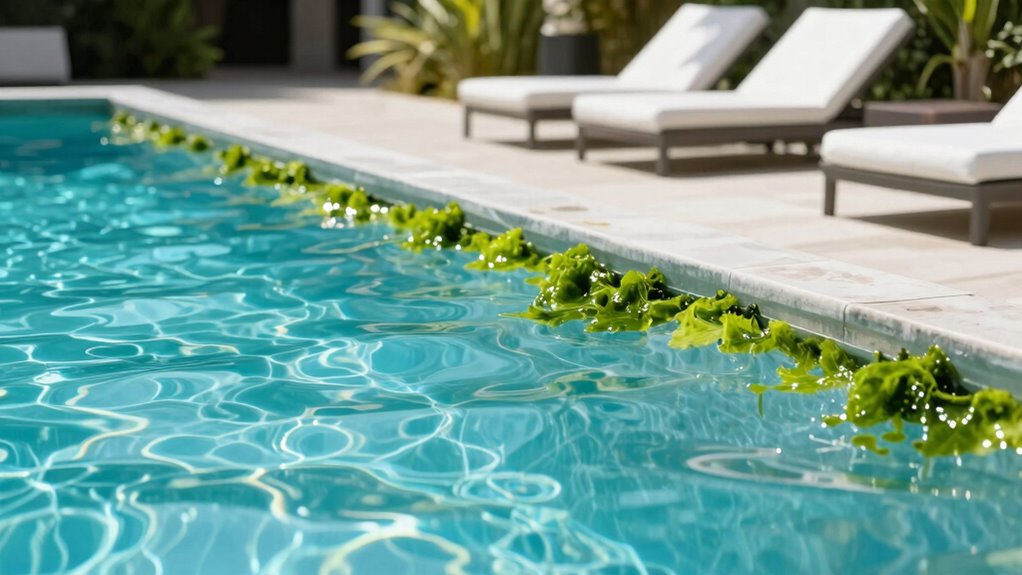
Have you ever wondered how phosphates impact your pool’s water quality? While they don’t directly affect the water’s safety, they can influence the overall cleanliness and appearance of your pool. Phosphates are nutrients that algae love, so their presence can make algae control more challenging. However, the importance of phosphates varies depending on your pool’s specific circumstances. If you’re diligent about maintaining the chemical balance, phosphates might matter less. Good water chemistry, including proper pH, alkalinity, and sanitizer levels, can keep algae at bay even if phosphates are present. But if your chemical balance is off, phosphates could tip the scales toward algae growth, making your pool look cloudy or green.
Proper chemical balance is key; phosphates matter less when your pool is well-maintained.
Managing phosphates is about understanding their role in algae development. When levels are high, algae can grow rapidly, especially if your sanitizer isn’t strong enough or if the water is warm. That’s why many pool owners see phosphates as an indirect threat—they don’t cause algae directly but set the stage for it to thrive. Regularly cleaning your pool and maintaining proper chemical levels can help control algae without obsessively removing phosphates. Still, some pool owners prefer to take extra steps, like using phosphate removers, to reduce nutrient levels and prevent algae outbreaks altogether. Additionally, monitoring water chemistry regularly can help you detect imbalances before they lead to algae problems. Proper filtration and circulation also play a vital role in keeping phosphates and algae in check.
You might think that removing phosphates is the only way to keep your pool pristine, but that’s not entirely true. The key lies in balancing your chemicals properly and ensuring you have a robust sanitation routine. When your chlorine or other sanitizers are at appropriate levels, they can suppress algae growth even when phosphates are present. Conversely, if your sanitizer levels drop, algae can flourish regardless of phosphate levels. So, in many cases, focusing on chemical balance and algae control is more effective than obsessing over phosphate levels alone. Additionally, understanding the role of phosphates in algae growth can help you develop a more targeted approach to pool maintenance. Proper water testing and adjusting chemical levels accordingly can prevent many common problems before they start. Being attentive to algae prevention strategies can further enhance your pool’s clarity and health.
That said, in heavily used or poorly maintained pools, phosphates can become a bigger problem. Over time, they build up, and algae control becomes more difficult. Regular testing and treatment can help keep phosphate levels low, but the core strategy remains maintaining a healthy chemical balance. When you do this, you minimize algae growth and keep your water clear and inviting. Whether phosphates matter more or less depends on how vigilant you are about chemical balance and sanitation. In the end, a well-maintained pool with proper algae control practices will stay cleaner, regardless of phosphate levels. Being proactive with preventative measures and routine testing can significantly reduce the risk of algae blooms caused by phosphate buildup.
pool water test kit chlorine pH alkalinity
As an affiliate, we earn on qualifying purchases.
As an affiliate, we earn on qualifying purchases.
Frequently Asked Questions
How Do Phosphates Affect Different Types of Pool Water?
Phosphates influence your pool water by promoting algae growth, which can make your water cloudy and less appealing. In outdoor pools, high phosphates accelerate algae development, reducing water clarity and increasing maintenance. For indoor pools, phosphates still encourage algae but are less impactful due to controlled environments. Regular testing and phosphate removal help maintain water clarity, preventing algae blooms and keeping your pool sparkling clean.
Are Phosphates More Common in Certain Pool Environments?
Yes, phosphates are more common in outdoor pools exposed to dirt, leaves, and debris, which promote algae growth and reduce water clarity. In contrast, indoor pools usually have fewer phosphates due to controlled environments and less organic contamination. You should regularly test for phosphates, especially in outdoor settings, because high levels encourage algae growth, making your water murky and less inviting. Managing phosphates helps keep your pool clean and clear.
Can Phosphate Levels Vary Seasonally in Pools?
Yes, phosphate levels can vary seasonally in pools, especially with changes in temperature and sunlight. During warmer months, increased algae growth often occurs due to higher phosphate levels, which can reduce water clarity. You might notice your pool becomes murkier or greener as phosphates rise. Regular testing and balancing phosphate levels help you control algae growth, maintain water clarity, and keep your pool inviting throughout the season.
What Are the Long-Term Effects of Phosphate Buildup?
Long-term phosphate buildup can lead to persistent algae growth, which ultimately affects your pool’s water clarity. As phosphates accumulate, algae thrive, making your pool look cloudy and uninviting. Over time, this can require more chemical treatments and frequent cleaning. To prevent these issues, regularly test and reduce phosphate levels, keeping algae at bay, and maintaining clear, inviting water for a safe and enjoyable swimming experience.
How Do Phosphate Removers Differ From Other Pool Chemicals?
Phosphate removers differ distinctly from other pool chemicals by targeting water chemistry directly. They neutralize phosphates, preventing algae growth without disrupting the essential balance of chlorine or pH levels. Unlike typical sanitizers or algaecides, phosphate removers focus on chemical interactions to reduce nutrient buildup, ensuring your pool stays clear and clean. This specialized approach helps maintain peak water chemistry while minimizing the need for harsh chemicals, keeping your pool safe and sparkling.
pool phosphate remover treatment
As an affiliate, we earn on qualifying purchases.
As an affiliate, we earn on qualifying purchases.
Conclusion
So, don’t stress too much about phosphates in your pool. While they can cause algae, they’re just one piece of the puzzle. Focusing on proper maintenance, balanced chemicals, and good filtration makes a bigger difference. Remember, it’s not about eradicating every trace but keeping things in check. By understanding their role, you’ll enjoy a sparkling pool without obsessing over every tiny phosphate molecule. Relax—your pool’s health depends on overall care, not just one element.
As an affiliate, we earn on qualifying purchases.
As an affiliate, we earn on qualifying purchases.
Halloween Picks
halloween
As an affiliate, we earn on qualifying purchases.