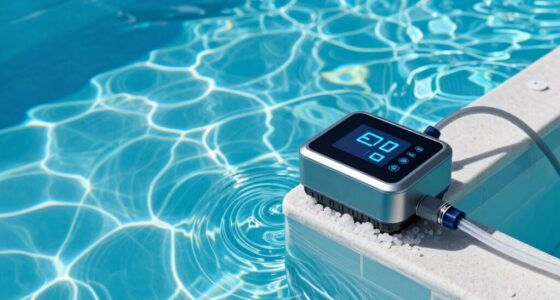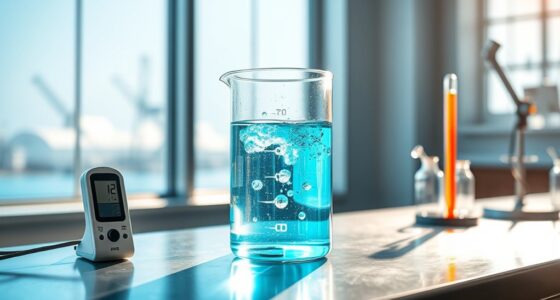

Understanding pH drift and chemical balance helps you maintain a healthy aquatic environment. Small changes in pH can result from chemical additions, environmental factors, or biological activity, and these fluctuations can cause water issues like algae growth or sanitizer inefficiency. To keep pH stable, test regularly and adjust slowly with pH buffers, while balancing alkalinity and calcium levels. Staying vigilant ensures water stays safe; explore further to master maintaining ideal water chemistry.
Get ready for Prime Big Deal Days — try Prime free
Exclusive member deals on October 6–7, plus fast free delivery. Cancel anytime.
As an affiliate, we earn on qualifying purchases.
Key Takeaways
- pH drift refers to undesirable fluctuations in water pH levels, impacting water quality and sanitation effectiveness.
- Chemical additions, environmental factors, and biological activity are common causes of pH fluctuations.
- Maintaining chemical balance, including alkalinity and calcium hardness, helps buffer pH and prevent drift.
- Regular testing and gradual chemical adjustments are essential to manage and stabilize pH levels.
- Proactive monitoring and understanding pH influences ensure optimal water chemistry and prevent issues related to pH imbalance.

Maintaining a stable pH level is essential for the health of your aquatic environment, but pH drift can disrupt this balance unexpectedly. In pool chemistry, understanding how pH fluctuations occur helps you keep your water safe and comfortable. When your pool’s pH shifts outside the ideal range of 7.2 to 7.8, it can cause problems like skin irritation, cloudy water, and ineffective sanitation. These fluctuations often happen due to various factors, including environmental changes, chemical additions, or biological activity within the water. Recognizing the causes of pH drift allows you to take timely action to correct it before it impacts water quality.
Maintaining a stable pH is vital; fluctuations can cause irritation, cloudiness, and sanitation issues.
One common reason for pH fluctuations is the use of chemicals like chlorine, algaecides, or pH adjusters. When you add these substances, they can temporarily alter the pH level, leading to instability if not carefully managed. For example, adding too much chlorine or acid can cause rapid drops in pH, making the water more acidic. Conversely, using alkaline substances like sodium carbonate can raise the pH quickly. If you don’t measure and adjust accordingly, these shifts can become persistent, creating a cycle of pH fluctuations that are hard to control. Regular testing and proper dosing are essential to maintaining balance, as small changes can have outsized effects on water quality.
Environmental factors also influence pH drift. Rainfall, temperature changes, and debris can introduce organic matter and contaminants that alter the water’s chemistry. High temperatures, for instance, can cause pH to rise, while rain can dilute chemicals and lower pH unexpectedly. Additionally, biological activity, such as algae growth or debris decomposition, produces acids or bases that shift pH levels over time. This natural variability underscores the importance of consistent monitoring and adjusting your pool chemistry to keep pH within the ideal range. When pH drifts outside the desired range, it affects how effectively your sanitizer works, which can lead to increased algae growth and bacteria.
To manage pH fluctuations effectively, you should test your water frequently using reliable test kits. If you notice pH drifting upward, adding a pH reducer like muriatic acid can bring it back down. Conversely, if it drops too low, a pH increaser such as sodium carbonate can help stabilize the water. Adjusting slowly and retesting after each addition ensures you don’t overshoot the target range. Maintaining proper pool chemistry involves not just correcting pH but also balancing alkalinity and calcium hardness, which act as buffers against sudden shifts. Additionally, understanding pH drift and its causes helps you develop more effective strategies for maintaining water quality. By staying vigilant and proactive, you can prevent pH drift from undermining your efforts to keep your aquatic environment balanced and healthy.
As an affiliate, we earn on qualifying purchases.
Frequently Asked Questions
How Often Should I Test My Water’s Ph Level?
You should test your water’s pH level at least once a week using reliable testing kits. Regular testing helps you catch pH fluctuations early and maintain a stable environment. Keep in mind, water buffers can help stabilize pH, but they still need supervision to ensure they’re working effectively. If you notice any changes or irregularities, test more frequently to prevent issues and keep your water balanced.
What Are Common Causes of Sudden Ph Fluctuations?
Sudden pH fluctuations often result from alkaline reactions or acid precipitation. When your water encounters alkaline substances, it can cause the pH to rise quickly. Conversely, acid precipitation, like rain or runoff containing acids, can sharply lower pH levels. These changes happen rapidly, especially if new sources of chemicals enter your water. To prevent issues, monitor your water regularly and address any external sources that could cause these fluctuations.
Can Natural Remedies Stabilize Ph Levels?
Yes, natural remedies can help stabilize pH levels. You might mix herbal supplements like chamomile or nettle to support balance naturally. Additionally, mineral adjustments—adding small amounts of magnesium or calcium—can restore harmony. By incorporating these gentle, plant-based solutions and mineral tweaks, you create a calming, consistent chemical environment, helping your body and environment maintain a healthy pH balance without relying solely on synthetic options.
How Do Temperature Changes Affect Ph Readings?
Temperature changes directly impact pH readings because they alter the measurement accuracy of your pH test. When water gets warmer, it can cause the pH to appear higher, while cooler temperatures might make it seem lower. To guarantee precise results, always measure pH at a consistent temperature or use a pH meter with temperature compensation. This way, you maintain accurate readings regardless of temperature fluctuations.
What Are the Risks of Ignoring Ph Imbalances?
Ignoring pH imbalances can lead to serious water chemistry issues, risking algae growth, corrosion, and cloudy water. You might face fluctuating pH levels that damage equipment and upset aquatic life. Without proper pH correction methods, these problems worsen, causing costly repairs and compromised water quality. Staying vigilant with pH monitoring guarantees safe, balanced water, preventing potential problems before they become severe and saving you time, money, and trouble.
pH balancing chemicals for pools
As an affiliate, we earn on qualifying purchases.
As an affiliate, we earn on qualifying purchases.
Conclusion
By paying close attention to pH drift and maintaining chemical balance, you guarantee your aquarium stays healthy and vibrant. Think of it as gently guiding a delicate dance, where every step matters. When you embrace these small adjustments, you’re softly nurturing a thriving environment without fuss or chaos. Remember, a well-balanced tank isn’t just luck—it’s a quiet proof to your attentive care, keeping your aquatic world beautifully harmonious and inviting.
pool alkalinity and calcium hardness test
As an affiliate, we earn on qualifying purchases.
As an affiliate, we earn on qualifying purchases.
As an affiliate, we earn on qualifying purchases.
Fall Picks
fall essentials
As an affiliate, we earn on qualifying purchases.