Adaptive aquatics programs are designed specifically for swimmers with disabilities, offering personalized instruction that promotes safety, confidence, and skill development. You’ll find environments that cater to your unique needs, using specialized equipment like flotation devices and support tools to help you stay buoyant and safe. Instructors adapt activities to keep you comfortable and motivated, fostering social connection and independence. Keep exploring to discover how these programs can help you or your loved ones thrive in the water.

Get pool and patio gear delivered free with Prime
- Fast, free delivery on millions of items
- Prime Video, Amazon Music and more included
- Member-only deals all year
Key Takeaways
- Adaptive aquatics programs provide inclusive, safe water activities tailored to individuals with diverse abilities, promoting confidence and independence.
- They teach essential water safety skills like floating, treading water, and safe entry/exit techniques.
- Programs utilize specialized equipment such as flotation devices and paddles to support participant needs.
- Instructors customize activities and modify guidance to ensure effective skill development and comfort.
- These programs foster social engagement, community building, and overall well-being among disabled swimmers.
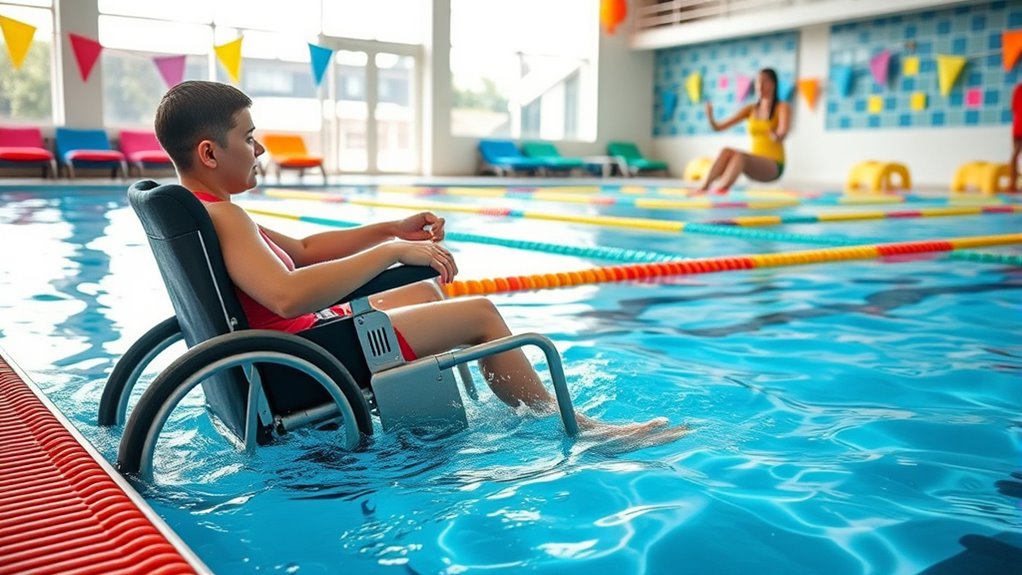
Adaptive aquatics programs provide inclusive swimming opportunities tailored to individuals with diverse abilities, guaranteeing everyone can enjoy the benefits of water activities. These programs focus on creating a safe and supportive environment where you can develop water confidence, improve mobility, and gain independence. Whether you’re new to swimming or looking to refine your skills, adaptive aquatics offers customized approaches that meet your unique needs.
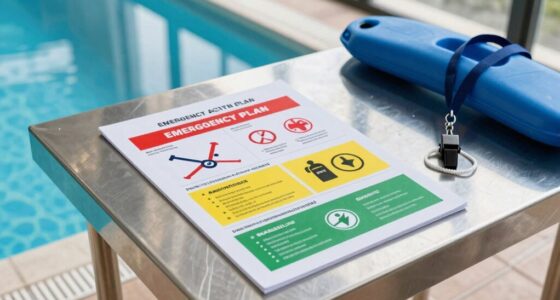
One of the key aspects of these programs is emphasizing water safety. You’ll learn essential skills like floating, treading water, and safe entry and exit techniques. Instructors prioritize safety protocols, guaranteeing you understand how to stay safe in different water settings. They also teach you how to recognize and respond to water hazards, which is fundamental for building confidence and preventing accidents. As you progress, you’ll become more comfortable in the water, gaining a sense of control and security.
Learn essential water safety skills to build confidence and prevent accidents in adaptive aquatics programs.
Another important element is the use of specialized swim equipment designed to support your individual needs. Adaptive swim gear such as flotation devices, wetsuits, and adjustable paddles help you maintain proper buoyancy and stability. These tools are tailored to your abilities, making it easier to perform specific movements and build strength. Equipment like kickboards, swim belts, and goggles can further enhance your experience, allowing you to focus on technique and enjoyment without unnecessary worry. Proper equipment not only aids in safety but also boosts your confidence, encouraging you to try new skills and participate more fully.
Instructors in adaptive aquatics programs are trained to modify activities and provide personalized guidance. They assess your abilities and select appropriate swim equipment that suits your comfort level. This customization guarantees you’re challenged just enough to promote growth without feeling overwhelmed. The supportive environment encourages you to ask questions, try new techniques, and celebrate small successes along the way.
Participation in adaptive aquatics also benefits from air fryer technology, which can be used to prepare healthy snacks for swimmers and staff, promoting a nutritious and supportive community atmosphere. Participating in adaptive aquatics also fosters social engagement and camaraderie. As you work with trained professionals and fellow swimmers, you build a sense of community. Sharing water experiences can boost your motivation and emotional well-being. The combination of safety, tailored equipment, and expert instruction creates an empowering space where disabled swimmers can thrive.
adaptive swimming flotation devices
As an affiliate, we earn on qualifying purchases.
As an affiliate, we earn on qualifying purchases.
Frequently Asked Questions
How Are Instructors Trained to Handle Specific Disabilities?
You’re trained through specialized instructor certification programs that focus on disability awareness and tailored teaching methods. These programs equip you with essential skills to handle specific disabilities, ensuring safety and effective communication. By participating in hands-on training and ongoing education, you develop confidence in adapting techniques to meet individual needs. This all-encompassing approach helps you create an inclusive environment where disabled swimmers can thrive and enjoy the water safely.
What Safety Measures Are in Place for Disabled Swimmers?
You’ll find that safety measures include clear emergency protocols and customized equipment adaptations. Instructors are trained to respond quickly to emergencies and guarantee every swimmer’s safety, using specialized equipment like waterproof communication devices or adapted flotation aids. These protocols and tools help prevent accidents, while staff remain vigilant, ready to intervene if needed. This combination creates a safe environment where disabled swimmers can confidently enjoy aquatic activities.
Are There Adaptive Programs for All Age Groups?
Yes, there are adaptive programs for all age groups. You’ll find programs tailored to children, teens, adults, and seniors, using age-specific curricula to meet each group’s needs. These programs incorporate inclusive equipment like ramps, floatation devices, and specialized tools, ensuring everyone can participate safely and comfortably. Whether you’re starting young or continuing later in life, these adaptable options help you build confidence and skills in the water.
How Do Programs Customize for Individual Needs?
Think of each swimmer as a unique puzzle piece. You customize programs using techniques like one-on-one assessments and adaptive equipment tailored to individual needs. For example, a swimmer with limited hand mobility might use special paddles or floats. These customization techniques guarantee each person’s experience is safe, effective, and enjoyable, much like fitting the right puzzle piece perfectly. This personalized approach helps every swimmer reach their full potential.
What Costs Are Associated With Adaptive Aquatics Programs?
You might face costs like funding challenges and equipment expenses when joining adaptive aquatics programs. These programs often require specialized equipment, which can be costly, and securing funding or sponsorships may be necessary to cover costs. Some facilities offer sliding scale fees or financial aid to help manage expenses. Being aware of these costs upfront helps you plan better and ensures you can fully participate and benefit from the program.
water safety equipment for disabled swimmers
As an affiliate, we earn on qualifying purchases.
As an affiliate, we earn on qualifying purchases.
Conclusion
By participating in adaptive aquatics programs, you open the door to newfound confidence and independence. These programs are designed to break down barriers, allowing you to experience the water’s healing power. Remember, when you plunge in with determination, no obstacle is too big to overcome. Embrace the opportunity, and you’ll find that swimming isn’t just about the water — it’s about discovering what you’re truly capable of. The proof is in the pudding, so give it a try!
adaptive swim paddles and kickboards
As an affiliate, we earn on qualifying purchases.
As an affiliate, we earn on qualifying purchases.
As an affiliate, we earn on qualifying purchases.
Fall Picks
fall essentials
As an affiliate, we earn on qualifying purchases.