When choosing an AED for a pool facility, focus on devices with high IP ratings like IP65 or above, ensuring they resist water, humidity, and corrosion. Store your AED in waterproof or weather-resistant enclosures, avoiding areas prone to humidity and splashes. Avoid common mistakes like inadequate protection or poor placement, which can damage the device. To keep it reliable and ready, understanding these ratings and storage tips is essential—you’ll find more helpful insights ahead.
Key Takeaways
- Select AEDs with high IP ratings (IP65+) to ensure water and humidity resistance in poolside environments.
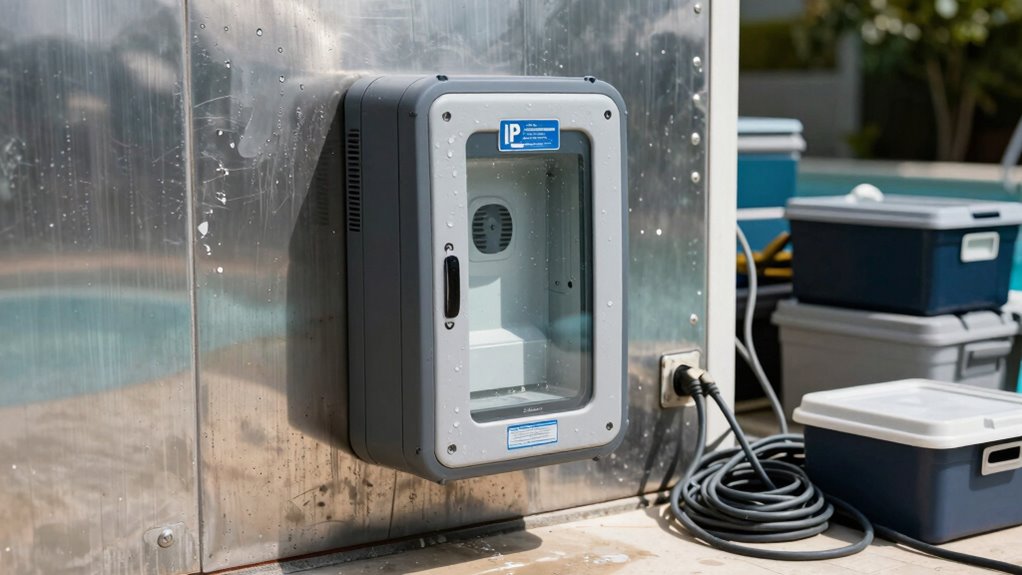
- Use waterproof, sealed enclosures made from durable materials to protect AEDs from moisture, splashes, and corrosion.
- Avoid storing AEDs in high-humidity, unventilated, or unprotected areas prone to condensation and water exposure.
- Properly mount AEDs in visible, accessible locations away from direct water contact and pool chemicals.
- Regularly inspect and maintain AED storage conditions, using protective covers and following best practices to prevent damage.

Zulkit Junction Box ABS Plastic Dustproof Waterproof IP65 Electrical Boxes Hinged Shell Outdoor Universal Project Enclosure Clear Cover with 2 Cable Glands 5.9 x 3.9 x 2.8 inch (150x100x70 mm)
- Waterproof Rating: IP65 waterproof protection
- Material: Made of durable ABS and PC
- Size: Approx. 6 x 4 x 3 inches
As an affiliate, we earn on qualifying purchases.
As an affiliate, we earn on qualifying purchases.
Why Choosing an AED for Pool Areas Matters
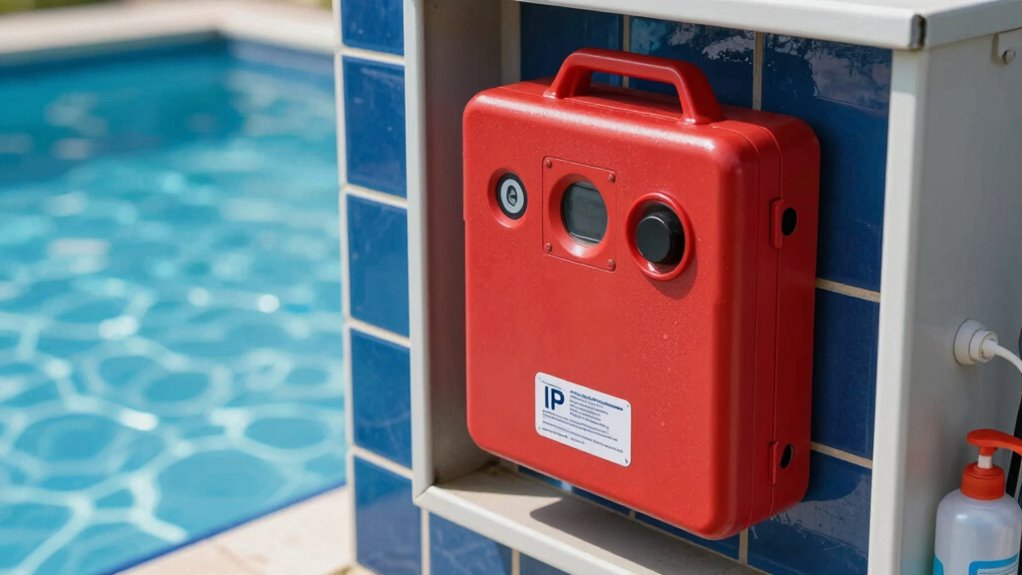
Because pool areas are high-risk zones for sudden cardiac emergencies, having an AED on-site can make all the difference in saving lives. Pool safety isn’t just about preventing accidents; it also involves being prepared for unexpected health crises. An AED ensures you’re ready for emergencies, providing immediate assistance until professional help arrives. When you prioritize emergency preparedness, you create a safer environment for everyone using the facility. In areas where water and electrical equipment coexist, having a reliable AED that can withstand wet conditions is essential. Quick access to an AED can markedly improve survival chances during cardiac events. Additionally, understanding the importance of IP ratings helps ensure the device is suitable for wet environments, especially considering water-resistant housing features. Proper storage considerations also play a vital role in maintaining device functionality and readiness during emergencies. Using appropriate storage solutions can prevent damage and ensure quick retrieval when needed. Moreover, selecting devices with waterproof features can further enhance safety and durability in aquatic settings. Thus, choosing the right device for your pool area isn’t just a safety measure—it’s a critical component of thorough pool safety.

NLShan AED Cabinet Wall Mount: Steel Defibrillator Storage Case with PVC Clear Window and Handle – for Hospitals/Schools/Offices (14.2" Wx7.9 Dx15.8 H)
- Durable Steel Construction: Corrosion-resistant and easy to clean
- Clear Viewing Window: Easily identify AED inside
- Universal Fit: Compatible with all AED brands
As an affiliate, we earn on qualifying purchases.
As an affiliate, we earn on qualifying purchases.
What Are IP Ratings and Why Do They Matter for Wet Environments?
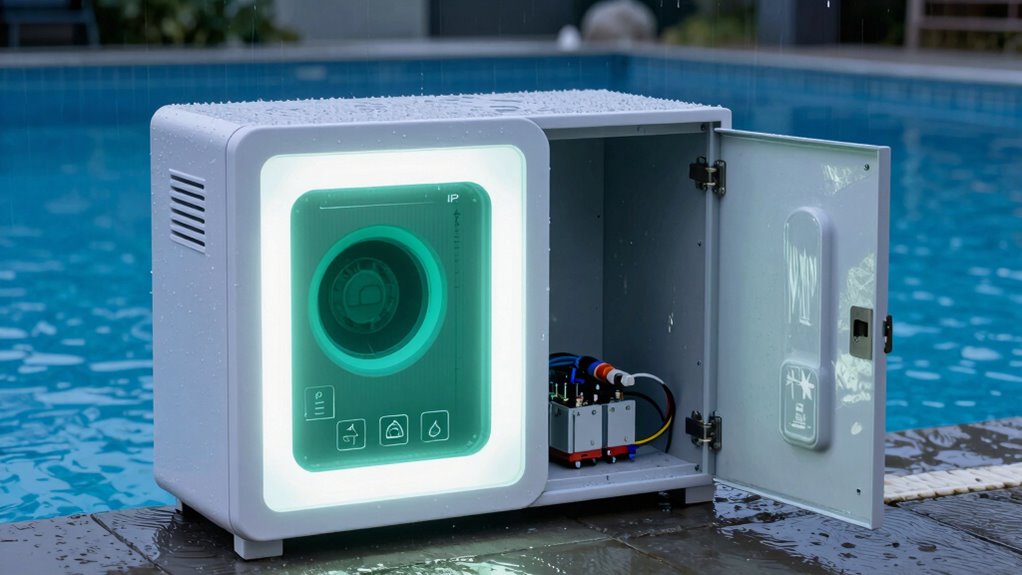
When selecting an AED for a pool area, understanding its durability in wet conditions is key. IP ratings, or Ingress Protection ratings, indicate how well a device resists water and dust. Higher ratings mean better waterproof materials and corrosion resistance, essential for poolside environments. For example:
| IP Rating | Water & Dust Resistance |
|---|---|
| IPX4 | Protected against splashing water |
| IPX7 | Can be submerged up to 1 meter for 30 minutes |
| IP68 | Fully dust-tight and submerged for extended periods |
Choosing an AED with an appropriate IP rating guarantees it withstands humidity, splashes, and potential submersion, keeping it safe and operational when you need it most. Additionally, selecting a device with proper storage is crucial to prevent damage from humid or wet conditions, especially in environments with high humidity levels. Proper storage practices help ensure the device remains functional over time and is ready during emergencies. Moreover, understanding IP ratings can help you select equipment that endures the specific environmental challenges of your pool area. For optimal protection, consider environmental factors such as temperature fluctuations and exposure to chemicals, which can also affect device longevity.

Water-Resistant AED Bag. Heavy-Duty Weather-Repellent Defibrillator Case with Quick-Access Front & Sides – Field Carry Sleeve for Sports, Paramedics & Schools
- All-Weather Protection: Weather-resistant coating shields against rain and mud
- Quick-Access Velcro Closure: Fast deployment with front and side Velcro
- Universal Fit & Extra Storage: Fits most defibrillators with room for supplies
As an affiliate, we earn on qualifying purchases.
As an affiliate, we earn on qualifying purchases.
How to Pick an AED Suitable for Poolside Use
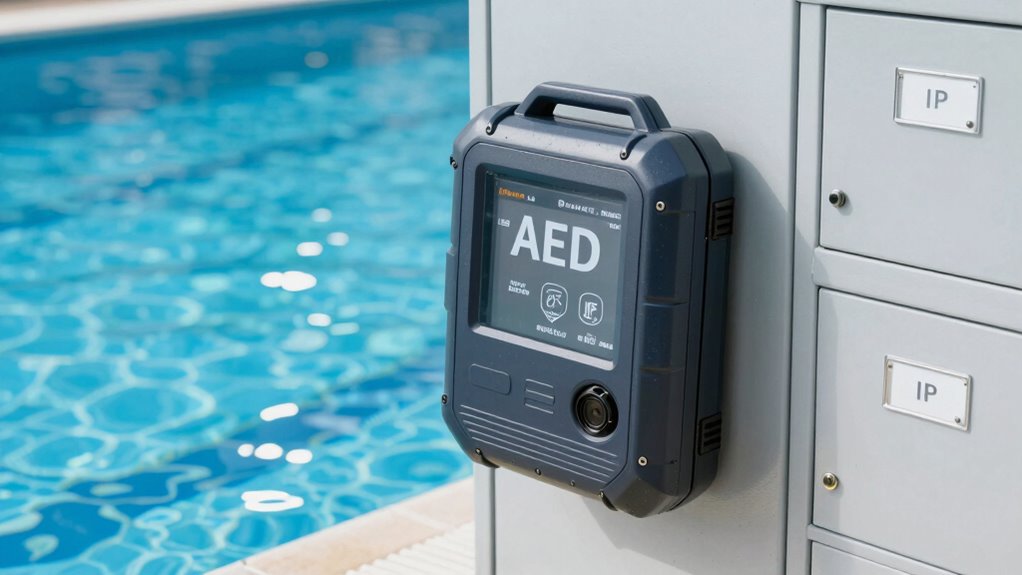
When choosing an AED for poolside use, you need to take into account waterproof enclosure options that can withstand splashes and humidity. Look for devices with appropriate IP ratings to ensure they’re protected in wet environments. Additionally, secure storage solutions are essential to keep the AED accessible yet safe from water exposure. Using appropriate floating gear can further protect the device and ensure it remains functional during water emergencies. Proper device placement is crucial to minimize the risk of water damage and ensure quick access during an emergency. Ensuring proper gear maintenance can prolong the lifespan of your AED and maintain its readiness for emergencies. Incorporating water-resistant accessories can also enhance the durability of your AED in humid or wet conditions. Regularly inspecting and updating your waterproof enclosures can help prevent accidental water ingress and ensure ongoing protection.
Waterproof Enclosure Options
Choosing a waterproof enclosure is essential for guaranteeing your AED can withstand the humid, wet environment around a pool. The right enclosure defends against moisture, corrosion, and accidental splashes. When selecting waterproof enclosures, consider these key factors:
- Corrosion Resistance: Look for enclosures made from materials like stainless steel or durable plastics that resist rust and corrosion.
- Sealing Quality: Ensure the enclosure has tight seals to prevent water ingress and maintain device functionality.
- Durability: Choose enclosures built to withstand frequent exposure to humidity and pool chemicals, extending your AED’s lifespan. Additionally, understanding waterproof enclosure options can help you make an informed choice. Selecting enclosures with high IP ratings ensures your AED remains protected in harsh environments. Paying attention to environmental protection standards can further guarantee the enclosure’s suitability for poolside conditions. Considering appropriate enclosure materials can also enhance durability and longevity in wet environments.
Appropriate IP Ratings
Selecting an AED for poolside use requires paying close attention to its Ingress Protection (IP) rating, which indicates how well the device resists dust and water. For pool safety and emergency preparedness, choose an AED with a high IP rating, ideally IP65 or higher. This ensures the device can withstand splashes, humidity, and even brief submersion without malfunctioning. An IP rating of IPX4 or above is recommended for outdoor or humid environments, providing protection against water jets and rain. By selecting an AED with an appropriate IP rating, you minimize risks associated with moisture exposure, ensuring reliable operation during emergencies. Prioritizing the right IP rating helps maintain readiness and safety, especially in the challenging conditions often present poolside.
Secure Storage Solutions
Ensuring your AED is stored securely is crucial for quick access during emergencies, especially in poolside environments where moisture and humidity can pose risks. To protect your device, consider these storage solutions:
- Use waterproof casings that prevent water ingress and keep the AED dry.
- Choose cabinets with humidity control features to reduce moisture buildup.
- Mount the AED in a visible, easily accessible location away from direct water splashes but within reach during emergencies.
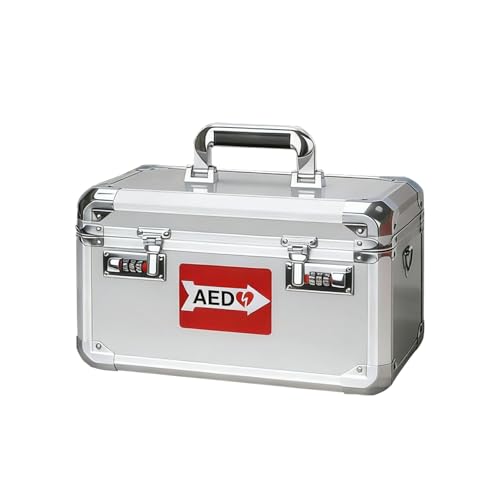
BAGAKE AED Vehicle Storage Case with Combination Lock-15.5 x 9.6 x 10 Inches Universal AED Compatible Medical Device Box, Perfect for Home, Hospital & School
- AED ID Plate Included: Built-in accessible AED identification plate
- Durable Construction: Aluminum alloy, MDF, impact-resistant materials
- Waterproof and Dustproof: Resistant to water, dust, shocks, and impacts
As an affiliate, we earn on qualifying purchases.
As an affiliate, we earn on qualifying purchases.
Best Practices for Storing AEDs Near Pools and Wet Areas
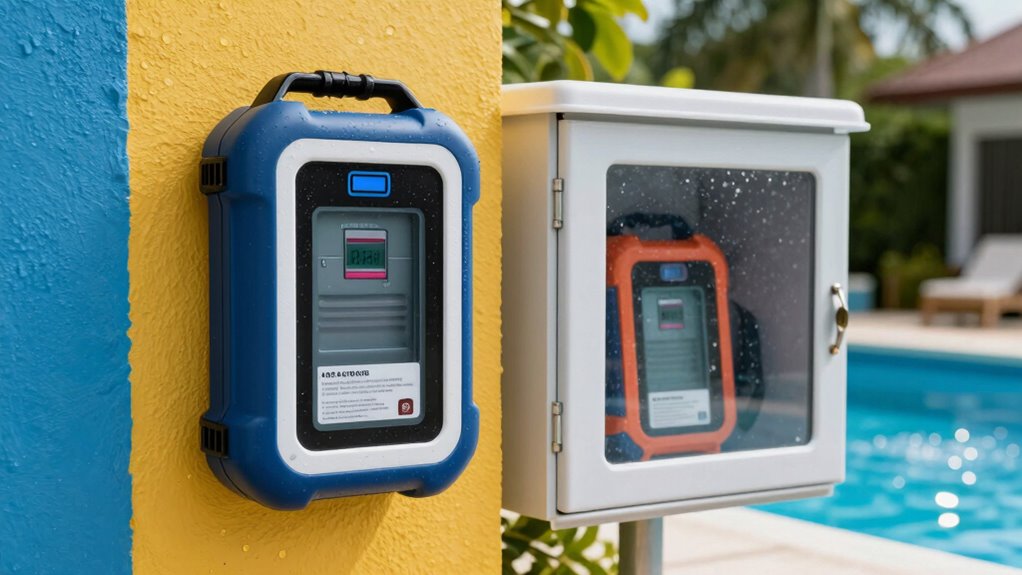
Proper storage of AEDs near pools and wet areas is vital to guarantee quick access during emergencies while maintaining their safety and functionality. To make certain of this, place AEDs in clearly marked, waterproof cabinets with appropriate IP ratings. Use visible poolside signage to guide staff and visitors to AED locations swiftly. Regular staff training is essential so everyone knows how to access and operate the device under pressure. Consider the following storage practices:
| Best Practice | Reasoning |
|---|---|
| Use waterproof, high IP-rated cabinets | Protects AED from moisture and corrosion |
| Install clear poolside signage | Ensures quick location during emergencies |
| Train staff regularly | Ensures proper use and access in critical moments |
Common Storage Mistakes That Can Damage Your AED
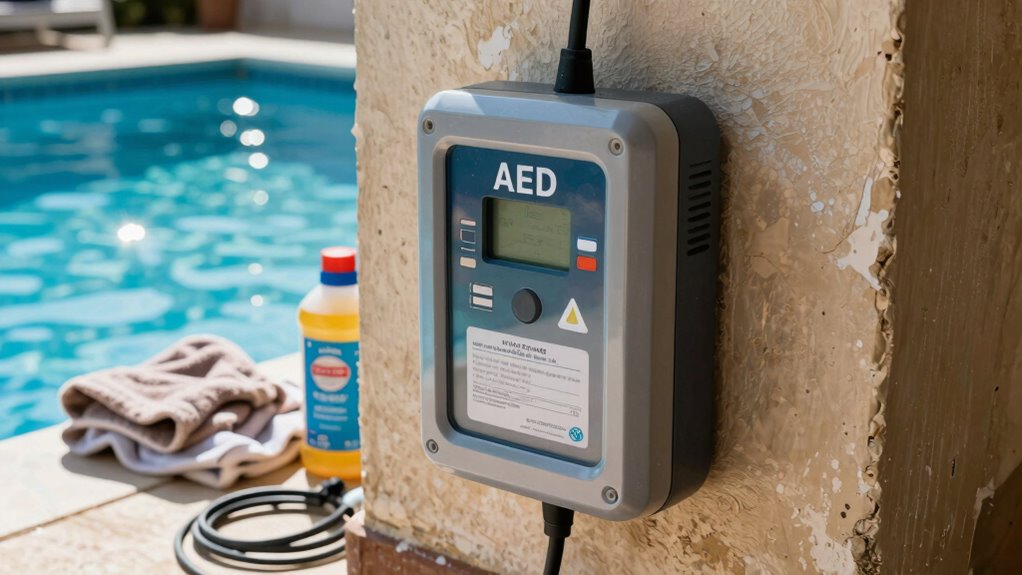
Storing your AED in high-humidity areas or without proper protection can lead to damage over time. If you don’t regulate humidity levels or use a sturdy, waterproof cover, moisture can compromise its functionality. Avoid these mistakes to ensure your AED is ready when you need it most.
Improper Humidity Control
Moisture and high humidity levels can severely damage your AED if it’s stored improperly. Without proper humidity control, moisture can seep into the device, leading to corrosion and malfunction. To guarantee environmental protection, avoid these common mistakes:
- Storing your AED in damp or unventilated areas where humidity fluctuates.
- Failing to use dehumidifiers or silica gel packs in the storage space.
- Leaving the AED in locations prone to condensation, such as near pools or humidifiers.
Maintaining proper humidity levels is vital for the longevity and reliability of your AED. Regularly monitor storage conditions and keep the device in a dry, controlled environment to prevent moisture buildup and ensure it’s always ready when needed.
Inadequate Protective Covering
Failing to use an adequate protective covering for your AED can expose it to unnecessary damage, especially in environments like pool facilities where moisture and debris are common. Without waterproof coverings or protective barriers, your AED risks corrosion, dirt buildup, and electrical issues. Proper protection guarantees longevity and readiness during emergencies. Consider these options:
| Covering Type | Benefits |
|---|---|
| Waterproof cover | Prevents water ingress |
| Protective barrier | Shields from debris and dirt |
| Ventilated cover | Allows airflow, reduces moisture |
| Lockable case | Adds security and protection |
| Rugged container | Withstands rough handling |
Using suitable coverings preserves your AED’s functionality and compliance, avoiding costly repairs or replacements caused by environmental damage.
Key Features to Look for in a Pool-Ready AED
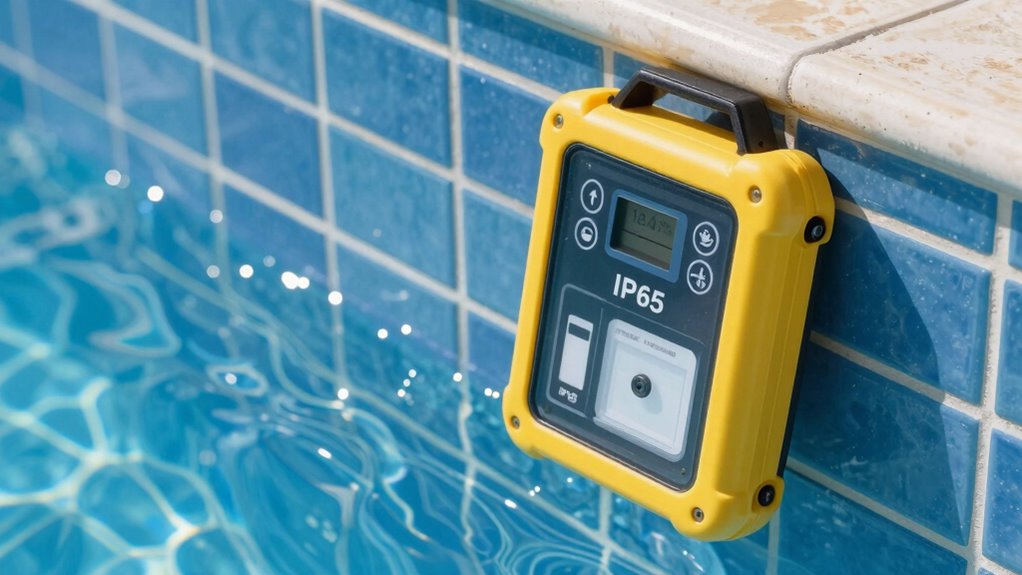
When selecting a pool-ready AED, it’s essential to prioritize features that guarantee quick and effective response in emergency situations. Look for devices that are easy to operate under stress, ensuring anyone can use them with minimal training. Key features include:
- Clear voice prompts and visual instructions to guide users through AED operation, reducing hesitation.
- Water-resistant design and high IP ratings to withstand poolside conditions and accidental splashes.
- Built-in AED training and CPR certification modules to help responders stay prepared, even if they haven’t undergone recent training.
These features help ensure the AED is accessible and reliable during emergencies, making quick response possible. Prioritize devices that combine durability, user-friendliness, and training support for the safest pool environment.
Real-Life Storage Errors and How to Avoid Them
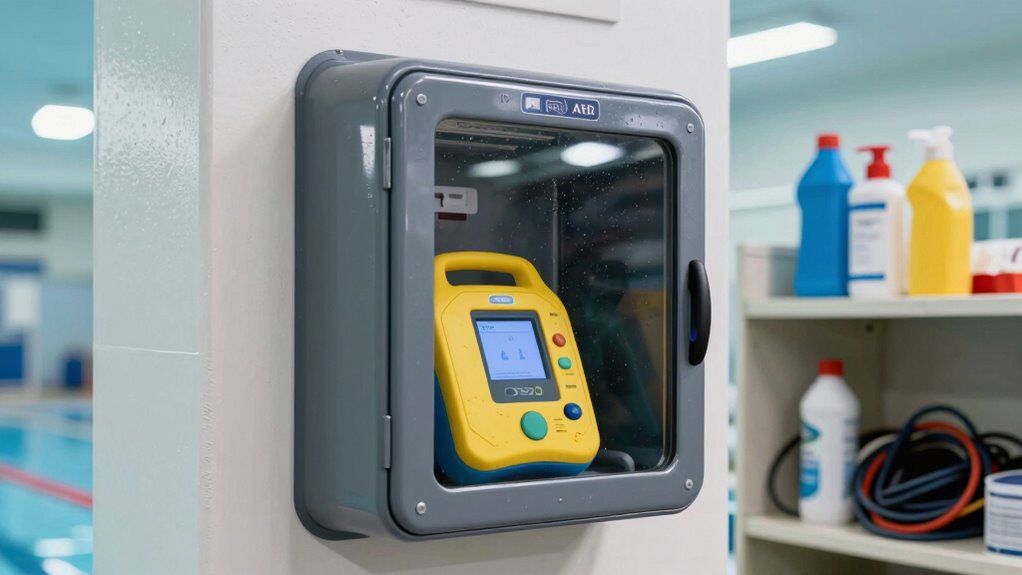
Many storage errors in pool facilities happen because emergency equipment like AEDs are not stored properly, which can delay critical response times. For example, neglecting to use clear poolside signage can make AEDs hard to locate quickly during an emergency. Storing AEDs in an inaccessible or inappropriate location, such as a locked cabinet without keys nearby, hampers rapid response. Additionally, failing to incorporate AED storage into your emergency response plans can cause confusion, wasting precious seconds during a rescue. To avoid these mistakes, ensure AEDs are stored in visible, designated areas with proper signage and integrated into your emergency procedures. Regular staff training on AED placement and quick access is essential to minimize delays and improve overall safety at your pool facility.
How to Maintain and Properly Store Your AED
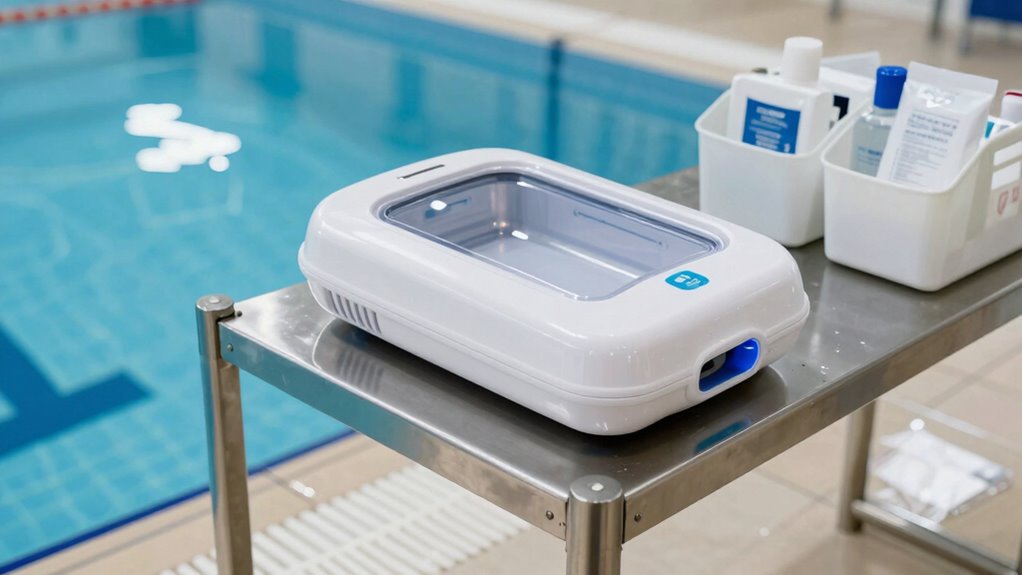
Proper maintenance and storage of your AED guarantee it is ready when seconds count. To ensure longevity and reliability, focus on these key steps:
Regular maintenance and proper storage ensure your AED is ready when every second counts.
- Regularly inspect the unit’s aesthetic design for dust, dirt, or damage, keeping it clean and visually appealing.
- Store the AED in a designated, climate-controlled area that protects it from humidity, extreme temperatures, and moisture—especially important for devices with IP ratings.
- Familiarize yourself with the user interface, ensuring buttons and displays remain clear and functional. Avoid cluttering the storage space, so the AED’s ease of use is preserved during emergencies.
Proper care maximizes device readiness, ensuring quick, confident responses during critical moments.
Final Checklist to Keep Your AED Ready When It Counts
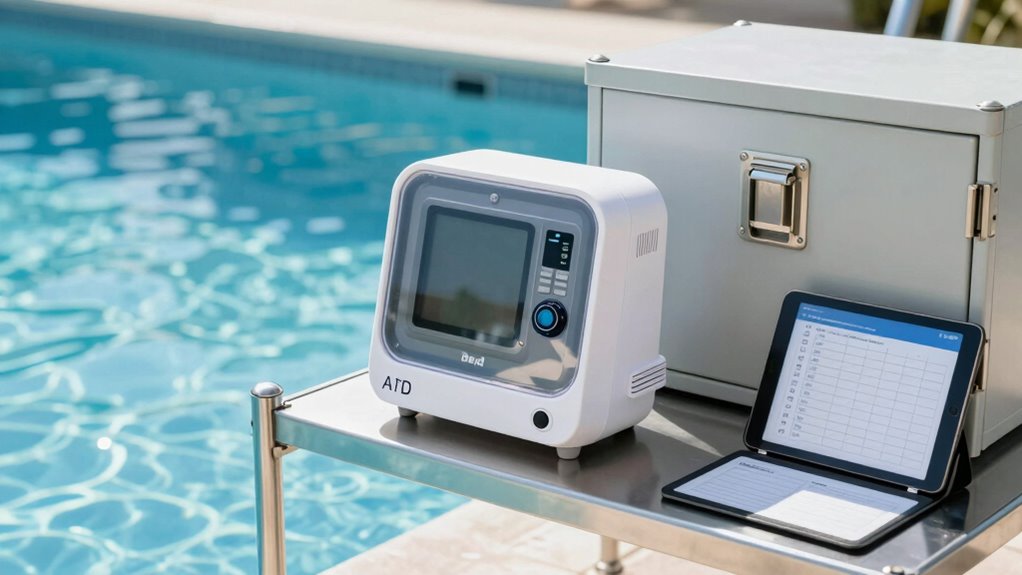
To guarantee your AED is always prepared to save a life, you need a simple but effective final checklist. First, verify the device’s battery and electrode pads are within their expiration dates, replacing them if necessary. Ascertain your AED is stored in an accessible, dry, and properly rated location, especially in a pool facility. Regularly inspect the unit for damage or corrosion, and confirm it’s fully functional with a test run if possible. Keep emergency preparedness top of mind by training staff frequently on AED operation and maintenance, so everyone knows what to do in an emergency. Document all checks and training sessions to stay organized. Staying vigilant with this checklist ensures your AED is ready when it counts most, potentially saving a life.
Frequently Asked Questions
What Are the Legal Requirements for AED Placement Near Pools?
You need to guarantee legal compliance by placing AEDs in accessible, clearly marked locations near pools. Regulations typically require AEDs to be within a certain distance, usually under 1-3 minutes of reach, and stored in visible, unlocked cabinets. Make sure the AED’s IP rating suits the humid, wet environment and that staff are trained to use it quickly. This assures AED accessibility and meets legal standards for emergency preparedness.
How Often Should AEDS Be Inspected for Water Damage?
You should inspect your AED for water damage monthly, especially if it’s near a pool. During inspections, check the battery for proper maintenance, ensuring it’s secure and functioning. Look for signs of corrosion prevention, like corrosion around terminals or on the device. If you notice any water or corrosion, replace the battery immediately and dry the unit thoroughly. Regular inspections help ensure your AED works reliably when needed.
Can Outdoor AEDS Withstand Prolonged Exposure to Sun and Humidity?
Sure, outdoor AEDs can handle sun and humidity—if you’re not asking them to perform miracles. With proper UV protection and corrosion resistance, they stand a decent chance against prolonged exposure. But don’t forget, even the toughest devices need shade and maintenance. Relying solely on their build is like trusting a sunscreen to do all the work—stay vigilant, or you might find yourself unprepared when seconds count.
Are There Different Storage Guidelines for Residential vs. Commercial Pool AEDS?
Yes, there are different storage protocols for residential and commercial pool AEDs. You should guarantee your device’s storage location protects it from extreme temperatures, humidity, and direct sunlight to maintain durability. Commercial AEDs often require more robust storage solutions with protective enclosures and climate control, while residential units may need less rigorous measures. Proper storage protocols help preserve device durability, ensuring your AED works reliably when you need it most.
What Training Is Recommended for Staff Handling AEDS in Wet Environments?
Think of your staff as the lifeguards of emergency response; they need sharp skills for wet environments. You should provide water safety training that covers AED use in humid, wet conditions, including proper handling and maintenance. Regular drills ensure quick, confident responses during emergencies. By equipping your team with this knowledge, you’re turning emergency response into a well-choreographed dance, reducing risks and saving lives when seconds count.
Conclusion
Ensuring your AED is suitable for poolside use and stored correctly can save lives. Remember, over 70% of sudden cardiac arrests happen outside hospitals, often in public areas like pools. Choosing an AED with proper IP ratings and avoiding common storage mistakes means it’ll be ready when every second counts. Stay proactive, regularly check your device, and keep it protected from water and damage—your preparedness can make all the difference.