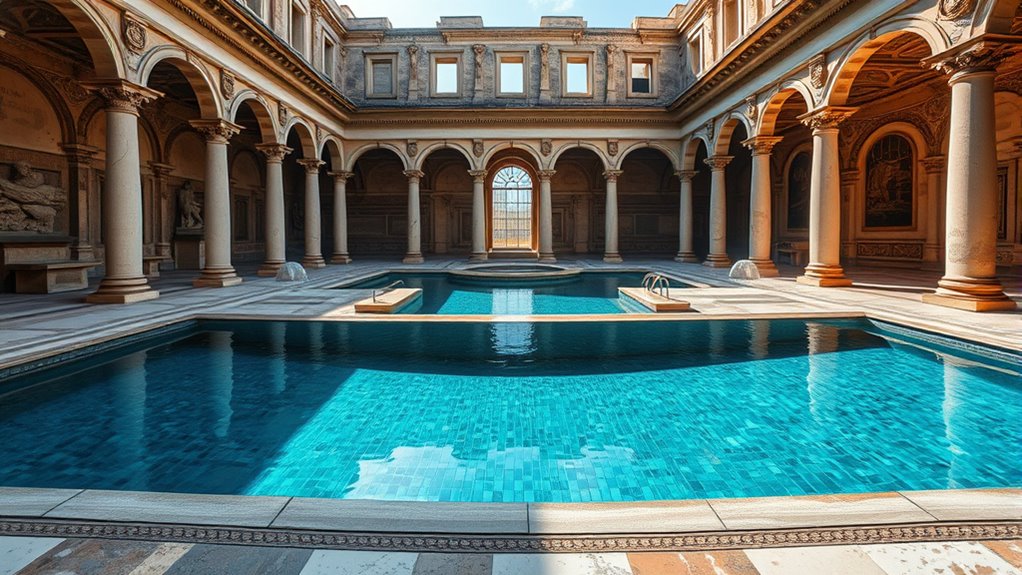

The history of pool design begins with ancient Roman baths, showcasing advanced engineering, social hubs, and impressive structures like aqueducts and heated pools. Over time, pools shifted from public baths to private retreats, with innovations in materials and technology improving durability and aesthetics. In the 19th and 20th centuries, reinforced concrete and modern filtration revolutionized pools, leading to today’s energy-efficient, sustainable designs. Exploring this evolution reveals how human ingenuity continually transforms aquatic spaces—if you’re curious, you’ll discover more about this fascinating journey.

Get pool and patio gear delivered free — and shop member deals
- Fast, free delivery on millions of items
- Access to Prime Big Deal Days deals on October 6–7
- Prime Video, Amazon Music and more included
Key Takeaways
- Roman engineers pioneered aqueducts and bath complexes, establishing foundational designs for durable, functional, and social pools.
- Over centuries, public baths transitioned to private pools, maintaining core engineering principles while emphasizing aesthetics and privacy.
- The 19th and 20th centuries introduced reinforced concrete, advanced filtration, and backyard pools, making swimming accessible and modernized.
- Modern pools feature energy-efficient systems, LED lighting, and eco-friendly materials, reflecting technological progress and sustainability goals.
- Pool design evolved to mirror societal values, combining cultural significance, technological innovations, and aesthetic preferences across eras.
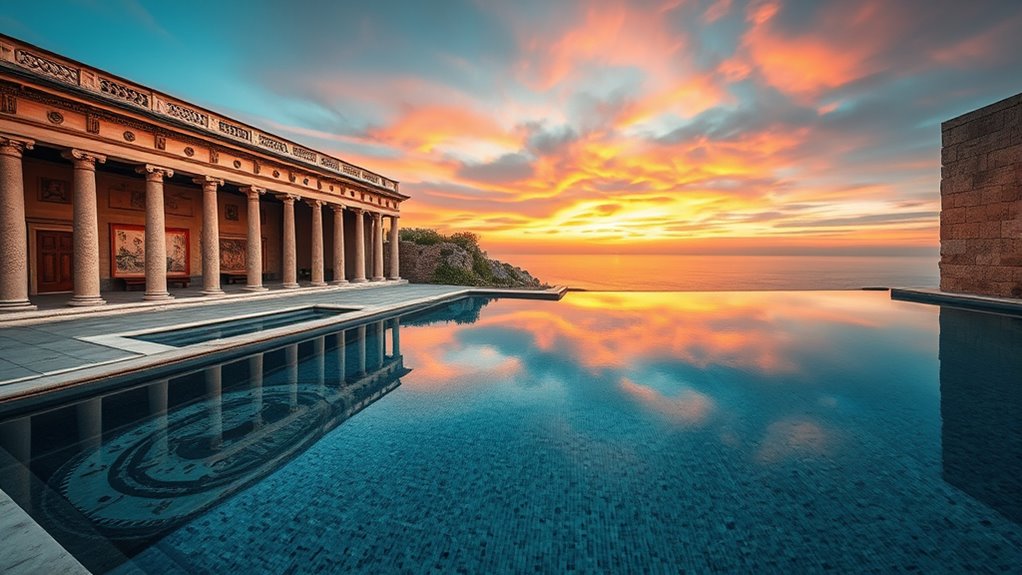
Have you ever wondered how pool designs have evolved over time? The journey from simple bathing facilities to today’s luxurious infinity pools reflects centuries of innovation and cultural shifts. One of the earliest influences on pool design comes from Roman engineering, which played a significant role in shaping what we now consider modern pools. The Romans mastered the art of creating sophisticated aqueduct systems and intricate bath complexes, such as the iconic Baths of Caracalla and Diocletian, which featured large communal pools, heated rooms, and elaborate plumbing. These structures weren’t just about hygiene—they were social hubs and symbols of power. The Romans used advanced engineering techniques to guarantee water flow and temperature control, setting a foundation for future pool innovations. Their emphasis on durability, aesthetics, and functionality influenced pool design long after the empire fell. As centuries passed, the focus shifted from grand public baths to more private and refined pools, but the principles of engineering and water management persisted. Additionally, the legacy of Roman engineering continues to influence modern water management systems, ensuring pools remain efficient and sustainable today.
Fast forward to the 19th and 20th centuries, where modern innovations transformed pools into personalized outdoor retreats. The invention of reinforced concrete allowed for more flexible shapes and sizes, giving architects creative freedom to design pools that fit specific landscapes and tastes. Filtration and chlorination systems advanced rapidly, making pools easier to maintain and more hygienic. These innovations made pool ownership accessible to the middle class and spurred the rise of backyard pools as symbols of leisure and luxury. Today’s pool design continues to evolve with cutting-edge technology: LED lighting, automated cleaning systems, and energy-efficient pumps enhance both aesthetics and convenience. Modern innovations also prioritize sustainability, with features like solar heating and eco-friendly materials reducing environmental impact. The sleek, minimalist designs of today’s pools often draw inspiration from both ancient Roman engineering and contemporary technology, blending the timeless with the innovative.
Throughout history, the essence of pool design has been about more than just water; it’s been about creating a space for relaxation, socialization, and even status. From the grandeur of Roman baths to the sleek, energy-efficient pools of today, each era reflects its culture’s values and technological capabilities. The evolution continues as new materials and smart technologies emerge, promising even more personalized and sustainable aquatic environments in the future. So, as you look at a modern pool, remember that its roots stretch back thousands of years, rooted in ancient engineering feats and driven forward by relentless innovation. The journey from simple baths to sophisticated pools illustrates how human ingenuity and cultural aspirations shape our most cherished leisure spaces.
As an affiliate, we earn on qualifying purchases.
Frequently Asked Questions
How Have Pool Materials Evolved Over Centuries?
You’ve seen pool materials evolve through centuries, driven by pool construction needs and material innovations. Early pools used natural stones and clay, but now, you get durable options like concrete, fiberglass, and vinyl liners. Modern materials resist corrosion, algae, and weather, making pools easier to maintain. Thanks to material innovations, you can customize your pool for style, longevity, and function, ensuring a more enjoyable and lasting swimming experience.
What Cultural Influences Shaped Ancient Pool Designs?
You see, ancient pool designs blend practicality with spiritual meaning, shaped by cultural symbolism and rituals. In Egypt and Mesopotamia, pools reflected divine power, serving as symbols of immortality. Conversely, Greek and Roman baths emphasized social harmony and cleanliness, influenced by their philosophies. These cultural influences transformed simple water features into sacred spaces, illustrating how rituals and symbolism deeply molded ancient pools, making them more than just functional structures.
When Did Modern Infinity Pools First Appear?
Modern infinity pools first appeared in the 1960s, revolutionizing pool design with their seamless visual illusion. You’ll notice that this innovative feature creates the effect of water extending infinitely, blending into the horizon. Designers use clever engineering and water management techniques, showcasing design innovation. If you seek a luxurious, visually striking pool, infinity pools offer an extraordinary experience by blurring boundaries between water and sky, making them a popular choice today.
How Have Technological Advances Changed Pool Maintenance?
You might think pool maintenance is tedious, but technology makes it simple. Robotic cleaners automatically scrub your pool, saving you time and effort. Automated chemical dosing guarantees your water stays perfectly balanced without guesswork. These advances mean less manual work and fewer errors, so you can enjoy your pool more. With smart technology, maintaining your pool becomes effortless, giving you more time to relax and have fun.
What Are Emerging Trends in Sustainable Pool Design?
You’re seeing trends in sustainable pool design like solar heating and eco-friendly filtration take off. These innovations help reduce energy consumption and minimize environmental impact. Solar heating harnesses sunlight to warm your pool naturally, while eco-friendly filtration uses less chemicals and recycles water efficiently. By adopting these methods, you’re making your pool more environmentally responsible, cutting costs, and creating a more sustainable, enjoyable swimming experience.
As an affiliate, we earn on qualifying purchases.
Conclusion
From ancient baths to modern pools, you’ve seen how pool design evolves with culture, technology, and innovation. You’ve explored the grandeur of Roman mosaics, the elegance of 19th-century architecture, and the sleek lines of today’s trends. You’ve witnessed the transformation from functional spaces to luxurious retreats. Now, you understand how history shapes your own pool experiences. Embrace the legacy, appreciate the progress, and imagine the future of pool design—because your pool is part of this ongoing story.
As an affiliate, we earn on qualifying purchases.
As an affiliate, we earn on qualifying purchases.
Fall Picks
fall essentials
As an affiliate, we earn on qualifying purchases.