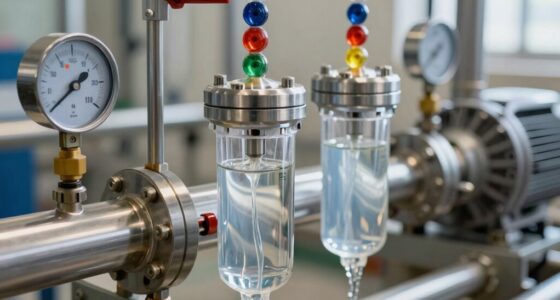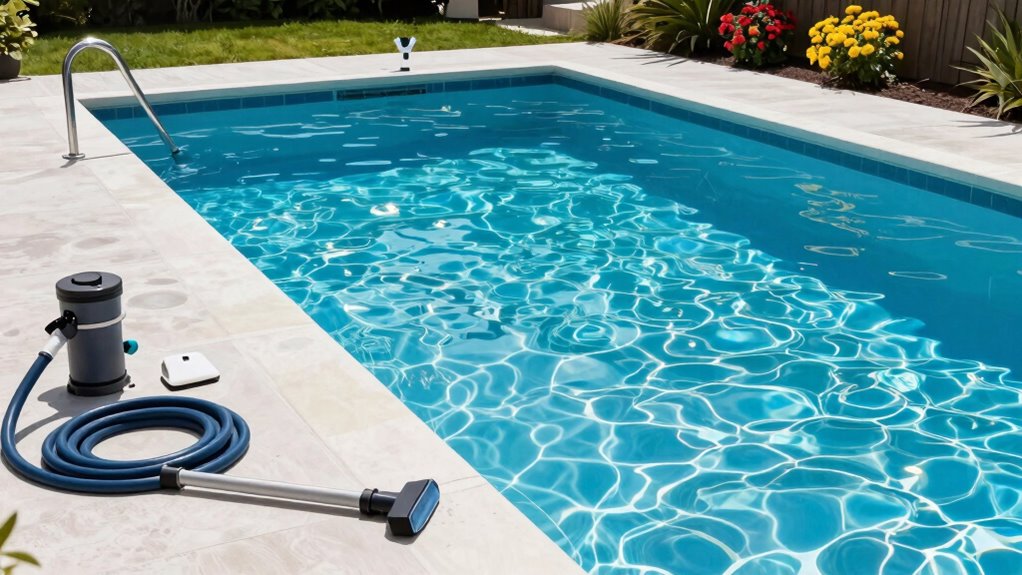

As a future pool pro, start by mastering fundamental maintenance skills like balancing chemicals, monitoring water levels, and cleaning equipment. Learn how pool systems like pumps, filters, and heaters work, so you can troubleshoot efficiently. Understand industry standards and safety protocols to guarantee quality service. Building a solid foundation will boost your confidence and reputation. Stay curious—if you keep exploring, you’ll discover even more ways to excel in this dynamic industry.

Get pool and patio gear delivered free with Prime
- Fast, free delivery on millions of items
- Prime Video, Amazon Music and more included
- Member-only deals all year
Key Takeaways
- Master basic water chemistry and chemical balancing to ensure safe, clean, and environmentally sustainable pools.
- Develop strong customer service skills to build trust and enhance client satisfaction.
- Gain foundational knowledge of essential pool equipment and maintenance procedures.
- Obtain industry certifications to demonstrate professionalism and stay current with safety standards.
- Stay informed about industry best practices, new technologies, and sustainable pool management techniques.
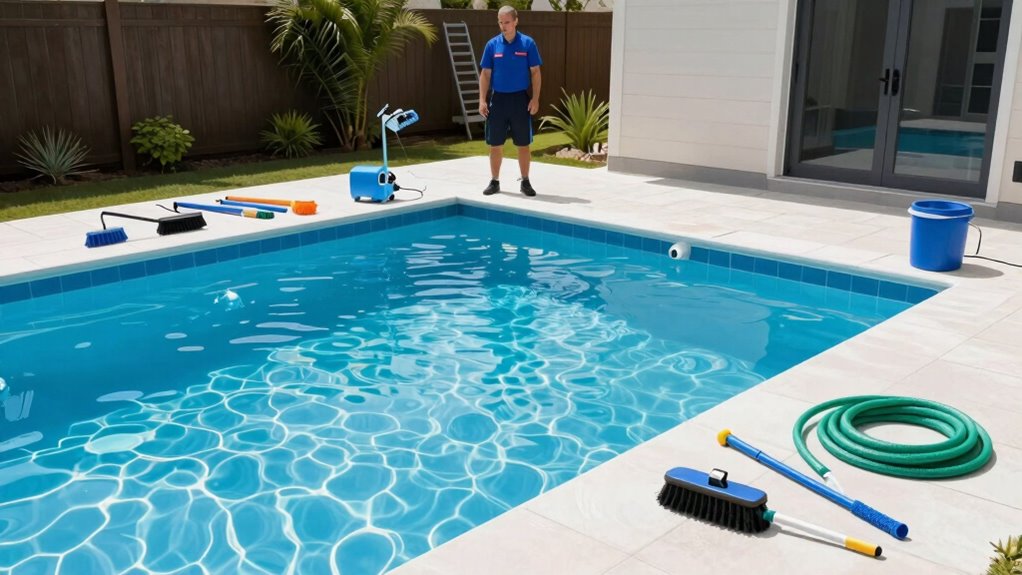
Starting in the pool industry can be overwhelming, but with the right tips, you’ll build a solid foundation for success. The first thing you need to grasp is the importance of proper pool maintenance. This isn’t just about keeping pools clean; it’s about understanding how to balance chemicals, monitor water levels, and troubleshoot common issues. When you master pool maintenance, you guarantee customer satisfaction and build a reputation for quality work. Regular maintenance tasks like cleaning filters, testing water chemistry, and inspecting equipment form the backbone of your daily operations. It’s essential to develop good habits early, so you can diagnose problems quickly and prevent costly repairs down the line. Additionally, understanding the significance of biodiversity and ecosystem health in water management can help promote environmentally sustainable practices within your services. Recognizing the impact of water quality on local ecosystems can also enhance your reputation as an environmentally conscious professional. Incorporating eco-friendly practices, such as water conservation and chemical reduction, can further set you apart in the industry.
Mastering pool maintenance ensures customer satisfaction and sets the foundation for long-term success.
Alongside pool maintenance, industry certifications play a significant role in establishing your credibility. Certifications from recognized organizations, such as the National Swimming Pool Foundation or the Association of Pool & Spa Professionals, not only boost your knowledge but also demonstrate your commitment to professionalism. Earning these credentials signals to clients that you’re serious about your craft and adhere to industry standards. Certifications often cover fundamental topics like safety protocols, chemical handling, and equipment installation, giving you a thorough understanding of the industry’s best practices. They also open doors to advanced training opportunities and higher-paying jobs, setting you apart from competitors who lack formal qualifications. Gaining a solid understanding of water chemistry is particularly important, as it directly impacts the safety and quality of the pools you service.
Another key aspect to learn early on is understanding the various types of equipment and their maintenance requirements. Pumps, filters, heaters, and automation systems all have specific needs, and knowing how to service them correctly ensures longevity and peak performance. This knowledge directly influences your ability to deliver reliable service and troubleshoot efficiently, saving your clients money and time. As you grow, staying updated on new technology and industry trends becomes indispensable. The pool industry evolves rapidly, and being proactive about continuing education helps you stay relevant and competitive.
Finally, developing strong customer service skills will set you apart. Building rapport with clients, communicating clearly, and managing expectations are just as important as technical skills. When you combine excellent pool maintenance, industry certifications, and strong interpersonal skills, you position yourself as a trustworthy professional. Remember, success in this field isn’t just about fixing pools; it’s about creating a positive experience for your customers. Focusing on client communication and delivering top-quality service will foster loyalty and help grow your reputation. It’s also crucial to stay informed about industry standards and best practices to continually improve your services. Focus on these foundational elements, and you’ll be well on your way to a thriving career in the pool industry.
Products Worth Considering

eufy Security SoloCam E42 4-Camera Kit, 4K Solar Security Cameras with HomeBase 3

Philips Hue Starter Kit with Bridge Pro and 4 A19 E26 Smart Bulbs

Arlo Pro Wireless Security Camera, 2K HDR, 6th Generation, 4-Camera Kit
As an affiliate, we earn on qualifying purchases.
Frequently Asked Questions
What Certifications Are Most Valuable for New Pool Pros?
You should prioritize earning a pool certification, such as the Certified Pool Operator (CPO) credential, to demonstrate your knowledge of industry standards. This certification is highly valued and shows employers you’re committed to safety and professionalism. Additionally, look into other industry-specific certifications like the Aquatic Facility Operator (AFO) to broaden your expertise. Staying certified and up-to-date helps you build credibility and succeed as a future pool pro.
How Do Seasonal Changes Affect Pool Maintenance Schedules?
Many believe seasonal fluctuations don’t impact pool maintenance, but they do. You’ll find that summer demands more frequent cleaning, chemical balancing, and filter checks, while winter often slows down your schedule. Proper maintenance scheduling adapts to these changes, ensuring your pools stay safe and inviting year-round. Recognizing these seasonal shifts allows you to plan ahead, avoid surprises, and deliver exceptional service, proving your expertise to clients.
What Are Common Safety Hazards on Pool Job Sites?
On pool job sites, you face common safety hazards like chemical safety risks and equipment hazards. You need to handle chemicals carefully, wearing protective gear and following proper storage procedures to prevent spills or accidents. Additionally, always be cautious around equipment like power tools and automated cleaning systems. Staying alert, using safety protocols, and knowing how to manage chemicals and equipment safely protect you and your team from potential injuries.
How Can Pros Effectively Upgrade Older Pool Systems?
Thinking of upgrading that ancient pool system? Start with a thorough assessment to identify outdated components. Modernize with energy-efficient pumps and smart controls, ensuring maintenance becomes a breeze. Focus on maintenance optimization by choosing durable, low-maintenance parts and sealing leaks early. Remember, a well-upgraded system saves money and hassle, making your clients’ dreams of a hassle-free pool a reality — all while you look like a pool wizard.
What Innovative Technologies Are Shaping the Future of Pool Industry?
You should focus on innovative technologies like smart technology and eco-friendly systems transforming the pool industry. Smart tech allows you to remotely monitor and control pools, boosting efficiency and convenience. Eco-friendly systems, such as energy-efficient pumps and automated chemical dispensers, help reduce environmental impact and operating costs. Staying ahead with these advancements guarantees you’re competitive, providing clients with sustainable, high-tech solutions that meet the demands of modern pool owners.
Conclusion
As a future pool pro, staying curious and enthusiastic to learn sets you apart. Imagine a rookie technician quickly mastering pool chemistry, leading to happier clients and more referrals. Like Sarah, who started with simple repairs and now handles complex installations confidently. Focus on building your skills early, embrace every challenge, and always prioritize quality. The industry rewards those who stay dedicated—your journey to success begins with a willingness to learn and grow.