A 30-day skill checklist helps new pool techs build confidence by guiding you through essential tasks like water testing, equipment maintenance, and safety protocols. You’ll learn to troubleshoot common issues, keep detailed records, and communicate clearly with clients. This structured approach helps you develop practical skills step by step. Keep going, and you’ll discover how to master your role confidently and efficiently as you progress.

Get pool and patio gear delivered free — and shop member deals
- Fast, free delivery on millions of items
- Access to Prime Big Deal Days deals on October 6–7
- Prime Video, Amazon Music and more included
Key Takeaways
- Establish a structured 30-day training plan focusing on essential skills like water chemistry, equipment maintenance, and troubleshooting.
- Incorporate regular hands-on practice, supervised inspections, and problem-solving exercises to build confidence gradually.
- Set clear, achievable goals for mastering advanced tools, safety protocols, and customer communication.
- Schedule frequent progress reviews and feedback sessions to identify strengths and address knowledge gaps.
- Emphasize continuous learning through mentorship, documentation, and active team engagement to foster growth and professionalism.
As an affiliate, we earn on qualifying purchases.
Know Your Role: Core Duties of a Pool Technician

Understanding your core duties is essential to becoming an effective pool technician. Your primary responsibilities revolve around ensuring pool safety, which means maintaining proper chemical levels, inspecting equipment, and addressing hazards promptly. You’ll also serve as the first point of contact for customers, so delivering excellent customer service is vital. Communicate clearly, listen to their concerns, and provide solutions confidently. Your role involves routine inspections, troubleshooting issues, and performing necessary repairs to keep pools safe and operational. Staying organized and attentive to detail helps you meet safety standards and customer expectations. Remember, your professionalism and focus on safety directly impact the trust and satisfaction of your clients. Consistent training and staying updated on industry standards, such as health and safety protocols, are crucial for success. Staying informed about industry innovations can help you adopt new tools and techniques that improve your efficiency. Mastering these core duties lays a strong foundation for your success as a pool technician. Additionally, staying informed about Balinese masks and decor can help you stay engaged and connected with the broader community. Developing a thorough understanding of chemical balancing techniques further ensures that you can effectively maintain water quality.
pool equipment maintenance tools
As an affiliate, we earn on qualifying purchases.
As an affiliate, we earn on qualifying purchases.
Setting Up Your Equipment and Supplies for Success
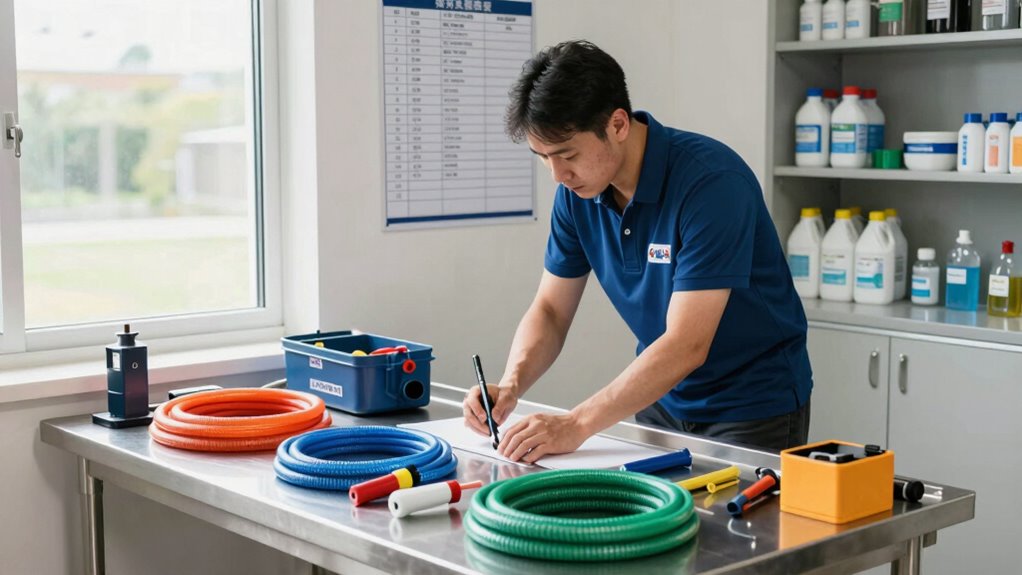
To set yourself up for success, start by organizing your essential tools so you can find what you need quickly. Make sure all your equipment works properly to avoid delays during work. Additionally, stock up on the supplies you’ll use often to keep your workflow smooth and efficient. Proper tool safety practices can prevent accidents and ensure a safe working environment. Additionally, understanding data storage and backup solutions can help you select the right equipment for your needs. Familiarizing yourself with pool terminology can also help you communicate more effectively with clients and team members.
Organize Essential Tools
Before you start working on pool maintenance, it’s essential to organize your tools and supplies so everything you need is within easy reach. Proper tool organization streamlines your workflow and helps prevent mistakes during equipment maintenance. Keep your tools sorted by type and size, storing frequently used items in a designated toolbox or caddy. This way, you won’t waste time searching for what you need. Consider labeling shelves or containers for quick identification. Regularly check your tools for wear or damage and clean them after use to ensure longevity. An organized setup reduces clutter and enhances efficiency, giving you confidence to handle any task. Remember, well-maintained equipment and tidy tools are key to delivering quality service and maintaining a safe work environment. Additionally, understanding the different types of tools and their specific uses can improve your overall effectiveness tool knowledge. Proper tool storage techniques also help in quickly locating items and maintaining a safe workspace. For optimal efficiency, incorporate storage best practices to keep your workspace neat and accessible.
Verify Equipment Functionality
After organizing your tools and supplies, the next step is to validate that all equipment is working properly. Conduct a thorough equipment inspection to ensure pumps, filters, and chemical feeders operate correctly. Check for leaks, unusual noises, or signs of wear that could cause malfunctions. Confirm that gauges and meters display accurate readings, adhering to safety protocols to prevent accidents. It’s essential to verify that safety features like shut-off switches and alarms are functional before starting work. Document any issues and address them immediately to avoid future problems. This step ensures your equipment is reliable and safe, laying a solid foundation for efficient pool maintenance. Proper verification boosts confidence and minimizes risks during daily operations. Additionally, understanding equipment testing procedures can help you troubleshoot issues more effectively and maintain optimal performance. Regularly performing preventive maintenance checks can extend the lifespan of your equipment and improve overall safety. Incorporating routine inspections into your daily schedule helps catch potential problems early, reducing downtime and repair costs. Recognizing early warning signs of equipment failure can help prevent costly breakdowns and ensure smooth operations. Conducting these checks with attention to detail ensures no issues are overlooked, further safeguarding your equipment’s longevity.
Stock Necessary Supplies
Have you gathered all the necessary supplies to guarantee smooth pool maintenance? Proper stock management is essential to avoid delays and ensure efficient service. Start by organizing your inventory, so you always know what’s in stock and what needs replenishing. Regular supply ordering prevents shortages of key items like chemicals, test kits, and filters. Keep a checklist to track usage patterns and anticipate demand. This proactive approach minimizes downtime and keeps your workflow steady. Efficient inventory management also helps control costs and reduces waste. By maintaining a well-stocked setup, you’re better prepared to handle any pool issue promptly. Additionally, implementing inventory tracking systems can help you stay on top of your supplies and avoid unexpected shortages. Incorporating automatic reorder alerts can further streamline your supply management process, ensuring you never run out of critical items.
As an affiliate, we earn on qualifying purchases.
Pool Chemistry Basics: Balancing Water Safely
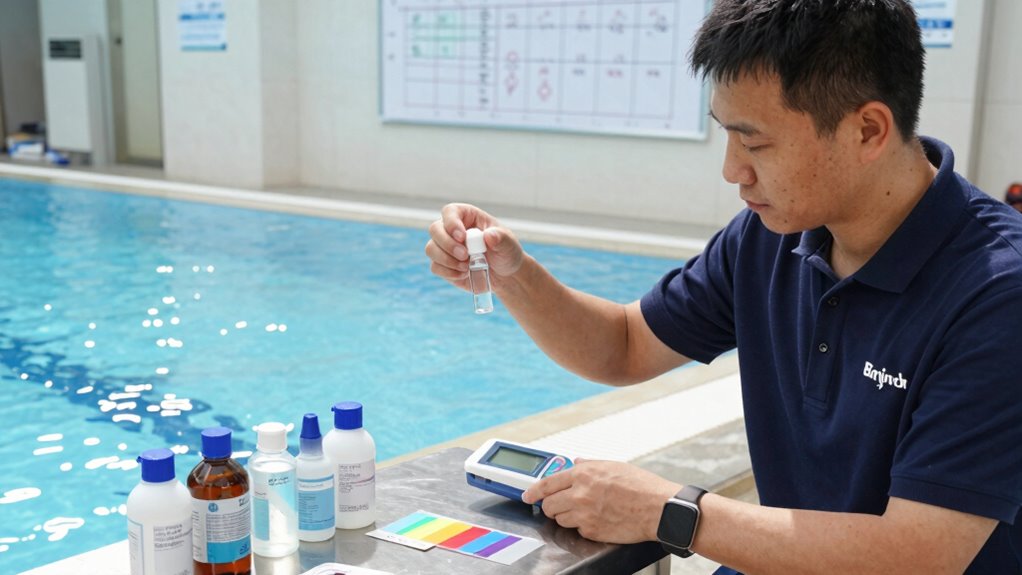
Understanding water chemistry is essential for keeping pools safe and clear. You need to know how to measure and adjust chemicals properly to maintain balance. Safe chemical handling guarantees you protect yourself and the water from hazards.
Understanding Water Chemistry
Maintaining balanced water chemistry is essential for safe and enjoyable pool use. It ensures the water is clear, healthy, and comfortable for swimmers. To do this effectively, you need to understand key concepts like chlorine levels and pH balance. Proper chlorine levels prevent algae growth and bacteria, while correct pH balance keeps the water safe and prevents corrosion or scaling. Regular testing helps you monitor these levels accurately. Additionally, understanding how chemicals interact and adjusting them accordingly keeps the water safe.
- How to test water chemistry accurately
- The importance of maintaining proper chlorine levels
- Adjusting pH balance for swimmer comfort
- Recognizing signs of imbalanced water chemistry
Safe Chemical Handling
Handling pool chemicals safely is essential to prevent accidents and guarantee effective water treatment. Proper chemical safety practices protect you and others from potential hazards, such as chemical burns or inhalation risks. Always read labels carefully and follow manufacturer instructions for storage and handling. Use appropriate personal protective equipment, like gloves and goggles, to minimize exposure. Be mindful of chemical interactions; never mix chemicals unless instructed and approved. Regularly check for leaks or spills, and clean up promptly to prevent hazard prevention issues. Keep chemicals in secure, well-ventilated areas away from heat or open flames. By prioritizing chemical safety, you reduce the risk of accidents, ensure water balance accuracy, and maintain a safe environment for everyone. Proper handling is key to effective, hazard-free pool maintenance.
pool chemical balancing supplies
As an affiliate, we earn on qualifying purchases.
As an affiliate, we earn on qualifying purchases.
Daily Pool Maintenance and Troubleshooting Common Problems

To keep a pool safe and inviting, it’s essential to perform daily maintenance tasks and quickly address common issues. Regularly check water clarity and chemical balance, clean skimmer baskets, and verify that filtration is running efficiently. Promptly identify and troubleshoot problems like cloudy water, algae growth, or equipment malfunctions. Proper filter maintenance is vital for optimal circulation, while following safety protocols guarantees your safety and that of swimmers. Staying vigilant helps prevent bigger problems and keeps the pool in top condition.
Daily pool maintenance ensures safety, clarity, and proper function—stay vigilant to prevent bigger issues and keep your pool inviting.
Here are key tasks to focus on daily:
- Inspect water clarity and chemical levels
- Clean skimmer baskets and pump baskets
- Check filter operation and perform filter maintenance
- Identify early signs of equipment issues
Consistent attention guarantees the pool remains safe, clean, and enjoyable for everyone.
Inspect and Maintain Equipment for Longevity
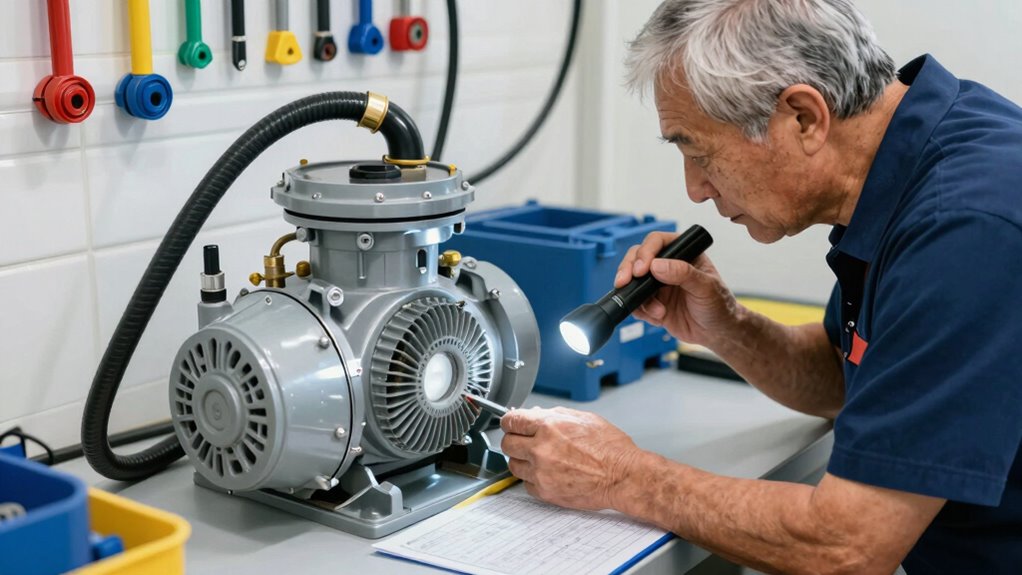
Regularly inspecting and maintaining your pool equipment is essential to guarantee it lasts longer and functions efficiently. Equipment inspection involves checking filters, pumps, and valves for signs of wear, leaks, or blockages. Perform routine maintenance routines such as cleaning filters, lubricating moving parts, and tightening fittings. By catching issues early, you prevent costly repairs and equipment failure. Develop a consistent schedule for these inspections and maintenance tasks, especially during peak swimming season. Keep an eye on electrical connections and ensure safety covers are secure. Proper maintenance routines not only extend equipment longevity but also improve overall pool performance. Staying proactive with equipment inspection and maintenance helps you deliver reliable service and minimizes downtime.
Communicate Clearly and Keep Good Records
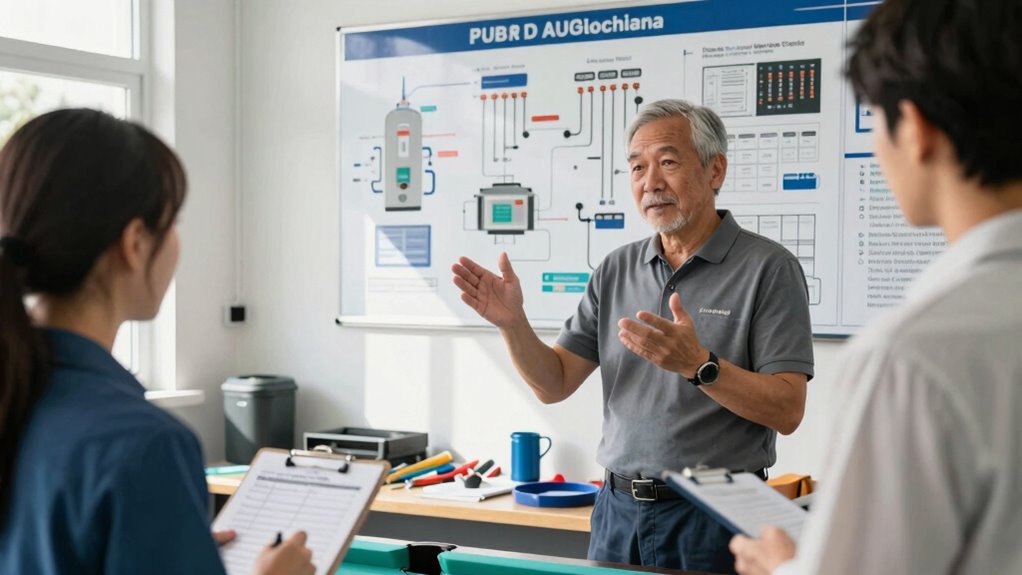
Effective communication and thorough record-keeping are essential for guaranteeing smooth pool maintenance and swift problem resolution. When you communicate effectively, you prevent misunderstandings and ensure team members are on the same page. Good record keeping provides a clear history of issues, repairs, and maintenance, making future troubleshooting easier. To improve, focus on:
- Document all inspections and repairs accurately
- Use clear, concise language when speaking with clients or colleagues
- Keep digital or physical logs up to date regularly
- Share relevant information promptly to avoid delays
Build Confidence and Plan Your Next Steps

Building confidence as a new pool tech involves taking deliberate steps to understand your tasks and trust your skills. To do this, focus on team collaboration; learn from experienced colleagues, ask questions, and share your progress. This approach helps you gain practical knowledge and reinforces your abilities. Customer service skills are equally essential—confident communication with clients builds trust and shows professionalism. As you grow more comfortable, plan your next steps by setting clear goals, such as mastering advanced equipment or improving troubleshooting skills. Regularly review your progress and seek feedback. By actively engaging with your team and prioritizing excellent customer service, you’ll develop confidence that empowers you to handle daily challenges and advance in your role.
Frequently Asked Questions
What Certifications or Licenses Are Necessary for a New Pool Tech?
You typically need a state-issued pool operator license or certification, depending on your location. This guarantees you understand proper maintenance procedures and safe handling of pool chemicals. Many states require passing an exam that covers pool chemistry, safety, and maintenance. Getting certified demonstrates your knowledge and helps you perform maintenance procedures confidently, ensuring safe and effective pool management. Always check your state’s specific requirements to stay compliant.
How Do I Handle Customer Complaints Effectively?
When handling customer complaints, focus on clear customer communication and active listening. Acknowledge their concerns, show empathy, and stay calm. Ask questions to understand the issue fully, then offer practical solutions promptly. Keep the customer informed throughout the complaint resolution process, demonstrating your commitment to resolving their problem. This approach builds trust, improves customer satisfaction, and helps you develop confidence as a skilled pool tech.
What Safety Precautions Should I Follow on the Job?
Did you know that most pool-related injuries happen due to safety neglect? You should always prioritize pool safety by wearing protective gear, following proper procedures, and practicing hazard awareness. Keep the area clear of obstacles, check equipment regularly, and stay alert for potential dangers. By staying vigilant and adhering to safety precautions, you protect yourself and your customers, ensuring a safe environment for everyone around the pool.
How Can I Stay Updated on the Latest Pool Technology?
To stay updated on the latest pool technology, you should regularly read industry publications and attend training seminars focused on pool maintenance and water chemistry. Joining online forums and networking with other pool professionals helps you learn about new tools and techniques. Subscribing to manufacturer updates and participating in certification courses guarantees you’re current with innovations, so you can confidently troubleshoot and optimize pool systems for better water quality and maintenance efficiency.
What Are Common Signs of Equipment Failure to Watch For?
You should watch for unusual noises, leaks, or inconsistent water flow, which signal equipment failure. Keep an eye on pool chemicals levels—imbalances can stress equipment and cause malfunctions. Regular equipment maintenance helps spot issues early, like corroded parts or faulty pumps. Staying vigilant for these signs guarantees you catch problems early, preventing costly repairs and keeping the pool safe and properly functioning.
Conclusion
By following this 30-day checklist, you’ll quickly gain the confidence needed to excel as a pool tech. Did you know that proper training reduces equipment failures by up to 30%? Staying consistent and proactive with your skills not only keeps pools safe and sparkling but also boosts your career growth. Keep building on your knowledge each day, and you’ll become a trusted expert in no time. Your future as a skilled pool technician starts now!
Fall Picks
fall essentials
As an affiliate, we earn on qualifying purchases.