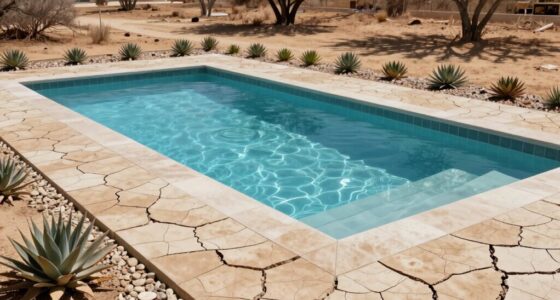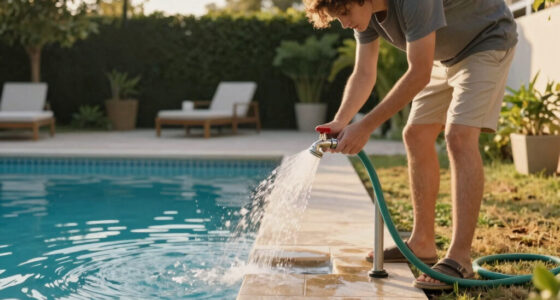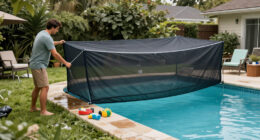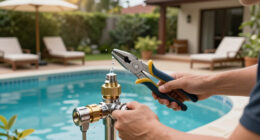

You might not notice how backwashing, splash-out, and tiny leaks quietly waste more water than expected. Overly long backwashes, malfunctioning equipment, or ignoring pressure gauges lead to unnecessary water use. Splashing caused by high water levels or faulty jets can drain water outside the pool, while small leaks in fittings or pipes can waste significant amounts over time. Identifying these hidden issues helps conserve water and money—keep going to discover simple ways to spot and fix these silent water wasters.

Get pool and patio gear delivered free with Prime
- Fast, free delivery on millions of items
- Prime Video, Amazon Music and more included
- Member-only deals all year
Key Takeaways
- Improperly timed backwashing flushes excessive water, especially when using the filter pressure gauge as a guide.
- Equipment malfunctions, like faulty skimmers or jets, increase splash-out, leading to unnoticed water loss.
- Small leaks in fittings or pipes can cause significant water waste over time without obvious signs.
- Neglecting regular maintenance and ignoring pressure gauge readings result in unnecessary backwash and water use.
- Unaddressed leaks and equipment issues gradually drain water quietly, inflating bills and wasting resources.
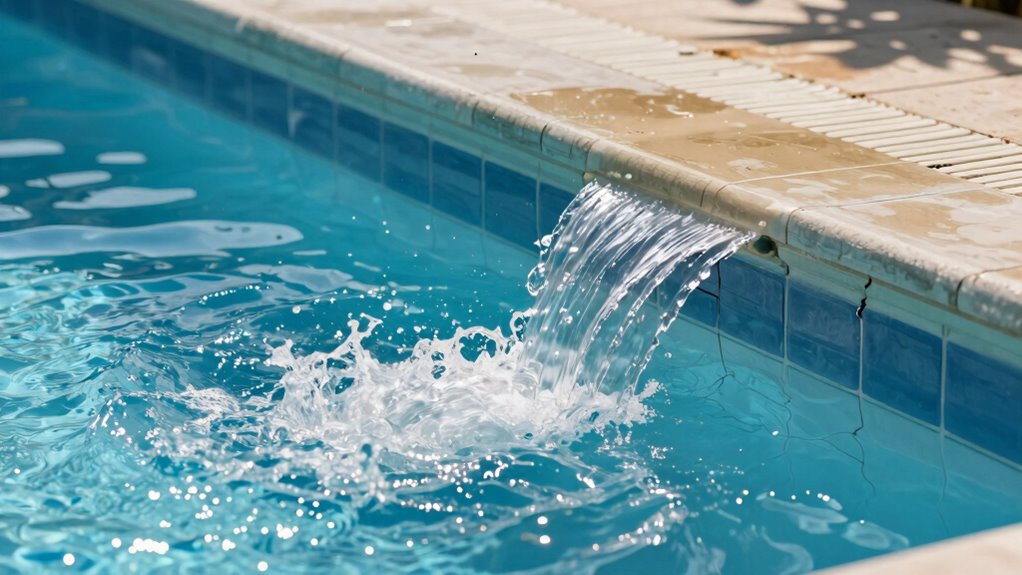
When your water filtration system or pool equipment isn’t properly maintained, it can lead to significant water waste through backwash, splash-out, and leaks. These issues often go unnoticed but can quietly drain your water resources over time. Proper pool filtration is essential for clear, healthy water, but if your system isn’t functioning efficiently, it can cause excess water loss. Backwashing, for example, is necessary to clean the filter, but if done too frequently or improperly, it wastes more water than needed. You might be surprised how much water gets flushed away during each backwash cycle, especially if your system runs longer than necessary or if the filter pressure gauge indicates a problem that doesn’t require full cleaning. Regularly monitoring your filter pressure gauge can help prevent unnecessary backwash cycles. Splash-out is another common cause of unnecessary water loss. When you or your pool’s circulation system create splashes, the water level can drop faster than expected. While some splash-out is inevitable, excessive splashing often results from equipment issues, such as a malfunctioning skimmer or return jets that are set too forcefully. These can cause water to spray outside the pool, leading to wastage. Additionally, high water levels or improper water balancing can increase splash-out, amplifying water loss over time. Addressing these issues quickly can help conserve water and reduce your pool’s overall water consumption. Leaks, although sometimes subtle, are perhaps the most damaging to water conservation. Small leaks in fittings, valves, or pipes may seem insignificant initially, but over days or weeks, they can amount to gallons of wasted water. Leaks often happen without your immediate notice, especially if they’re behind walls or underground. If you notice unexplained drops in water level or increasing water bills, it’s time to inspect your pool’s plumbing and fittings thoroughly. Regular maintenance checks, leak detection, and prompt repairs can help identify hidden leaks early, saving both water and money. Detecting these issues early also reduces the risk of further damage to your pool’s structure. In addition, understanding the causes of leaks can help in implementing preventive measures to avoid future issues. Fixing leaks promptly not only preserves water but also prevents further damage and costly repairs down the line. Maintaining your pool filtration system properly is crucial for water conservation. Regularly checking and cleaning filters, avoiding unnecessary backwash cycles, and repairing leaks as soon as they’re detected can save a significant amount of water. Being vigilant about splash-out and adjusting your equipment to minimize splashes will also help preserve water. Overall, attentive maintenance and timely repairs are key to preventing these silent water wasters, ensuring your pool remains efficient and environmentally friendly.
As an affiliate, we earn on qualifying purchases.
Frequently Asked Questions
How Can I Detect Hidden Leaks in My Plumbing System?
To detect hidden leaks, start with a plumbing inspection focusing on areas where leaks are common. Use leak detection tools like moisture meters or pressure gauges to identify slow drips or drops in water pressure. Check your water meter for unexplained movement, even when no fixtures are in use. Regularly monitoring your system helps catch leaks early, saving water and preventing costly damage.
What Are the Environmental Impacts of Water Wastage From Pool Equipment?
Imagine a Victorian water clock, each drop essential. Water wastage from pool equipment leads to aquifer depletion, risking our crucial underground reserves. Additionally, leaks and backwash can cause water contamination, harming ecosystems and human health. This silent waste not only drains resources but also contributes to environmental stress, threatening clean water access for communities. By minimizing unnecessary water loss, you help preserve these precious resources for future generations.
Are There Cost-Effective Ways to Prevent Splash-Out During Pool Use?
Yes, you can prevent splash-out cost-effectively by using a pool cover when the pool isn’t in use, reducing water splashing and evaporation. Additionally, installing water-saving devices like adjustable skimmers and splash guards helps control water spray during swimming. These simple measures are affordable, easy to implement, and considerably cut down water waste. Maintaining your equipment properly also minimizes leaks, further conserving water and saving you money.
How Often Should Backwash Cycles Be Performed to Conserve Water?
Backwash cycles should be performed when the pressure gauge indicates a rise of 8-10 psi above the clean filter setting, typically every 4-6 weeks. In your pool maintenance routine, timely backwashing is key to water conservation and efficiency. Don’t wait until you see visible dirt—regular backwashing keeps your pool running smoothly and conserves water by preventing unnecessary waste. Stay attentive to your filter’s performance for best results.
Can Water Leaks Cause Structural Damage Over Time?
Water leaks can indeed cause structural damage over time by compromising structural integrity. As leaks persist, water seeps into walls, foundations, or other materials, leading to material deterioration. This ongoing deterioration weakens the structure, potentially causing cracks, mold growth, or even more severe damage. Regularly inspecting for leaks and addressing them promptly helps preserve the building’s integrity and prevents costly repairs caused by long-term water exposure.
As an affiliate, we earn on qualifying purchases.
Conclusion
While backwash, splash-out, and leaks might seem minor, they quietly drain more water than you’d expect—like a slow leak in your favorite mug. Instead of ignoring these small annoyances, fix and maintain your system. Because sometimes, the biggest waste isn’t loud or obvious but the silent, sneaky leaks that chip away at your resources—reminding you that even the smallest issues can ripple into bigger problems if left unchecked.
As an affiliate, we earn on qualifying purchases.
As an affiliate, we earn on qualifying purchases.
Fall Picks
fall essentials
As an affiliate, we earn on qualifying purchases.