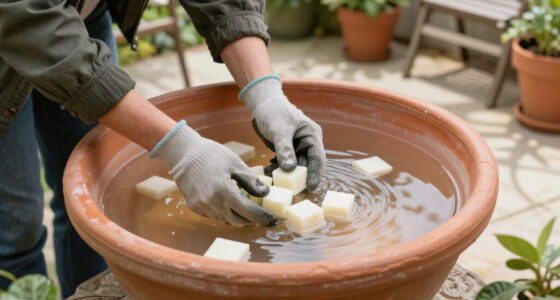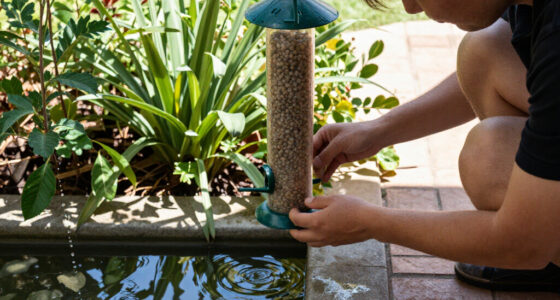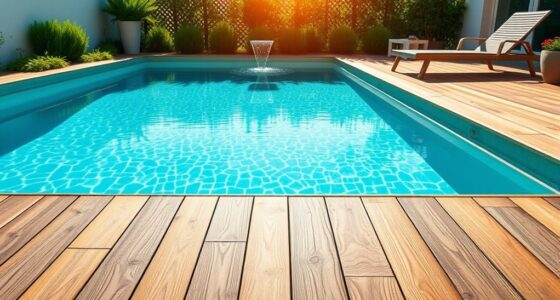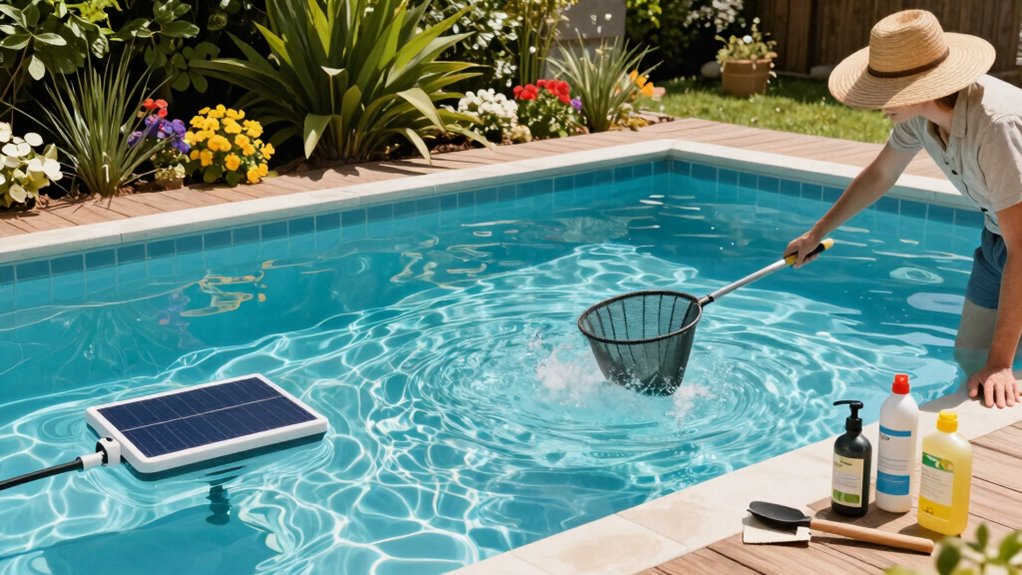

To build an eco-friendlier pool maintenance routine, start by installing a solar blanket to reduce evaporation and cover the pool when not in use. Use natural chemical alternatives like saltwater systems and opt for energy-efficient pumps and heaters powered by solar energy. Regularly check for leaks, clean filters, and incorporate native plants around the pool to promote biodiversity. These eco-conscious steps help conserve water and energy, creating a healthier pool environment—exploring further can reveal even more sustainable practices.

Get pool and patio gear delivered free — and shop member deals
- Fast, free delivery on millions of items
- Access to Prime Big Deal Days deals on October 6–7
- Prime Video, Amazon Music and more included
Key Takeaways
- Implement water-saving tactics like covers, leak checks, and rainwater collection to reduce water waste.
- Use natural, low-impact chemicals such as saltwater systems and beneficial bacteria for algae control.
- Opt for solar-powered pumps, heaters, and energy-efficient filtration systems to minimize energy consumption.
- Incorporate native plants around the pool area to promote biodiversity and natural water filtration.
- Regularly maintain equipment and employ natural methods to ensure efficiency and reduce chemical and energy use.
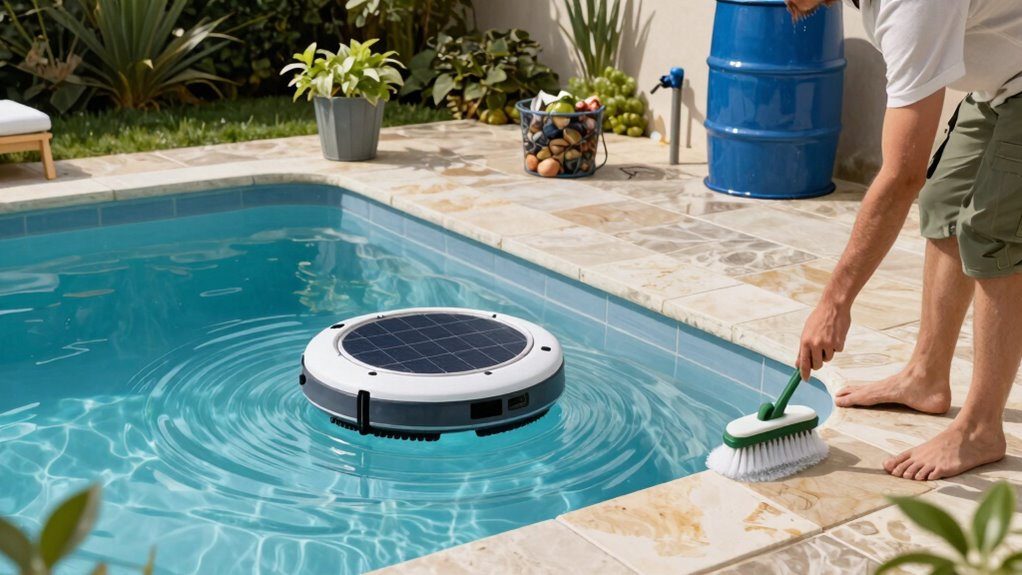
Maintaining a clean pool doesn’t have to harm the environment. By adopting eco-friendly practices, you can keep your pool safe, clean, and sustainable. The first step is focusing on water conservation. Instead of draining and refilling your pool frequently, aim to minimize water loss through evaporation and splashing. Cover your pool with a solar blanket when not in use; this simple step reduces evaporation considerably, conserving water and heat. Regularly check for leaks or cracks that might leak water and waste resources. Additionally, consider installing a rainwater collection system to supplement your pool’s water needs, especially during rainy seasons. This way, you’re not relying solely on municipal water sources, which can be costly and resource-intensive. Embracing biodiversity in your surrounding environment can also help create a more balanced ecosystem that naturally supports your pool’s cleanliness. Incorporating native plants around your pool area can further enhance this eco-system, promoting natural filtration and habitat diversity. Furthermore, using local plants can reduce the need for excessive watering and chemical treatments, making your pool area even more eco-friendly.
Conserve water by using a solar blanket and fixing leaks to make your pool eco-friendly.
When it comes to pool safety, using eco-friendly chemicals is vital. Traditional chlorine and algaecides can be harsh on the environment and your skin. Opt for natural alternatives like saltwater systems, which produce chlorine naturally and reduce chemical runoff. These systems are generally gentler and easier to maintain over time. To further enhance pool safety, ensure your filtration system is energy-efficient, properly maintained, and appropriately sized for your pool. An efficient system consumes less power and reduces your carbon footprint. Regularly clean your filters to keep the water clear, reducing the need for chemical treatments. You should also monitor your pool’s pH levels and sanitizer levels carefully, avoiding overuse of chemicals that can contaminate local waterways if they escape the pool.
Another way to build an eco-friendlier routine is by reducing energy consumption. Use solar-powered pumps and heaters whenever possible. Solar pool covers and solar panels can considerably cut down on electricity needs, making your pool more sustainable. When cleaning your pool, choose eco-friendly tools such as manual skimmers and brushes instead of high-powered, battery-operated devices that consume energy unnecessarily. Incorporating natural methods for algae control, like adding beneficial bacteria that outcompete algae for nutrients, reducing reliance on chemical algaecides. This approach not only keeps your water cleaner but also minimizes chemical exposure for swimmers and the environment. Moreover, selecting energy-efficient equipment can significantly reduce your overall ecological impact.
Incorporating these practices into your routine helps you maintain a safe pool while promoting water conservation and reducing your ecological impact. It’s about making smarter choices—using less energy, fewer chemicals, and conserving water—to enjoy your pool responsibly. With a little effort and awareness, you can create a sustainable swimming experience that’s safe for everyone and kind to the planet.
As an affiliate, we earn on qualifying purchases.
Frequently Asked Questions
How Can I Reduce Water Wastage During Pool Maintenance?
You can reduce water wastage by collecting rainwater through harvesting systems, then use this water for routine pool maintenance. Additionally, opt for eco-friendly chemicals that require less frequent application, minimizing water usage and chemical runoff. Regularly check your pool for leaks and fix them promptly to prevent unnecessary water loss. Combining rainwater harvesting with eco-friendly chemicals helps you conserve water and maintain a sustainable, eco-conscious pool.
Are There Natural Alternatives to Chemical Pool Treatments?
Yes, you can use natural sanitizers like mineral or enzyme-based treatments to keep your pool clean without harsh chemicals. Organic algae control methods, such as introducing beneficial bacteria or using barley extract, help manage algae naturally. These alternatives are eco-friendly, safer for swimmers, and reduce chemical dependence. By incorporating natural sanitizers and organic algae control, you create a healthier, more sustainable pool environment while maintaining clarity and safety.
What Eco-Friendly Tools Are Best for Pool Cleaning?
Think of eco-friendly pool tools as gentle giants that protect your water and the environment. You’ll want natural enzymes to break down organic matter without harsh chemicals, keeping your pool clear naturally. Pair that with eco-friendly vacuums designed to minimize energy use and waste. These tools work together like a well-oiled machine, making pool cleaning effective and sustainable, while you enjoy a healthier, greener oasis.
How Often Should I Check for Eco-Friendly Pool System Leaks?
You should check for eco-friendly pool system leaks weekly to guarantee water conservation. Leak detection is essential because even small leaks can waste significant water over time. Regular inspections help you catch leaks early, preventing water loss and reducing the need for frequent refilling, which conserves resources. Use eco-friendly leak detection methods like dye tests or visual inspections to maintain your pool’s efficiency and stay environmentally responsible.
Can Solar Energy Power My Pool Filtration System?
Absolutely, solar power can energize your pool filtration system—imagine turning sunlight into endless, eco-friendly filtration! Using solar energy boosts your system’s energy efficiency, reducing reliance on conventional power sources. With solar panels, you’ll harness the sun’s power to keep your pool crystal clear while cutting down on energy bills and carbon footprint. It’s a smart, sustainable choice that transforms your pool into a shining example of environmental consciousness.
As an affiliate, we earn on qualifying purchases.
Conclusion
Remember, a stitch in time saves nine. By adopting eco-friendly pool maintenance habits, you not only protect the environment but also save money and extend your pool’s lifespan. Consistent, mindful care keeps your water clean and clear without harming nature. So, stay committed to green practices—after all, a healthy planet begins with small, responsible choices. Immerse yourself in sustainability today and enjoy a sparkling, eco-friendly pool all season long!
As an affiliate, we earn on qualifying purchases.
rainwater collection system for pools
As an affiliate, we earn on qualifying purchases.
As an affiliate, we earn on qualifying purchases.
Fall Picks
fall essentials
As an affiliate, we earn on qualifying purchases.