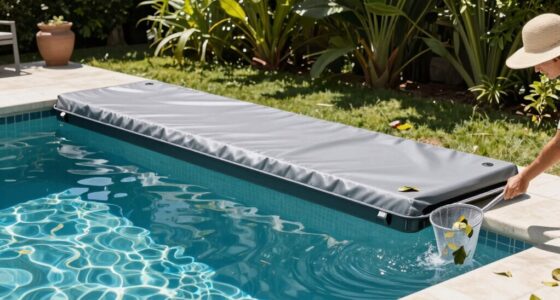

A low-waste pool maintenance routine involves regularly testing and balancing chemicals with eco-friendly products to minimize excess use and waste. You keep filters clean and well-maintained to improve water circulation and reduce chemical reliance. Supporting beneficial microorganisms and encouraging natural purification processes help maintain water quality naturally. You also conserve water by mindful backwashing and refilling practices. Implementing these steps creates an efficient, eco-friendly pool routine—continue exploring how each tip can make your pool more sustainable.

Get pool and patio gear delivered free — and shop member deals
- Fast, free delivery on millions of items
- Access to Prime Big Deal Days deals on October 6–7
- Prime Video, Amazon Music and more included
Key Takeaways
- Use eco-friendly test strips or digital meters to monitor water chemistry and avoid unnecessary chemical overuse.
- Maintain filters regularly and backwash with recycled water to minimize waste and ensure efficient water circulation.
- Support beneficial microorganisms and biological processes to reduce reliance on chemical sanitizers.
- Schedule routine maintenance checks and clean filters proactively to prevent major issues and water waste.
- Implement water-saving practices during refilling and backwashing, combining them with eco-friendly cleaning methods.
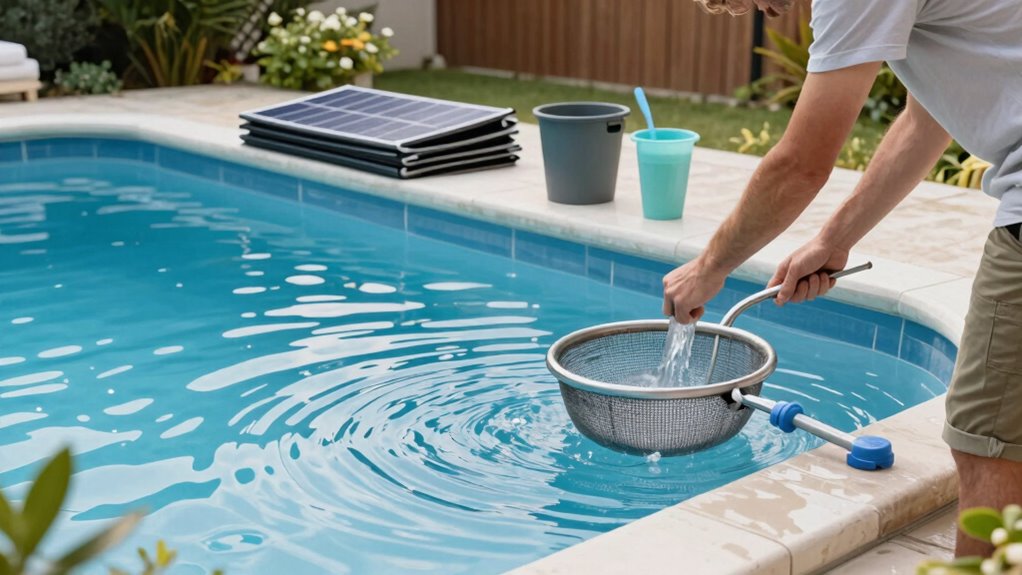
Maintaining the right chemical balance is another key aspect of low-waste pool care. Instead of overusing chlorine or other sanitizers, test your water frequently with eco-friendly test strips or digital meters. Keeping the chemical levels balanced minimizes the need for excessive chemicals and reduces waste from unused or expired products. Proper filtration also plays a role here; a well-maintained filter reduces the amount of chemicals needed to keep your water clean, and regular backwashing with filtered or recycled water prevents waste. Incorporating biodiversity-friendly practices, such as supporting beneficial microorganisms in your pool system, can further enhance eco-friendly maintenance. Additionally, understanding the chemical interactions within your pool helps optimize sanitizer use and decrease chemical wastage. Using environmentally conscious cleaning products can further reduce your pool’s ecological footprint. Finally, scheduling regular maintenance checks helps prevent big problems that require more wasteful, large-scale repairs or replacements down the line. Clean your filter regularly, keep debris out of the water with skimmers, and monitor your water chemistry. These proactive steps ensure your pool stays healthy with less environmental impact. By combining eco-friendly cleaning practices with water conservation strategies, you create a low-waste routine that’s good for the planet and your wallet. This approach proves that sustainable pool maintenance isn’t complicated or time-consuming—it’s simply about making mindful choices that contribute to a cleaner, greener environment every time you take care of your pool.
As an affiliate, we earn on qualifying purchases.
Frequently Asked Questions
How Often Should I Test My Pool Water?
You should test your pool water at least twice a week to keep it balanced. Regular testing helps you identify when to add chemical alternatives or DIY solutions, reducing chemical use and waste. During heavy use or after storms, test more frequently. Using simple test kits, you can monitor pH, chlorine, and alkalinity levels, ensuring a low-waste routine that keeps your pool safe and eco-friendly.
What Eco-Friendly Pool Cleaning Tools Are Best?
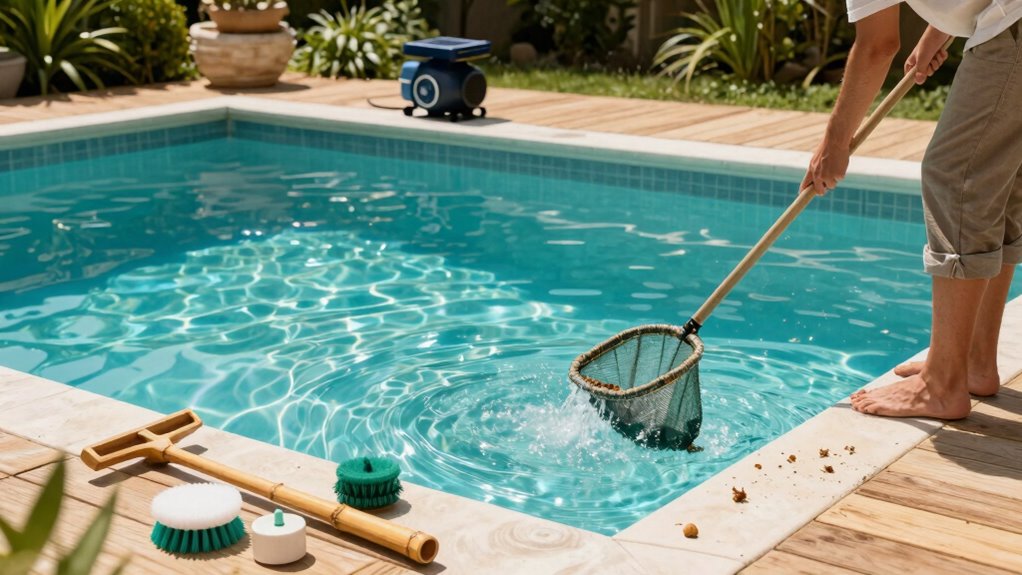
Imagine a homeowner switching to eco-friendly tools, like biodegradable brushes and reusable skimmers, to clean their pool. These tools are among the best for eco-conscious pool maintenance because they reduce waste and last longer. Biodegradable brushes break down naturally, while reusable skimmers cut down on plastic waste. Using these eco-friendly tools not only keeps your pool sparkling but also helps protect the environment.
Can I Use Natural Products to Balance pH Levels?
Yes, you can use natural products to balance pH levels in your pool. Chemical alternatives like baking soda and vinegar work well for organic balancing, helping you avoid harsh chemicals. Baking soda raises pH, while vinegar lowers it naturally. By choosing these eco-friendly options, you maintain healthy water conditions without harming the environment or your skin. Always test your water first to guarantee proper pH adjustments and keep your pool eco-conscious.
How Do I Reduce Water Evaporation Naturally?
Imagine you’re a modern-day alchemist, turning rainwater harvesting into your secret weapon. To naturally reduce water evaporation, cover your pool with a solar blanket or a shade cloth when not in use. Incorporate organic algae control to keep water clean without chemicals. These simple steps help conserve water, reduce waste, and keep your pool sparkling—like a vintage treasure chest—while respecting the environment.
Is Solar-Powered Equipment Effective for Pool Maintenance?
Yes, solar-powered equipment can be effective for pool maintenance. It offers good solar efficiency, harnessing sunlight to power pumps and heaters, reducing energy costs. Plus, the equipment is designed for durability, resisting weather and corrosion, making it reliable over time. While initial setup might be a bit higher, you’ll save money in the long run with lower energy bills and eco-friendly operation. It’s a smart choice for sustainable pool care.
As an affiliate, we earn on qualifying purchases.
Conclusion
By adopting this low-waste pool maintenance routine, you’re not just saving water and reducing waste—you’re transforming your backyard into an eco-friendly oasis. With every small effort, you’ll be making a monumental impact on the environment, like moving mountains with your mindful choices. So, stick to these simple steps, and watch your pool stay pristine while you champion sustainability. After all, a greener pool isn’t just a dream—it’s a reality waiting to splash into your life!
biodegradable pool cleaning brushes
As an affiliate, we earn on qualifying purchases.
As an affiliate, we earn on qualifying purchases.
digital water chemistry meter for pools
As an affiliate, we earn on qualifying purchases.
As an affiliate, we earn on qualifying purchases.
Fall Picks
fall essentials
As an affiliate, we earn on qualifying purchases.