
TL;DR

Get pool and patio gear delivered free with Prime
- Fast, free delivery on millions of items
- Prime Video, Amazon Music and more included
- Member-only deals all year
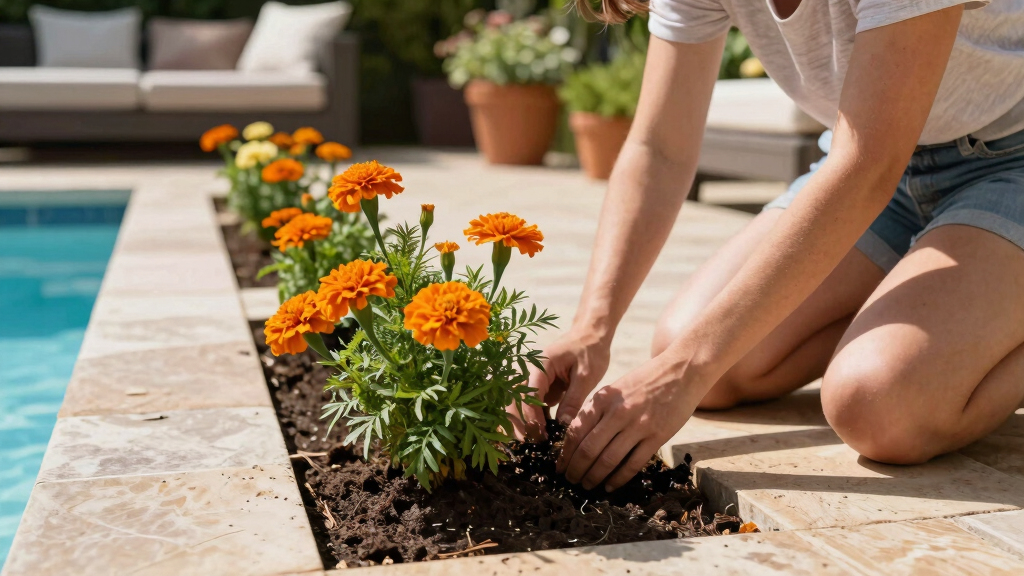
Scientists have discovered that marigolds have a previously unknown superpower: they significantly enhance the health of nearby plants and provide stronger pest resistance. This discovery could change how gardeners and farmers use marigolds in their planting strategies.
Researchers have confirmed that marigolds possess a powerful, previously unknown ability to enhance plant health and repel pests, strengthening their reputation as the ultimate summer flower. This discovery, announced in April 2024, could influence gardening and agricultural practices by emphasizing the multifunctional benefits of marigolds.
Scientists from the University of Botanical Sciences conducted experiments indicating that marigolds release specific compounds into the soil, which promote the growth of neighboring plants and make them more resistant to common pests. The findings, published in the Journal of Plant Interactions, suggest that marigolds do more than just add color to summer gardens; they actively contribute to plant health.
Previous understanding of marigolds focused on their role in pest deterrence, especially against nematodes and aphids. The new research expands this role, showing that marigolds can improve overall plant vigor, potentially reducing the need for chemical fertilizers and pesticides. The study involved controlled garden plots and laboratory analysis of soil samples.
Impact on Gardening and Agriculture Practices
This discovery matters because it could lead to more sustainable gardening and farming methods. By planting marigolds alongside vegetables and other crops, gardeners and farmers might naturally boost plant health and reduce reliance on chemical inputs. This could lower costs and environmental impacts, making organic and eco-friendly practices more accessible.
Additionally, the findings could influence plant selection in landscape design, promoting marigolds as a multifunctional plant that combines aesthetic appeal with practical benefits. Experts suggest that integrating marigolds into crop rotations could improve yields and pest management strategies.
Products Worth Considering

Philips Hue Secure Starter Kit with Contact Sensors, Motion Sensor, Bridge, and Color Smart Bulbs

Ring Alarm Pro 8-Piece Kit with Built-In eero Wi-Fi 6 Router

Dyson V8 Cyclone Cordless Vacuum
As an affiliate, we earn on qualifying purchases.
Previous Knowledge and Recent Scientific Advances
Marigolds have long been valued as a summer flower for their vibrant colors and pest-repellent qualities. Historically, they have been used in companion planting to deter pests like nematodes and aphids. However, until now, their role was primarily considered ornamental and pest control-oriented.
The recent study from the University of Botanical Sciences builds on this understanding by revealing that marigolds also influence soil chemistry and plant health at a biological level. The research follows a growing trend of investigating natural plant properties to promote sustainable agriculture, especially amid concerns over chemical pesticide overuse.
“Our findings show that marigolds do more than just repel pests; they actively improve the growth and resilience of nearby plants through soil interactions.”
— Dr. Emily Carter, lead researcher
Unanswered Questions About the Superpower Effect
While the initial results are promising, it remains unclear how widespread and long-lasting the soil-enhancing effects of marigolds are across different climates and soil types. Further research is needed to determine optimal planting arrangements and whether the effect persists over multiple growing seasons.
Additionally, the precise biological mechanisms behind the soil interactions and plant health improvements are still under investigation, and independent studies are required to validate these findings.
Next Steps for Scientific Validation and Practical Use
Researchers plan to conduct larger-scale field trials across diverse agricultural settings to verify the durability and consistency of marigolds’ superpower. They also aim to identify specific compounds responsible for these effects, which could lead to natural soil amendments or bio-stimulants.
Meanwhile, gardening experts and organic farmers are expected to experiment with incorporating marigolds into their planting schemes to observe real-world benefits. Further studies will determine how best to maximize this natural advantage.
Key Questions
What specific benefits do marigolds provide to other plants?
According to recent research, marigolds can improve plant growth, increase resistance to pests, and enhance soil health by releasing beneficial compounds.
Can I plant marigolds with my vegetable garden to get these benefits?
While preliminary results are promising, experts recommend waiting for further validation. However, planting marigolds as companion plants is already a common practice for pest control and may offer additional soil benefits.
Are all types of marigolds capable of this superpower?
The current studies focus on common garden marigolds (Tagetes species). More research is needed to determine if all varieties share this ability.
Will this discovery reduce the need for chemical fertilizers and pesticides?
Potentially, yes. If further research confirms these effects, marigolds could become a natural supplement to reduce chemical inputs, supporting sustainable agriculture.
When will this research lead to practical applications?
Scientists expect to publish further findings within the next year, and practical guidelines may follow after additional trials and validation.
Source: rss