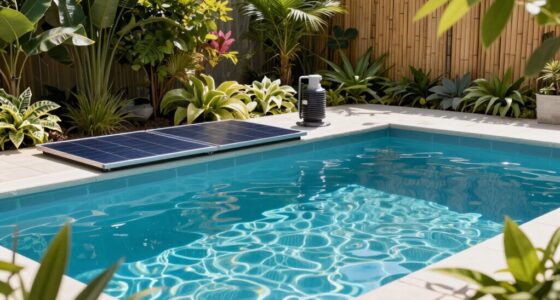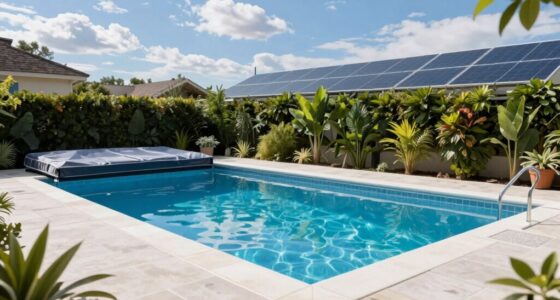

To save water with your pool, focus on maintaining proper chemical balance, as it reduces frequent refills. Use pool covers to minimize evaporation and debris buildup, and always inspect for leaks to prevent unnoticed water loss. Securing safety features and monitoring water levels helps catch issues early. Small habits like these have a bigger impact than most owners think, and if you keep going, you’ll discover even more ways to keep your pool efficiently maintained.
Get ready for Prime Big Deal Days — try Prime free
Exclusive member deals on October 6–7, plus fast free delivery. Cancel anytime.
As an affiliate, we earn on qualifying purchases.
Key Takeaways
- Regularly test and adjust chemical levels to prevent unnecessary water replacement caused by imbalances.
- Use safety covers and secure fencing to reduce evaporation and debris entry, conserving water.
- Detect and repair leaks promptly to prevent unnoticed water loss and save resources.
- Maintain proper water levels and monitor for early signs of issues to avoid excessive refills.
- Implement efficient water management practices, including routine inspections and cover usage, to maximize conservation.
Have you ever wondered how much water your pool wastes every year? It’s a common concern, especially when you realize that small habits can lead to substantial water loss. One of the most effective ways to conserve water is by maintaining proper pool chemical balance. When your pool’s pH, alkalinity, and chlorine levels are in check, you reduce the need for frequent refills caused by evaporation or chemical imbalance. An unbalanced pool often leads to cloudy water, algae growth, or corrosion, prompting you to drain and refill more often than necessary. Regular testing and adjusting your chemicals not only keeps your pool safe and inviting but also saves gallons of water that would otherwise be wasted.
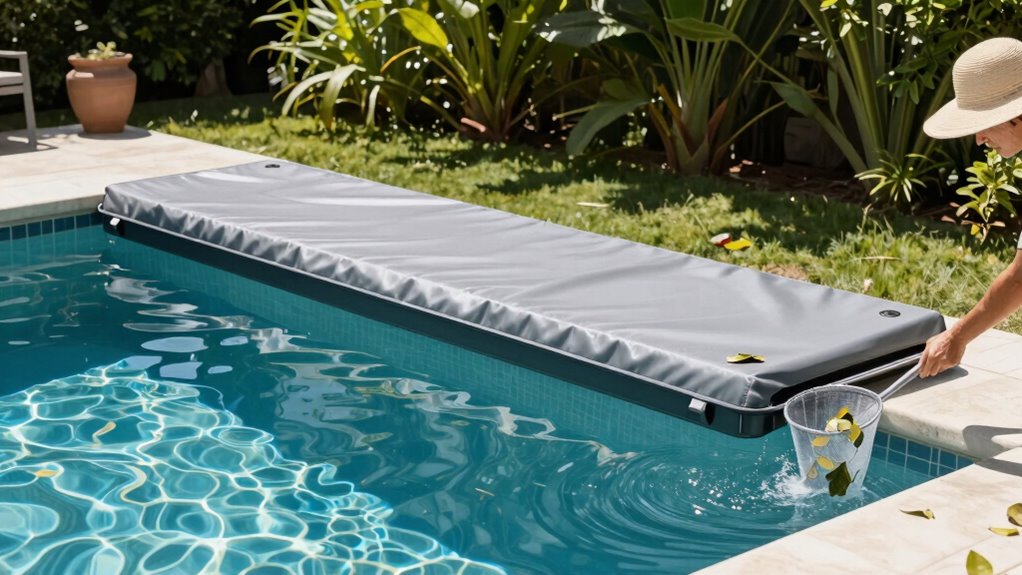
Alongside chemical balance, practicing good pool safety measures plays an essential role in reducing water waste. Installing safety covers when the pool isn’t in use prevents debris and dirt from entering, which can upset the chemical balance and lead to more chemical use or water replacement. When your pool is covered, evaporation rates decrease, meaning less water is lost to the environment. Additionally, ensuring that gates and fences around the pool are secure helps prevent accidental spills or overflows that can occur if children or pets unintentionally knock over equipment or mismanage water levels. Proper pool maintenance also helps identify potential issues early, avoiding unnecessary water loss. Regular inspections, combined with leak detection, can prevent unnoticed leaks that quietly drain your water supply over time. Implementing efficient water management practices further enhances your conservation efforts by optimizing water usage and reducing waste.
Another key habit is promptly repairing leaks and equipment malfunctions, which can quietly drain your water supply without you noticing. Small leaks in filters, pipes, or fittings might seem insignificant at first, but over time, they can waste substantial amounts of water. Regular inspections and quick repairs can prevent this unnecessary loss, saving both water and money. It’s also wise to monitor your water level regularly. If you notice it dropping faster than normal, it could be a sign of a leak or evaporation issues that need addressing. Maintaining water-saving pool habits is crucial for conserving this vital resource.
Using a pool cover effectively not only conserves water but also reduces the strain on your filtration system, extending its lifespan. This simple addition keeps heat in, slows evaporation, and minimizes debris, all of which contribute to fewer chemical adjustments and less water replacement. By integrating these habits—maintaining proper chemical balance, implementing safety measures, repairing leaks promptly, and using covers—you markedly reduce unnecessary water waste. More importantly, you help preserve this precious resource while keeping your pool safe, clean, and enjoyable for years to come. These small but impactful actions make a big difference over time, proving that water-saving pool habits are more essential than most owners realize.
As an affiliate, we earn on qualifying purchases.
Frequently Asked Questions
How Often Should I Check for Leaks in My Pool?
You should check for leaks in your pool at least once a month as part of your pool maintenance routine. Regular inspections help identify small issues early, preventing water loss and promoting water conservation. Keep an eye on water levels and look for signs of leaks around the pool’s edges or equipment. Addressing leaks promptly not only saves water but also reduces costly repairs, making your pool more eco-friendly and efficient.
What Is the Ideal Water Level for Evaporation Control?
A stitch in time saves nine, and maintaining the right water level is key. Keep your pool water level at about the mid-skimmer or slightly below the tile line to prevent evaporation loss and maintain proper pool water balance. This balance helps prevent unnecessary water loss and keeps your pool functioning efficiently. Regularly monitoring and adjusting the water level guarantees evaporation prevention and extends the life of your pool equipment.
Can Pool Covers Reduce Water Evaporation Significantly?
Yes, pool covers like solar covers can considerably reduce water evaporation. They trap heat and create a barrier that minimizes water loss caused by wind and sun exposure. By using a solar cover whenever your pool isn’t in use, you can save a substantial amount of water and energy. This simple habit not only conserves water but also helps maintain your pool’s temperature more efficiently.
How Does Weather Affect Pool Water Consumption?
Weather patterns greatly influence your pool water consumption. Hot, sunny days increase evaporation, leading you to refill your pool more often. Conversely, rainfall impact can naturally replenish your pool, reducing the need for added water. To save water, monitor weather forecasts and adjust your pool maintenance accordingly. Covering your pool during storms or high evaporation periods also helps reduce water loss, making your efforts more effective regardless of weather fluctuations.
Are There Eco-Friendly Pool Cleaning Options?
Yes, there are eco-friendly pool cleaning options. You can use eco-friendly filtration systems that reduce energy and water use while maintaining clean water. Opt for biodegradable cleaning products that break down naturally, minimizing environmental impact. Regular skimming and brushing also help reduce chemical needs. By choosing these sustainable methods, you lower your ecological footprint and keep your pool clean without harming the environment.
As an affiliate, we earn on qualifying purchases.
Conclusion
By adopting these water-saving pool habits, you’re fundamentally steering your pool’s health like a skilled captain guiding calm waters. Every small effort, from fixing leaks to using a cover, helps conserve this precious resource and keeps your pool pristine. Remember, you’re not just maintaining a pool — you’re safeguarding a finite treasure that benefits everyone. So, take charge and make these habits your trusted compass, guiding you toward a more sustainable and enjoyable swimming experience.
As an affiliate, we earn on qualifying purchases.
automatic water level controller for pools
As an affiliate, we earn on qualifying purchases.
As an affiliate, we earn on qualifying purchases.
Fall yard work Picks
leaf blowers
As an affiliate, we earn on qualifying purchases.