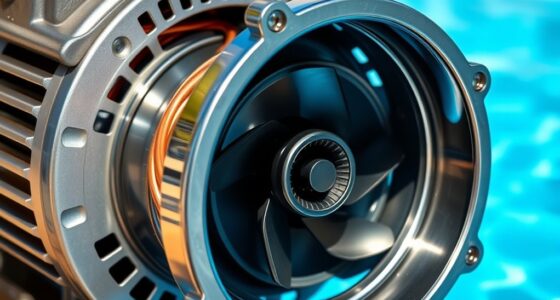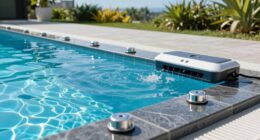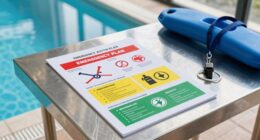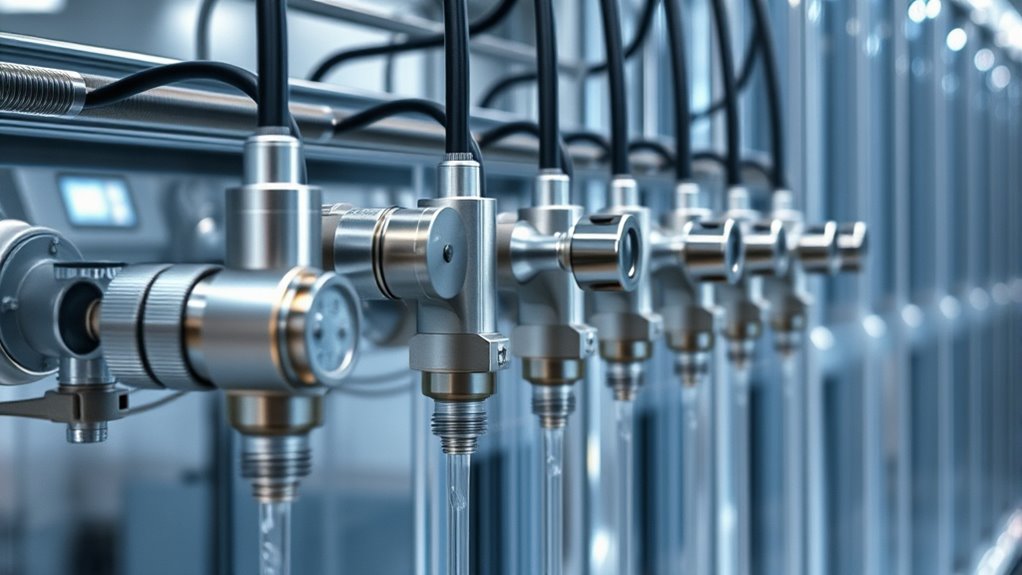

Flow switches and sensors play a key role in safeguarding your heaters and salt cells by detecting fluid movement and alerting you to issues like dry running or low flow. They work with mechanical, magnetic, or electronic technologies to guarantee systems stay protected, preventing damage and extending equipment life. Proper installation and maintenance are essential for reliable operation. Keep exploring to discover how these devices can keep your systems safe and efficient.
Key Takeaways
- Flow switches detect fluid movement to prevent dry running and overheating in heaters and salt cells.
- Sensors ensure proper flow in saltwater systems, optimizing electrolysis and chlorine production.
- Automated alerts and shutdowns protect equipment from damage due to insufficient or no flow.
- Durable, corrosion-resistant sensors extend the lifespan of heaters and salt cells in harsh environments.
- Proper installation and maintenance guarantee reliable flow detection and system safety.

Have you ever wondered how systems detect and control fluid flow? It’s a fundamental part of many industrial and residential setups, especially when it comes to protecting components like heaters and salt cells in pools or water treatment systems. Flow switches and sensors are the unsung heroes that guarantee these systems operate safely and efficiently. They constantly monitor the movement of fluids, alerting or shutting down equipment if flow rates fall outside acceptable ranges. This way, they prevent damage caused by dry running, overheating, or corrosion, ultimately extending the lifespan of your equipment.
Flow sensors and switches protect equipment by monitoring fluid movement and preventing damage.
At their core, flow switches are straightforward devices that detect whether fluid is moving through a pipe or system. They typically use mechanical, magnetic, or electronic principles to sense flow. For example, a paddle-type switch might pivot when fluid flow pushes against it, triggering an electrical contact. Magnetic flow switches use the principles of electromagnetic induction, where the movement of conductive liquids generates a voltage proportional to flow rate. Electronic sensors rely on ultrasonic or thermal methods to detect flow without direct contact. Regardless of the technology, the goal remains the same: to provide a reliable signal that flow is occurring or not.
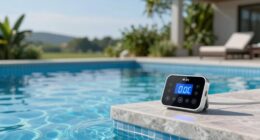
When it comes to protecting heaters, flow switches are indispensable. If a heater runs without water—say, in a pool or a boiler—it can overheat and sustain severe damage. The flow switch detects the absence of water flow and sends a signal to shut off power, preventing costly repairs and dangerous failures. Similarly, for salt cells used in saltwater pools, maintaining proper flow is essential for the electrolysis process. Insufficient flow can lead to uneven salt cell cleaning, reduced chlorine production, or even damage to the cell itself. A flow sensor ensures the salt cell only operates when water is flowing correctly, safeguarding your pool’s chemistry and equipment.
Installing flow switches and sensors also offers peace of mind. They can be integrated with control panels to automate responses, such as activating alarms, shutting down pumps, or initiating safety protocols when irregular flow is detected. This automation minimizes manual oversight and reduces the risk of human error. Moreover, modern flow sensors are designed for durability, with corrosion-resistant materials and easy maintenance, making them suitable for various environments.
In essence, flow switches and sensors act as vigilant guards within your fluid systems. They continuously verify that water or other fluids are moving as they should, protecting vital components like heaters and salt cells from damage. By detecting flow issues early, they help you avoid costly repairs, ensure safety, and keep your system running smoothly. Properly installing and maintaining flow sensors is crucial to ensuring long-term system reliability and safety. So, next time you think about maintaining your water systems, remember the silent, essential role these devices play in keeping everything working just right.

LEYILE Water Paddle Flow Switch Female Thread Connecting Flow Sensor for Heat Pump Water Heater Air Conditioner, 6* 3* 2cm, As Picture Show
✨💖 Adjustable:The flow range can be adjusted, allowing the user to select the flow adjustment value according to…
As an affiliate, we earn on qualifying purchases.
As an affiliate, we earn on qualifying purchases.
Frequently Asked Questions
What Are the Signs of a Faulty Flow Switch?
You’ll notice a faulty flow switch if your heater or salt cell isn’t functioning properly, such as inconsistent water temperature, the pump not starting, or the system shutting down unexpectedly. You might also hear unusual noises or see warning lights on your equipment. If the flow switch isn’t working, it may falsely detect flow or no flow at all, causing system malfunctions. Regular inspections can help catch issues early.
How Often Should Flow Sensors Be Calibrated?
You should calibrate your flow sensors at least once a year to guarantee accurate readings. If you notice inconsistent flow rates, unexpected shutdowns, or alarms, consider more frequent calibration. Regular checks help maintain system efficiency and prevent potential damage to heaters or salt cells. Always follow the manufacturer’s recommendations for calibration intervals, and consider professional calibration if you’re unsure about the sensor’s accuracy or performance.
Can Flow Switches Be Used for Corrosive Liquids?
Yes, flow switches can be used for corrosive liquids, but you need to choose the right materials. Make certain the switch’s wetted parts are made from corrosion-resistant materials like PVDF, Teflon, or stainless steel. You should also verify compatibility with your specific corrosive liquid. Regular maintenance and inspections are essential to ensure the switch remains effective and doesn’t degrade over time due to corrosion.
What Maintenance Is Required for Flow Sensors?
You need to regularly inspect your flow sensors for dirt, debris, or buildup that could impair accuracy. Clean them with a soft brush or cloth, avoiding harsh chemicals. Check for any corrosion or damage, and verify wiring connections are secure. Test the sensor’s functionality periodically by verifying readings against expected flow rates. Keeping up with these maintenance steps helps ensure your flow sensors operate reliably and extend their lifespan.
Are Wireless Flow Switches Available for Easy Installation?
Are wireless flow switches available for easy installation? Absolutely. You can find wireless flow switches designed for quick setup, allowing you to avoid complex wiring or drilling. Imagine installing a device with just a few simple steps, saving time and effort. These switches often feature user-friendly interfaces and remote monitoring capabilities, making maintenance and adjustments more convenient. Isn’t it time you upgraded to smarter, hassle-free flow protection?

Malictele Flow Switch, GLX-FLO-RP for Hayward Goldline Aquarite Salt System Pool Flow Sensor Suitable Hayward Salt Cell and Chlorine Generator with 15ft Cable Pool Flow Switch
Product Information: Hayward GLX-FLO-RP Flow Switch Assembly, sensing piece is made of high quality plastics for longer service…
As an affiliate, we earn on qualifying purchases.
As an affiliate, we earn on qualifying purchases.
Conclusion
By installing flow switches and sensors, you thoroughly reduce the risk of equipment damage, saving you time and money. Did you know that improper flow can cause up to 30% of heater failures? That’s a large percentage that highlights the importance of proper flow management. Stay proactive by regularly checking your sensors and switches to keep your system running smoothly. Protect your investment and guarantee ideal performance with these essential safety devices.

MARSTEK IP65 Automatic Water Pump Controller,Water Pump Pressure Switch Water Flow Sensor Switch Electronic Pump Pressure Regulator for Self-priming Pump,110V-120V~50/60Hz
【Automatic Water Pump Control Switch】: It can turn an ordinary water pump into an automatic water pump, which…
As an affiliate, we earn on qualifying purchases.
As an affiliate, we earn on qualifying purchases.
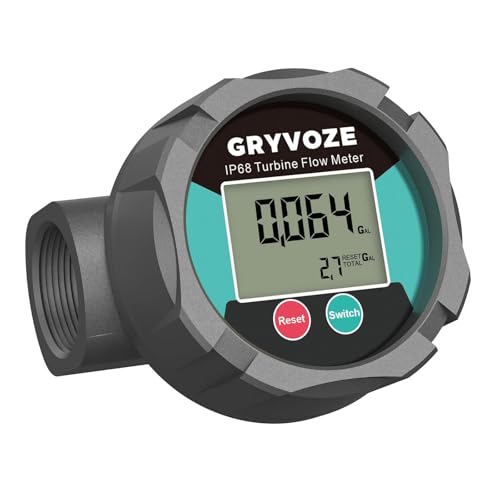
GRYVOZE Waterproof 1 Inch Corrosion Resistant Flow Meter with PTFE Coating, 2.4–26.4 GPM Digital Inline NPT Flowmeter for Water, Fuel, Chemicals, Weak Acids & Bases
Corrosion-Resistant Coating – This chemical flow meter features a PTFE (Teflon) coating that resists mild corrosion, ideal for…
As an affiliate, we earn on qualifying purchases.
As an affiliate, we earn on qualifying purchases.