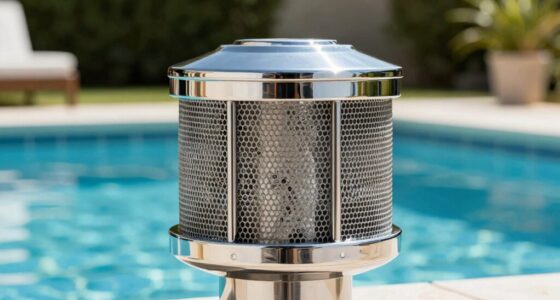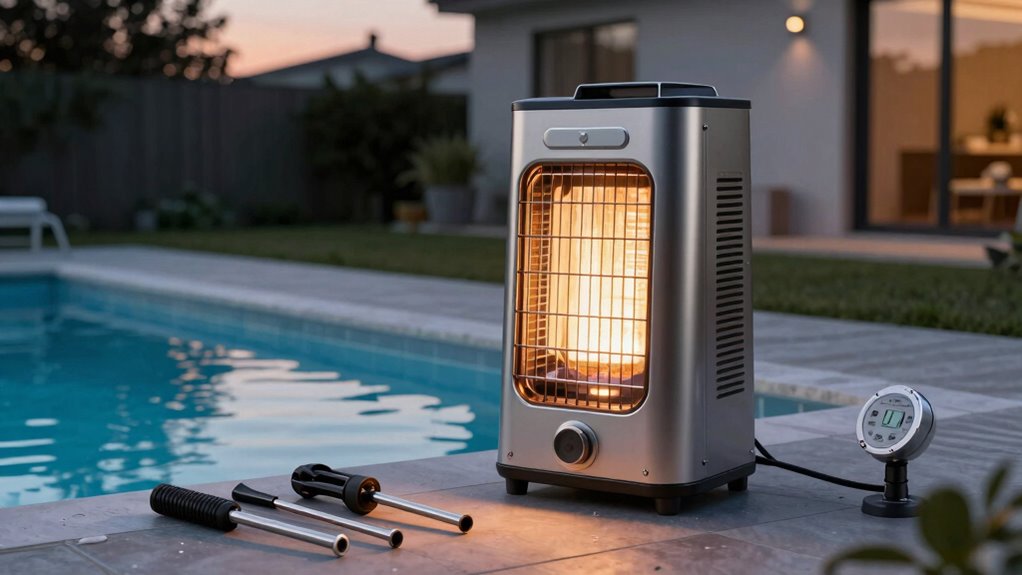

To avoid overspending on your pool heater, choose an energy-efficient system like a heat pump, which uses less electricity and saves money long-term, despite higher upfront costs. Proper sizing and smart controls help reduce waste and optimize performance. Gas heaters heat quickly but cost more over time, while electric resistance options are cheaper initially but less efficient. Stay tuned for tips that help you keep your pool warm without breaking the bank.

Get pool and patio gear delivered free — and shop member deals
- Fast, free delivery on millions of items
- Access to Prime Big Deal Days deals on October 6–7
- Prime Video, Amazon Music and more included
Key Takeaways
- Opt for energy-efficient heat pumps to reduce long-term operating costs despite higher upfront expenses.
- Properly size and install your heater to avoid unnecessary energy waste and ensure effective heating.
- Use smart controllers and timers to optimize energy use and minimize running costs.
- Consider integrating renewable energy sources for sustainable and cost-effective pool heating.
- Balance initial investment with ongoing savings by choosing the most efficient heater suited to your usage and budget.
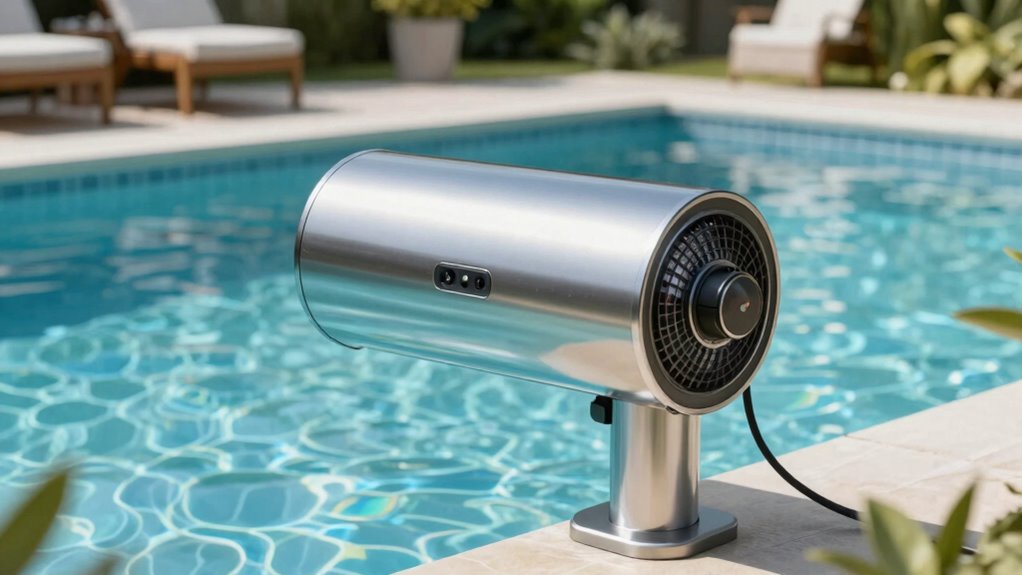
Thinking about extending your swimming season? A good pool heater can make that possible, but you’re probably concerned about the costs. The key is to find a heater that balances energy efficiency with reasonable installation costs. You want to enjoy warm water longer without breaking the bank, so understanding your options is vital.
First, consider the energy efficiency of different heater types. Heat pumps are often the most energy-efficient choice for residential pools, especially if you plan to use your pool regularly. They work by extracting heat from the surrounding air, which means they consume less electricity compared to traditional electric resistance heaters. While the upfront installation costs for a heat pump can be higher, their lower operating costs over time can save you money in the long run. On the other hand, gas heaters heat water quickly and are generally cheaper to install initially, but they tend to have higher ongoing fuel costs, which can add up if you’re using the heater frequently.
Heat pumps are the most energy-efficient choice for regular pool use, balancing upfront costs with long-term savings.
Another factor to think about is installation costs. Electric resistance heaters are usually less expensive to install initially but tend to be less energy-efficient, leading to higher operational expenses. Gas heaters require more complex installation, including gas lines and proper ventilation, which can increase upfront costs. Heat pumps might involve a bigger initial investment, but since they run more efficiently, your monthly energy bills will likely be lower. When comparing options, don’t forget to factor in the cost of additional equipment, like controllers or timers, which can help optimize energy use and further reduce expenses. Additionally, choosing energy-efficient equipment can significantly impact your long-term savings by reducing operational costs. Proper sizing is also essential—buying a heater that’s too large for your pool wastes energy, while one that’s too small won’t keep the water warm enough.
Consulting with a professional can help you choose the right size and type of heater to match your usage habits and budget. Additionally, choosing renewable energy sources or environmentally friendly options can further enhance sustainability and reduce your carbon footprint. Being aware of energy-saving strategies can help you maximize your investment and enjoy more economical operation over time. Incorporating smart technology can also contribute to lowering energy consumption by allowing precise control over heating schedules.
In the end, the best pool heater for you is one that offers a balance between installation costs and energy efficiency. By carefully weighing your options, you can extend your swimming season comfortably without overspending. Proper planning and choosing the right model will guarantee you enjoy warm, inviting water while keeping your expenses in check.
As an affiliate, we earn on qualifying purchases.
Frequently Asked Questions
How Long Does It Take for a Pool Heater to Warm the Water?
It takes about 8 to 12 hours for a pool heater to warm your water, depending on factors like pool size, heater efficiency, and starting temperature. If you prioritize water temperature control, choose an energy-efficient heater and set it to your desired temperature early. To save money, run it during off-peak hours, and remember that larger pools need more time to heat effectively.
Are Solar Pool Heaters Effective in Colder Climates?
Solar pool heaters can be effective in colder climates, but their efficiency depends on the climate impact and solar efficiency. In regions with less sunlight or colder temperatures, they may struggle to heat water adequately. However, if you get enough sunny days and use a well-designed system, solar heaters can still work efficiently, saving you money in the long run. Just be prepared for potentially longer heating times during winter months.
What’s the Average Lifespan of a Typical Pool Heater?
On average, a typical pool heater lasts about 8 to 12 years. This lifespan depends on your pool size and how well you perform heater maintenance. Larger pools may put more strain on the heater, potentially shortening its life, while regular maintenance can extend it. To maximize your heater’s longevity, keep an eye on efficiency and schedule annual checkups. Proper upkeep guarantees you get the most value from your investment.
Can I Install a Pool Heater Myself, or Should I Hire a Professional?
You can attempt a DIY installation if you’re comfortable with electrical and plumbing work, but it’s often better to hire professional assistance. Pool heaters require proper setup to guarantee safety, efficiency, and compliance with local codes. While DIY might save money upfront, a licensed professional guarantees correct installation and reduces potential issues. If you’re unsure about your skills, investing in professional help is a smarter, safer choice.
How Much Can I Expect to Save With Energy-Efficient Pool Heaters?
You can expect to save substantially with energy-efficient pool heaters, often reducing your energy costs by 30-50%. A cost comparison shows that although these heaters might have a higher upfront price, their improved efficiency pays off over time. Use efficiency tips like insulating your pool and scheduling heating wisely to maximize savings. Investing in efficient equipment can make your pool more affordable to maintain in the long run.
best pool heater with smart controls
As an affiliate, we earn on qualifying purchases.
As an affiliate, we earn on qualifying purchases.
Conclusion
So, as you consider your pool heater options, remember that smart choices today can keep your summer memories warm without breaking the bank tomorrow. It’s funny how a simple decision can lead to endless weekends of joy, all while saving you money. Sometimes, the best investments are the ones that keep you cozy and carefree, just like those perfect summer afternoons you’ve been dreaming of. Here’s to making your pool season both affordable and unforgettable.
As an affiliate, we earn on qualifying purchases.
As an affiliate, we earn on qualifying purchases.
Fall Picks
fall essentials
As an affiliate, we earn on qualifying purchases.