Pool valves are essential, quiet components that control water flow, system efficiency, and maintenance with minimal fuss. They come in types like ball, gate, and check valves, each serving specific needs. Proper care, such as regular cleaning and correct installation, guarantees they operate smoothly and last longer. Understanding how these valves work helps you keep your pool running effortlessly. Stick around to discover more about how you can optimize your pool’s performance and longevity.

Get pool and patio gear delivered free with Prime
- Fast, free delivery on millions of items
- Prime Video, Amazon Music and more included
- Member-only deals all year
Key Takeaways
- Pool valves regulate water flow, directing it through various system components like filters and pumps.
- Different types (ball, gate, check) serve specific functions and require tailored maintenance.
- Proper installation and design extend valve lifespan and simplify routine upkeep.
- Regular maintenance prevents leaks, corrosion, and clogs, ensuring efficient system operation.
- Well-maintained valves improve system control, energy efficiency, and water quality.
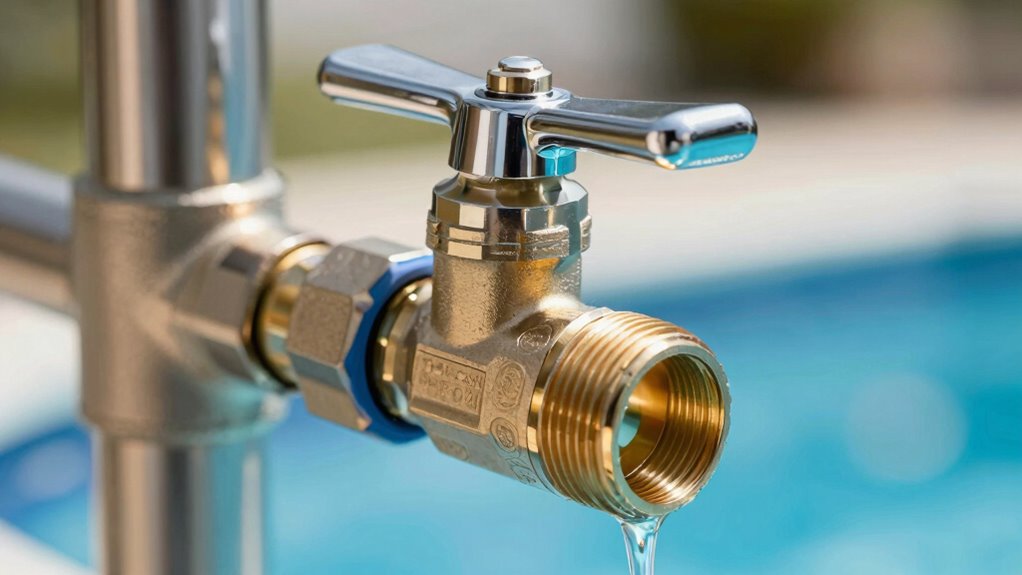
Have you ever wondered how pool water flows smoothly through your system? It all comes down to the valves—those quiet, often overlooked components that control the direction, flow, and pressure of water in your pool. Valve maintenance is essential to keep everything running seamlessly. Regular checks and cleaning prevent leaks, corrosion, or clogs that could disrupt your pool’s circulation. When you maintain your valves properly, you ensure that your pool operates efficiently, saving energy and reducing the need for costly repairs later on.
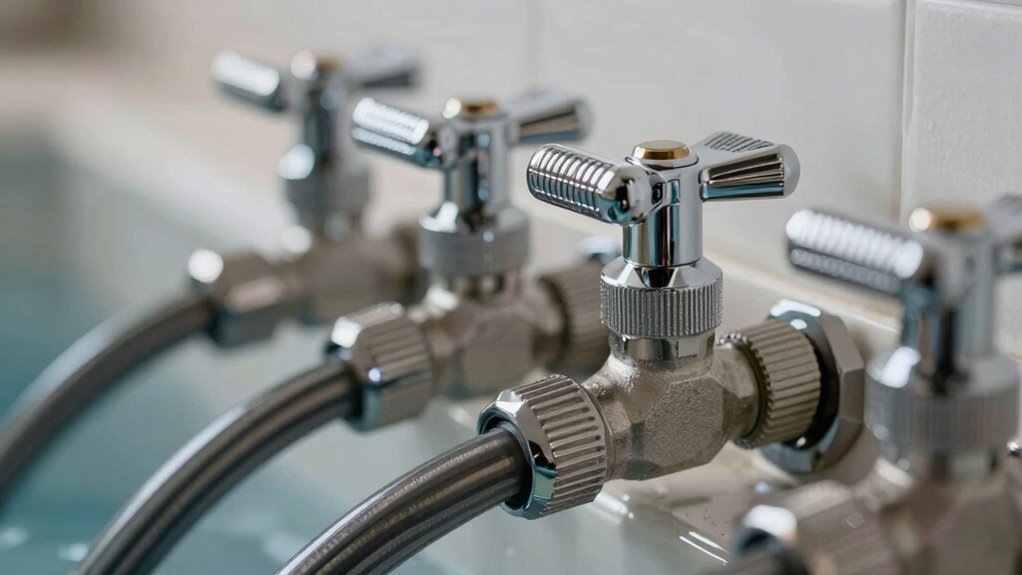
Understanding the types of valves is key to selecting the right ones for your pool. The most common are ball valves, which feature a simple lever that turns to open or close the flow. They’re durable, easy to operate, and provide a tight seal, making them perfect for main shut-off points. Then there are gate valves, which use a sliding gate to control water flow. While less common today, they’re still found in some systems and are valued for their ability to handle high pressure without leaking. Check valves are another important type; they prevent backflow, ensuring water doesn’t return to unwanted parts of your system, which is especially vital in preventing contamination or damage. Proper valve maintenance is crucial to keep these components functioning properly over time. Additionally, understanding how different valve types interact within your system can help optimize overall performance.
Each type of valve has its specific maintenance needs. For example, ball valves are generally low-maintenance but should be checked regularly for leaks around the handle or stem. Gate valves may need lubrication to operate smoothly, especially if they become stiff over time. Check valves, being more specialized, require occasional inspection to confirm they’re sealing properly and not allowing backflow. No matter the type, keeping the valves clean and free of debris is critical. Dirt or algae buildup can hinder their operation, so wiping down the valve surfaces and occasionally flushing the system with clean water helps maintain optimal function. Proper system design also plays a role in ensuring the longevity and ease of maintenance for your valves. Ensuring proper installation from the start can also make routine maintenance much easier and more effective.
Choosing the right valves and maintaining them properly ensures a smooth flow of water through your pool system. When your valves work correctly, you can easily regulate water circulation, control filtration, and manage pool features like jets or waterfalls. By paying attention to valve maintenance, you prevent leaks, reduce energy consumption, and extend the lifespan of your entire system. Whether you’re replacing an old valve or installing new ones, understanding the different types and their upkeep makes a significant difference. Your pool’s quiet hardware—the valves—are the backbone of a well-functioning, enjoyable pool experience. Keep them in good shape, and you’ll enjoy perfectly balanced water and hassle-free operation season after season.
As an affiliate, we earn on qualifying purchases.
Frequently Asked Questions
How Often Should Pool Valves Be Serviced or Replaced?
You should service your pool valves annually to guarantee smooth operation and check for any leaks or damage. Valve maintenance is vital, especially if you notice reduced water flow or unusual noises. Typically, replacement frequency depends on usage and wear—most valves last 5 to 10 years. Regular inspections help identify when a valve needs replacing, preventing costly repairs and keeping your pool system running efficiently.
Can Faulty Valves Cause Algae Buildup in the Pool?
Faulty valves can definitely contribute to algae buildup in your pool. When valves don’t function properly, they disrupt water circulation, making it harder to prevent algae growth. To guarantee algae prevention, you need regular valve maintenance and timely repairs. Properly working valves help maintain clean, clear water by promoting effective filtration and chemical distribution. Neglecting valve issues can create stagnant spots, providing an ideal environment for algae to thrive.
Are There Eco-Friendly Options for Pool Valves?
Yes, you can choose eco-friendly pool valves that help protect our environment. Think of these as the gentle giants of pool hardware—made from sustainable materials like recycled plastics or biodegradable composites. These sustainable valve options reduce your carbon footprint while maintaining premium performance. By opting for eco-friendly materials, you actively contribute to a greener planet, all while keeping your pool functioning smoothly and efficiently.
What Tools Are Needed to Install or Repair Pool Valves?
To install or repair pool valves, you’ll need basic tools like a wrench, screwdriver, pipe cutter, and Teflon tape. Depending on the valve type—ball, check, or multiport—you might also need pliers or a valve key. Follow proper installation procedures, ensuring all connections are secure and aligned correctly. Always turn off the pool’s power and water supply before starting to prevent leaks or damage.
How Do Pool Valves Impact Overall Pool Water Chemistry?
Like the conductor of an orchestra, pool valves regulate water flow, directly impacting your water chemistry. Properly functioning valves guarantee ideal water circulation, preventing stagnation and uneven chemical distribution. If valves leak or malfunction, it can throw off the chemical balance, leading to issues like algae growth or cloudiness. Regular maintenance keeps your valves working smoothly, helping you maintain a healthy, balanced pool water chemistry with clearer, safer water.
As an affiliate, we earn on qualifying purchases.
Conclusion
Think of pool valves as the silent conductors of your backyard symphony, guiding water smoothly through every note. Without them, your pool’s rhythm would falter, turning harmony into chaos. By understanding these quiet hardware marvels, you hold the baton to a perfectly orchestrated oasis. So, next time you glance at your pool, remember—these unassuming valves are the heartbeat, keeping your aquatic melody flowing seamlessly beneath the surface.
As an affiliate, we earn on qualifying purchases.
As an affiliate, we earn on qualifying purchases.
Halloween Picks
halloween
As an affiliate, we earn on qualifying purchases.