A salt chlorine generator continuously converts salt into chlorine to keep your pool sanitized and balanced. It automatically monitors water quality, adjusting chlorine production based on salt levels and sensor data. Throughout the day, it works nonstop to prevent bacteria, algae, and odors, while cycling water through filtration and sanitizer processes. Proper maintenance and calibration guarantee it functions efficiently. Stay with us to discover how this automated system keeps your pool crystal clear and inviting all season long.

Get pool and patio gear delivered free with Prime
- Fast, free delivery on millions of items
- Prime Video, Amazon Music and more included
- Member-only deals all year
Key Takeaways
- Converts salt into chlorine continuously through electrolysis to sanitize the pool water.
- Monitors salt levels and water chemistry to adjust chlorine production automatically.
- Circulates water through filtration and sanitizer processes to prevent algae and bacteria growth.
- Sends alerts and adjusts operations based on system status and maintenance needs.
- Maintains balanced water chemistry for safe, clear, and inviting pool conditions.
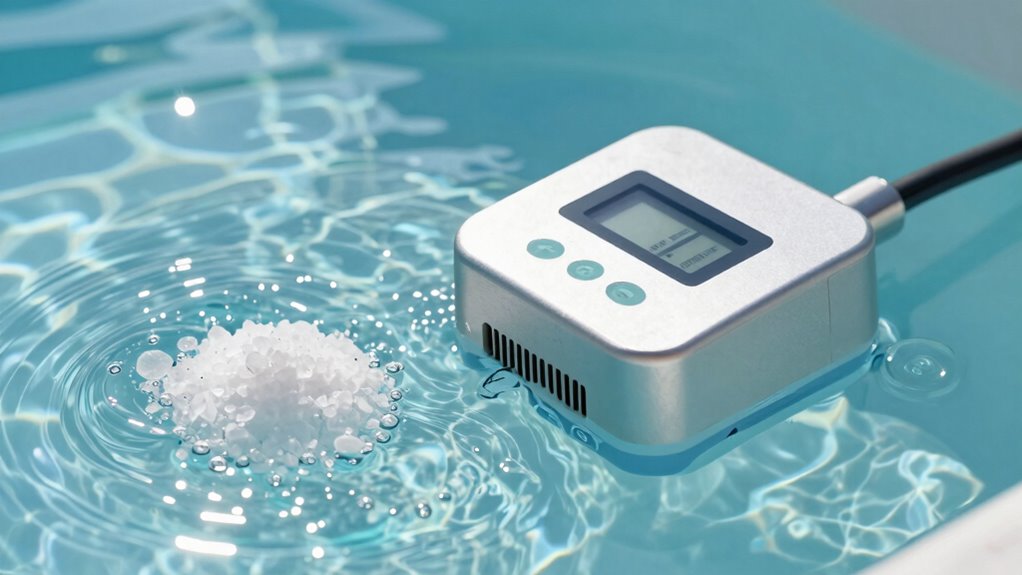
A salt chlorine generator works tirelessly all day to keep your pool clean and sanitized, converting salt into chlorine through a simple electrolysis process. As you set your system, it takes on the essential role of maintaining consistent chlorine levels, which is critical for effective pool sanitation. During the day, the generator continuously monitors the water, using sensors to check the salt levels and adjust its output accordingly. When salt levels are within the ideal range, it produces just enough chlorine to keep bacteria and algae at bay, reducing the need for manual chemical additions. If the salt levels drop too low, the system may alert you or automatically reduce chlorine production until you add more salt. Conversely, if salt levels are too high, the generator might scale back its activity to prevent damage or inefficiency.
A salt chlorine generator automatically adjusts chlorine production based on water salt levels, ensuring consistent, hassle-free pool sanitation.
Throughout the day, your generator works with the pool’s filtration system, cycling water through the sanitizer process without you needing to intervene constantly. This seamless operation helps maintain balanced water chemistry, preventing cloudy water, algae growth, and unpleasant odors. As you enjoy your pool, the generator quietly does its job, converting a small amount of salt into chlorine 24/7, guaranteeing the water remains safe and inviting. Unlike traditional chlorine methods that require manual addition and careful tracking, a salt chlorine generator automatically adjusts its output based on real-time data, simplifying pool maintenance. This automation not only saves you time but also provides more consistent water quality. Understanding the electrolysis process can enhance your knowledge of how the system produces chlorine safely and efficiently.
Knowing how to maintain the system properly can extend the lifespan of your generator and ensure optimal performance. Part of your daily pool maintenance involves checking and cleaning this cell periodically to keep it functioning efficiently, especially since mineral deposits can build up over time. The system also relies on the pool’s control panel, which displays salt levels, chlorine output, and system status, giving you a clear picture of what’s happening beneath the surface. Keeping the salt levels in the recommended range is key; too little salt means less chlorine production, risking inadequate sanitation, while too much salt can cause scaling and damage to the system. Regular testing of your pool water ensures you stay within the perfect salt range, letting your generator do its job smoothly. Additionally, understanding the importance of proper system calibration can help prevent issues with chlorine production and salt levels. Ultimately, your salt chlorine generator acts as an automated, dependable partner in pool maintenance, working tirelessly behind the scenes to produce the right amount of chlorine, maintaining salt levels, and keeping your water crystal clear—all without the constant manual effort traditionally associated with pool care.
salt chlorine generator for pools
As an affiliate, we earn on qualifying purchases.
As an affiliate, we earn on qualifying purchases.
Frequently Asked Questions
How Long Does a Salt Chlorine Generator Typically Last?
A salt chlorine generator usually lasts about 5 to 7 years with proper maintenance. During this time, you’ll focus on pool cleaning and monitoring salt conversion to guarantee it functions efficiently. Regularly check and clean the cell to prevent buildup, and keep water levels balanced. Proper care helps extend its lifespan, saving you money and effort while maintaining clean, healthy water for your pool.
Does the Generator Require Special Maintenance or Repairs?
You don’t need special repairs often, but regular maintenance is key. As you check your pool’s chemical balance, you might notice the need for component replacement, like electrodes or sensors, to keep things running smoothly. Think of it as tending a garden—you’ll prune and adjust to guarantee everything’s in harmony. Keeping an eye on these elements prevents costly fixes, ensuring your generator works efficiently and your pool stays crystal clear.
Can It Be Used in All Types of Pools?
Yes, a salt chlorine generator can be used in most types of pools, but it’s essential to take into account your pool’s materials and design. It helps maintain pool aesthetics by producing consistent chlorine levels, reducing the need for added chemicals. However, you must monitor chemical balance regularly, as certain pool finishes or features may be sensitive to salt or chlorine levels. Always check manufacturer guidelines for compatibility with your pool type.
How Much Salt Is Needed for Proper Operation?
Imagine your pool as a delicate dance, where salt levels set the rhythm. You’ll need about 3,000 to 4,000 parts per million (ppm) of salt for proper operation. Keep water balance in check, balancing pH and alkalinity, to guarantee the generator works smoothly. Regularly test salts and water chemistry to maintain this harmony, so your salt chlorine generator can produce clean, invigorating water all season long.
Is a Salt Chlorine Generator Energy-Efficient?
Yes, a salt chlorine generator is energy-efficient because it produces chlorine on demand, reducing chemical waste and excess use. This helps maintain proper chemical balance, which is essential for pool safety. You’ll find that it uses less energy compared to traditional chlorination methods, saving you money and ensuring a safer swimming environment. By keeping your pool properly balanced, you reduce risks like algae growth and skin irritation.
automatic pool chlorinator system
As an affiliate, we earn on qualifying purchases.
As an affiliate, we earn on qualifying purchases.
Conclusion
By now, you see how your salt chlorine generator works tirelessly, turning ordinary salt into the disinfectant your pool needs—all day long. It’s like having a modern-day alchemist, constantly keeping your water sparkling clean and safe. So, next time you’re lounging poolside, remember that this little device is the true unsung hero, much like the legendary craftsmen of old, turning simple ingredients into magic. You can relax, knowing your pool’s in good hands.
As an affiliate, we earn on qualifying purchases.
As an affiliate, we earn on qualifying purchases.
Fall Picks
fall essentials
As an affiliate, we earn on qualifying purchases.