
TL;DR

Get pool and patio gear delivered free with Prime
- Fast, free delivery on millions of items
- Prime Video, Amazon Music and more included
- Member-only deals all year
Amateur Gardening editor and resilient-gardening expert Kim Stoddart outlines seven free ways to protect and nourish garden soil: disturb it less, leave roots in place, sow green manures and use four readily available mulches. The advice is practical gardening guidance, not a report of new research; claims about crop nutrition remain qualified in the source.
Amateur Gardening editor Kim Stoddart has set out seven free ways to help garden soil withstand weather extremes, recommending less digging, keeping roots in the ground, sowing green manures and applying four kinds of mulch. The advice focuses on protecting soil structure and feeding the organisms within it, rather than relying on purchased products.
Stoddart’s first two recommendations are to disturb soil as little as possible and keep it rooted. She says no-dig methods help maintain soil structure, while roots and stems left after harvesting can help bind the ground. Peas and beans, members of the legume family, also fix nitrogen, according to the report. Stoddart says she returns root material to the soil and leaves some plants to die back naturally, providing cover and habitat for invertebrates.
For bare ground, the article suggests allowing non-invasive weeds to grow, applying mulch or sowing green manure. Its examples include field beans and phacelia; the latter should be cut back before setting seed. The source also names poached egg plant as an option. It advises lightly raking the surface before sowing and covering seeds with a thin layer of peat-free multipurpose compost, then watering if needed.
The four featured free mulches are homemade compost, fallen leaves, grass clippings and other available materials. Stoddart suggests prioritising hungry plants for limited compost, spreading leaves directly over beds, and using a thin layer of grass clippings. Other possibilities include foliage left to break down, cardboard, sheep wool dags where available, and locally gathered seaweed. The report cautions that leaves may need securing in windy weather and may not fully decompose by spring.
How Soil Cover Can Reduce Weather Stress
The recommendations offer gardeners ways to protect soil using materials already on hand. According to Stoddart, maintaining soil structure and covering bare ground can help the soil absorb and cope with rain, while reducing the loss of fertility through leaching. The article presents this as a way to make gardens better able to handle greater weather extremes; it does not quantify the effect or claim that the methods prevent damage in every garden.
For readers, the practical point is that soil protection does not necessarily require bought inputs. Compost from household and garden scraps, leaves and lawn cuttings can all be put to use. Stoddart also says regenerative and organic growing methods may improve the nutrient density of home-grown produce, but frames that as a possibility while research continues, not as a settled result.
As an affiliate, we earn on qualifying purchases.
The Autumn Soil-Care Advice
The report is framed as autumn gardening guidance, when beds may be cleared after harvest and fallen leaves and grass clippings can be collected. Its central principle is to treat soil as a living system: limit disruption, keep it covered and return organic material to the ground where possible.
Stoddart describes soil as a habitat for microbial life and says gardeners do not fully understand the processes beneath the surface. The source offers no study results, measurements or comparison of the seven practices. It is an expert advice article from Amateur Gardening, rather than a scientific paper or announcement of new findings.
“The beating heart of an organically-grown garden is its soil.”
— Kim Stoddart, Amateur Gardening editor and resilient-gardening expert
As an affiliate, we earn on qualifying purchases.
What the Advice Does Not Measure
The article does not report trials comparing the seven methods, quantify how much they reduce soil erosion or weather-related harm, or specify how results vary by soil type and climate. Its recommendations are presented as gardening guidance, not as guarantees.
The source says research into nutrient density is continuing and that organic methods combined with no-dig gardening and mulching appear to produce the best results. It supplies no study details or numerical findings, so the extent of any nutritional benefit remains unclear. Availability and suitability of materials such as seaweed and sheep wool also depend on location and circumstances.
As an affiliate, we earn on qualifying purchases.
Putting the Methods Into Practice
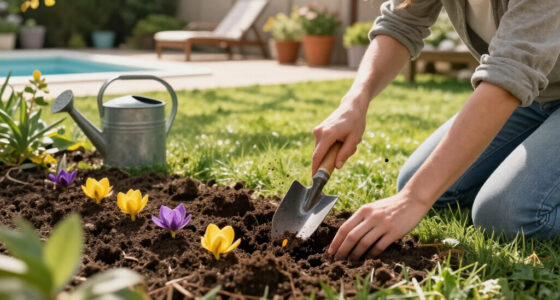
Gardeners can start by leaving suitable roots and stems in place after harvesting, covering exposed beds with available leaves or compost, or sowing a green manure suited to their plot. Stoddart advises keeping leaf mulch from blowing away and cutting phacelia before it sets seed. The source does not announce a follow-up study or a further milestone; its next step for readers is applying the methods during autumn garden preparation.
As an affiliate, we earn on qualifying purchases.
Key Questions
What are the seven free soil-care methods?
The report recommends disturbing soil less, leaving roots and stems in the ground, sowing green manures, and using homemade compost, leaves, grass clippings or other available materials such as foliage and cardboard as mulch.
Which green manures does the article name?
It mentions field beans, phacelia and poached egg plant. Stoddart says phacelia should be cut back before it sets seed.
Why does the advice recommend leaving roots in the soil?
Stoddart says roots help bind the soil. The report also notes that peas and beans can fix nitrogen, and that plant remains left to break down may provide cover and habitat for invertebrates.
Does the report prove these methods improve food nutrition?
No. It says research into nutrient density is ongoing and that organic growing combined with no-dig methods and mulching appears promising, but gives no study details or measured results.
Source: rss
Halloween Picks
halloween
As an affiliate, we earn on qualifying purchases.