
TL;DR

Get pool and patio gear delivered free with Prime
- Fast, free delivery on millions of items
- Prime Video, Amazon Music and more included
- Member-only deals all year
A Gardening Know How report uses the large cacti visible from Mandy Moore’s former Pasadena home as inspiration for outdoor garden design. Landscape and property experts say gardeners can create a similar focal point in some cooler regions by choosing suitable cold-hardy varieties and providing good drainage, but plant choice must match local conditions.
A Gardening Know How report has outlined how gardeners can use large cacti as architectural focal points, taking inspiration from the plants visible through the windows of Mandy Moore’s former Pasadena home. Landscape architect Noé Lerma and property manager Marta Pawlik say the look is not limited to hot regions, but success depends on selecting species suited to local winter temperatures and ensuring effective drainage.
The report describes the Pasadena garden’s large cacti as a visual feature seen from the home’s floor-to-ceiling windows. It says Moore was likely growing Euphorbia ammak, a plant typically suited to USDA Hardiness Zones 9b through 11b. The identification is presented as likely, not confirmed. The article’s broader point is that a small number of sculptural plants can create a strong garden feature without relying on seasonal flowers.
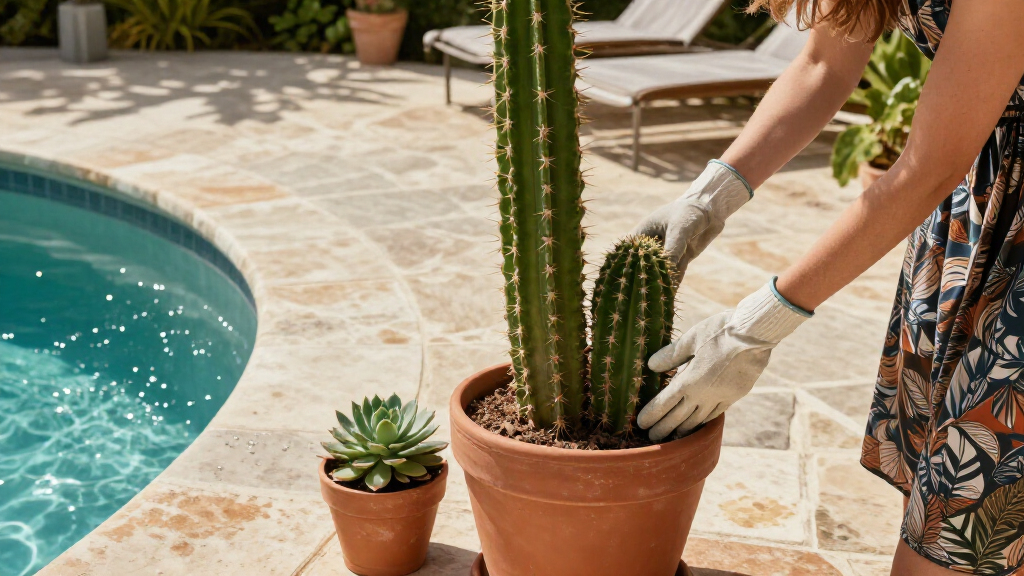
Pawlik, co-founder and director of luxury property management company Laik, said she has used statement cacti at more than 50 premium properties. She recommends golden barrel cacti for small gardens, prickly pear for medium-sized spaces and blue columnar cacti for larger properties. The report says eastern prickly pear, Opuntia humifusa, can tolerate conditions down to USDA Zone 4; it also gives a low-temperature tolerance of 20°F for golden barrel cactus. That tolerance should not be treated as a guarantee for every site, since conditions and drainage vary.
Lerma recommends keeping the planting simple: avoid crowding large specimens, and use a few softer companions or stone around the base. Suggested companion plants include natal plum, purple ruellia, fountain grass and desert rose. For cooler locations, the experts’ advice is to research the desired garden style, then identify species with a similar form that can withstand the local climate.
Choosing Cacti for Local Winters
The advice matters to gardeners who like the bold, upright look of desert planting but do not live in a warm climate. A cactus that thrives in Southern California may not survive a colder winter elsewhere, so copying the appearance does not mean copying the exact species. The report points to hardy prickly pear as one possible alternative for colder zones, while stressing the role of well-drained soil.
Its design guidance also addresses a practical issue: oversized or crowded plants can overwhelm a yard rather than create a focal point. Choosing a specimen scaled to the garden and giving it visual space can help the plant read as an intentional feature. The recommendations are expert guidance, not a guarantee that any listed plant will thrive in every microclimate.
cold hardy prickly pear cactus Opuntia humifusa live plant
As an affiliate, we earn on qualifying purchases.
As an affiliate, we earn on qualifying purchases.
The Pasadena Garden Inspiration
The report’s starting point is the view from Moore’s former Pasadena house, which was put on the market. Rather than focusing on the interiors, the writer highlights the large cacti visible through the living room windows and describes the garden as a kind of living wall art. The article uses that example to discuss how plants can shape a view from indoors as well as the outdoor space itself.
Its recommendations distinguish between the likely plant at Moore’s home and alternatives for other settings. The report names Euphorbia ammak as a probable identification, then suggests columnar species such as Cereus peruvianus and blue myrtle cactus for a similar vertical effect. Lerma also names organ pipe cactus, barrel cacti and Pachycereus as options for strong visual impact. No evidence in the supplied report confirms the exact species in Moore’s garden.
“Cacti serve as great focal points because they fill up the space they occupy without any effort. While most plants ask you to wait for blooms, growth, and seasons, cacti have presence from day one.”
— Marta Pawlik, co-founder and director of Laik
golden barrel cactus live plant outdoor
As an affiliate, we earn on qualifying purchases.
As an affiliate, we earn on qualifying purchases.
Species and Site Conditions Matter
The report does not confirm which cactus species grow at Moore’s home; it says Euphorbia ammak is likely. It also does not provide a full growing guide for every variety it mentions, including specific soil mixes, watering schedules or regional performance data. Temperature hardiness alone cannot establish whether a plant will succeed in a particular yard, and the supplied material does not detail how exposure, soil or local winter conditions affect the recommendations.
The report’s claim that Pawlik has operated properties with statement cacti year-round with no maintenance is her account, not a universal care standard. Gardeners should check reliable local horticultural guidance for the exact species and their own growing conditions before planting.
cactus and succulent gritty well draining soil mix
As an affiliate, we earn on qualifying purchases.
As an affiliate, we earn on qualifying purchases.
Match the Plant to Your Garden
The report does not announce a planting project or a scheduled follow-up. Its practical next step for readers is to decide what scale and shape they want, then check a plant’s hardiness range against their location and plan for drainage before buying. For an architectural look, the article favors columnar varieties; for colder areas, it points to hardy Opuntia types as candidates.
Once a suitable species is selected, the experts advise treating it as the main feature rather than surrounding it with multiple competing plants. A restrained combination of one statement cactus, a small number of companions and textured ground cover is the design approach described in the report. Local plant specialists or extension services can help confirm whether a particular cactus is suited to the site.
decorative landscape stone mulch for cactus garden
As an affiliate, we earn on qualifying purchases.
As an affiliate, we earn on qualifying purchases.
Key Questions
What cactus does the report say may be growing at Mandy Moore’s former home?
The Gardening Know How report says it is likely to be Euphorbia ammak, typically suited to USDA Hardiness Zones 9b through 11b. The report does not confirm the plant’s identity.
Can cacti grow outdoors in colder climates?
Some can. The report identifies eastern prickly pear, Opuntia humifusa, as a cold-hardy option, with a stated tolerance down to USDA Zone 4. Local conditions and drainage still matter, so check guidance for the exact species and location.
How should statement cacti be arranged?
Landscape architect Noé Lerma advises against placing too many large cacti close together. The report recommends leaving a specimen room to stand out and using only a few companion plants or stone around it.
Which cacti suit a smaller garden?
Marta Pawlik recommends golden barrel cacti for small gardens, saying they can be grouped to create an intentional look. Check the variety’s hardiness and growing needs before planting.
Source: rss
Fall Picks
fall essentials
As an affiliate, we earn on qualifying purchases.