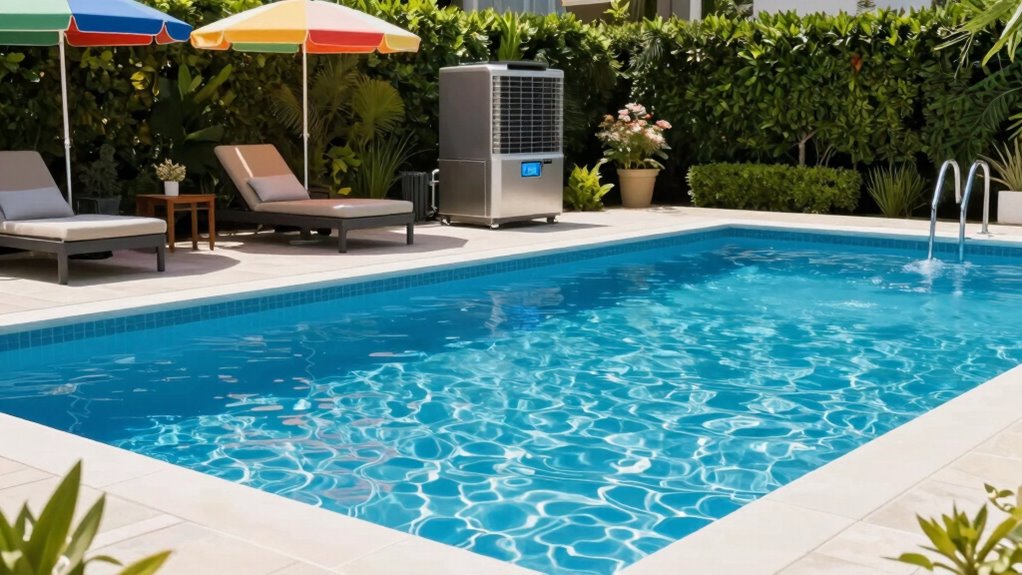
A pool chiller is a smart choice if you swim often during hot months, especially in hot or humid climates, to keep water comfortable and prevent issues like algae growth. It can extend your swimming season and protect your equipment from heat stress. However, if your climate isn’t extreme or you swim occasionally, other cooling methods might suffice. To determine if a chiller fits your needs, explore the detailed factors that influence pool comfort and cost-effectiveness.
Key Takeaways
- Pool chillers are beneficial in hot, humid climates or for frequent swimmers to maintain comfortable water temperatures.
- Signs your pool needs cooling include persistently high water temperatures, murkiness, and algae growth.
- Alternative cooling methods like shade covers, fountains, and chemical agents are eco-friendly and cost-effective options.
- Installing a pool chiller involves high upfront costs but can reduce long-term energy expenses and improve water stability.
- Factors such as climate, pool usage frequency, maintenance capacity, and budget determine whether a chiller is a worthwhile investment.
As an affiliate, we earn on qualifying purchases.
When Is a Pool Chiller Necessary?
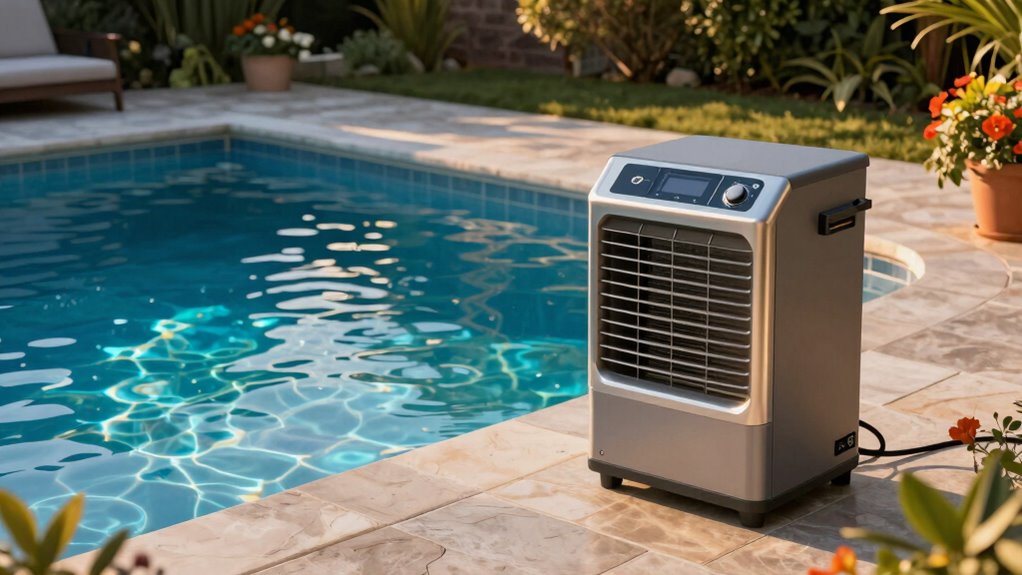
A pool chiller becomes necessary when your pool water consistently feels uncomfortably warm, especially during hot summer months. In such cases, maintaining proper pool maintenance becomes vital to ensure water stays safe and inviting. If your water chemistry is off—like high pH or alkalinity levels—it can contribute to uneven temperature and discomfort. A chiller helps regulate water temperature, making swimming more enjoyable and reducing stress on pool equipment caused by thermal fluctuations. Keep an eye on your water chemistry, as imbalances can signal the need for cooling solutions. When hot weather persists and your water feels too warm despite regular maintenance, investing in a pool chiller can restore comfort and protect your pool’s overall health. Additionally, understanding thermal regulation principles can help you optimize your pool environment for year-round enjoyment.
As an affiliate, we earn on qualifying purchases.
What Factors Affect Your Pool’s Temperature and Comfort
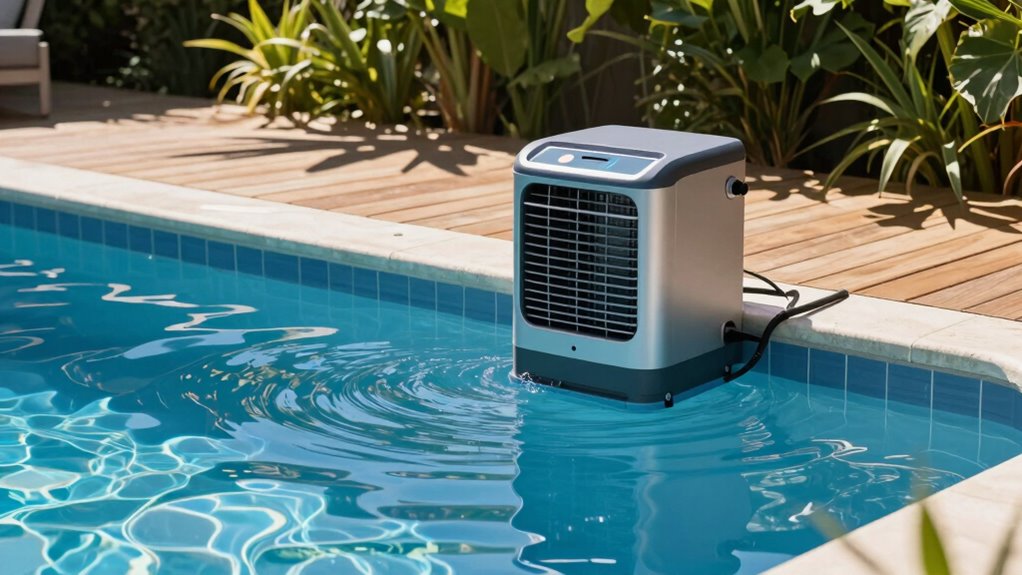
Your pool’s temperature is heavily influenced by how much sunlight it receives, which can raise the water temperature during hot days. Using a pool cover can help retain heat and keep your water comfortable for longer periods. Understanding these factors lets you better manage your pool’s temperature and enjoy it more consistently. Additionally, considering early warning signs of equipment issues can prevent temperature fluctuations caused by malfunctioning systems. Regularly checking your pool’s ventilation and filtration systems can also ensure optimal performance and temperature regulation. Incorporating seasonal flavor options into your pool routine can also support overall relaxation and well-being.
Sun Exposure Effects
Sun exposure plays a significant role in determining your pool’s temperature and overall comfort. When your pool gets direct sunlight, the water heats up faster, making it more inviting on hot days. However, increased UV exposure also raises the sunburn risk, especially if you’re swimming during peak hours. Prolonged UV rays can cause skin damage and discomfort, so it’s essential to take precautions like applying sunscreen or using shade. Shade structures or trees can reduce direct sunlight, helping to keep the water cooler and more comfortable. Additionally, understanding halal traditions related to outdoor activities can guide the use of natural shade and appropriate attire. Using solar covers can also help retain heat during cooler evenings or overcast days. Moreover, being aware of UV protection strategies can further enhance your safety and enjoyment while swimming. Incorporating proper hydration is also crucial, as sun exposure can lead to dehydration and fatigue. It’s also beneficial to monitor pool temperature regularly to maintain a comfortable swimming environment. Keep in mind that while sun exposure warms your pool, it also impacts your safety, so balancing sunlight and shade ensures a more enjoyable and protected swimming experience.
Pool Cover Benefits
Using a pool cover can considerably influence your pool’s temperature and overall comfort by reducing heat loss and minimizing evaporation. The primary pool cover benefits include trapping heat and keeping your water warmer for longer periods. Evaporation reduction is especially critical, as it can cause significant cooling and water loss, forcing you to fill and heat your pool more frequently. By limiting evaporation, a cover helps maintain your pool’s temperature efficiently, saving energy and costs. Additionally, a cover prevents debris from entering, reducing cleaning time and chemical use. Proper use of pool covers can also help prevent heat loss during colder nights, further conserving energy and maintaining water warmth. Understanding the thermal insulation properties of your pool cover can optimize these benefits even more. For example, selecting a cover with higher insulation effectiveness can significantly improve heat retention. It is also beneficial to consider the material composition] of your cover, as different materials can impact overall performance. Overall, using a pool cover enhances comfort, conserves energy, and prolongs your pool’s warmth, making it a smart investment if maintaining consistent water temperature and minimizing heat loss are priorities.
As an affiliate, we earn on qualifying purchases.
How Can You Tell If Your Pool Needs Cooling?
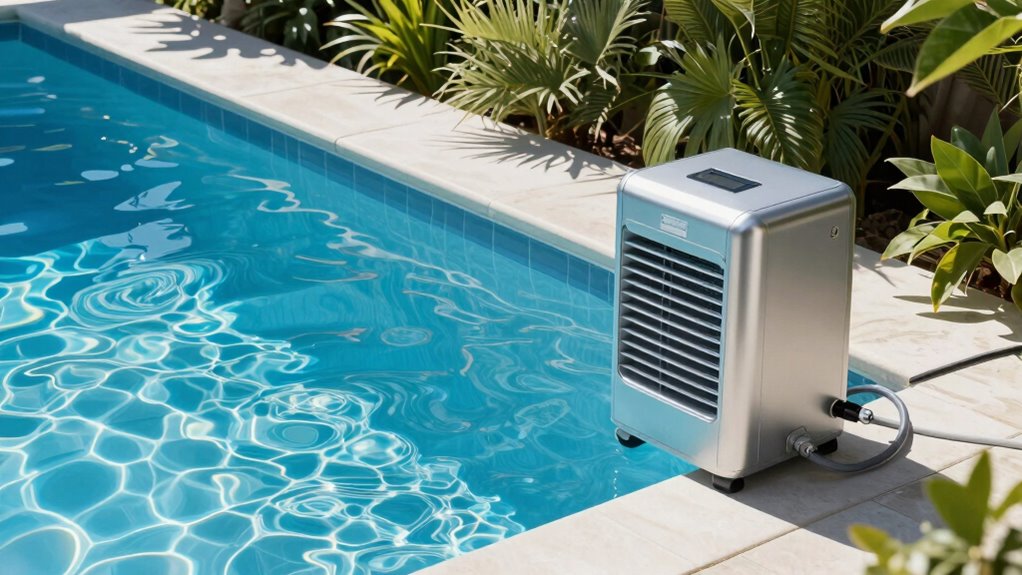
Wondering if your pool needs cooling? Check for these signs:
Is your pool feeling too warm and murky? Watch for signs it needs cooling.
- Your water feels too warm, making swimming uncomfortable.
- Chemical balance is hard to maintain, and algae or bacteria start thriving.
- Water clarity diminishes, turning murky or cloudy despite regular cleaning.
- Protecting your equipment from heat stress can also be a sign that cooling is needed.
Keeping an eye on water temperature fluctuations helps you determine if cooling is necessary. Elevated temperatures can cause algae growth, which clouds water and interferes with proper sanitation. Regularly monitoring thermal regulation techniques can help you maintain consistent water conditions and prevent sudden temperature spikes. Recognizing pool climate factors that influence water temperature can further aid in maintaining optimal conditions. Additionally, understanding water circulation methods can assist in keeping your pool within a comfortable range. Clear water and stable chemical levels indicate your pool is in good shape, while murkiness or frequent chemical adjustments suggest it might be time to cool things down. Early recognition of these signs keeps your pool inviting and safe for swimmers.
As an affiliate, we earn on qualifying purchases.
Pros and Cons of Pool Chillers
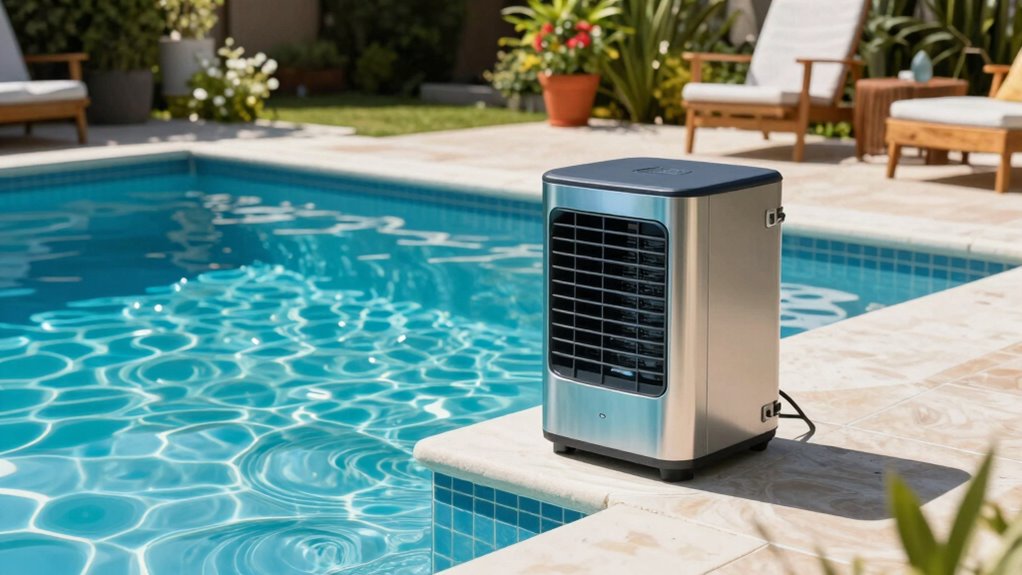
Pool chillers can help keep your water comfortable, but they also come with costs and energy use to contemplate. You’ll want to weigh the efficiency benefits against the initial investment and ongoing expenses. Understanding these pros and cons can help you decide if a pool chiller is right for you.
Chiller Efficiency Benefits
Chiller efficiency plays a crucial role in determining the overall cost and performance of your pool cooling system. A more efficient chiller provides notable benefits, including:
- Energy savings: Efficient chillers consume less power, reducing your monthly utility bills.
- Equipment longevity: Lower energy strain minimizes wear and tear, extending the lifespan of your system.
- Consistent performance: Higher efficiency ensures your pool stays at a comfortable temperature without overworking the unit.
Cost and Energy Considerations
While investing in a pool chiller can improve your swimming experience, it’s important to weigh both the costs and energy implications. Pool chillers can increase energy consumption, especially if you rely solely on electricity, raising your utility bills. However, pairing a chiller with solar heating can offset some energy costs, making cooling more affordable and eco-friendly. Good pool insulation also helps maintain your desired temperature, reducing the workload on both chillers and heaters. Keep in mind that installing a chiller involves upfront costs, but it can extend your swimming season and improve comfort. Balancing these factors—initial expense, ongoing energy use, and alternative heating options—helps determine whether a pool chiller is a practical and cost-effective choice for you.
Other Ways to Cool Your Pool
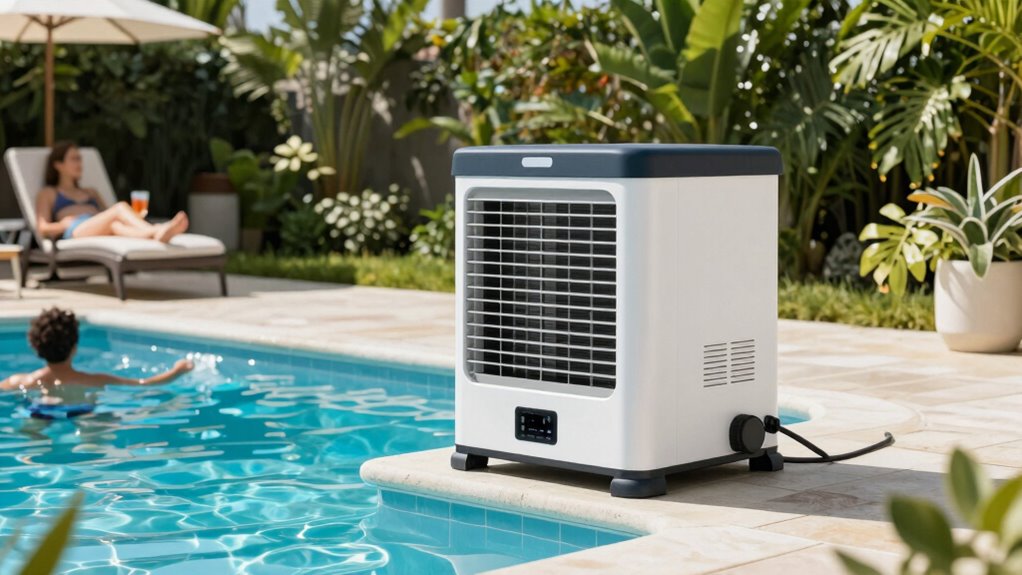
If you’re looking for effective ways to lower your pool’s temperature without relying solely on traditional chillers, there are several practical options to contemplate.
- Natural evaporation: You can increase surface agitation by using fountains, waterfalls, or spray features, which promote evaporation and help cool the water naturally.
- Chemical cooling: Some pool owners add cooling agents or use specific chemicals designed to absorb heat, reducing water temperature subtly.
- Shade and Coverings: Installing shade sails or pool covers during peak sunlight hours minimizes heat gain, keeping water cooler for longer.
These methods are eco-friendly and often cost less than installing a pool chiller, making them attractive options for maintaining a comfortable swim temperature efficiently.
Should You Get a Pool Chiller? Here’s How to Decide
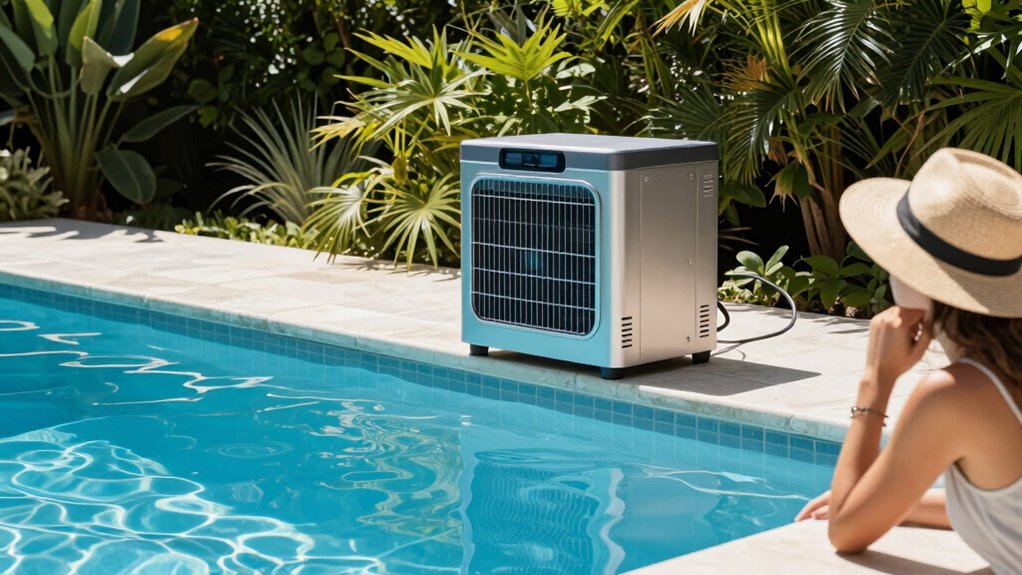
Deciding whether to invest in a pool chiller depends on several factors, including your local climate, how often you swim, and your budget. If you live in a hot climate, a chiller can make pool maintenance more comfortable by maintaining a pleasant water temperature. Consider how frequently you swim; regular use justifies the investment. Your budget also matters, as chillers can be costly upfront but save energy over time. Additionally, a chiller impacts water chemistry, so proper filtration and chemical balance are essential to prevent algae and bacteria growth. To help decide, compare these aspects:
| Factor | High Priority | Moderate Priority |
|---|---|---|
| Climate | Hot, humid climates | Mild, seasonal climates |
| Swimming Frequency | Daily or multiple times weekly | Occasional or seasonal swimming |
| Budget | Can afford upfront and maintenance costs | Limited budget |
| Pool Maintenance | Consistent water chemistry management | Occasional adjustments |
| Water Chemistry | Stable, well-maintained chemistry needed | Less sensitive to fluctuations |
Frequently Asked Questions
How Often Should I Run My Pool Chiller for Optimal Results?
You should run your pool chiller during the hottest parts of the day, typically 10 a.m. to 4 p.m., for maximum results. This maximizes energy efficiency and helps maintain a comfortable temperature. To manage costs, compare running times with the energy savings gained from cooling. Avoid overuse, as it can increase your energy bills without significant benefits. Regularly monitor your pool’s temperature to adjust the chiller accordingly.
Are There Specific Pool Sizes That Benefit Most From Chillers?
You’ll find that medium-sized pools benefit most from chillers, especially if your pool size ranges between 10,000 and 20,000 gallons. Larger pools can still use chillers, but efficiency factors like insulation and cover use become essential for ideal cooling. Smaller pools might not need a chiller at all, as they cool naturally. Keep these considerations in mind to maximize your chiller’s effectiveness and enjoy invigorating dips all season.
What Is the Typical Lifespan of a Pool Chiller?
A typical pool chiller lasts about 10 to 15 years, depending on energy efficiency and maintenance. You’ll want to contemplate installation costs upfront, but a good-quality chiller can offer long-term savings through lower energy use. Regular upkeep helps extend its lifespan, ensuring you get the most out of your investment. Keep an eye on performance and schedule routine checks to maximize your chiller’s durability and efficiency over time.
Can Pool Chillers Be Used With Saltwater Pools?
It might seem like a coincidence, but pool chillers can indeed be used with saltwater pools. Look for models with saltwater compatibility and chlorine resistance to guarantee durability. These chillers are designed to withstand the corrosive nature of salt and chlorine, making them a smart choice. Just verify the specifications before installation, and you’ll enjoy a cooler, more comfortable swim without worrying about damaging your equipment.
Do Pool Chillers Require Special Maintenance or Repairs?
Pool chillers do require some special maintenance and occasional repairs. You should regularly check chlorine compatibility, especially if you have a saltwater pool, to prevent corrosion. Also, verify your chiller meets your electrical requirements to avoid issues. Keep the system clean, inspect hoses and connections, and schedule professional tune-ups as needed. Doing so helps your chiller operate efficiently and lasts longer, saving you time and money in the long run.
Conclusion
Ultimately, deciding whether to get a pool chiller depends on your comfort needs and budget. If you value a invigorating dip on hot days, a chiller might be worth it. However, consider alternatives first, like shading or circulation. Remember, “a stitch in time saves nine”—addressing cooling needs early can save you money and hassle later. Weigh the pros and cons carefully to guarantee your pool stays inviting without unnecessary expense.