
Installing AI safety cameras around pools raises important legal questions about liability, privacy, and compliance. You need to think about who’s responsible if the cameras fail to detect danger or cause privacy invasions. Privacy concerns are especially relevant if cameras record beyond the pool area or in private spaces. Ensuring compliance with local laws and protecting footage are also essential. Staying aware of these issues can help you avoid legal trouble—if you keep exploring this topic, you’ll uncover essential insights.

Get pool and patio gear delivered free with Prime
- Fast, free delivery on millions of items
- Prime Video, Amazon Music and more included
- Member-only deals all year
Key Takeaways
- Ownership liability depends on whether the camera detects safety hazards or fails to prevent incidents around pools.
- Privacy concerns arise when cameras record private or semi-private pool areas without explicit consent.
- Compliance with local laws and regulations is crucial for lawful installation and operation of pool safety cameras.
- Proper data security measures are necessary to prevent footage misuse and legal repercussions.
- Transparency and clear policies help balance safety benefits with privacy rights, reducing legal risks.
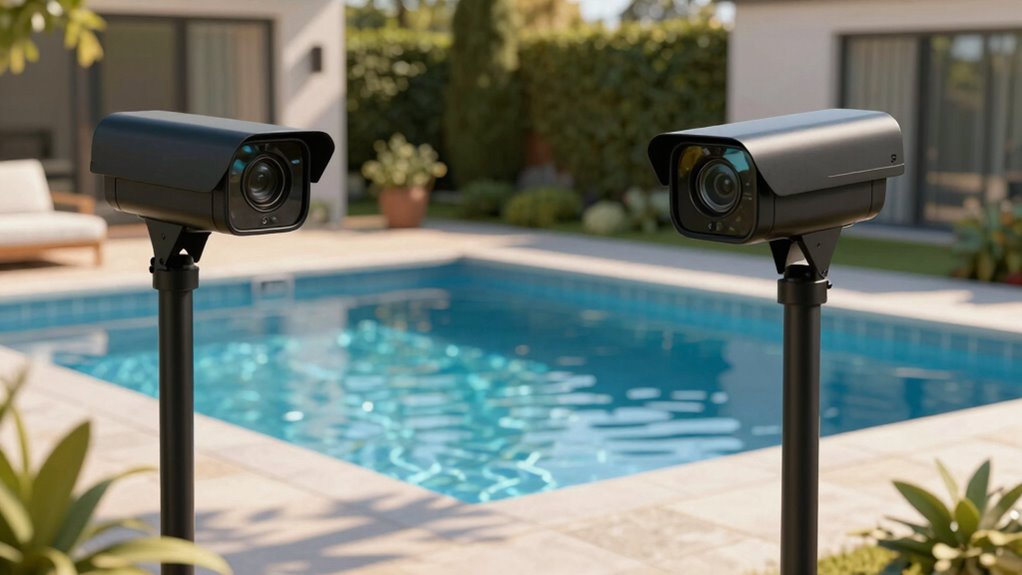
As AI safety cameras become more common around pools, many people are wondering about the legal implications of their use. These cameras are designed to detect potential hazards, monitor activity, and prevent accidents, but they also raise important questions about liability concerns and privacy implications. If an incident occurs and an AI safety camera was present, you might wonder who’s legally responsible. Is it the property owner who installed the camera, the manufacturer, or perhaps the person who was harmed? The answer isn’t always straightforward, especially since laws vary by jurisdiction. Liability concerns can become complex, particularly if the camera fails to detect danger or if its footage is mishandled or misused. You need to understand that installing these devices could potentially shift liability, making you more accountable if someone gets hurt and footage reveals negligence or safety lapses. Conversely, if the camera malfunctions or invades privacy, you could find yourself facing legal action from those whose privacy was compromised.
Privacy implications are perhaps the most contentious aspect of AI safety cameras around pools. These devices often operate with sophisticated sensors that can capture more than just safety-related data; they may record images, videos, or even audio, raising serious concerns about intrusion into personal privacy. As a pool owner or manager, you might worry about whether it’s legal to monitor people in private or semi-private areas, especially if the footage extends beyond the pool area into neighboring properties or public spaces. Installing cameras without clear consent can lead to accusations of invasion of privacy, and you could be held liable if individuals feel their rights have been violated. Additionally, storing or sharing footage improperly can further complicate legal standing, exposing you to lawsuits or regulatory penalties. It’s also essential to stay informed about privacy laws in your jurisdiction to ensure compliance and avoid unintended legal issues. Being aware of data protection regulations can help you develop appropriate policies for handling surveillance footage. Moreover, understanding AI surveillance technology and its capabilities can help you better navigate these legal challenges. Balancing safety benefits with legal risks requires careful consideration. You should inform guests and residents about the presence of AI safety cameras, clarify their purpose, and ensure compliance with local laws regarding surveillance. Moreover, consulting with legal experts familiar with digital security can provide tailored guidance that safeguards both safety and privacy. Implementing proper data handling protocols—such as limiting access to footage and deleting recordings after a certain period—can help mitigate privacy concerns. Staying updated on emerging privacy regulations is crucial in adapting your policies to evolving legal standards. Ultimately, understanding the legal landscape surrounding AI safety cameras involves considering both liability concerns and privacy implications. You need to weigh the safety advantages against potential legal pitfalls, and sometimes, consulting with legal experts can give you peace of mind. Being proactive about these issues not only protects you legally but also fosters trust with those who use the pool, ensuring safety without infringing on personal privacy.
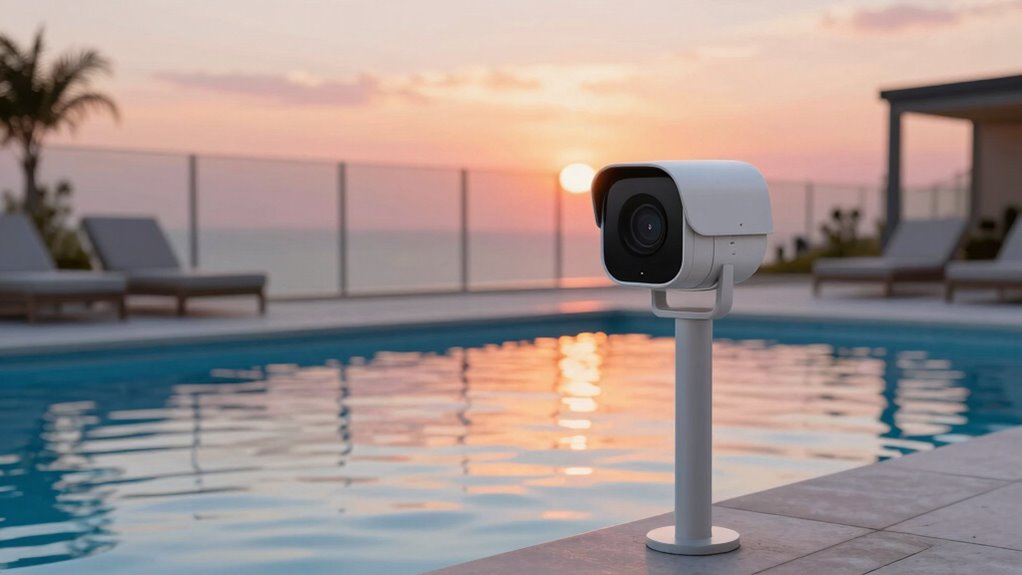
AI pool safety camera with privacy features
As an affiliate, we earn on qualifying purchases.
As an affiliate, we earn on qualifying purchases.
Frequently Asked Questions
Who Owns the Footage Captured by AI Safety Cameras?
You typically own the footage captured by AI safety cameras if you installed them on your property, but data ownership can vary based on local laws and agreements. For pool security, it’s essential to understand who controls the data and how it’s used. In some cases, the camera provider or third parties may claim rights over the footage, so always review your privacy policies and clarify ownership rights to protect your interests.
Can AI Cameras Be Considered an Invasion of Privacy?
Sure, AI cameras with facial recognition seem like the pinnacle of privacy invasion, right? They constantly watch, raising serious surveillance ethics concerns. While they can enhance safety, you might wonder if they cross the line into unwanted scrutiny. If you’re uncomfortable with such invasive monitoring around pools, you’re not alone—these cameras blur the line between protecting and invading, making privacy questions unavoidable in this high-tech age.
Are There Specific Laws Regulating AI Monitoring Around Private Pools?
Yes, there are specific laws regulating AI monitoring around private pools, mainly focusing on privacy concerns. You need to check local and state regulations, as some areas have strict rules about surveillance and data collection, especially involving artificial intelligence. These laws aim to protect your privacy rights while allowing safety measures. Make certain to stay informed about legal requirements to avoid potential violations and ensure responsible use of AI safety cameras.
How Long Can the Footage From AI Cameras Legally Be Stored?
Ever wonder how long your AI safety camera footage can stay stored? Typically, data retention policies limit storage to what’s necessary for safety or legal reasons, often around 30 to 90 days. But what about privacy implications? You should know that prolonged storage increases privacy risks, and laws may require deleting footage sooner to protect your privacy rights. Always check local regulations to ensure compliance and safeguard your privacy.
What Are the Liability Issues if an AI Camera Fails?
If an AI camera fails, you could face liability issues, especially if the malfunction leads to an accident. You should have liability insurance to cover potential damages and legal claims. A camera malfunction might be seen as negligence, so regularly maintaining and testing your safety cameras is essential. Being proactive helps protect you from liability, ensuring you’re covered if the technology doesn’t perform as expected.
pool safety camera with legal compliance
As an affiliate, we earn on qualifying purchases.
As an affiliate, we earn on qualifying purchases.
Conclusion
As you consider installing AI safety cameras around pools, remember they’re like a double-edged sword—offering safety but raising complex legal questions. You need to balance protecting loved ones with respecting privacy rights and legal boundaries. Just like a tightrope walker, you must navigate carefully to avoid falling into legal pitfalls. Staying informed and seeking legal advice guarantees you can keep everyone safe without crossing any lines. Ultimately, responsibility is yours to take, like a captain steering through uncertain waters.
waterproof AI surveillance camera for pools
As an affiliate, we earn on qualifying purchases.
As an affiliate, we earn on qualifying purchases.
home pool security camera system
As an affiliate, we earn on qualifying purchases.
As an affiliate, we earn on qualifying purchases.
Fall Picks
fall essentials
As an affiliate, we earn on qualifying purchases.