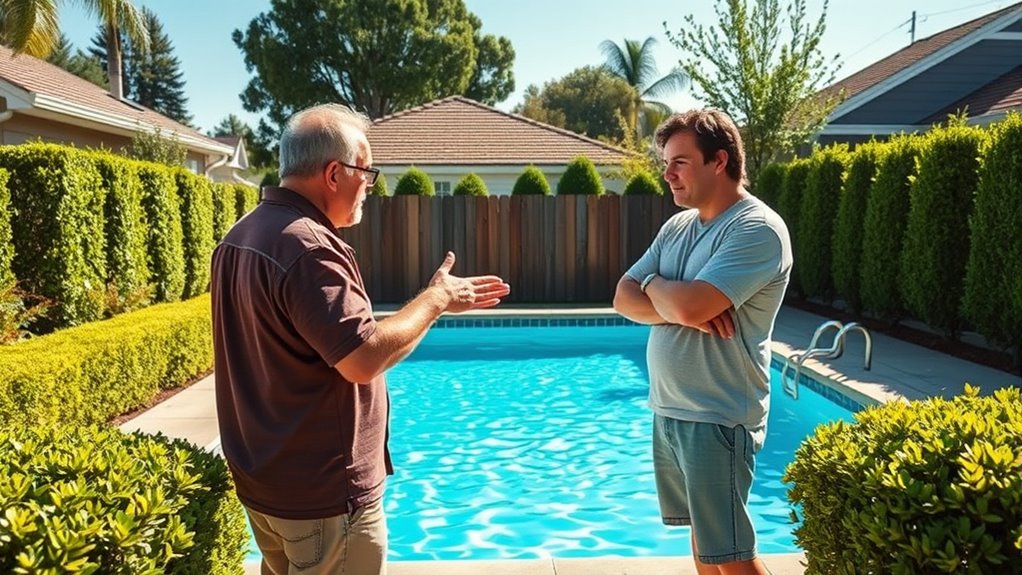

If you’re dealing with neighbor issues over pools, start by reviewing local safety laws and fencing regulations. Approach your neighbor calmly and respectfully, focusing on safety concerns like fencing height or gaps, and suggest practical solutions such as compliant fencing or covers. If they’re unresponsive, consider involving local authorities or community resources to mediate. Keeping detailed records helps prevent escalation. To learn how to handle these situations effectively, you’ll find useful steps for maintaining good neighbor relations below.
Key Takeaways
- Address pool-related disputes promptly through calm, respectful communication focused on safety and regulatory compliance.
- Review local fencing laws and safety standards to inform discussions and ensure legal adherence.
- Document issues and communications to support future resolution efforts or legal considerations.
- Involve community authorities or homeowners’ associations if neighbors are unresponsive or problems persist.
- Prioritize collaborative solutions that balance property rights with safety, fostering positive neighbor relationships.

When disagreements arise over shared neighbor pools, addressing the issue promptly and constructively is vital to maintaining good relationships. These conflicts often center around concerns like pool safety and fencing regulations, which are essential for preventing accidents and ensuring everyone’s peace of mind. If you notice that your neighbor’s pool setup doesn’t meet safety standards or fencing requirements, it’s natural to feel worried. However, approaching the situation calmly and with a focus on cooperation can make all the difference. Start by reviewing local pool safety laws and fencing regulations so you’re informed before discussing your concerns. Knowing the legal standards helps you communicate clearly and avoid misunderstandings.
When talking to your neighbor, be respectful and straightforward. Emphasize that your goal is to ensure safety for everyone involved, not to criticize or create conflict. Mention specific issues, such as whether the pool has proper fencing that meets height and gate requirements, or if there are gaps that could pose a risk to children or pets. Highlighting these concerns with facts and a friendly tone encourages your neighbor to take proactive steps without feeling defensive. Sometimes, fencing regulations are overlooked, especially if the pool is older or recently installed. Offering suggestions, like installing compliant fencing or adding safety covers, can facilitate positive solutions.
If your neighbor isn’t responsive or the problem persists, consider consulting local authorities or your homeowners’ association for guidance. Many communities have specific rules and resources to help enforce pool safety and fencing regulations. These organizations can mediate or recommend appropriate actions, such as inspections or notices to bring the pool setup into compliance. Remember, the goal is not to punish but to guarantee everyone’s safety and comfort.
It’s also wise to document any issues or communications. Taking photos or keeping records of your conversations can be helpful if disputes escalate or if legal action becomes necessary. Keep in mind that resolving neighbor pool issues is about balancing your right to safe surroundings with your neighbor’s right to enjoy their property. Approaching the matter with patience and a willingness to collaborate often results in better outcomes than confrontation. Ultimately, addressing concerns about pool safety and fencing regulations early on helps prevent accidents and preserves the friendly neighborly relationship you want to maintain.

B00BIKTISG
As an affiliate, we earn on qualifying purchases.
As an affiliate, we earn on qualifying purchases.
Frequently Asked Questions
Can Neighbors Legally Remove Pool Water to Resolve Disputes?
You can’t legally remove pool water to resolve disputes, as it violates neighbor water rights. Pool water removal without permission can be seen as wasteful or destructive, leading to legal issues. Instead, you should communicate openly with your neighbor or seek mediation. Respecting water rights guarantees a peaceful resolution. Taking unilateral action like pool water removal risks escalating conflicts and possible legal consequences.
What Are the Legal Rights if a Neighbor’s Pool Overflows Onto My Property?
If your neighbor’s pool overflows onto your property, you have the right to seek compensation for property damage caused by the excess water. You should notify your neighbor about the issue and document the damage. Legally, they’re responsible for managing their pool water rights to prevent overflow. If unresolved, you can pursue legal action to recover damages, ensuring your property stays protected from water-related harm.
How Long Does It Typically Take to Resolve Pool Disputes Legally?
Typically, resolving pool disputes takes time, often spanning from a few weeks to several months, depending on the difficulty and diligence involved. During this delay, liability timelines linger, and legal proceedings can prolong the process. You can consider mediation options to hasten harmony and help parties promptly reach a resolution. Mediation’s manageable meetings may minimize misunderstandings, making the process more manageable and moving disputes more swiftly toward settlement.
Are There Specific Regulations for Pool Fencing to Prevent Disputes?
Yes, there are specific fence regulations and safety standards you need to follow to prevent disputes. Local laws often require a certain height, material, and secure gates around pools to ensure safety and compliance. You should check your city or county codes, as they set these standards. Adhering to proper fence regulations and safety standards helps you avoid neighbor conflicts, ensures safety, and keeps your pool area legally compliant.
What Evidence Should I Gather for a Dispute Over Pool Maintenance Issues?
Imagine turning a minor concern into a clear case by gathering solid evidence. For pool maintenance disputes, collect photos of the pool’s condition, dates of maintenance work, and any communication with your neighbor or service providers. Keep records of invoices, receipts, and times when issues arose. This evidence collection helps demonstrate your efforts and clarifies responsibilities, making it easier to resolve disputes amicably and efficiently.

VEVOR Inground Pool Safety Cover 18' x 36' Rectangle with 4x8ft Center End Step, Safety Pool Covers Green Mesh, Triple Stitched, MAX Strength Winter Safety Cover for Children & Pets
1.VEVOR Inground Pool Safety Cover – Winter Pool Care Made Easy: Pool Cover Size: 20×38 ft, Suitable Pool…
As an affiliate, we earn on qualifying purchases.
As an affiliate, we earn on qualifying purchases.
Conclusion
Maneuvering disputes over neighbor pools can feel as challenging as walking a tightrope. But by communicating openly, respecting boundaries, and seeking compromise, you can resolve issues smoothly. Remember, a good relationship is like a well-maintained pool—clear, calm, and invigorating. Taking proactive steps ensures you preserve that harmony, making summer days enjoyable for everyone. So, stay patient and cooperative; after all, peaceful coexistence is the true fountain of community happiness.
B00BIKTISG
As an affiliate, we earn on qualifying purchases.
As an affiliate, we earn on qualifying purchases.

VEVOR Pool Fence Gate, 4 x 2.5 ft Inground Swimming Pool Fences Gate, Outdoor Security Fencing Door Kit with Metal Latch and Stopper, 352 GSM Teslin PVC Mesh, Square Tube, Easy Installation, Black
Safer Locking Solution for Pools: Our pool fence gate (size: 4 x 2.5 ft / 1.2 x 0.75…
As an affiliate, we earn on qualifying purchases.
As an affiliate, we earn on qualifying purchases.