
As a landlord, you should never guess about essential pool rules that guarantee safety and prevent issues. Clearly outline who can access the pool, enforce supervision, and specify hours of use. Include safety gear requirements and prohibited activities like glass containers and diving. Make certain tenants know how to report hazards and understand their responsibilities for maintenance. If you’re interested in creating detailed, enforceable guidelines, continue exploring what best practices can protect your property and tenants alike.

Get pool and patio gear delivered free with Prime
- Fast, free delivery on millions of items
- Prime Video, Amazon Music and more included
- Member-only deals all year
Key Takeaways
- Clearly specify who is authorized to access the pool and under what conditions.
- Define specific hours of operation to prevent disturbances and ensure safety.
- Outline mandatory safety equipment requirements, such as life vests and non-slip footwear.
- Establish procedures for reporting damages, hazards, or rule violations promptly.
- Enforce prohibitions on activities like diving, glass containers, and roughhousing consistently.
Having clear pool rules is vital to guarantee safety and enjoyment for everyone in your rental property. When you establish specific guidelines, you reduce the chances of accidents and misunderstandings, making sure tenants know exactly what’s expected. One of the first steps is to implement a thorough tenant screening process. By conducting diligent tenant screening, you can identify responsible individuals who are more likely to follow the rules and respect the property. Screening helps you select tenants who understand the importance of safety and are less likely to cause issues around pool use, such as reckless behavior or neglecting maintenance responsibilities.
Thorough tenant screening ensures responsible pool use and reduces safety risks at your rental property.
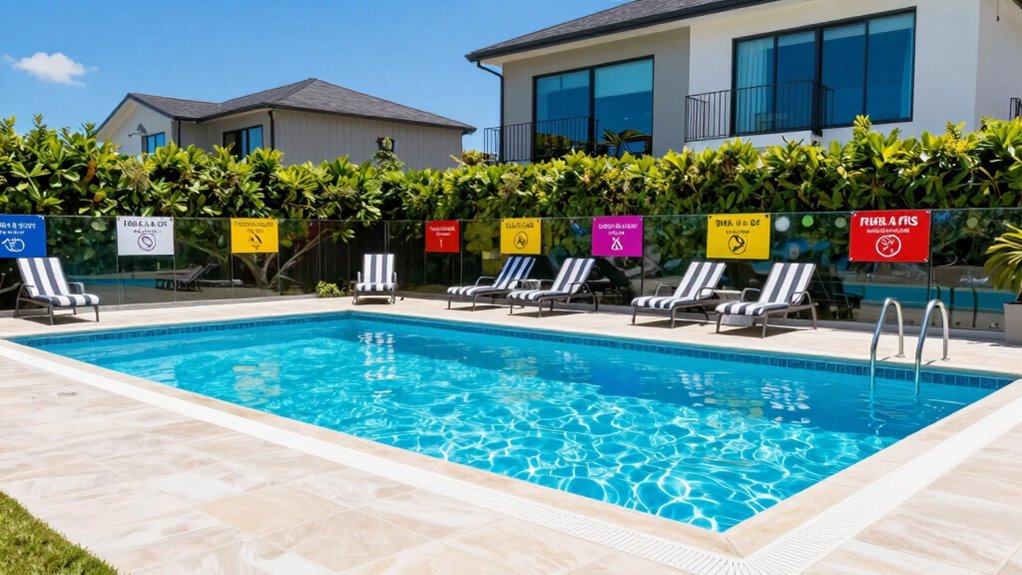
Clear rules should cover who can use the pool, at what times, and under what conditions. You might specify that only tenants and their approved guests are allowed, and establish hours when pool use is permitted to prevent disturbances late at night. You should also emphasize the importance of supervising children at all times, as drownings and pool accidents often happen when vigilance lapses. It’s essential to set expectations about safety gear, like requiring the use of life vests for young children or non-slip footwear to prevent falls. Maintaining a safe environment also involves understanding pool safety protocols, which are critical for preventing accidents. Additionally, providing tenants with written copies of safety guidelines can reinforce proper behavior and awareness. Regularly reviewing these rules with tenants helps ensure everyone remains informed and responsible. Developing a comprehensive safety plan can further enhance overall pool safety and preparedness. Ensuring tenants are aware of local safety regulations creates a safer environment and helps prevent liability issues.
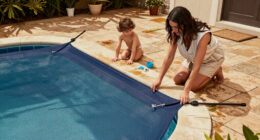
Another key aspect is addressing maintenance responsibilities. You need to clearly communicate who is responsible for routine cleaning, chemical balancing, and minor repairs. Typically, as the landlord, you’ll handle major maintenance, but tenants should be aware of their role in keeping the pool clean and reporting any issues promptly. For example, instruct tenants to rinse off before entering the pool and to avoid bringing debris or trash into the water. You should also specify procedures for reporting problems, such as damaged pool equipment or safety hazards, so that repairs can be completed swiftly. Establishing a clear communication channel helps ensure issues are addressed quickly and efficiently.
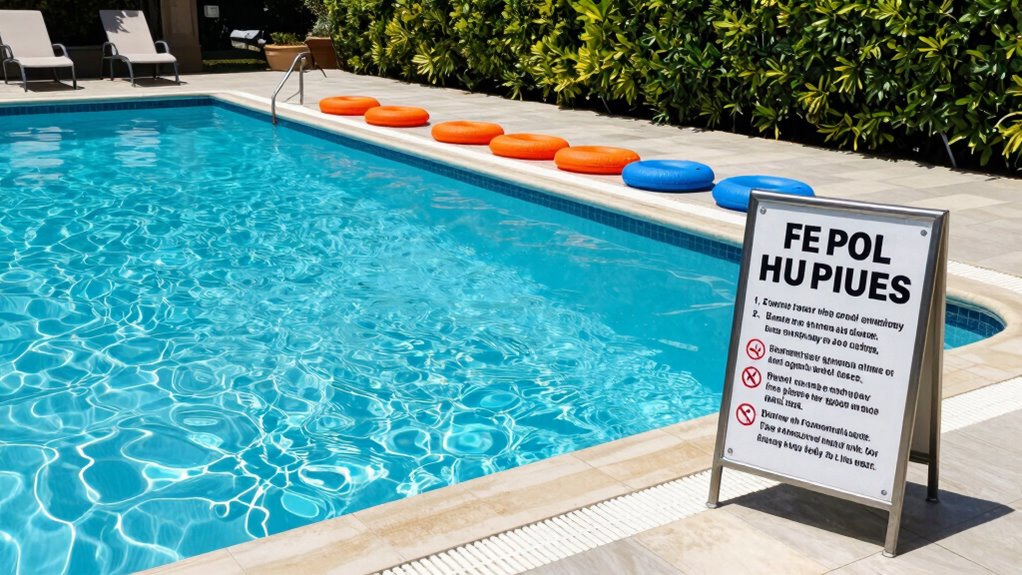
Setting rules about prohibited activities is equally important. You might restrict glass containers around the pool to prevent breakage, prohibit diving in shallow areas, and ban any form of roughhousing that could lead to injury. These rules not only protect tenants but also safeguard your property from damage and costly repairs, which fall under your maintenance responsibilities. Regularly reviewing and reinforcing these rules with tenants ensures everyone remains aware and responsible. Incorporating consistent enforcement of these rules can significantly reduce potential hazards and liabilities.
As an affiliate, we earn on qualifying purchases.
Frequently Asked Questions
Can Tenants Use the Pool During Private Events?
Tenants generally can’t use the pool during private events unless your rental agreement explicitly permits it. You should specify pool safety rules and restrictions in the rental agreement to prevent misunderstandings. Make certain to communicate that private events may require prior approval and outline safety protocols to protect everyone. Clear rules help avoid liability issues and ensure tenants understand when and how they can safely enjoy the pool during private gatherings.
Are There Age Restrictions for Pool Access?
Yes, there are age restrictions for pool access, and ignoring them could lead to chaos like a toddler tsunami! For safety and water temperature, most pools restrict access to children under a certain age without adult supervision. Pool safety is paramount, and you want to prevent any water temperature mishaps or accidents. Make sure you check your property’s specific rules, so everyone stays safe and happy, from tiny tots to grown-up swimmers.
Who Handles Pool Maintenance and Repairs?
You handle pool maintenance and repairs, guaranteeing safety and cleanliness. It’s your responsibility to keep the pool in good condition, addressing any issues promptly to maintain pool safety for tenants. Clear maintenance responsibilities in your rental agreement help prevent confusion. Regular inspections, cleaning, and prompt repairs are essential for safety and compliance. By staying proactive, you assure the pool remains a safe, enjoyable amenity for your tenants, reducing liability risks.
What Are the Guest Policies for Pool Use?
Think of your pool as a guarded treasure, where pool safety and guest restrictions keep everyone secure. You should clearly specify who can swim, limit the number of guests, and set hours for pool use. Require guests to follow safety rules like no diving or running. By establishing these guest policies, you protect your property and guarantee a safe, enjoyable experience for everyone, just like a vigilant guardian.
Is Liability Insurance Required for Pool Injuries?
Yes, liability insurance is usually required for pool injuries. It helps protect you if someone gets hurt while using the pool. You should also enforce pool safety rules and require guests to sign liability waivers, which can reduce your legal risk. Regularly inspecting your pool and ensuring safety equipment is available are key steps. These measures help safeguard your property and give you peace of mind during pool use.
As an affiliate, we earn on qualifying purchases.
Conclusion
Staying informed about rental property pool rules helps you avoid surprises and keeps everything running smoothly. When you know the ins and outs, you’re better equipped to handle issues before they escalate. Remember, it’s better to be safe than sorry—like having all your ducks in a row. Clear rules and open communication create a hassle-free environment for everyone involved. Don’t leave things to chance; plan ahead and keep your rental pool in top shape.
As an affiliate, we earn on qualifying purchases.
As an affiliate, we earn on qualifying purchases.
Halloween Picks
halloween
As an affiliate, we earn on qualifying purchases.