
TL;DR
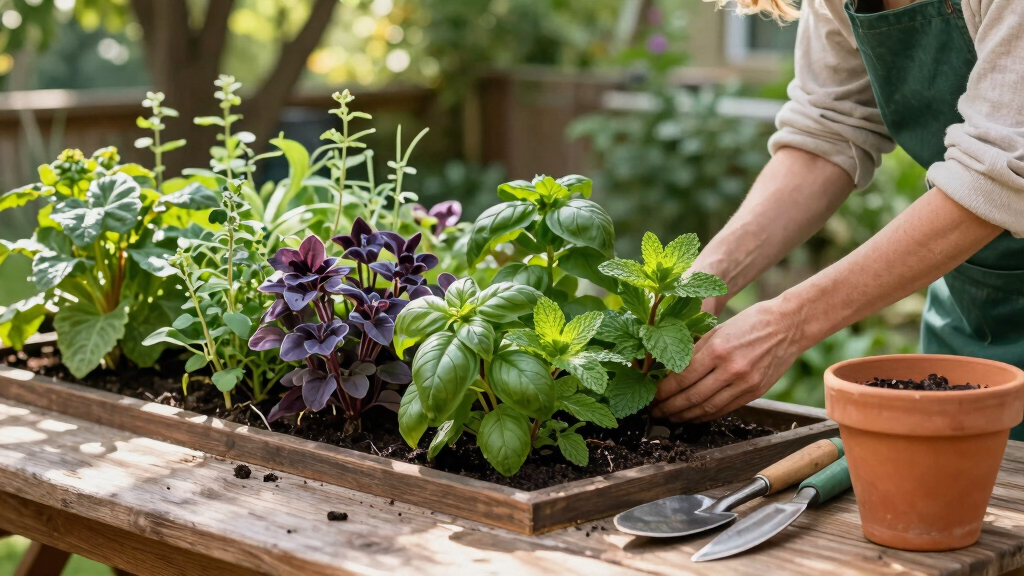
Scientists have discovered that grouping plants by scent, rather than just proximity, significantly improves pest control in companion planting. This breakthrough could change gardening practices.
Scientists have confirmed that the effectiveness of companion planting in pest control is significantly enhanced by a technique called scent clustering, where plants with complementary scents are grouped together. This discovery challenges the common assumption that simply planting certain species nearby is sufficient, and highlights the importance of scent interactions in pest deterrence.

Get pool and patio gear delivered free with Prime
- Fast, free delivery on millions of items
- Prime Video, Amazon Music and more included
- Member-only deals all year
Researchers from the Agricultural Science Institute conducted a series of controlled experiments comparing traditional companion planting with scent clustering strategies. They found that pest populations, including aphids and beetles, were markedly reduced in plots where plants with synergistic scent profiles were grouped together, compared to standard planting arrangements.
According to lead researcher Dr. Emily Carter, “Our findings demonstrate that scent interactions play a crucial role in pest deterrence, and that gardeners can significantly improve pest control outcomes by intentionally clustering plants with complementary scents.” The study specifically identified certain scent combinations, such as basil and marigold, that produce a stronger repellent effect when clustered.
Implications for Organic Gardening and Pest Management
This discovery matters because it offers a practical, science-backed method for gardeners and farmers to enhance natural pest control without relying on chemical pesticides. By applying scent clustering, they can potentially reduce pest damage, improve crop yields, and promote sustainable gardening practices. The technique could lead to new guidelines for planting arrangements that maximize pest deterrence through scent interactions.
Products Worth Considering

Levoit Vital Pet Pro Smart Air Purifier

LG 77-Inch OLED evo C5 Series Smart TV (2025)

Hisense 85U6SF Pro 85-Inch U6 Pro Mini-LED 4K UHD Smart Fire TV
As an affiliate, we earn on qualifying purchases.
Previous Understanding of Companion Planting Limitations
Traditional companion planting relies on the proximity of certain plants believed to repel pests or attract beneficial insects. However, its effectiveness has often been inconsistent, leading some to dismiss it as unreliable. Prior studies focused mainly on physical proximity and plant interactions, with little emphasis on the chemical signals involved. The recent research shifts this perspective by emphasizing the importance of scent interactions, or scent clustering, in pest management.
“Our experiments clearly show that grouping plants by scent profiles can dramatically increase their pest-repellent effects, beyond what proximity alone can achieve.”
— Dr. Emily Carter
Unanswered Questions About Scent Clustering Application
While the initial results are promising, it remains unclear how easily gardeners can implement scent clustering in diverse environments, or how long the effects last over different growing seasons. Further research is needed to determine specific plant combinations and optimal clustering methods for various crops and climate zones. Additionally, the long-term impact on pest populations and beneficial insects is still being studied.
Next Steps for Researchers and Gardeners
Researchers plan to conduct field trials across different regions to validate scent clustering techniques in real-world settings. Meanwhile, gardening experts and extension services are expected to develop practical guidelines and tools to help gardeners apply these findings. Further studies will explore the chemical mechanisms behind scent interactions and identify the most effective plant combinations for pest control.
Key Questions
What is scent clustering in gardening?
Scent clustering involves grouping plants with complementary or synergistic scents to enhance their natural pest-repellent effects, rather than just planting them close together.
Can scent clustering replace chemical pesticides?
While promising, scent clustering is an emerging technique that can reduce reliance on chemicals but may not fully replace conventional pest control methods in all situations.
Which plants are best for scent clustering?
Research has identified combinations like basil and marigold as effective, but more studies are underway to determine the most beneficial pairings for various crops.
How difficult is it to implement scent clustering in a home garden?
Implementation involves grouping plants with compatible scents, which can be straightforward with guidance from upcoming practical resources and guidelines.
Will scent clustering work in all climates?
The effectiveness may vary depending on local climate and soil conditions; ongoing research aims to tailor recommendations for different regions.
Source: rss