
To control pests around pools, regularly manage standing water by removing debris, fallen leaves, and other attractants. Use larvicides or mosquito dunks to target larvae, and keep water moving with pumps or aerators. Inspect your yard for hidden breeding sites like plant saucers, gutters, and buckets, and eliminate them. Installing screens and sealing gaps blocks wildlife entry. Continuing with these steps helps create a pest-free environment, and you’ll discover more effective tips as you go along.

Get pool and patio gear delivered free with Prime
- Fast, free delivery on millions of items
- Prime Video, Amazon Music and more included
- Member-only deals all year
Key Takeaways
- Regularly remove debris, fallen leaves, and algae from the pond to eliminate insect breeding habitats.
- Use chemical treatments like larvicides and mosquito dunks to target larvae without harming pools or the environment.
- Inspect and eliminate standing water in plant saucers, gutters, and containers to prevent insect and wildlife attractants.
- Install screens and seal gaps in fencing to prevent wildlife intrusion around pool areas.
- Maintain proper water flow with pumps or aerators and perform routine yard inspections for new breeding sites.

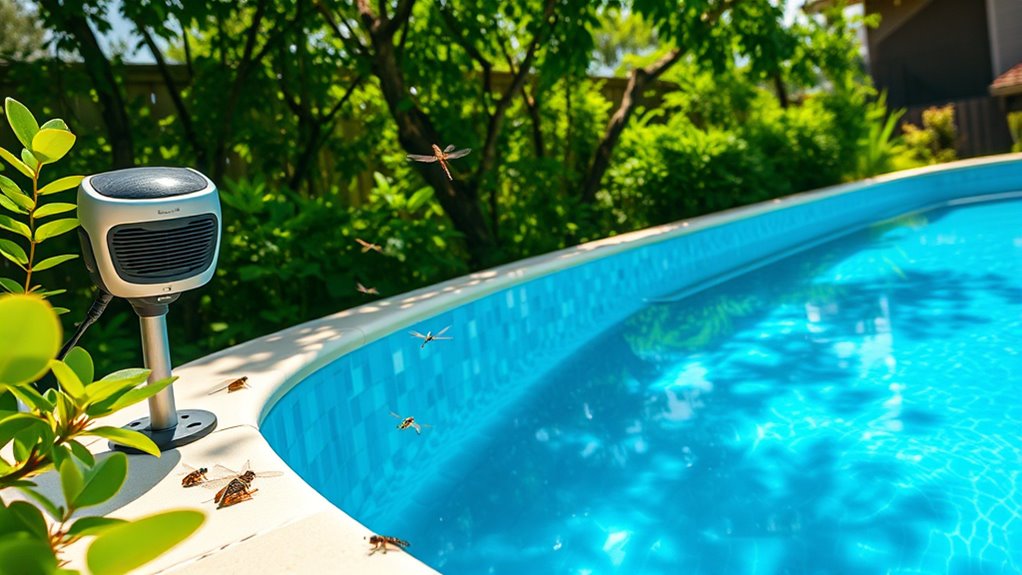
Keeping pests away from your pool area is vital for enjoying a clean, safe, and pest-free environment. One of the most common issues you’ll face involves insects and wildlife that are attracted to water sources or nearby natural habitats. To prevent these unwelcome visitors, it’s important to understand how pond maintenance and chemical treatments can play a role in pest control. Pests like mosquitoes thrive in stagnant water, so regular pond maintenance is essential. Removing debris, fallen leaves, and algae from any nearby pond or water feature reduces breeding grounds for mosquitoes and other insects. Keeping the water moving with pumps or aerators also discourages pest larvae from settling in. When pond maintenance is neglected, standing water becomes a haven for pests, increasing the risk of bites and the spread of diseases.
Chemical treatments can complement pond maintenance efforts by targeting pest populations directly. Applying larvicides or mosquito dunks in standing water around your pool area disrupts the breeding cycle of mosquitoes without harming your pool or the environment. These treatments are effective, quick to apply, and help break the mosquito life cycle at the larval stage, markedly reducing adult mosquito populations. However, always follow manufacturer instructions carefully to avoid any chemical runoff into your pool or garden. When used properly, chemical treatments are a safe and efficient way to keep pest populations under control, especially during peak breeding seasons.
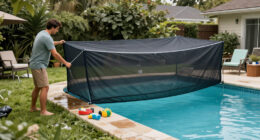
Beyond water management, you should also focus on eliminating other attractants. Regularly inspect your yard for standing water in plant saucers, buckets, or clogged gutters, as these can also serve as breeding sites for insects. Installing screens on pool vents and sealing any gaps in fencing can prevent wildlife, like raccoons or rodents, from wandering into your pool area. These animals often seek water and may introduce pests or disease when they come into contact with your pool or surrounding environment.
mosquito larvicide dunks for standing water
As an affiliate, we earn on qualifying purchases.
As an affiliate, we earn on qualifying purchases.
Frequently Asked Questions
How Do I Prevent Mosquitoes From Breeding Around My Pool?
To prevent mosquitoes from breeding around your pool, eliminate standing water where they lay eggs, like puddles or clogged drains. Regularly clean and empty any containers holding water, and keep your pool covered when not in use. Use natural repellents, like citronella candles or plant mosquito-repelling herbs nearby. These steps reduce mosquito breeding sites and keep pests at bay, making your pool area safer and more enjoyable.
Are Certain Insecticides Safe for Poolside Use?
Think of insecticide safety like walking a tightrope—you want effectiveness without tipping into danger. Certain insecticides are formulated for poolside chemical use, making them safe when instructions are followed carefully. Always choose products labeled for use around pools, and avoid spraying directly into the water. By selecting the right insecticide and using it responsibly, you protect both your pool’s environment and your family’s health.
What Wildlife Is Most Attracted to Pool Areas?
You’ll notice native bird species are often attracted to pool areas for water and insects, while raccoon activity increases around pools due to their curiosity and access to water sources. These animals seek food and hydration, so keeping your pool area clean and secure can help reduce their visits. Installing barriers or deterrents can also discourage raccoons and other wildlife, making your pool safer and less inviting to unwanted guests.
How Can I Protect My Pets From Poolside Pests?
To protect your pets from poolside pests, prioritize pet safety by keeping them away from insect-prone areas. Use pest proofing tips like removing standing water, sealing trash cans, and installing screens around your pool. Regularly inspect for pests and clean up food or debris that attract wildlife. Keep your pets supervised near the pool, and consider natural repellents safe for animals to reduce pest activity, ensuring a safe and enjoyable poolside environment.
When Should I Schedule Professional Pest Control Services?
You should schedule professional pest control services before peak seasonal pest patterns begin, typically in early spring or late summer. Regular pest control scheduling helps manage insects and wildlife around your pool effectively. By staying ahead of pest activity, you protect your pets and maintain a clean, safe environment. Don’t wait until pests become a problem—timely treatment keeps your pool area enjoyable and pest-free year-round.
pool insect screens and gap seals
As an affiliate, we earn on qualifying purchases.
As an affiliate, we earn on qualifying purchases.
Conclusion
So, next time you’re lounging poolside, remember that your quest for a bug-free oasis isn’t just about comfort—it’s a noble battle against nature’s tiniest invaders. With the right pest control tactics, you’ll keep those uninvited winged guests at bay, proving once and for all that you’re the true master of your domain. After all, a pristine pool should be a sanctuary, not a wildlife refuge for the six-legged and winged—unless, of course, you’re into that sort of thing.
As an affiliate, we earn on qualifying purchases.
As an affiliate, we earn on qualifying purchases.
Fall Picks
fall essentials
As an affiliate, we earn on qualifying purchases.