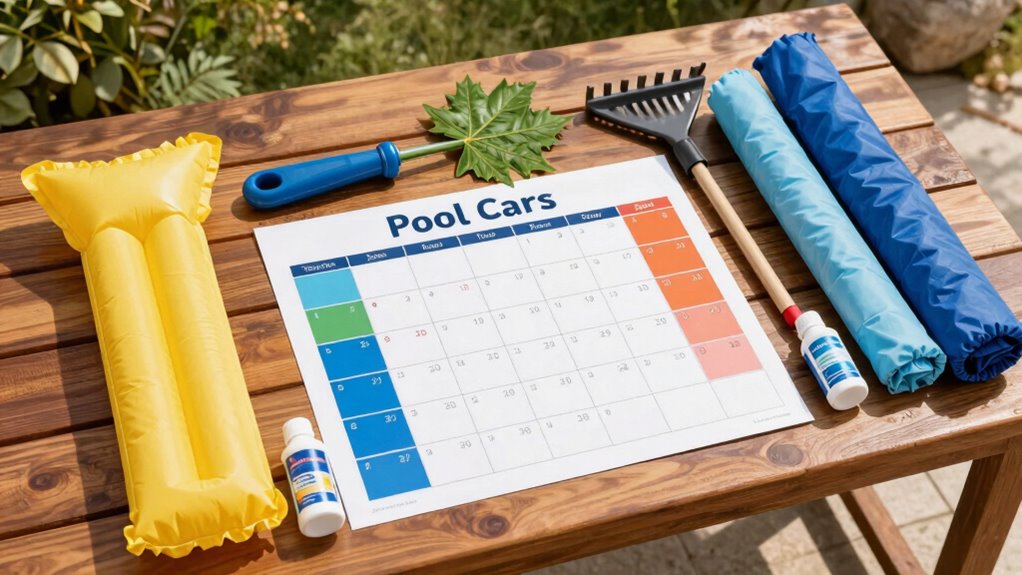
To build a smarter pool care calendar for all four seasons, schedule weekly chemical testing and adjustments during peak months to prevent imbalances. In colder months, test bi-weekly or monthly to protect your equipment and water quality. Align equipment inspections with water tests for efficiency, and keep detailed records. Incorporate eco-friendly practices to reduce chemical use and support the environment. Keep a flexible, well-organized plan—your pool will thank you as you uncover more effective strategies.

Get pool and patio gear delivered free — and shop member deals
- Fast, free delivery on millions of items
- Access to Prime Big Deal Days deals on October 6–7
- Prime Video, Amazon Music and more included
Key Takeaways
- Align chemical testing and equipment inspections with seasonal water temperature and usage changes for optimal maintenance.
- Increase testing frequency during peak season and reduce it in winter to maintain water stability efficiently.
- Schedule equipment checks alongside water testing to prevent blockages and ensure system longevity.
- Use a well-organized calendar to track routine tasks, adjusting schedules based on seasonal needs.
- Incorporate sustainable practices, such as minimizing chemical use, to promote eco-friendly pool maintenance year-round.
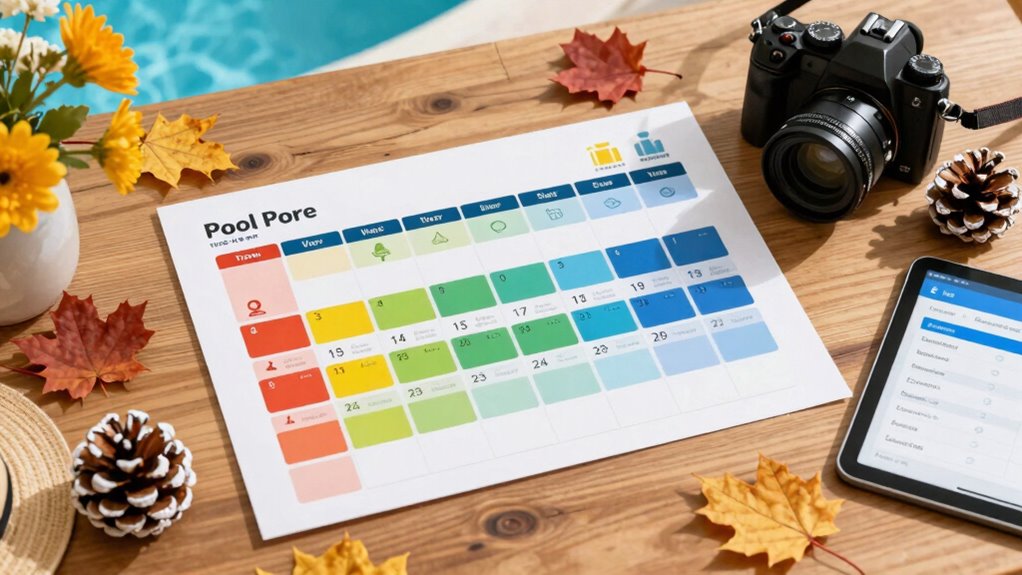
Keeping your pool crystal clear requires more than occasional maintenance; it demands a well-organized plan. A smart pool care calendar helps you stay on top of routine tasks, guaranteeing your pool remains inviting all year round. To build an effective schedule, start by understanding the significance of maintaining proper pool chemical balance. Regularly testing your water’s pH, alkalinity, and chlorine levels prevents algae growth, cloudy water, and equipment damage. During the warmer months, you might need to check these levels weekly, especially if you’re swimming often or experiencing heavy rain. In colder seasons, testing every couple of weeks may suffice, but don’t skip it entirely. You want to avoid swings in chemical levels that can strain your equipment and compromise water quality. Proper water testing is essential for safe and effective pool maintenance. Incorporating biodiversity considerations can also help you adopt more sustainable practices that support local ecosystems and reduce chemical usage.
Regularly test pH, alkalinity, and chlorine to keep your pool balanced and prevent issues year-round.
Alongside chemical management, equipment maintenance is vital for a well-functioning pool. Filters, pumps, and skimmers need regular inspection and cleaning to prevent blockages and ensure efficient operation. During peak swimming season, you might need to check and backwash filters weekly, while in winter, a bi-weekly or monthly check could be enough. Remember, neglecting equipment can lead to costly repairs or replacements down the line. Incorporate equipment checks into your calendar, aligning them with your chemical testing schedule for maximum efficiency. Additionally, understanding the water quality parameters helps you identify issues early and adapt your routine accordingly. Staying aware of water quality promotes proactive maintenance and helps you maintain optimal water conditions throughout the year.
As an affiliate, we earn on qualifying purchases.
Frequently Asked Questions
How Can I Adjust My Pool Care Schedule for Unexpected Weather Changes?
When weather unpredictability strikes, you should stay flexible with your pool care schedule. Check the forecast regularly and adjust your cleaning and chemical treatments accordingly. For unexpected cold snaps or storms, temporarily reduce chlorine levels and cover your pool if possible. Seasonal flexibility means staying attentive to changes, ensuring your pool stays clean and safe despite weather surprises, and preventing long-term damage or algae growth.
What Are the Best Tools to Automate Seasonal Pool Maintenance Reminders?
You should consider smart pool automation tools like pool chemical sensors and equipment maintenance apps. These tools send automated reminders for chemical levels and equipment checks, ensuring your pool stays pristine year-round. With digital alerts, you won’t miss essential tasks, and you can adjust for seasonal needs easily. Investing in these tools simplifies your pool care routine, helping you keep the water balanced and equipment running smoothly through every season.
How Often Should I Test Water Chemistry During Different Seasons?
You should test your water chemistry at least once a week during peak swimming season to maintain proper chemical balance. In colder months, testing every two to three weeks usually suffices, as water conditions change more slowly. Regular water testing helps you monitor pH, chlorine levels, and other chemicals, ensuring your pool stays safe and clear year-round. Adjust your testing frequency based on usage and weather conditions for best results.
Can I Customize My Pool Care Calendar for Specific Pool Types?
Yes, you can customize your pool care calendar based on your pool type. Different pool types, like saltwater or vinyl, require specific maintenance routines. By understanding your pool’s unique needs, you can tailor your maintenance schedule accordingly. This approach guarantees ideal water quality and equipment longevity. Adjust your tasks seasonally, focusing on specific chemicals or cleaning methods, to create a personalized, efficient pool care routine that fits your pool’s unique characteristics.
What Are Common Mistakes to Avoid in Seasonal Pool Maintenance?
You should avoid neglecting your pool cover, especially during off-season months, as it helps keep debris out and prevents algae growth. Don’t overlook algae prevention by ignoring proper chemical balance; unbalanced water encourages algae blooms. Also, avoid skipping regular inspections and maintenance, which can lead to costly repairs. Properly maintaining your pool cover and staying vigilant about algae prevention guarantees a cleaner, safer swimming environment year-round.
As an affiliate, we earn on qualifying purchases.
Conclusion
As you step back and survey your shimmering, crystal-clear pool through each season’s shifting light, you realize your smarter care calendar has transformed your backyard oasis into a sanctuary of effortless beauty. With every task timed perfectly—spring’s gentle blooms, summer’s sizzling days, fall’s rustling leaves, and winter’s quiet hush—you find peace in knowing your pool remains inviting year-round. Embrace this rhythm, and let your pool’s sparkling waters reflect the harmony of your well-tended haven.
As an affiliate, we earn on qualifying purchases.
As an affiliate, we earn on qualifying purchases.
Fall Picks
fall essentials
As an affiliate, we earn on qualifying purchases.