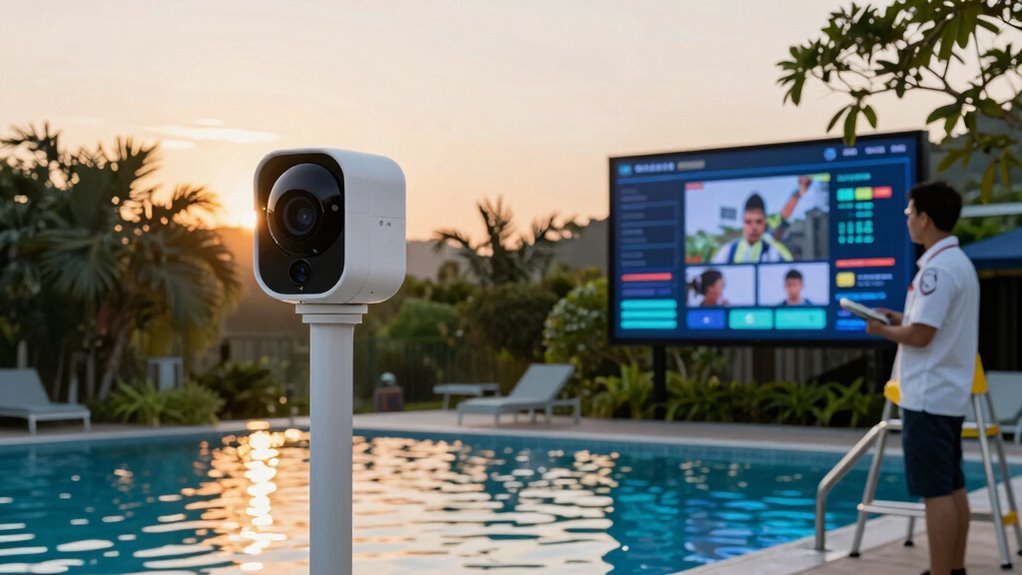

AI-based drowning detection fits into a bigger safety strategy by providing real-time alerts that help you respond quickly to emergencies. It works alongside traditional safety measures like signage, patrols, and safety equipment to create a layered approach. AI enhances your ability to monitor water environments continuously, reducing response times and preventing accidents. When integrated properly, it supports both proactive and reactive safety efforts. Keep exploring, and you’ll discover how all these elements come together for thorough water safety.
Key Takeaways
- AI enhances real-time monitoring and rapid response, strengthening overall water safety systems.
- It complements traditional methods like signage, patrols, and safety equipment for a layered safety approach.
- Proper staff training ensures effective interpretation and action upon AI alerts within emergency response protocols.
- Integration of AI requires robust data privacy measures to maintain public trust and compliance.
- Combining AI with environmental awareness and advanced sensors creates a comprehensive, adaptive water safety framework.
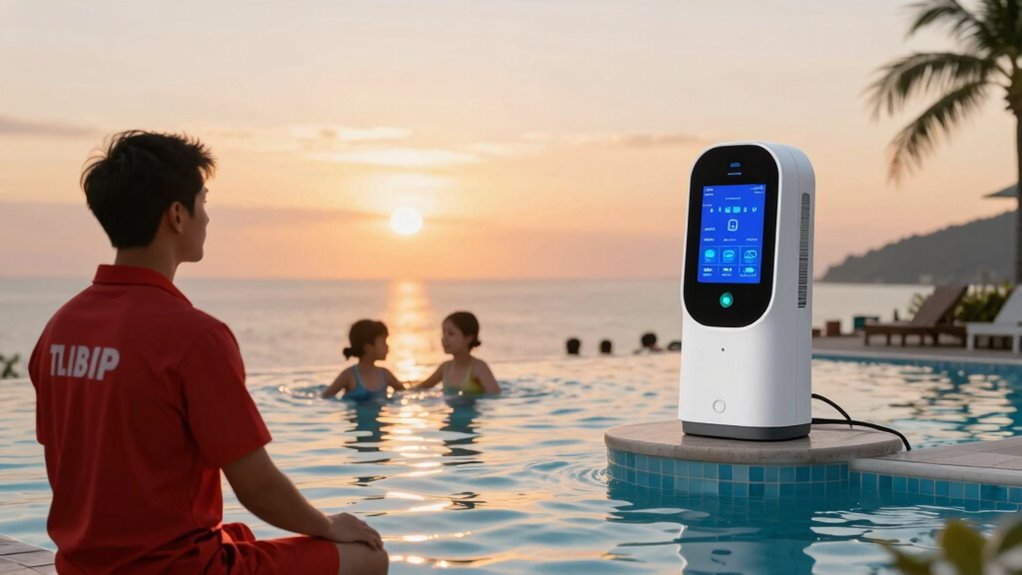
Have you ever wondered how technology can save lives in water safety? AI-based drowning detection systems are revolutionizing the way we protect swimmers, bathers, and beachgoers. These intelligent systems can identify distress signals or unusual movements in real-time, alerting lifeguards or emergency responders instantly. Instead of relying solely on human surveillance, which can be limited by fatigue or blind spots, AI enhances the speed and accuracy of emergency response. When a potential drowning is detected, immediate alerts are sent to trained personnel, reducing the precious seconds needed to initiate rescue efforts. This integration of AI into water safety strategies creates a proactive approach, allowing responders to act swiftly and effectively, ultimately saving more lives.
However, implementing AI-based drowning detection isn’t just about technology; it involves careful consideration of data privacy. These systems often collect and process video feeds or sensor data from various environments, raising concerns about how this information is stored, shared, and protected. As a user or administrator, you need to guarantee that robust data privacy measures are in place to prevent misuse or unauthorized access. Clear policies should govern who can view the data and how long it’s retained, aligning with privacy laws and ethical standards. When done correctly, data privacy becomes an integral part of the safety strategy, building trust among users and stakeholders while still leveraging the technology’s benefits.
Integrating AI-based drowning detection into a holistic safety plan involves more than just deploying sensors or cameras. It requires coordination between technology, personnel, and protocols. For example, AI alerts should seamlessly trigger emergency response procedures, ensuring quick and organized action. Staff must be trained to interpret AI notifications accurately and respond appropriately. Regular maintenance and system updates are vital to keep detection algorithms sharp and reliable, especially in changing environmental conditions. By embedding AI into existing safety frameworks, you ensure that technology complements human efforts rather than replacing them, creating a layered and resilient safety net. Additionally, understanding the importance of biodiversity in surrounding ecosystems can enhance safety measures by promoting environmental awareness and conservation efforts that indirectly support water safety initiatives. Furthermore, leveraging advanced sensors can improve detection capabilities in diverse aquatic environments. Incorporating data privacy practices into these systems is essential to maintain public trust and ensure compliance with legal standards, especially as data collection becomes more sophisticated. Emphasizing the role of training and education for staff ensures that human operators are prepared to respond effectively to AI alerts, maximizing the system’s safety benefits.
In the bigger picture, AI-based drowning detection fits into a broad safety strategy aimed at minimizing risk and maximizing response effectiveness. It acts as an extra set of eyes, continuously monitoring situations that might otherwise go unnoticed. When combined with traditional safety measures—like lifeguard patrols, signage, and safety equipment—it creates a multi-tiered approach that adapts to various scenarios. Ultimately, embracing AI in water safety underscores your commitment to innovation, rapid response, and protecting lives, all while maintaining responsible data practices and respecting privacy.
As an affiliate, we earn on qualifying purchases.
Frequently Asked Questions
How Does AI Detect Drowning in Real-Time?
AI detects drowning in real-time through behavior analysis and sensor integration. It monitors swimmer movements, recognizing signs like irregular breathing or struggling, and compares these patterns to safe swimming behaviors. Sensors embedded in pools or wearables collect data continuously. When AI identifies abnormal activity, it instantly alerts staff or lifeguards, enabling quick intervention. This proactive approach helps prevent accidents by providing immediate, accurate drowning detection.
What Are the Privacy Concerns With AI Surveillance?
Sure, AI surveillance might seem like Big Brother’s new best friend, but it raises serious privacy implications and data security concerns. You could be watched during every swim, with your personal data stored and possibly misused. This intrusive monitoring can compromise your privacy, making you question who’s watching and why. So, while drowning detection saves lives, it’s essential to balance safety with respecting individual rights and safeguarding data.
How Cost-Effective Is Implementing AI Drowning Detection?
Implementing AI drowning detection can be cost-effective if you analyze the cost versus safety benefits. A thorough cost analysis highlights potential savings from preventing accidents and reducing liability. However, you might face implementation challenges, such as integrating new technology with existing systems and training staff. Despite these hurdles, investing in AI can enhance safety, potentially lowering long-term costs and saving lives, making it a worthwhile addition to your safety strategy.
Can AI Differentiate Between Distressed Swimmers and Others?
Yes, AI can differentiate distressed swimmers from others through swimmer identification and behavior analysis. By analyzing movement patterns, facial expressions, and body language, AI systems detect signs of distress or struggle. These advanced techniques allow the technology to distinguish between normal activity and emergencies, reducing false alarms. With continuous learning, AI improves accuracy over time, providing swift alerts that enhance safety and guarantee quicker rescue responses.
What Are the Limitations of AI Drowning Detection Technology?
You should know that AI drowning detection technology has limitations, including ethical implications like privacy concerns and potential bias. False alarm mitigation remains a challenge, as false positives can cause unnecessary panic or response. Additionally, AI systems might struggle in poor visibility conditions or crowded environments. It’s important to use these tools alongside human oversight to guarantee safety, minimize errors, and address ethical considerations effectively.
water safety surveillance cameras
As an affiliate, we earn on qualifying purchases.
As an affiliate, we earn on qualifying purchases.
Conclusion
As you integrate AI-based drowning detection into your safety plan, you’re blending cutting-edge technology with essential human vigilance. Imagine a quiet poolside, where silent AI sensors watch tirelessly, while lifeguards remain alert and ready. This fusion of automation and human oversight creates a safer environment, like a watchful guardian and a vigilant companion working side by side. Together, they form a powerful shield, turning the formidable risk of drowning into a manageable, even preventable, threat.
lifeguard emergency alert system
As an affiliate, we earn on qualifying purchases.
As an affiliate, we earn on qualifying purchases.
As an affiliate, we earn on qualifying purchases.