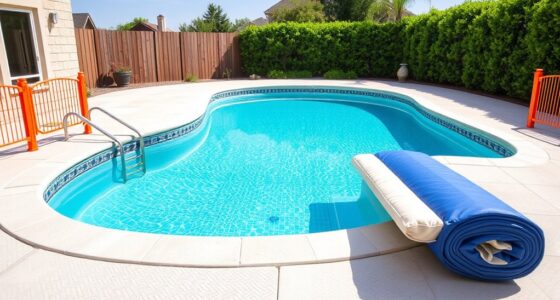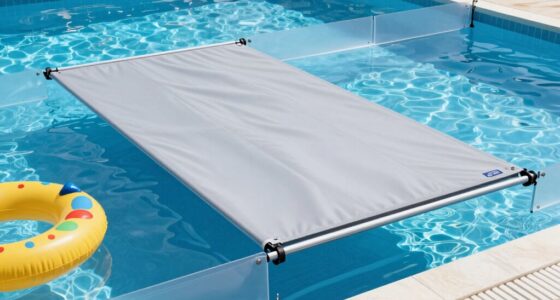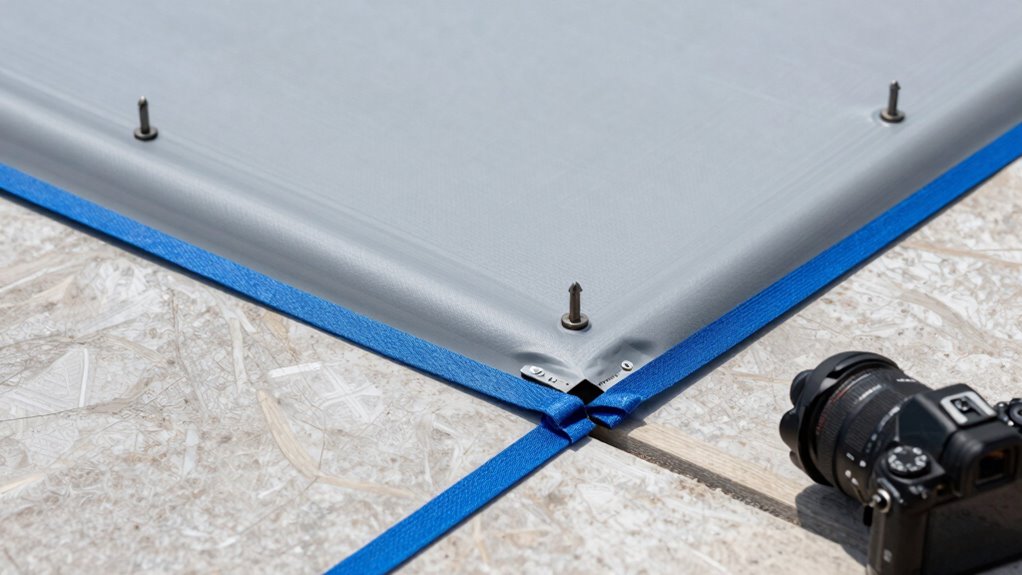
To measure for a safety cover like a pro, start by accurately measuring your pool’s length, width, and features such as steps and ladders, adding extra inches for weather and movement. Determine ideal anchor points based on your deck layout, ensuring they’re properly spaced and made from durable, corrosion-resistant materials. Measure strap overhang and angles carefully—aim for 30° to 45° for best tension—and plan seamless step cuts for safety. Keep learning tips to guarantee a secure, long-lasting fit.
Key Takeaways
- Measure pool dimensions at widest points with a sturdy tape, including steps and ladders, for accurate cover sizing.
- Mark precise anchor placement points considering deck layout, ensuring even spacing and secure attachment.
- Calculate strap overhang (3-6 inches) beyond the pool edge for secure fastening and debris prevention.
- Determine optimal strap angles (30°–45°) using tools like a carpenter’s square to ensure proper tension and support.
- Double-check all measurements, including step cuts, and verify anchor locations for a seamless, safe cover fit.

The Door Bull Brass Pool Cover Anchors for Concrete & Pavers Deck, Universal Size Fits 3/4" Hole, Ideal for Inground Pool Safety Covers, Durable & Easy to Install (5 Pack)
Keeps your pool area safe, won’t break even in a storm: 5-Pack of Heavy-duty pool cover anchors that…
As an affiliate, we earn on qualifying purchases.
As an affiliate, we earn on qualifying purchases.
Why Precise Measurement Is Critical for Your Pool Cover
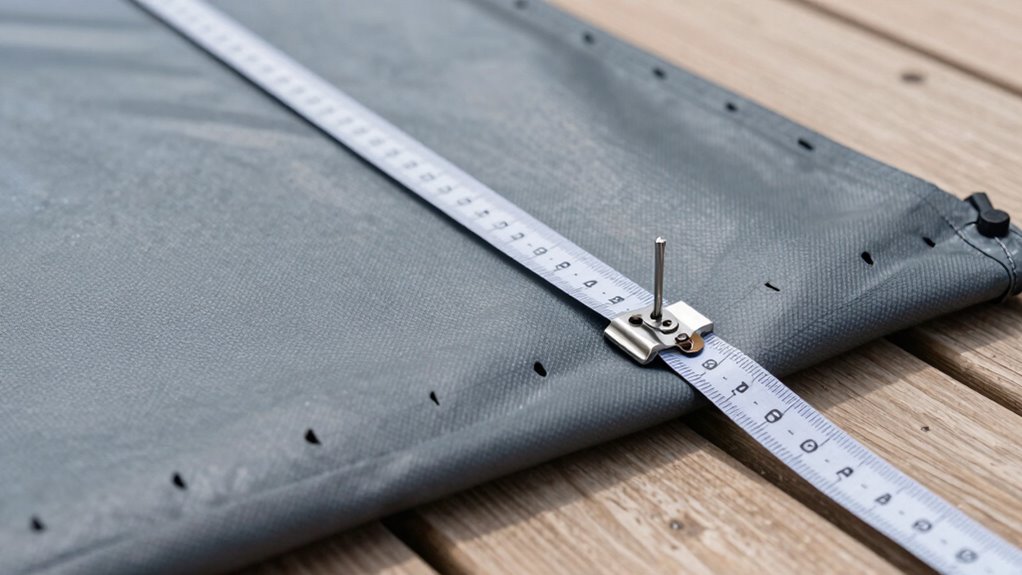
Accurate measurement is essential because a pool cover that doesn’t fit properly can compromise safety and durability. If your cover is too loose, it may shift or slip, exposing the pool and increasing the risk of accidents. Conversely, a cover that’s too tight can strain the material and anchors, leading to tears or damage over time. Proper measurements ensure the cover provides maximum pool safety by securely sealing the area, preventing debris entry, and reducing hazards. Additionally, a well-fitted cover maintains its durability, resisting wear from weather and frequent use. When you measure precisely, you’re investing in a cover that will perform reliably season after season, keeping your pool safe and extending the lifespan of your cover. Using proper protocols during measurement helps ensure all elements are accurately accounted for, resulting in a safer and more durable pool cover. Correct anchor placement is vital to prevent shifting and maintain the integrity of the cover over time. Moreover, understanding the importance of strap angles can help you optimize tension and stability across the cover’s surface. A thorough understanding of industry standards can further guide you to achieve the most effective and safe installation. Paying attention to installation details ensures your pool cover remains secure and functional for years to come.

8 Set Solar Cover Reel Attachment Kit, Solar Cover Reel Blanket Straps and Clips for Universal Inground Swimming Pool – Including 8 Adhesive Nylon Straps & Tabs, 8 Cord Plates, 8 Buckles
[ Universal Pool Cover Clips ] – Works Well On Solar Pool Covers From 10ft To 24ft In…
As an affiliate, we earn on qualifying purchases.
As an affiliate, we earn on qualifying purchases.
How to Measure Your Pool for a Perfect Fit
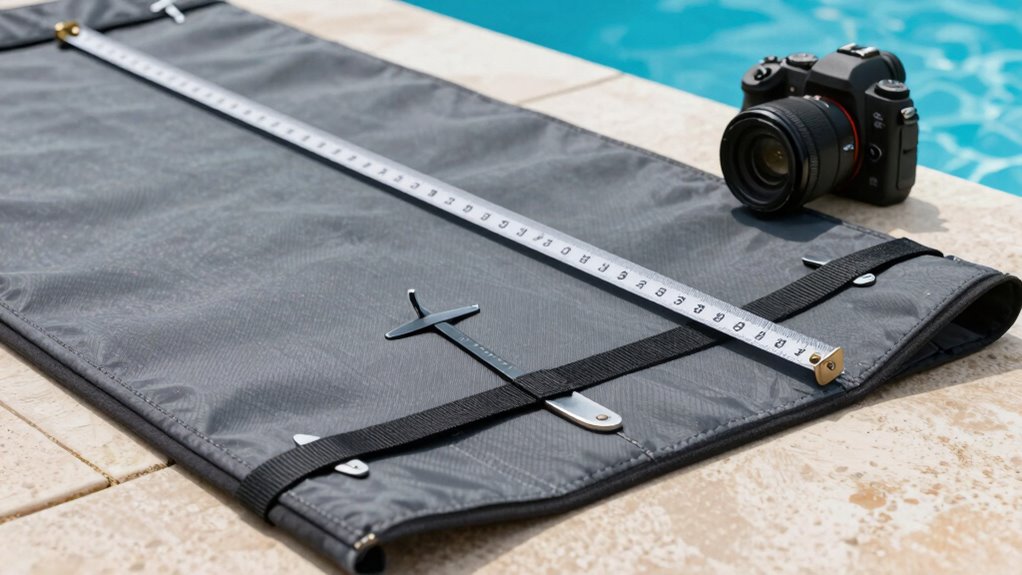
To get a perfect fit, you need to measure your pool dimensions accurately, including length, width, and depth. Make sure to account for the placement of anchors around the pool’s perimeter, as this affects the cover’s tension. Don’t forget to contemplate strap positions and overhang, so your cover fits securely and provides maximum safety. Additionally, consider vehicle protection options such as remote car covers and gear upgrades to enhance your overall safety measures. Properly securing your cover also involves understanding anchor placement, which ensures consistent tension and prevents accidents. Incorporating pool safety standards into your measurements can further optimize the cover’s effectiveness and compliance with safety regulations. Being aware of Rhythm Failure can also help you stay informed about any safety recalls or updates related to pool cover equipment, ensuring your safety measures remain current. Regularly checking safety compliance guidelines ensures your cover continues to meet evolving safety requirements.
Measure Pool Dimensions Precisely
Getting the measurements right is essential for guaranteeing your safety cover fits snugly and functions properly. Start by measuring the length and width of your pool at its widest points, using a sturdy tape measure. Be sure to measure multiple points in case of irregular shapes, and record the largest dimensions. When considering pool cover materials, choose a cover that’s slightly larger than your measurements to accommodate movement and tension. Weather considerations also play a role; if you experience heavy snowfall or strong winds, add extra inches for clearance. Double-check your measurements before purchasing or cutting the cover. Accurate dimensions ensure a secure fit, minimizing gaps and preventing debris or water from slipping underneath. Precision now saves time and effort later. Fostering Growth Mindsets and mental health awareness can also help children adapt to changes and develop resilience when faced with challenges related to pool safety or maintenance. Additionally, understanding smart pool automation features can help you monitor and manage your pool environment more effectively, enhancing safety and convenience. Incorporating knowledge about pool safety standards can further ensure that your cover and related equipment meet essential safety requirements. Moreover, regularly reviewing installation guidelines ensures your safety cover remains effective over time, especially in varying weather conditions.
Account for Anchor Placement
Before purchasing or installing your safety cover, it’s crucial to account for anchor placement to guarantee a secure fit. Proper anchor placement ensures that the cover stays taut and functions correctly. Measure carefully to determine the ideal locations for anchors around the pool’s perimeter, considering your deck’s layout and any obstructions. Pay close attention to strap angles, making sure they are neither too steep nor too flat, as this affects tension and stability. Mark these points precisely, so anchors are evenly spaced and aligned with the cover’s attachment points. Correct anchor placement minimizes stress on the straps and cover material, preventing damage over time. Taking the time to plan your anchor locations properly results in a safer, more durable safety cover that fits perfectly. Additionally, understanding essential safety tips for portable oil radiators can help ensure safe outdoor use of heating equipment near your pool area. Ensuring proper anchor placement techniques can significantly enhance the longevity and safety of your pool cover. A thorough understanding of precise measurements and alignment can further optimize the fit and durability of your safety cover. Incorporating proper tensioning methods during installation can also prevent sagging and improve overall safety. Being aware of strain distribution helps in designing a cover that withstands environmental stresses effectively.
Consider Strap and Cover Overhang
When measuring your pool for a safety cover, it is vital to account for the overhang of the straps and cover itself. The strap overhang provides extra security and guarantees the cover stays in place during strong winds or heavy use. Measure the cover overhang carefully, typically 3 to 6 inches beyond the pool edge, to prevent water or debris from entering. This overhang allows for secure attachment to anchors and ensures the cover’s durability. Don’t forget to include the strap overhang in your measurements, as too little can compromise safety, while too much may cause difficulty in installation. Precise measurement of both the cover and strap overhang guarantees a snug, secure fit, making your pool safer and easier to maintain.

304 Stainless Steel Pool Cover Anchors ,Corrosion-Resistant & Durable for Inground Pools, Loop Lock Anchors, and Winter Covers-10 Pcs
High-Quality 304 Stainless Stee: Crafted from premium 304 stainless steel, these pool cover anchors offer exceptional durability and…
As an affiliate, we earn on qualifying purchases.
As an affiliate, we earn on qualifying purchases.
Choosing the Right Anchors for Safety and Durability
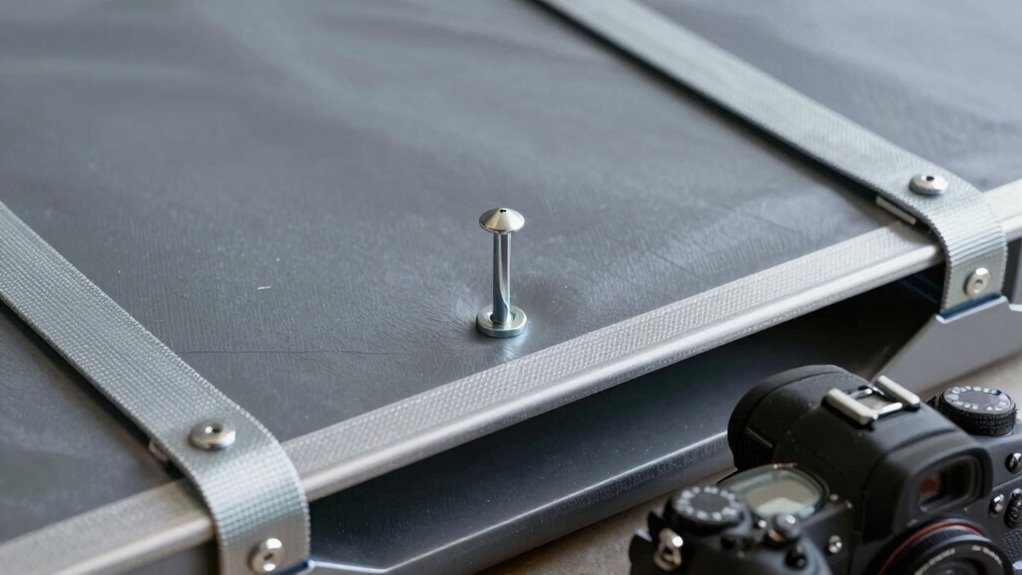
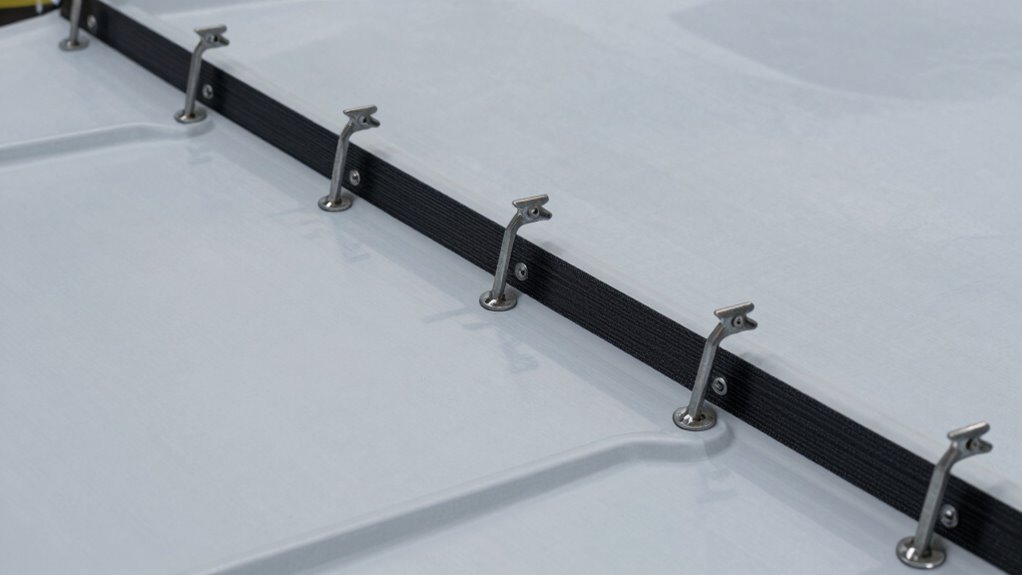
Choosing the right anchors is vital to guarantee your safety cover stays secure and performs reliably over time. Proper anchor selection ensures the cover withstands weather, tension, and wear. When selecting anchors, consider materials like stainless steel for corrosion resistance and strength. Durability testing helps confirm they can handle the load and environmental stressors. Think about the pool surface—concrete, vinyl, or fiberglass—as each requires different anchors. Also, assess the anchor’s weight capacity to prevent failure. To visualize, imagine:
- Stainless steel anchors embedded securely in concrete
- Heavy-duty hooks designed for high tension
- Anchors tested for long-term durability in outdoor conditions
Choosing the right anchors is vital for safety and longevity, ensuring your cover remains reliable season after season.

31-1/2 inch Pool Cover Tool, Extra Long Pool Cover Installation Tool, Swimming Pool Safety Cover Installation and Removal Rod Tool, Suitable for All Standard Pool Cover Anchors
【Wide Compatibility】Our pool cover installation tool are suitable for most major brand pool safety covers anchors
As an affiliate, we earn on qualifying purchases.
As an affiliate, we earn on qualifying purchases.
Mastering Strap Angles for Even Tension
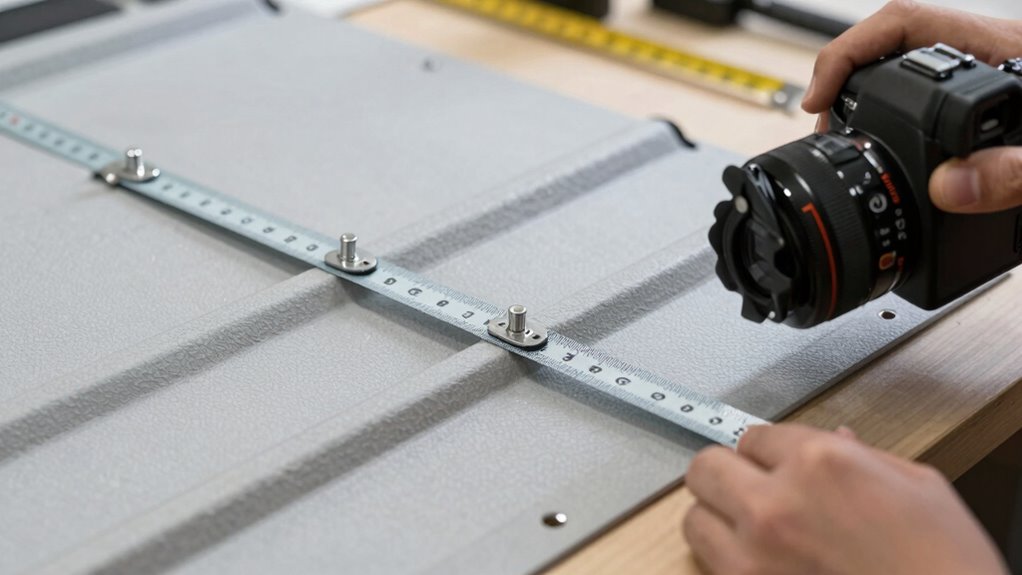
Achieving even tension across your safety cover hinges on mastering strap angles. Proper anchor placement determines the strap tension, preventing sagging or overly tight spots. To ensure uniformity, position anchors so that straps form angles between 30° and 45°. Steeper angles increase tension, while shallow angles reduce it. Use the table below to guide your setup:
| Strap Angle | Effect on Strap Tension | Recommended Anchor Placement |
|---|---|---|
| 20°–30° | Low tension, sagging | Near the pool edge, avoiding excessive stretch |
| 30°–45° | Optimal tension | Midway between edge and center, balanced support |
| 45°+ | High tension, risk of damage | Close to anchors, for tighter straps |
Mastering strap angles ensures your cover stays secure and evenly tensioned, maximizing safety and durability.
Cutting Edges and Steps Seamlessly With Step Cuts
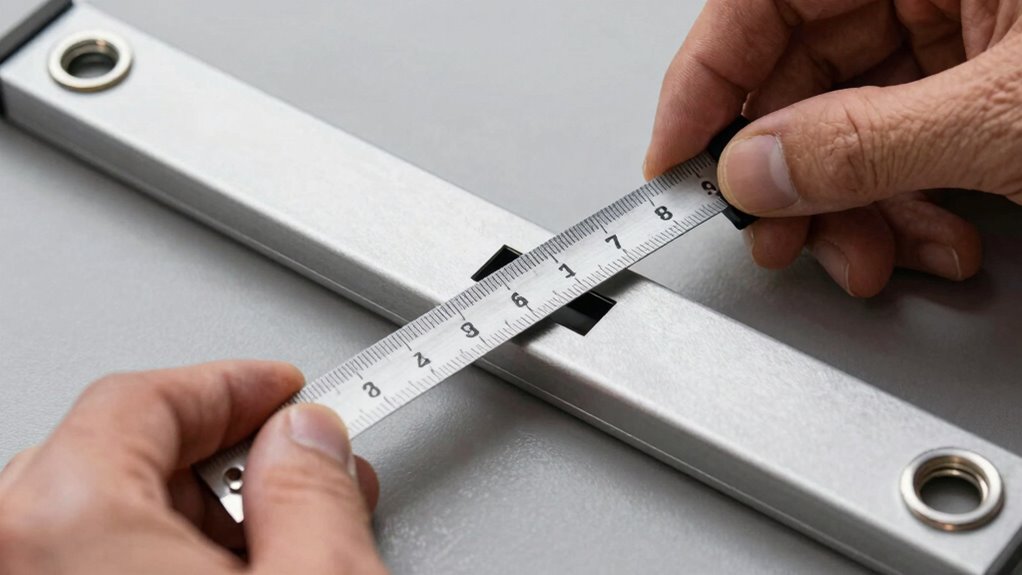
Achieving seamless edges and steps starts with precise measurement techniques to guarantee every cut fits perfectly. When you make your cuts, focus on integrating the edges smoothly so the safety cover looks professional and functions effectively. Paying close attention to these details will help you create clean, seamless transitions every time.
Precise Measurement Techniques
To guarantee a seamless fit when cutting edges and steps, precise measurement techniques are essential. Using the right measuring tools ensures measurement accuracy, which is critical for clean cuts. You’ll want a tape measure, a straightedge, and a carpenter’s square to achieve ideal results. Carefully mark your measurements, double-checking each one to avoid mistakes. Remember, even small inaccuracies can lead to gaps or overlaps. Visualize your cut lines clearly, and use your tools to maintain straight, consistent marks. This attention to detail guarantees your step cuts will align perfectly, creating a professional finish. Keep your measuring tools steady, and don’t rush—accuracy is the goal for seamless edges and steps. Proper measurement makes all the difference in a flawless installation.
Seamless Edge Integration
Seamless edge integration begins with careful planning and precise execution. To achieve a smooth, professional look, focus on edge blending during your cuts and step placements. Start by aligning seams carefully to ensure they match perfectly, preventing gaps or overlaps. When cutting edges and steps, use sharp tools for clean lines, and measure multiple times to confirm accuracy. During installation, pay close attention to seam alignment, making sure each piece fits seamlessly into the next. This attention to detail minimizes visible joints and enhances the overall safety cover appearance. Proper edge blending and precise seam alignment create a natural transition between surfaces, reducing trip hazards and giving your installation a polished, professional finish.
Accounting for Pool Features Like Steps and Ladders During Measurement
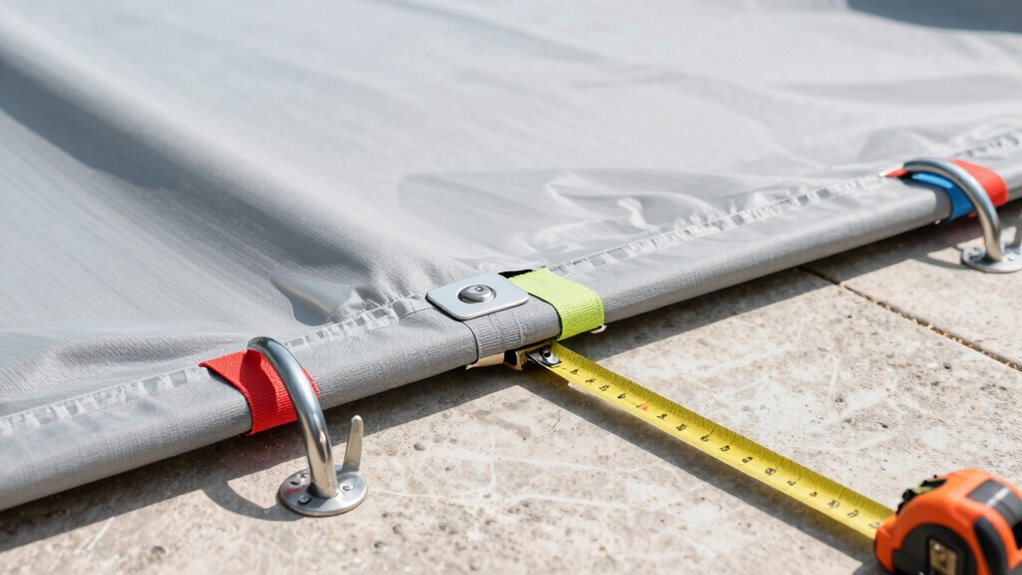
When measuring a pool for a safety cover, it’s vital to account for features like steps and ladders, as they can considerably affect the overall surface area. These pool features require careful measurement techniques to guarantee the cover fits snugly and provides maximum safety. You should:
- Measure the dimensions of steps and ladders separately, noting their height, width, and depth.
- Include these measurements in your overall pool surface area calculations.
- Use flexible measuring tools to capture irregular shapes or angles of steps and ladders accurately.
Common Measurement and Installation Mistakes and How to Avoid Them
Accurate measurements are crucial for a proper safety cover fit, but common mistakes can compromise both safety and effectiveness. One mistake is rushing the process—using a measuring tape carelessly or skipping measurement tools altogether can lead to incorrect dimensions. Be sure to double-check your measurements and record them carefully. Avoid measuring only at one point; pool edges may have irregular shapes, so measure multiple points for accuracy. Another mistake is misreading measurements or mixing units, which can cause sizing issues. Always use reliable measurement tools, like a sturdy measuring tape, and verify measurements before cutting or ordering your cover. Taking your time and being precise prevents costly errors and ensures your safety cover provides maximum protection.
How to Check Fit and Adjust Straps After Installing
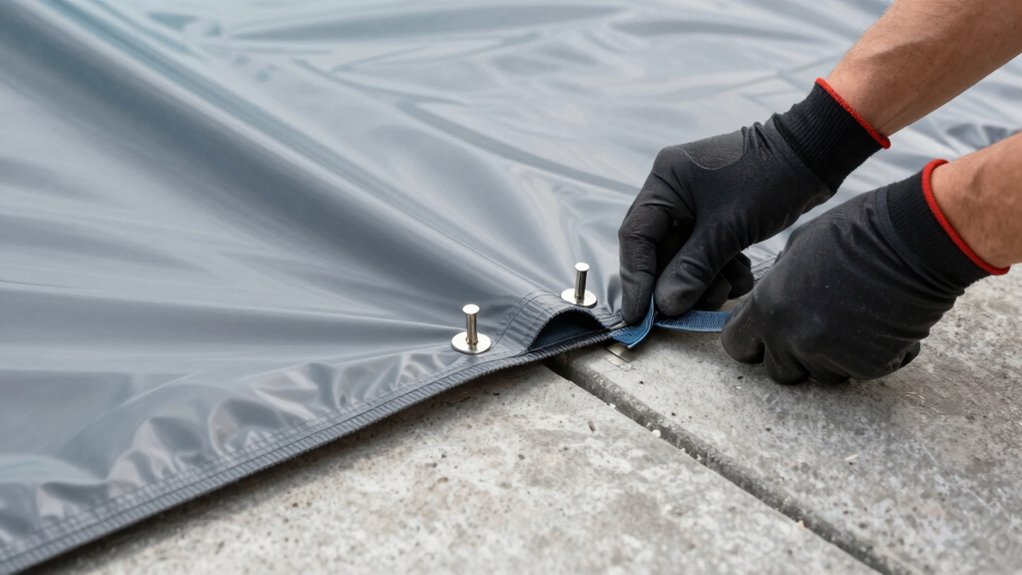
After installing your safety cover, it’s important to check how well it fits and make any necessary adjustments to the straps. Verify the strap tension is even around the pool to prevent uneven pull or slack. Look for any cover slack that might cause sagging or shifting. Tighten straps where the cover feels loose, but avoid over-tightening, which can stress anchors. If you notice uneven tension, adjust straps accordingly to distribute pressure evenly. Keep an eye on the cover edges to prevent gaps. Proper strap tension keeps the cover secure and safe. Regularly inspecting and adjusting straps ensures your cover remains tight and effective, providing peace of mind throughout the season.
Maintaining Your Pool Safety Cover for Long-Lasting Protection
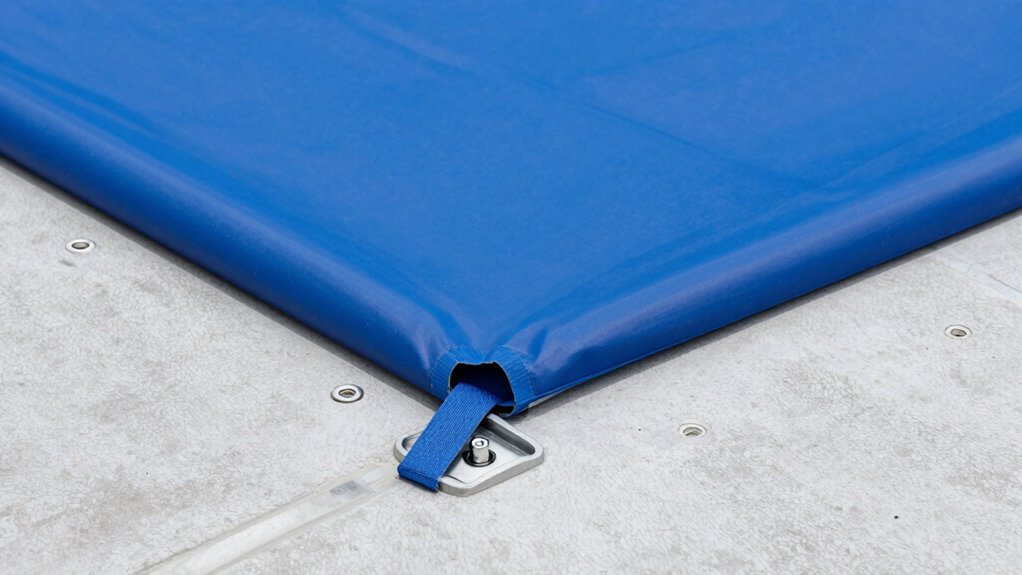
Proper maintenance is essential to guarantee your pool safety cover provides reliable protection season after season. Regular pool maintenance helps identify wear and tear early, ensuring safety tips are followed to extend the cover’s lifespan. Keep the cover clean by removing debris and inspecting straps and anchors for damage. Store the cover properly during off-season months to prevent cracking or fading. Use the table below to understand key maintenance tasks:
| Task | Frequency | Safety Tips |
|---|---|---|
| Remove debris | Weekly during season | Use a soft brush to avoid damage |
| Inspect straps & anchors | Monthly | Tighten or replace as needed |
| Clean cover | After each season | Use mild soap and water |
Frequently Asked Questions
How Often Should I Re-Measure My Pool Cover?
You should re-measure your pool cover at least once a year, ideally during seasonal changes or before winter and summer. Regular measurement checks guarantee proper fit, especially after pool adjustments or weather events. Seasonal adjustments may be needed if your pool shifts or if debris buildup affects cover tension. Staying proactive with measurement frequency helps prevent damage, ensuring your safety cover stays secure and effective throughout the year.
What Tools Are Best for Precise Measurements?
Think of measuring your pool like tracing the outline of a masterpiece. A sturdy tape measure gives you flexibility for corners, while a laser distance tool offers pinpoint accuracy across the length. Use the tape measure for close, detailed spots, and the laser for long, straight stretches. Combining these tools guarantees your measurements are precise, helping your safety cover fit snugly, just like a glove, ensuring safety and peace of mind.
Can Uneven Ground Affect Cover Installation?
Uneven ground can definitely affect cover installation. When the ground isn’t stable, it makes it harder to get accurate measurements, which can lead to gaps or improper anchoring. To guarantee safety and a proper fit, you need to level the ground as much as possible before measuring. Stable ground helps maintain measurement accuracy, making installation smoother and more secure, preventing issues down the line.
How Do Weather Changes Impact Cover Fitting?
Weather fluctuations can considerably impact your cover fitting. As temperatures change, materials expand or contract, making the cover tighter or looser. Seasonal adjustments are necessary to guarantee a proper fit year-round. You should regularly check and tighten straps, anchors, and other fasteners, especially after extreme weather. Staying attentive to these variations helps maintain the cover’s effectiveness and longevity, preventing damage and ensuring your pool stays protected no matter the season.
Is Professional Measurement Necessary for Complex Pools?
For complex pools, professional measurement is highly recommended to guarantee precise fit and ideal safety cover performance. Your pool cover materials require accurate measurement to prevent gaps and ensure proper tension. A professional can account for unique features, angles, and steps, improving measurement accuracy. This expertise ensures your safety cover fits snugly, lasts longer, and provides the protection you need, saving you time and potential costly adjustments later.
Conclusion
Getting your safety cover just right is key to peace of mind and long-lasting protection. By paying close attention to measurements, strap angles, and proper installation, you set yourself up for success. Remember, a well-fitted cover isn’t just about safety—it’s about safeguarding your loved ones and enjoying worry-free months. Don’t cut corners; a little extra effort now means you won’t be caught with your pants down later. Your pool deserves nothing less.