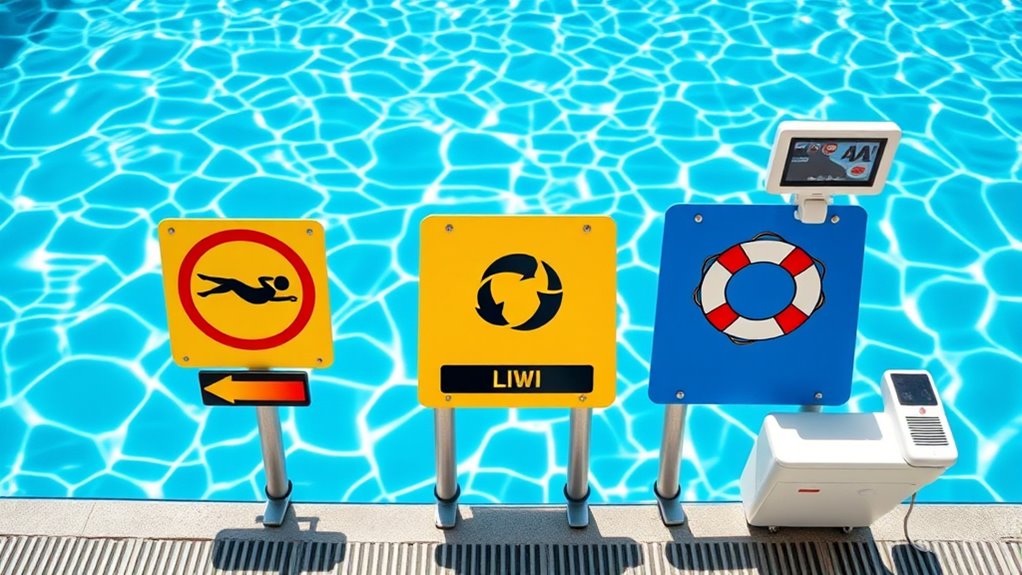

Effective safety signage and communication in pool areas are essential for preventing accidents and ensuring everyone understands safety rules. Clear signs with simple language and universal symbols guide visitors quickly, especially during emergencies. Proper placement in highly visible, well-lit spots near entrances and around the pool ensures signs are noticed and understood. Regularly maintaining signs keeps them effective and compliant. Keep exploring to discover how these strategies can further enhance your pool safety measures.
Key Takeaways
- Proper placement of visible, well-lit signage near pool entrances and deck areas ensures quick access to safety information.
- Using clear language and universal symbols helps communicate emergency procedures effectively to all visitors.
- Signage indicating lifesaving equipment locations guides prompt response during emergencies.
- Regular inspection and maintenance of safety signs prevent fading, damage, and ensure ongoing visibility.
- An overall safety communication strategy integrates signage with staff training and emergency protocols to enhance water safety.

Pool safety signage plays a essential role in preventing accidents and ensuring that everyone stays safe around the water. When you’re at a pool, clear and visible signage can make all the difference in how quickly and effectively you respond to emergencies. One of the most important aspects of effective safety signage is clearly communicating emergency procedures. These signs should be straightforward, using simple language and universally recognized symbols to guide you during urgent situations. For example, signs indicating the location of lifesaving equipment, such as life rings and first aid kits, help you act swiftly if someone needs assistance. They also specify what to do in case of emergencies, whether it’s calling emergency services or performing CPR. Properly conveying these procedures ensures that even if you’re not familiar with the pool area, you’ll know exactly what steps to take when seconds count.
Equally important is the strategic placement of signage around the pool area. Signage placement involves positioning signs in highly visible spots where they can be easily seen from all angles. You should find signs near the pool entrance, around the deck, and at key points along the pool perimeter. This way, no matter where you are, you won’t have to search for instructions or emergency information. Additionally, signs should be placed at eye level and in well-lit areas to maximize visibility, especially during the evening or in low-light conditions. You also need to guarantee that signs are free from obstructions like furniture, plants, or other objects that could block the view. Proper signage placement not only helps you quickly identify safety protocols and emergency procedures but also reinforces the importance of following rules to prevent accidents before they happen. Moreover, understanding that credit card data protection is vital for online safety underscores the importance of visual cues and security symbols to help users recognize trusted and safe environments, which can be applied to how safety signage reassures pool visitors.
When designing or choosing signage, keep in mind that consistent, clear visuals are essential. Use bright colors and bold fonts to catch attention. Incorporate symbols that are universally understood, such as a first aid cross or a no-diving icon, to transcend language barriers. Regularly inspecting and maintaining your signage ensures it remains effective; faded or damaged signs can lead to confusion and delay responses during emergencies. Remember, the goal of safety signage isn’t just to comply with regulations but to actively protect everyone around the pool. When signage is well-placed and clearly communicates emergency procedures, you create a safer environment where everyone feels confident and informed. This proactive approach helps prevent accidents, minimizes risks, and guarantees that in critical moments, everyone knows exactly what to do.
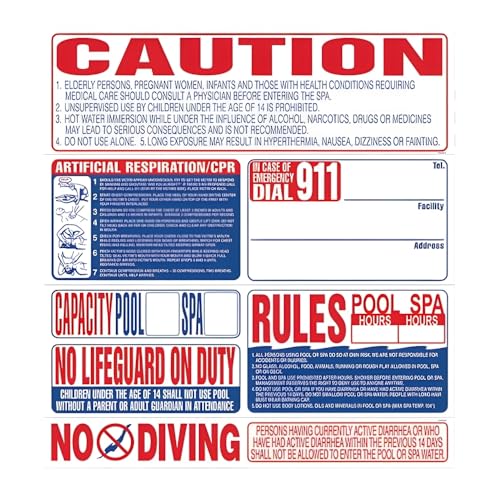
8-in-1 California Pool Safety Sign | SI9000CA | Large 47" Commercial Pool & Spa Safety Compliance Sign | UV-Protected Outdoor Construction | Meets CA Code Requirements
8 Safety Messages in One Panel: Includes all required California commercial pool & spa safety notices, simplifying compliance…
As an affiliate, we earn on qualifying purchases.
As an affiliate, we earn on qualifying purchases.
Frequently Asked Questions
How Often Should Safety Signs Be Replaced or Updated?
You should update or replace safety signs whenever their visibility is compromised or after any signage maintenance. Regularly inspect signs for fading, damage, or wear, ideally at least every six months. Ensuring signage visibility is clear is vital for safety. Promptly address any issues to maintain effective communication, preventing accidents and ensuring pool area safety. Consistent updates help keep safety messages current and easily understood by all users.
Are There Specific Colors Required for Pool Safety Signs?
Yes, pool safety signs should follow specific color standards and sign color codes to guarantee clarity. Typically, you’ll use red for prohibitions or dangers, yellow for caution or warnings, and blue or green for safety instructions or information. These color standards help swimmers quickly understand the message, reducing accidents. Make sure your signs conform to local regulations, and regularly check that the colors remain vibrant and visible for effective communication.
Can Custom Safety Signs Be Used Instead of Standard Ones?
Yes, you can use custom safety signs instead of standard ones. Custom sign options provide greater signage design flexibility, allowing you to tailor signs to your specific pool area needs. Just make certain your custom signs meet local safety regulations and clearly communicate hazards or rules. This way, you maintain safety standards while customizing your signage to better fit your environment and branding.
What Materials Are Best for Outdoor Pool Signage?
For outdoor pool signage, you should choose materials that are highly durable and weather-resistant. Consider using aluminum or high-density polyethylene (HDPE) because they resist rust, corrosion, and UV damage. These materials withstand exposure to sun, rain, and chlorine without fading or deteriorating. Their durability guarantees your signs stay clear and legible over time, providing consistent safety communication for your pool area.
Are Multilingual Signs Necessary in Diverse Pool Environments?
Imagine a vibrant pool filled with families from different backgrounds. Multilingual signs become your bridge, ensuring everyone understands safety rules clearly. They’re necessary in diverse pool environments, considering cultural considerations and language barriers. By using multilingual signage, you create an inclusive space where all guests feel safe and respected, reducing misunderstandings. This thoughtful approach shows your commitment to safety and inclusivity, making your pool a welcoming oasis for everyone.
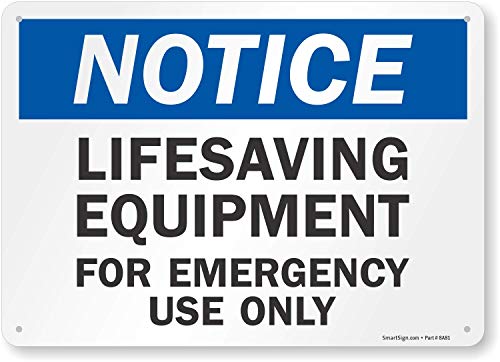
"Notice – Lifesaving Equipment, For Emergency Use Only" Sign By SmartSign | 10" x 14" Plastic
DURABLE PLASTIC. Signs use 55 mil thick HDPE (high density polyethylene) and can last up to 2 years…
As an affiliate, we earn on qualifying purchases.
As an affiliate, we earn on qualifying purchases.
Conclusion
You can substantially reduce accidents by ensuring clear safety signage around pools. Did you know that proper signage can lower drownings by up to 80%? By actively communicating hazards and safety rules, you create a safer environment for everyone. Don’t overlook the power of effective signage—your quick action can save lives and prevent injuries. Stay vigilant, keep signs visible, and promote a culture of safety every time you’re near the water.

Emergency Dial 911 Sign, Pool Sign, 10×14 Inches, 55 mil Thick HDPS (high Density polystyrene), Made in USA
Lightweight and durable: Polystyrene is known for its lightweight nature, making it easy to handle and install, while…
As an affiliate, we earn on qualifying purchases.
As an affiliate, we earn on qualifying purchases.

Pool Sign for Outside, Corrugated Plastic Safety Rules – 12" x 18", Rust Free, Weather/Fade Resistant, Easy Mounting, Pool Rules Sign Outdoor/Indoor Use
THE IMPORTANCE OF POOL SAFETY Swimming in pools is always a fun activity. Many people find swimming in…
As an affiliate, we earn on qualifying purchases.
As an affiliate, we earn on qualifying purchases.