
Optical sensors are essential for continuous water monitoring because they offer real-time, accurate detection of pollutants and contaminants. They use light-based technology to identify substances, helping you get immediate feedback to prevent environmental hazards and protect public health. Regular calibration guarantees accurate readings, and reliable data transmission keeps your monitoring system effective and secure. To learn more about how these sensors enhance water management, keep exploring the options available for your needs.

Get pool and patio gear delivered free — and shop member deals
- Fast, free delivery on millions of items
- Access to Prime Big Deal Days deals on October 6–7
- Prime Video, Amazon Music and more included
Key Takeaways
- Optical sensors enable real-time, non-invasive detection of water pollutants, ensuring continuous environmental monitoring.
- Proper calibration maintains sensor accuracy by compensating for environmental factors like temperature and fouling.
- Reliable data transmission methods, including wireless options, facilitate real-time data flow from remote water bodies.
- Ensuring data security and integrity is vital for trustworthy water quality assessments and decision-making.
- Regular system maintenance and calibration optimize sensor performance for long-term continuous water monitoring.
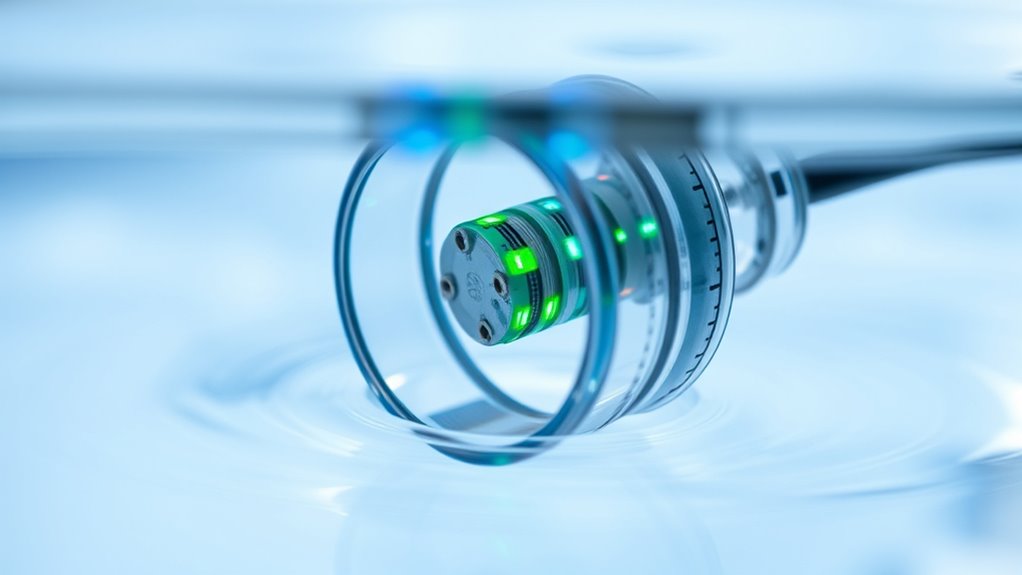
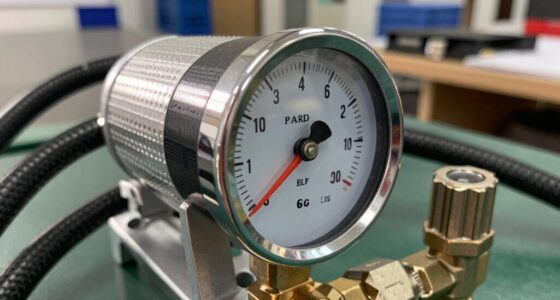
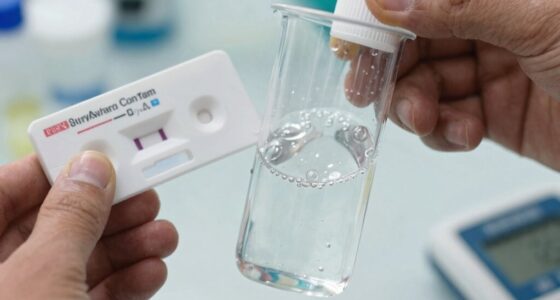
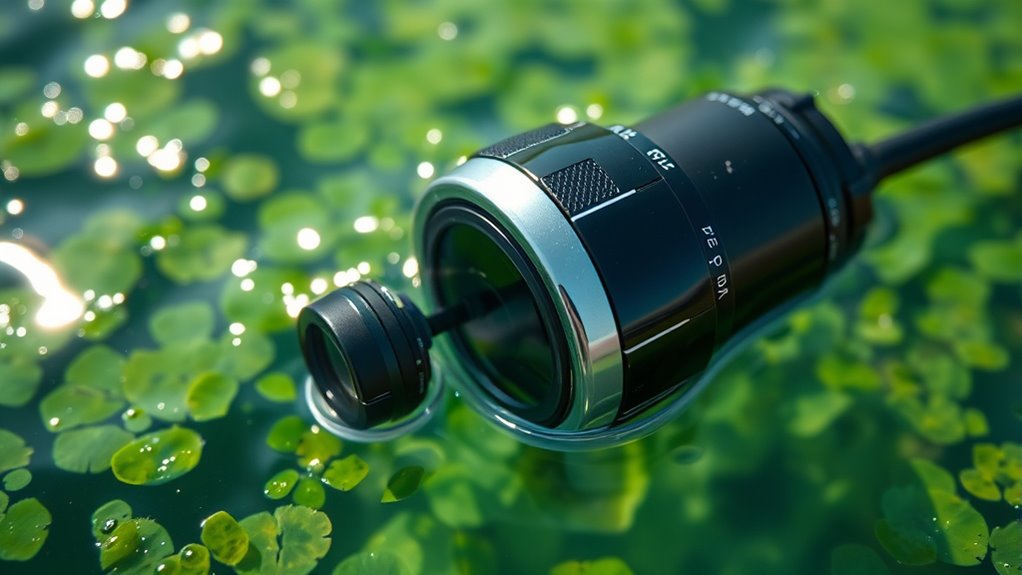
Optical sensors have become essential tools for water monitoring, offering real-time, accurate detection of pollutants and contaminants. These sensors rely on light-based technology to identify substances in water, providing immediate feedback that helps prevent environmental hazards and protect public health. To guarantee their measurements are reliable, you need to focus on sensor calibration. Proper calibration aligns the sensor’s readings with known standards, compensating for factors like temperature variations, fouling, or drift that can affect accuracy over time. Regular calibration routines are indispensable because they maintain the sensor’s precision, allowing you to trust the data it transmits. When calibrating, you typically use reference solutions with known concentrations, adjusting the sensor’s parameters until its output matches expected values. This process isn’t a one-time task; it’s an ongoing necessity to keep your monitoring system functioning at its best. Data accuracy is critical for making informed decisions and ensuring water safety. Data transmission plays a pivotal role in the effectiveness of optical sensors. Once the sensor detects pollutants, it converts those signals into electronic data that must be reliably transmitted to a central system for analysis. You want a robust data transmission method—be it wired or wireless—that minimizes interference and data loss, especially in challenging environments like remote water bodies or industrial sites. Wireless options, such as cellular or satellite communication, are popular because they enable real-time monitoring without extensive infrastructure. Ensuring secure and stable data transmission means you can quickly respond to pollution events, adjust treatment processes, or alert authorities. Additionally, integrating data transmission with cloud-based platforms allows for easier data access, visualization, and long-term storage, making your water monitoring efforts more efficient. Incorporating sensor calibration and effective data transmission into your water monitoring strategy means you get trustworthy, continuous insights into water quality. It’s not enough to simply install an optical sensor; you must regularly calibrate it to account for environmental changes and guarantee accuracy. Simultaneously, reliable data transmission guarantees that the information collected reaches your analysis system promptly and securely. By paying close attention to these aspects, you enhance the overall performance of your monitoring setup, enabling timely interventions and informed decision-making. Whether you’re overseeing a municipal water supply, an industrial process, or an environmental research project, these practices ensure your optical sensors deliver consistent, high-quality data that supports your goals for water safety and sustainability.
As an affiliate, we earn on qualifying purchases.
Frequently Asked Questions
How Do Optical Sensors Compare to Traditional Water Testing Methods?
Optical sensors offer higher sensor accuracy and real-time data collection compared to traditional water testing methods. You can rely on them to provide continuous, precise measurements without waiting for lab results. They also integrate seamlessly with data systems, enabling you to monitor water quality more effectively. Overall, optical sensors streamline water monitoring, giving you immediate insights and better control over water quality management.
What Are the Main Challenges in Deploying Optical Sensors in the Field?
You face challenges like guaranteeing sensor durability against harsh water conditions and maintaining a reliable power supply for continuous operation. Environmental factors such as debris, biofouling, and temperature fluctuations can degrade sensor performance over time. Additionally, providing consistent power, whether through batteries or solar, is essential for uninterrupted data collection. Overcoming these issues requires robust designs and effective maintenance strategies to guarantee long-term, accurate water monitoring.
Can Optical Sensors Detect Specific Contaminants or Only General Water Quality?
Imagine shining a beam of light through water, revealing hidden secrets. Optical sensors use spectral analysis to detect specific contaminants, not just general water quality. You can identify substances like pesticides or heavy metals with precision, thanks to their unique spectral signatures. This contaminant specificity lets you pinpoint issues quickly, enabling targeted responses. So, yes, optical sensors can distinguish specific pollutants amidst the water’s complex mixture.
How Often Do Optical Sensors Require Calibration or Maintenance?
You should calibrate optical sensors every few weeks or monthly, depending on usage and water conditions. Regular maintenance procedures include cleaning the sensor surface to prevent fouling and checking for any calibration drift. Consistent calibration frequency ensures accurate readings, while routine maintenance helps prolong sensor lifespan. Keep an eye on sensor performance indicators and follow manufacturer guidelines to maintain peak functionality and reliable water quality monitoring.
Are Optical Sensors Suitable for Monitoring Large-Scale Water Bodies?
You can use optical sensors for large-scale water bodies, especially when combined with remote sensing techniques. They provide real-time data that helps you monitor water quality across extensive areas. By integrating this data with remote sensing, you get a thorough view of environmental conditions. This approach enables you to track changes efficiently, ensuring effective management and timely responses, even in remote or hard-to-reach locations.
continuous water monitoring system
As an affiliate, we earn on qualifying purchases.
As an affiliate, we earn on qualifying purchases.
Conclusion
By choosing optical sensors for water monitoring, you get real-time insights that help protect our water resources. These sensors aren’t just about technology; they’re about creating a safer environment for everyone. When you rely on optical sensors, you’re not only detecting contaminants early but also making smarter decisions that impact health and sustainability. It’s a simple step that connects you directly to the health of our water — making a difference, one reading at a time.
As an affiliate, we earn on qualifying purchases.
As an affiliate, we earn on qualifying purchases.
Fall Picks
fall essentials
As an affiliate, we earn on qualifying purchases.