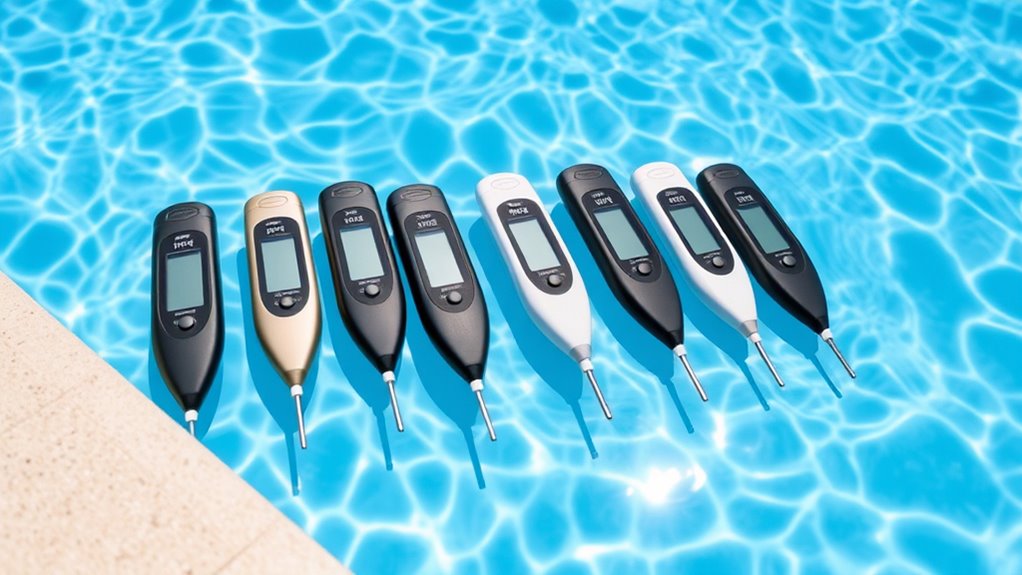

The best pH meters for pools balance dependable readings with simple calibration and care. I’d put the Apera Instruments AI311 first for its waterproof design and replaceable probe, while the AI209 is a simpler alternative and the Smart Pool Salt Tester suits owners who want app-connected, multi-parameter readings. The main choice is between a focused pH tester and a combination meter that also checks salinity, temperature, or other water measures. Extra functions can help with saltwater pools, but they also add features you may not need to maintain. Read on for the full comparison, selection criteria, and advice on choosing a meter that fits your pool routine.

Get pool and patio gear delivered free — and shop member deals
- Fast, free delivery on millions of items
- Access to Prime Big Deal Days deals on October 6–7
- Prime Video, Amazon Music and more included
Complete the kit


Key Takeaways
- The Apera AI311 stands apart from the pool-focused combination meters with a replaceable probe, waterproof construction, and stated ±0.01 pH accuracy; its more involved upkeep may not suit occasional testers.
- The Apera AI209 offers a simpler dedicated pH-testing route with stated ±0.1 accuracy, making it a better fit for routine checks when hundredth-point precision is not a priority.
- Saltwater pool owners have several 5-in-1 and 7-in-1 options, but extra salinity and conductivity functions matter more to them than to owners of conventional chlorine pools.
- App connectivity is a distinct feature of the Smart Pool Salt Tester, while most other listed combination meters present measurements on the device itself.
- The roundup includes several broad-use pen meters with accuracy claims as fine as ±0.01, but pool suitability depends on care, calibration, and stated use—not the number of digits alone.


| ph meters for pool | pH range | Temperature range | Calibration | Weight |
|---|---|---|---|---|
| Salt Tester for Pools & pH Met | 0.1–14.0 | 32–140°F / 0–60°C | — | 1.13 ounces |
| Apera Instruments AI311 Premiu | -2.00 to 16.00 | 32–122°F / 0–50°C | 1–3 points; recognizes 5 solutions | — |
| Smart Pool Salt Tester & pH Me | — | 32–122°F / 0–50°C | Includes pH powders for 4.00, 6.86, and 9.18 | — |
| Pool Salt Tester pH and Salt M | 0.00–14.00 | — | — | — |
| Pool Salt Tester & pH Meter | 0–14.00 | 32–140°F | Automatic with calibration powder | 4.6 ounces |
| Digital pH Meter | 0–14 | 32°F–158°F | Automatic, with calibration solutions | 52 g |
| VIVOSUN Digital pH Meter 0.01 | — | — | Automatic; buffer powders required | 0.11 kg |
| Apera Instruments AI209 Value | — | 32°F to 50°C | — | — |
| GuDoQi PH Meter | 0–14 | — | Automatic with standard buffer | — |
| Pool Salt Tester & pH Meter | 0–14 | 0–80°C | — | 5.3 ounces |
| Digital Water Tester 5-in-1 pH | — | — | — | — |
| Digital pH Meter Tester Pen fo | — | — | Pre-calibrated; manual calibration with standard powders | 3.52 ounces |
More Details on Our Top Picks
Salt Tester for Pools & pH Meter, 5-in-1 Digital Water Quality Meter
The FLOSGSAI is a practical pick for pool owners who want pH and salt readings alongside broader water checks. It also measures TDS, EC, and temperature, so it can serve other household or hobby water setups without requiring separate meters. Compared with the Apera AI311, which is focused on precise pH measurement and offers stated ±0.01 pH accuracy, this tester favors versatility over a clearly specified precision figure. Its wide pH range and compact 1.13-ounce body suit routine spot checks, but the supplied information notes that calibration is needed and instructions are limited. I would choose it for a saltwater pool owner who values one portable tool, not for someone whose main priority is the most clearly documented pH accuracy.
Pros:- Measures pH, salinity, TDS, EC, and temperature with one device
- Compact, lightweight body is convenient for routine pool checks
- Useful across pools and several other water-testing applications
- Avoids disposable test strips for these measurements
Cons:- Calibration is required for precise readings
- Instructions are described as limited, which may complicate setup
- Battery life may vary with frequent use
Best for: Saltwater pool owners who also test aquarium, hydroponic, or other water and want several measurements in one portable meter
Not ideal for: Pool owners who want a pH-only tester with stated high precision or detailed setup guidance
- pH range:0.1–14.0
- Salt range:0–10,000 ppm; 10.1–200.0 ppt; 0.01–25.00%
- EC range:0–9,990 µS/cm; 10.01–19.99 mS/cm
- TDS range:0–9,990 ppm
- Temperature range:32–140°F / 0–60°C
- Measurements:pH, salinity, TDS, EC, and temperature
- Dimensions:1.38 × 1.38 × 3.15 inches
- Weight:1.13 ounces
Our verdict“Choose the FLOSGSAI if you want a compact multipurpose tester for a saltwater pool and other water applications, rather than a dedicated precision pH meter.”
The Apera AI311 earns its place for pool owners who put documented pH precision ahead of measuring salt or other water metrics. Its stated ±0.01 pH accuracy, automatic calibration, and replaceable glass probe make it a more focused pH tool than the FLOSGSAI 5-in-1, which covers salinity and several additional measurements but does not list a comparable accuracy figure. The large backlit display shows pH and temperature together, helping with quick checks, while the rugged case supports portable storage. The tradeoff is scope: it does not measure pool salinity, TDS, or EC, so saltwater-pool owners may still need another tester. Calibration solutions are also needed for accurate results. I’d pick it for pH-led maintenance, not as a single-device answer for every pool-water parameter.
Pros:- Stated ±0.01 pH accuracy supports close pH monitoring
- Replaceable glass probe can extend the useful life of the tester
- Automatic calibration recognizes one to three points and five solutions
- Backlit dual display shows pH and temperature
Cons:- Does not measure salinity, TDS, or EC
- Calibration solutions are required for accurate readings
- Uses four AAA batteries that need replacement over time
Best for: Pool owners who prioritize precise pH monitoring and want a replaceable probe and automatic calibration
Not ideal for: Saltwater pool owners seeking one instrument for pH, salinity, TDS, and EC
- pH range:-2.00 to 16.00
- Accuracy:±0.01 pH
- Temperature range:32–122°F / 0–50°C
- Calibration:1–3 points; recognizes 5 solutions
- Display:Large backlit LCD with dual pH and temperature display
- Power:4 AAA batteries, included
- Auto power-off:8 minutes
- Dimensions and weight:7 × 1.6 × 1.6 inches; 10 ounces
Our verdict“Choose the Apera AI311 if pH precision and a replaceable probe matter more to you than all-in-one saltwater testing.”
Smart Pool Salt Tester & pH Meter with App, 7-in-1 Digital Water Tester for pH, Salinity, ORP, EC, TDS, SG & Temperature
This smart tester is the lineup’s strongest fit for owners who want to record water readings over time, rather than check pH in isolation. Along with pH and salinity, it measures ORP, EC, TDS, specific gravity, and temperature; Bluetooth app support adds tracking and report export. Its stated ±0.02 pH accuracy is close to the Apera AI311’s ±0.01 figure, though the Apera is the more direct choice for pH-focused use and has a replaceable probe. The rechargeable battery avoids disposable batteries, with more than 100 tests listed per charge. The added modes and app can be useful for regular pool and hot-tub monitoring, but they also make setup less straightforward. Full functionality depends on Bluetooth, and pH readings require calibration powders.
Pros:- Measures seven parameters, including ORP and specific gravity
- App supports reading history and report export
- Rechargeable battery is listed for more than 100 tests per charge
- Stated ±0.02 pH accuracy
Cons:- Bluetooth is needed for full functionality
- Calibration powders are needed for accurate pH measurements
- Multiple modes and app features may add setup complexity for beginners
Best for: Pool and hot-tub owners who want app-based records of pH, salinity, and several related water measurements
Not ideal for: Beginners seeking a simple standalone pH pen or owners who do not want to rely on a phone connection
- Measurement modes:pH, ORP, EC, TDS, salinity, specific gravity, and temperature
- pH accuracy:±0.02 pH
- Connectivity:Bluetooth with iOS and Android apps
- Temperature range:32–122°F / 0–50°C
- Battery:Rechargeable; 100+ tests per charge
- Calibration:Includes pH powders for 4.00, 6.86, and 9.18
Our verdict“Choose this model if app-based tracking and broad water analysis matter to you; pick the Apera AI311 for a simpler, pH-focused instrument.”
Pool Salt Tester pH and Salt Meter for Saltwater Pool
This tester is aimed squarely at saltwater pool upkeep: it combines pH and salt readings with TDS, EC, and temperature, and the listing gives a recommended pool pH range of 7.2 to 7.8. That pool-specific framing makes it easier to match to routine chlorinator and water checks than the Apera AI311, which offers a stated accuracy advantage for pH but does not measure salt. The included calibration powder, brush, and battery give buyers the basic items needed to get started. Still, no pH accuracy figure is provided, so I would not rank it above the Apera for precision-sensitive pH work. It also relies on a digital display and requires calibration and batteries. This is a practical multi-reading option, not a specialist pH instrument.
Pros:- Measures salinity, pH, TDS, EC, and temperature
- Lists a recommended pool pH range of 7.2 to 7.8
- Includes calibration powder, battery, brush, and user manual
- Designed for pools, hot tubs, spas, and aquariums
Cons:- No pH accuracy figure is provided in the supplied product data
- Calibration and batteries are required for operation
- Digital readings call for careful handling of the tester
Best for: Saltwater pool owners who want one meter for pH, salinity, and related readings, with pool-range guidance
Not ideal for: Buyers who need a stated pH accuracy specification or prefer a dedicated pH tester with a replaceable probe
- Salt range:0–9,990 ppm / 10–100 ppt
- pH range:0.00–14.00
- Measurements:Salinity, pH, TDS, EC, and temperature
- Recommended pool pH:7.2–7.8
- Included items:Tester, battery, brush, user manual, and calibration powder
Our verdict“Choose this tester for routine saltwater-pool checks across several parameters, but favor the Apera AI311 if stated pH precision is your priority.”
Pool Salt Tester & pH Meter – 5-in-1 Digital TDS Meter for Salinity, pH, Temperature, EC, and Salinity
This 5-in-1 meter makes sense for pool owners who want several water readings in a portable tester with a backlit display. It covers pH, salinity, TDS, EC, and temperature, and its automatic calibration and temperature compensation are intended to reduce the manual work involved in routine checks. Compared with the FLOSGSAI 5-in-1, it offers a stated 0.01 resolution and automatic calibration, while the FLOSGSAI provides specific ranges for salt, EC, and TDS and weighs less than two ounces. The listing does not give a pH accuracy figure, so resolution should not be mistaken for a confirmed accuracy advantage. Calibration powder is still needed, and battery life is unspecified. I’d choose this for readable multiparameter checks, not for buyers who want the most complete performance documentation.
Pros:- Combines pH, salinity, TDS, EC, and temperature testing
- Backlit LCD can make readings easier to see
- Automatic calibration and temperature compensation are listed
- Portable design weighs 4.6 ounces
Cons:- Calibration powder is needed for accurate readings
- Battery life is not specified
- Supplied data gives pH resolution but no pH accuracy figure
Best for: Pool owners who want a portable, backlit meter for pH and salt-related checks with automatic calibration
Not ideal for: Buyers who need documented pH accuracy, battery-life details, or clearly listed ranges for every measurement
- Measurements:pH, salinity, TDS, EC, and temperature
- pH range:0–14.00
- pH resolution:0.01
- Temperature range:32–140°F
- Calibration:Automatic with calibration powder
- Display:Backlit LCD
- Dimensions:9.09 × 6.38 × 1.93 inches
- Weight:4.6 ounces
Our verdict“Choose this model for readable, automatic-calibration multiparameter checks, but select the FLOSGSAI if clearly stated measurement ranges matter more.”
Digital pH Meter – High Accuracy Water Quality Tester with 0-14 pH Range and ATC
For pool owners who want a small, straightforward pH checker, this 52 g meter is easier to carry and store than the larger Apera AI209 kit. Its automatic temperature compensation adjusts readings for water temperature, while calibration solutions support setup before testing. That makes it a practical choice for occasional checks rather than a more involved water-analysis routine. The tradeoff is a narrow focus: it measures pH only, so it cannot also check salinity or dissolved solids like the GuDoQi 4-in-1. Calibration still takes attention, and the listing does not specify battery life, which makes it harder to plan for frequent testing. I’d choose it when portability and uncomplicated pH checks matter more than extra measurements or a rugged waterproof design.
Pros:- Lightweight 52 g design is easy to carry and store
- Automatic temperature compensation adjusts readings for water temperature
- Calibration solutions are included for setup
- Measures across a broad 0–14 pH range
Cons:- Measures pH only, unlike the GuDoQi 4-in-1
- Needs calibration with solutions for dependable readings
- Battery life is not specified
Best for: Pool owners who want a lightweight meter for occasional pH checks and do not need salinity or TDS readings.
Not ideal for: Saltwater-pool owners or frequent testers who need multiple water measurements, a stated battery life, or a specifically waterproof build.
- pH range:0–14
- Temperature range:32°F–158°F
- Temperature compensation:Automatic
- Calibration:Automatic, with calibration solutions
- Power:Battery powered
- Weight:52 g
Our verdict“Choose this compact meter for portable, occasional pool pH checks if you do not need a waterproof body or multi-parameter testing.”
VIVOSUN Digital pH Meter 0.01 Accuracy Pen Tester for Water Hydroponics
The VIVOSUN’s standout is its stated ±0.01 pH accuracy, paired with a backlit display that can make readings easier to see when checking pool water in a shaded area. Automatic calibration and temperature compensation reduce some setup work compared with the basic Digital pH Meter in this roundup, though buffer powders are still required. Its memory function may help users keep track of readings, but this remains a pH-only pen: the GuDoQi also reports TDS, EC, and temperature for owners who want a broader water snapshot. The listing gives a precision figure, but not a waterproof rating or battery-life estimate. I’d favor it for a careful pool owner who values a readable display and fine pH increments over a rugged body or multiparameter testing.
Pros:- Specified ±0.01 pH accuracy
- Backlit LCD improves readability in dimmer conditions
- Automatic calibration and temperature compensation
- Compact design with a memory function
Cons:- Buffer powders are needed for calibration
- Measures pH only, unlike the GuDoQi 4-in-1
- Battery life and waterproof rating are not specified
Best for: Pool owners who routinely check pH and want a backlit screen, memory function, and stated fine accuracy.
Not ideal for: Buyers who need a confirmed waterproof meter, long-term battery guidance, or readings for salinity, TDS, and EC.
- Accuracy:±0.01 pH
- Calibration:Automatic; buffer powders required
- Temperature compensation:Automatic
- Display:Backlit LCD
- Power:2 × 1.5 V button cells
- Weight:0.11 kg
- Material:ABS
- Features:Memory; compact design; UL certified
Our verdict“Pick the VIVOSUN if readable, fine-resolution pH checks matter more than extra water measurements or a documented waterproof build.”
Apera Instruments AI209 Value Series pH20 Waterproof pH Tester Kit, ±0.1 pH Accuracy
Among these five, the Apera AI209 makes the clearest case for regular poolside use: its IP67 water resistance and included carrying case offer more protection than the VIVOSUN, which has no waterproof rating listed. It gives ±0.1 pH accuracy, responds in about five seconds, and includes calibration buffers and batteries, so the kit arrives with much of the setup covered. Its stated immersion depth is only one inch, so I would not treat it as a meter to submerge freely. The GuDoQi checks more water parameters, but the AI209 keeps the job focused on pH and adds a more clearly specified outdoor-ready design. Calibration remains part of upkeep, and the electrode warranty is shorter than the instrument warranty.
Pros:- IP67 water resistance suits outdoor poolside handling
- Includes calibration buffers, batteries, and a carrying case
- Five-second response time
- Two-year limited instrument warranty
Cons:- Specified accuracy is ±0.1 pH, less fine than the VIVOSUN’s stated ±0.01 pH
- Listed immersion depth is limited to one inch
- Electrode warranty lasts six months
Best for: Pool owners who test outdoors and want a waterproof pH-focused kit with buffers, batteries, and a carrying case included.
Not ideal for: Buyers who want ±0.01 pH accuracy, deeper submersion, or salinity and TDS measurements in the same device.
- Model:AI209
- Accuracy:±0.1 pH
- Water resistance:IP67
- Response time:5 seconds
- Immersion depth:1 inch
- Power:4 AAA batteries, included
- Temperature range:32°F to 50°C
- Warranty:Two-year limited for instrument; six months for electrodes
Our verdict“Choose the AI209 for outdoor pH checks and a more complete, water-resistant kit, but skip it if you need finer stated accuracy or multiparameter readings.”
GuDoQi PH Meter, TDS Meter Combo, Water Test Kit, Digital pH Tester, PPM Meter, 4-in-1 Set for Drinking Water, Hydroponics, RO System, Aquarium, Swimming
The GuDoQi earns its place by extending pool checks beyond pH: one kit measures pH, TDS, EC, and temperature. That extra context can suit owners who also monitor water for an aquarium or hydroponic setup, while the Digital pH Meter in this roundup keeps readings to pH alone. The pH display resolution is 0.01 pH, and automatic temperature compensation and a hold function support routine measurements. More modes bring more interface complexity, however, and the listing advises calibration before each use for best results. Unlike the Apera AI209, its supplied details do not specify an IP67 rating or a limited immersion depth, so I would not assume it is suited to wet handling. Choose it for versatility, not for a clearly documented poolside waterproof build.
Pros:- Combines pH, TDS, EC, and temperature measurements
- Provides 0.01 pH resolution
- Automatic temperature compensation
- Hold function can help capture readings
Cons:- Calibration before each use adds routine upkeep
- Multiple measurement modes may take time to learn
- Waterproof protection is not specified, unlike the Apera AI209
Best for: Pool owners who also test aquariums, hydroponic water, or other systems and want pH, TDS, EC, and temperature measurements.
Not ideal for: Buyers who want a simple pH-only tester, clearly specified waterproof protection, or a low-maintenance calibration routine.
- pH range:0–14
- pH resolution:0.01 pH
- TDS range:0–9990 ppm
- Conductivity range:0–9990 µS/cm
- EC range:0–9990 µS/cm
- Temperature units:°C / °F
- Calibration:Automatic with standard buffer
- Additional feature:Hold function
Our verdict“Choose the GuDoQi if you want one device for pool pH and broader water checks, rather than a simpler, specifically waterproof pH tester.”
Pool Salt Tester & pH Meter, Hofun 5-in-1 Digital Salinity, pH, Temperature, EC, TDS Meter for Aquarium and Pool Water
For a saltwater pool owner, the Hofun’s main advantage is direct salinity measurement alongside pH, temperature, EC, and TDS. The GuDoQi also covers several water measures, but the Hofun specifies salinity ranges and display modes in PPM, PPT, and percent, making salt checks a more explicit part of its purpose. Its titanium-alloy probe is another distinction in a lineup where probe material is not specified for the other meters. This broader tool brings tradeoffs: calibration is needed for precise results, some functions may take extra learning because instructions are limited, and its dimensions make it less pen-like than the compact Digital pH Meter. I’d choose it when salt management matters as much as pH; owners who only need pH can keep things simpler with the VIVOSUN or Apera AI209.
Pros:- Measures salinity, pH, temperature, EC, and TDS
- Offers salinity display modes in PPM, PPT, and percent
- Titanium-alloy probe material is specified
- Works across pools, aquariums, hot tubs, and seawater applications
Cons:- Requires calibration for precise readings
- Limited instructions may complicate less familiar functions
- Larger dimensions are less pocketable than the Digital pH Meter
Best for: Saltwater-pool owners who want to check salinity and pH with one device, especially if they also monitor EC, TDS, or temperature.
Not ideal for: Owners of standard pools who only need pH readings, or buyers who prefer a compact pen with detailed operating instructions.
- pH range:0–14
- Salinity range:0–9999 ppm or 10–200 ppt
- TDS range:0–9999 ppm
- EC range:0–9999 µS/cm
- Temperature range:0–80°C
- Display modes:PPM, PPT, %
- Probe material:Titanium alloy
- Dimensions:9.33 × 3.19 × 2.05 inches
- Weight:5.3 ounces
Our verdict“Choose the Hofun for saltwater-pool monitoring that includes pH; for pH alone, the Apera AI209 offers a more focused poolside kit.”
Digital Water Tester 5-in-1 pH/EC/TDS, ± 0.1 pH Accurate, Green
This tester is a practical choice for pool owners who want more than a pH reading from one pocket-size tool. Alongside pH, it measures salinity, TDS, EC, and temperature, which can help when monitoring a saltwater pool or checking several water systems at home. Its stated ±0.1 pH accuracy suits routine water care, though it offers less precision on paper than the B08HLXBBK4 pen’s ±0.01 claim. That narrower focus may matter to buyers who want the finest stated pH resolution; this model’s advantage is broader coverage. The corrosion-resistant titanium-alloy probes and LCD are useful practical touches, but battery details are not provided, and the probe needs wiping dry after use. Choose it for versatile checks, not for a pH-only tool with a specified calibration routine.
Pros:- Measures pH, salinity, TDS, EC, and temperature in one device
- Stated ±0.1 pH accuracy supports routine pool-water checks
- Corrosion-resistant titanium-alloy probes are suited to repeated water contact
- Compact design and LCD make readings convenient to take poolside
Cons:- Less precise on paper than the B08HLXBBK4 pen’s stated ±0.01 pH accuracy
- Battery type and battery life are not specified
- Probe should be wiped dry after use to maintain accuracy
Best for: Pool owners, especially those with saltwater pools, who want to check pH alongside salinity and other water measurements with one portable tester
Not ideal for: Buyers who want pH-only testing with a stated ±0.01 pH accuracy, or who need clear battery-life and maintenance instructions
- Measurements:pH, EC, TDS, salinity, and temperature
- pH accuracy:±0.1 pH
- Probe material:Corrosion-resistant titanium alloy
- Display:LCD
- Design:Compact and portable
- Power:Not specified
Our verdict“Pick this tester if you want portable pH, salinity, and related readings in one poolside device and can accept limited battery details.”
Digital pH Meter Tester Pen for Water, Pre-Calibrated, High Accuracy ±0.01, 0–14 pH Range, Pocket Size for Drinking Water, Pool, Aquarium & Hydroponics (Yellow)
For pool owners focused on pH rather than a bundle of water readings, this pen offers a stated ±0.01 pH accuracy and a broad 0–14 pH range. Its pre-calibrated setup makes it ready for initial checks, while support for manual calibration with standard powders gives owners a way to adjust it later. Compared with the B0HG1J8N1Q, it reports pH only, so it cannot also check salinity, TDS, EC, or temperature; the tradeoff is a more focused tool with a finer stated accuracy. The pocket-size form suits quick poolside readings, but it runs on a CR2 battery that will eventually need replacement. Calibration may also need occasional adjustment, so this is less appealing to buyers who want a maintenance-free tester or several metrics from one device.
Pros:- Stated ±0.01 pH accuracy is finer than the B0HG1J8N1Q’s ±0.1 pH claim
- Pre-calibrated for initial use
- Manual calibration with standard powders is supported
- Compact, lightweight design is easy to carry for poolside checks
Cons:- Measures pH only, unlike the B0HG1J8N1Q’s multi-metric testing
- Requires a CR2 battery, which must be replaced when depleted
- Calibration may need occasional adjustment
Best for: Pool owners who prioritize a fine stated pH accuracy and want a compact pen they can recalibrate with standard powders
Not ideal for: Saltwater-pool owners who also need salinity readings, or buyers who prefer a tester with no battery replacement or calibration upkeep
- Measurement range:0–14 pH
- Accuracy:±0.01 pH
- Calibration:Pre-calibrated; manual calibration with standard powders
- Power source:1 CR2 battery required
- Dimensions:6.85 × 2.13 × 1.26 inches
- Weight:3.52 ounces
Our verdict“Choose this pen for portable, pH-focused pool checks with a fine stated accuracy, but skip it if you need salinity or other readings.”
How We Picked
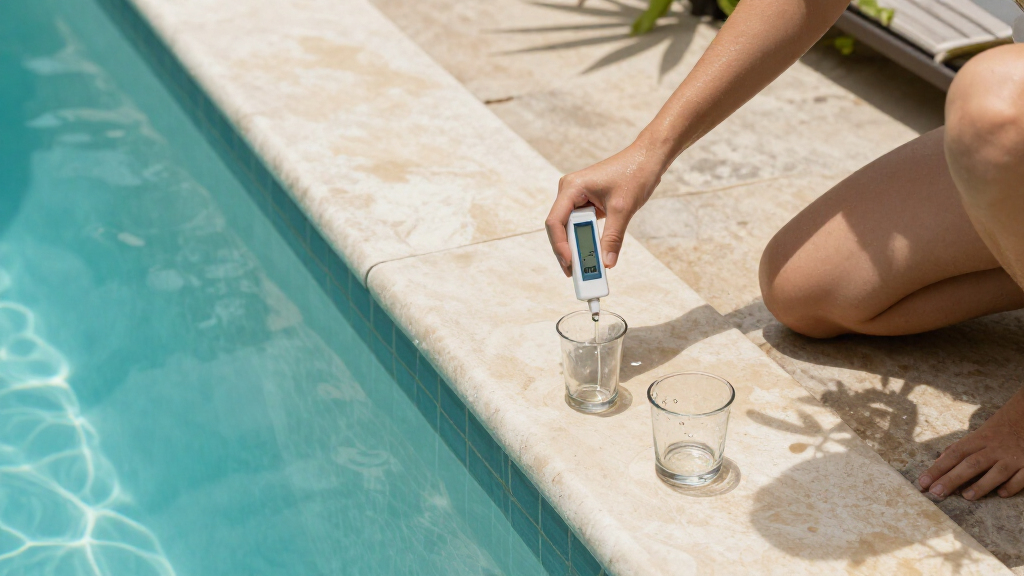
I ranked these pH meters for pools by how well their stated design and functions match regular pool-water checks. I gave more weight to clear pH accuracy claims, waterproofing, probe serviceability, and pool-relevant measurements than to the number of functions listed. For saltwater pool owners, salinity and temperature readings add practical value; for other pools, those extra measures may bring complexity without improving a basic pH check.
The ordering also reflects usability and upkeep. The Apera AI311 leads for its stated precision and replaceable probe, while the AI209 earns a place for a simpler dedicated-testing setup. Multi-parameter and app-connected models follow when their extra functions suit a specific pool routine. General-purpose pen testers remain useful alternatives, but I rank them lower when the supplied product details give less evidence of pool-specific design. Accuracy figures are manufacturer-stated specifications, not independent test results.
Factors to Consider When Choosing Ph Meters For Pools
Before choosing a meter, I’d match its features to the pool’s treatment system and the way you actually test water. A longer feature list does not automatically make pool maintenance easier; the right choice is the one you can calibrate, rinse, store, and use consistently.
Match the meter to your pool’s sanitation system
A saltwater pool gives salinity readings a clear job: they can help you track salt levels alongside pH. A standard chlorine pool may gain little from a meter focused on salinity, conductivity, or specific gravity. Do not treat those readings as substitutes for a complete pool-water test, since pH is only one part of water balance and sanitation. Check the product’s listed measurement range against the needs of your pool equipment and test routine. If you manage both a pool and an aquarium or hydroponic setup, a multipurpose unit may earn its added functions. Otherwise, a dedicated pH tester can keep the process simpler.
Choose useful accuracy, not just more decimal places
A stated accuracy of ±0.01 pH looks finer than ±0.1, but the displayed resolution and the meter’s actual accuracy are different things. Pool owners should focus on whether the reading is reliable enough for their decisions and whether the device can be calibrated properly. A hundredth-point display cannot compensate for old calibration solutions, a dirty probe, or poor storage. Avoid comparing meters by digits on the screen alone. If you routinely make small adjustments and want tighter readings, a more precise stated specification may suit you. For basic checks, a simpler instrument may be easier to maintain.
Plan for calibration and probe care
Digital pH meters need regular calibration with suitable buffer solutions; they are not maintenance-free replacements for test strips. Before buying, check whether calibration instructions and supplies are included, sold separately, or left unspecified. Rinse the probe between samples and follow the maker’s storage directions, since letting a pH electrode dry out can affect performance. A replaceable probe can extend the useful life of a tester, though replacement parts add upkeep. Buyers who want minimal handling may prefer a simpler testing method, while frequent testers may value serviceable components. Set aside time for care rather than judging convenience by the readout alone.
Decide whether combination readings earn their place
Combination meters can report pH alongside salinity, temperature, electrical conductivity, or total dissolved solids. Those readings can support a broader water-check routine, especially for saltwater pools, but each extra function adds another measurement to interpret. Conductivity and TDS readings do not directly tell you whether pool water is safe or balanced, and they do not replace a suitable test for sanitizer levels. An app can help organize readings, but check whether the functions you need work without a phone and how the app handles stored data. Choose a multi-parameter device when you will use its added measurements, not simply because its feature count is higher. For pH-only checks, fewer functions can mean fewer distractions.
Check waterproofing, display, and handling details
Pool testing happens around wet hands, splashes, and small sample containers, so waterproof construction can reduce worry during routine use. Confirm what the manufacturer means by waterproof or water-resistant rather than assuming the meter can be submerged without limits. A readable display and straightforward controls matter when you are checking several samples in succession. Pen-style testers are compact, but they still need careful rinsing and safe storage between readings. Think about whether you will test at the poolside, indoors, or in multiple locations. A portable meter is only convenient if its probe and accessories are easy to protect.
Consider your full testing routine before paying for extras
A pH meter does not measure every factor that affects pool care, so it should fit into a broader testing plan. Pool owners may still need appropriate tests for free chlorine or other sanitizer measures, alkalinity, and additional water-balance factors. Buying a multi-function meter with TDS or conductivity does not fill those gaps automatically. If you test often and want reusable equipment, calibration and probe replacement may justify a more durable model. If testing is occasional, a less complicated meter—or a different testing method—may be more practical. Compare the time and supplies needed over the meter’s life, not only its listed features.
Frequently Asked Questions
Can a pH meter replace pool test strips or a full water test?
A pH meter measures pH; it does not provide a complete pool-water profile. Even a 5-in-1 or 7-in-1 unit may not measure the sanitizer and balancing factors your pool routine requires. Keep appropriate tests for chlorine or other sanitizer levels and any additional parameters recommended for your pool system. A meter can make pH readings more direct, but it still needs calibration and care. Treat it as one part of your testing kit, not a replacement for every test.
Is a ±0.01 pH meter worth choosing over a ±0.1 model?
It depends on whether finer stated accuracy helps you make better pool-care decisions and whether you will maintain the meter. A ±0.01 claim may appeal to frequent testers who want more precise readings, but the result still depends on calibration, probe condition, and correct sampling. A ±0.1 model can be a more straightforward fit for routine checks when that level meets your needs. Do not assume that a display showing two decimal places proves the same level of accuracy. Compare the specification with the calibration and probe-care demands.
Do I need a salinity meter if I have a saltwater pool?
A salinity function can be useful for checking salt levels, so saltwater pool owners have a stronger reason to choose a combination tester than conventional pool owners. It does not replace pH testing or the other checks required to care for the pool. Confirm that the device reports salinity in a format and range that suit your system, and follow your equipment maker’s guidance when interpreting results. If your pool already has a dependable way to check salt, a separate pH tester may be enough. Choose the extra function when it fills a real gap in your routine.
How often should I calibrate a digital pool pH meter?
Follow the meter maker’s instructions for calibration frequency, since guidance can differ by model and use. Frequent testing, long storage, or inconsistent readings are reasons to check calibration rather than relying on an old setup. Use the specified buffer solutions and handle the probe as directed. Rinse it between samples and store it according to the manufacturer’s instructions to help preserve consistent readings. If you are unsure whether a result is dependable, compare it with a suitable alternative test before adjusting pool chemistry.
Should I choose an app-connected meter or one with a built-in display?
An app-connected model can suit someone who wants to review or organize readings on a phone, but its added connectivity is useful only if the app supports the routine you want. A built-in display is more direct when you need a quick poolside reading without opening another device. Check whether the meter can show results on its own, how it connects, and what functions require the app. Neither option removes the need for calibration or careful probe handling. Pick based on how you record and use measurements, not on connectivity alone.
Conclusion
For most pool owners, I’d choose the Apera AI311 as the best overall because its stated ±0.01 pH accuracy, waterproof design, and replaceable probe form the strongest combination for regular use. The Apera AI209 is my best value-style pick for buyers who want a simpler dedicated pH tester and can work with its stated ±0.1 accuracy. Beginners who prefer a straightforward pH-focused tool may find the AI209 easier to approach than a multi-parameter meter, provided they are ready to learn calibration and probe care. For the best premium-style feature set, the Smart Pool Salt Tester stands out for app connectivity and broad measurements; it makes the most sense when you will use those functions. Saltwater pool owners should prioritize a suitable salinity meter, while owners who only need pH readings can skip extra functions. Choose according to your pool system, testing frequency, and willingness to maintain the probe.
Halloween Picks
halloween
As an affiliate, we earn on qualifying purchases.